

When constipation plagues you, you might be wondering which strategies, including dietary changes, can help you find relief. The basic tactics include staying hydrated and ensuring you’re getting optimal fiber intake. But staying more regular is not about diet alone. Other factors also contribute to constipation.
Constipation can be uncomfortable. It causes bloating, distention, and abdominal pain, and it can leave you feeling sluggish and fatigued. Everyone experiences constipation from time to time. While diet isn’t the only factor, and changing what you eat isn’t the only way to find relief, adjusting your diet might help if you’re feeling irregular on the regular.
When considering dietary changes for addressing constipation, don’t worry–the best strategies are not about restricting food. “I often like to frame to patients that this is usually a game of addition rather than subtraction,” says Kaitlin Voicechovski, MS, RD, LDN, the lead registered dietitian at Oshi Health. “While it’s possible there could be a food exacerbating someone’s constipation, I find that more often it’s a matter of adding dietary elements in to support regularity that does the trick, rather than considering what may need to be removed from the diet.” So what can you eat to go number two? Let’s explore.
Foods that help with constipation
The key dietary elements that help with constipation are fluids and fiber. We get into the specifics below. But if you’re experiencing constipation frequently, it’s possible you may be falling short with your daily intake of one or both of these.
“Not enough of either can make staying regular a challenge,” Voicechovski says. Deficiencies in fluids and/or fiber are relatively common, although the prevalence of chronic dehydration in adults in the United States is hard to pinpoint. Some statistics are overinflated, but one that research tends to agree on is that older adults have a dehydration prevalence of 17% to 28%. The prevalence of fiber deficiency is higher, with 95% of adults not getting the recommended daily amount.
Fluids
At a minimum, adults need 11.5 cups (2.7 liters) of fluid for females and 15.5 cups (3.7 liters) for males. Of course, if you are highly active or live or work in a warm climate or conditions, you might need to up your fluids even more.
“In the fluid department, of course, water is a common recommendation,” Voicechovski says. “However, I often encourage any unsweetened beverages that individuals might enjoy to help meet hydration needs. This could be seltzer, unsweetened teas, etc.”
Fiber
The recommended minimum daily fiber intake for adults is 25 grams for females and 38 grams for males. Yet the average intake in North America is just 17 grams per day.
If you’re unsure if you’re getting enough, consider tallying up your fiber intake each day for a week and figuring out your average. If it falls short of the recommended daily amount, coming up with a plan for adding more is a good idea.
Intentionality is important here because adding too much all at once could backfire and lead to additional gastrointestinal (GI) symptoms, including gas, bloating, or general discomfort. In a weird paradox, fiber can also contribute to worsening constipation. That’s why hydration is also critical. A good rule of thumb is to add fiber slowly over time so that your body can adjust to your new level of intake. But what should you add?
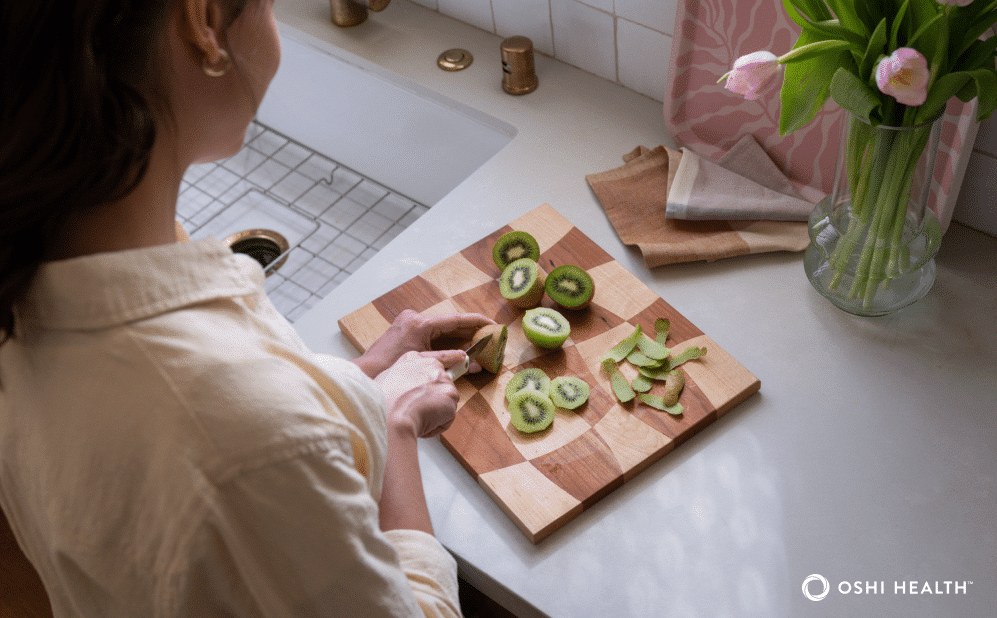
“Fiber is found in all plant foods, so the list of foods one can incorporate into their diet is long,” Voicechovski says. “Some of our favorites here at Oshi include kiwis, which, in addition to their fiber content, contain an enzyme called actinidin thought to be responsible for kiwis’ extra effective laxation benefits.”
Another strategy is to boost the fiber content of meals and snacks you already eat. “I like to recommend chia and flaxseed,” she adds, “as they are easy to add into other foods and pack a lot of fiber in small servings that can make reaching fiber goals easier.” You can easily incorporate these seeds into smoothies, yogurt, oatmeal, and more.
Your morning cup of joe can also get things moving. “Another trick we keep up our sleeve is coffee,” Voicechovski says. “Pairing coffee with a fiber-rich breakfast can be a really effective way to stimulate motility and promote regularity during the time of day our bodies are already most primed to have a bowel movement.” Motility is the movement of food and waste through your digestive tract. It’s a key factor in stimulating a number two.
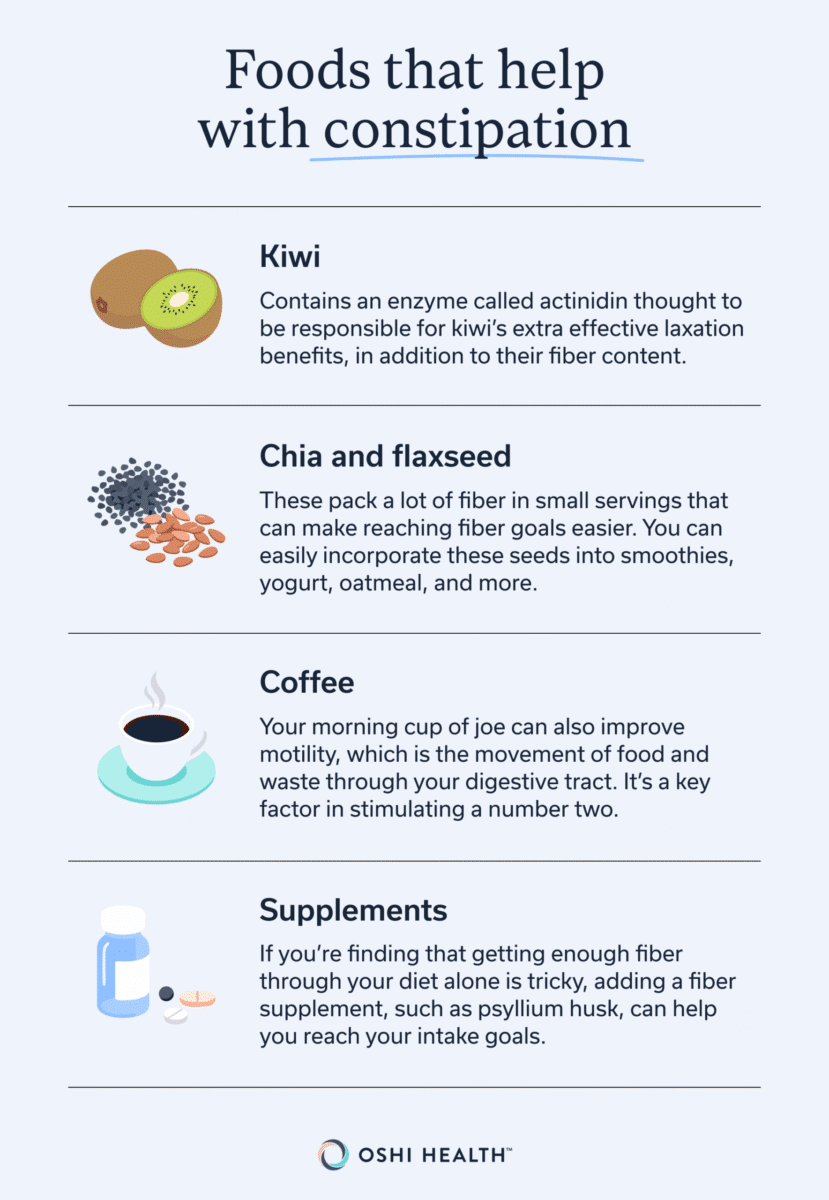
Finally, if you’re finding that getting enough fiber through your diet alone is tricky, adding a fiber supplement, such as psyllium husk, can help you reach your intake goals.
Foods to avoid when constipated
Dietary needs, sensitivities, and preferences are highly individual. So GI experts typically don’t provide a list of off-limit foods for constipation.
“I’m spending more of my time focusing on what we’re adding in rather than what we’re subtracting,” Voicechovski says. “For some people, foods like dairy and large portions of animal protein might worsen constipation.”
One way to find out whether any foods are triggering for you is to keep a food diary for a week or so. Note what you eat and drink, and when, and keep track of your bowel movements and any symptoms.
You might notice a pattern or a correlation between foods that tend to worsen your constipation. Likewise, you might notice foods or meals that tend to keep you more regular. Then you can adjust your diet accordingly.
You might also find that working with a registered dietitian is helpful. If so, your food and symptom diary can be a big help in identifying constipation connections.
When diet might not be the whole story
Constipation is complicated. It’s usually not brought on by diet alone. Your activity level, mental health status, gut-brain connection, and more can all play a role. Understanding what causes constipation might help you identify what’s going on in your unique situation.
First, constipation falls into three categories:
-
Functional: You have infrequent and difficult bowel movements that have no structural cause. Instead, various non-structural factors may be contributing, such as miscommunication between the gut and brain.
-
Chronic idiopathic: You have irregular and difficult bowel movements, but with no evident underlying factors or causes.
-
Secondary constipation: You experience constipation from specific causes, such as medications, underlying conditions, dietary factors, and more.
Next, the causes of constipation also involve categories:
-
Primary or idiopathic: This type of constipation, where the cause is unknown and not a symptom of another disease, includes three categories.
-
Normal-transit constipation: Stool moves through the colon at a normal rate, but you still experience bowel movement trouble. This is often a sign of disrupted gut-brain communication.
-
Slow-transit constipation: Stool moves through the colon at a slower-than-normal rate.
-
Pelvic floor dysfunction: The pelvic floor muscles do not work correctly because of pregnancy or childbirth, obesity, pelvic surgery, or injury, etc.
-
Dietary: Inadequate fiber or fluid intake can cause constipation (which we’ve already covered).
-
Anatomical: Structural causes (including hemorrhoids, a narrow anal canal, a tumor, etc.) can lead to constipation. Even a retroverted or incarcerated uterus can be a factor.
-
Abnormal musculature: Some underlying conditions or congenital abnormalities that affect abdominal muscles can contribute to constipation, including Down syndrome, muscular dystrophy, gastroschisis, and more.
-
Neurological: Neurological conditions (including Parkinson’s disease and multiple sclerosis) and abnormalities in the neurological structure of the intestines can also lead to difficulty with bowel movements.
-
Medications: Constipation can be a side effect of a medication or a recreational drug.
-
Metabolic or endocrine: Some metabolic or endocrine disorders, including diabetes, can contribute to constipation.
-
Miscellaneous: Other causes of constipation get lumped into the miscellaneous category and include celiac disease, inflammatory bowel disease (IBD), cystic fibrosis, and more.
What helps with constipation beyond food?
Because so many factors can impact your motility, you might be getting plenty of fluids and fiber and still experience constipation. So what else can be done to help relieve it?
“I try to identify other potential factors and consider which of them may be modifiable,” Voicechovski says. “A few potential factors include things such as medication side effects and activity levels.”

She adds, “There may be situations where a medication is nonnegotiable, but perhaps there’s an opportunity to incorporate more movement. Considering and addressing as many factors as possible often leads to the greatest success when tackling constipation.”
The following are additional strategies that can help address constipation.
Engage in physical activity
When you’re constipated, you understandably might feel like curling up in a ball on the couch until you get the urge to go. But movement helps stimulate your gut. If you’re targeting immediate constipation, try walking around the block or taking a longer stroll. Stretching can also help.
Overall, aim for 150 minutes of moderate-intensity or 75 minutes of vigorous-intensity activity per week to maintain more regularity.
Change your toileting routine or posture
Simple changes, such as allowing more time to use the bathroom when you usually have a bowel movement (likely in the morning), can also help.
Keep in mind that the way humans sit on a toilet can also make pooping a bit more difficult. It’s a departure from how our ancient ancestors used to squat. You could try adding a defecation postural modification device that puts you in a squatting position.
Manage mental health
Stress, anxiety, and inadequate sleep can all contribute to constipation. Focusing on these aspects and treating any underlying mental health conditions may help keep you more regular.
Improve gut-brain communication
Conditions such as irritable bowel syndrome (IBS) are often rooted in disrupted gut-brain interaction. Working with a gut-brain specialist can help improve this communication.
Consider supplements
Some supplements, such as magnesium, can help draw water into the bowel for more regularity. A provider can recommend which type and how much to take based on your unique needs.
Try over-the-counter solutions
When constipation strikes, and you need relief in the short term, you might need to turn to OTC options, such as stool softeners or osmotic laxatives. Some laxatives are stimulants, however.
Stimulant laxatives should only be used sparingly so as to avoid dependence. Again, consulting a provider on what to use, when, and how often is a great idea.
Ask your doctor about prescription medications
In some cases, you may need a prescription, especially if you have IBS.
When to seek care for constipation
If you battle constipation more regularly than you feel regular, don’t hesitate to reach out to a knowledgeable GI provider. That’s what they’re there for. They can evaluate your symptoms, medical history, and more. And they can formulate a treatment plan to help you find relief. Some instances warrant seeking immediate medical attention, however.
Don’t wait to seek care if you notice the following:
-
Severe abdominal pain
-
Blood in your stool
-
Constipation lasting weeks
-
Unexplained persistent changes in bowel habits
-
Inability or difficulty passing gas
-
Unexplained weight or appetite loss with constipation
-
Vomiting with constipation
-
Feeling a mass in your abdomen
-
Having to use your fingers to extract feces
-
Using an enema or suppository and not being able to evacuate it
Working with an Oshi Health provider
Since constipation can be caused by many factors, including issues where the gut and brain are having trouble communicating, you may benefit from coordinated, multidisciplinary support from a team of experts in gut-brain therapy, like those at Oshi Health.
Your care team might include a GI provider (a nurse practitioner or physician associate), a GI registered dietitian, and/or a gut-brain specialist or psychologist, all overseen by board-certified gastroenterologists. They collaborate to help you repair your gut-brain connection to soothe and manage GI conditions and symptoms.
Personalized GI care starts here
Our GI providers, registered dietitians, and gut-brain specialists work together to identify your triggers and deliver coordinated, comprehensive care, all in one place.









Key takeaways
-
The best dietary strategies to address constipation include drinking enough fluids and eating enough fiber-rich foods.
-
But dietary changes alone may not be enough to address constipation.
-
How to get rid of constipation will depend on the underlying cause and your unique circumstances.
-
Seek treatment with a GI provider, such as the specialists at Oshi Health, if you are experiencing chronic constipation or frequent bouts.
FAQ
-
Taking an over-the-counter osmotic laxative, such as magnesium citrate, is one of the fastest ways to address constipation. But while OTC medications are helpful for immediate relief, they won’t address the underlying cause of your constipation long-term.
-
Incorporating more fluids and fiber-rich foods can help with constipation. One of the best foods that can help you find relief is the kiwi fruit, which contains an enzyme that has a laxative effect.
-
Adding more fiber too fast or without proper hydration can worsen constipation and bloating. Getting up and moving around won’t increase bloating and could help stimulate a number two. You can also try gently massaging your abdomen or downing a cup of coffee. Add more fiber slowly over time and pair it with additional fluids to help improve regularity.
Oshi is your partner in digestive health
Feel like your digestive concerns are running your life? You’re not alone—and we’re here to help you find lasting relief.
Oshi Health GI providers, gut-brain specialists, and registered dietitians work together to address your symptoms and find solutions that actually work for you.
Whether you’re dealing with chronic digestive issues or unpredictable symptom flare-ups, our GI specialists deliver:
✔ Personalized care plans tailored to your lifestyle
✔ Science-backed strategies to calm your gut
✔ Compassionate, whole-person care
✔ And so much more!
Ready to take control of your gut health?