

If you’ve heard a lot about prebiotics and probiotics but aren’t quite sure what they actually do, you’re in the right place. Here’s a look at the best prebiotics and the best probiotics for women, which typically come from food, as well as insight into when to consider a supplement.
Think of an iconic duo. Whether Mario and Luigi, Batman and Robin, peanut butter and jelly, or some other pairing popped up, we can all probably think of two characters or foods that work better together. One particularly important duo for your gut health? Prebiotics and probiotics.
Probiotics are the beneficial bacterial strains that colonize your gut, and prebiotics are like the fertilizer, providing the food source those bacteria need to grow. When working together, the two support gut health, mental health, and vaginal health, making them an important component for our overall health.
Both are available in supplement form, though the best probiotics for women (and the best prebiotics for women) usually come from your plate. Continue reading to learn more about this dynamic duo, how to get enough of each, and when to consider supplementation.
What probiotics and prebiotics do in the gut
Before we get ahead of ourselves, what are the differences between prebiotics and probiotics? Spoiler alert: There is a lot more to it than just the spelling difference. Both pre- and probiotics for women support the gut microbiome, which is the complex community of bacteria, fungi, and other organisms that live in your digestive tract. The gut microbiome contains over 400 bacterial species, some of which are beneficial to our health, while others are neutral or even harmful.
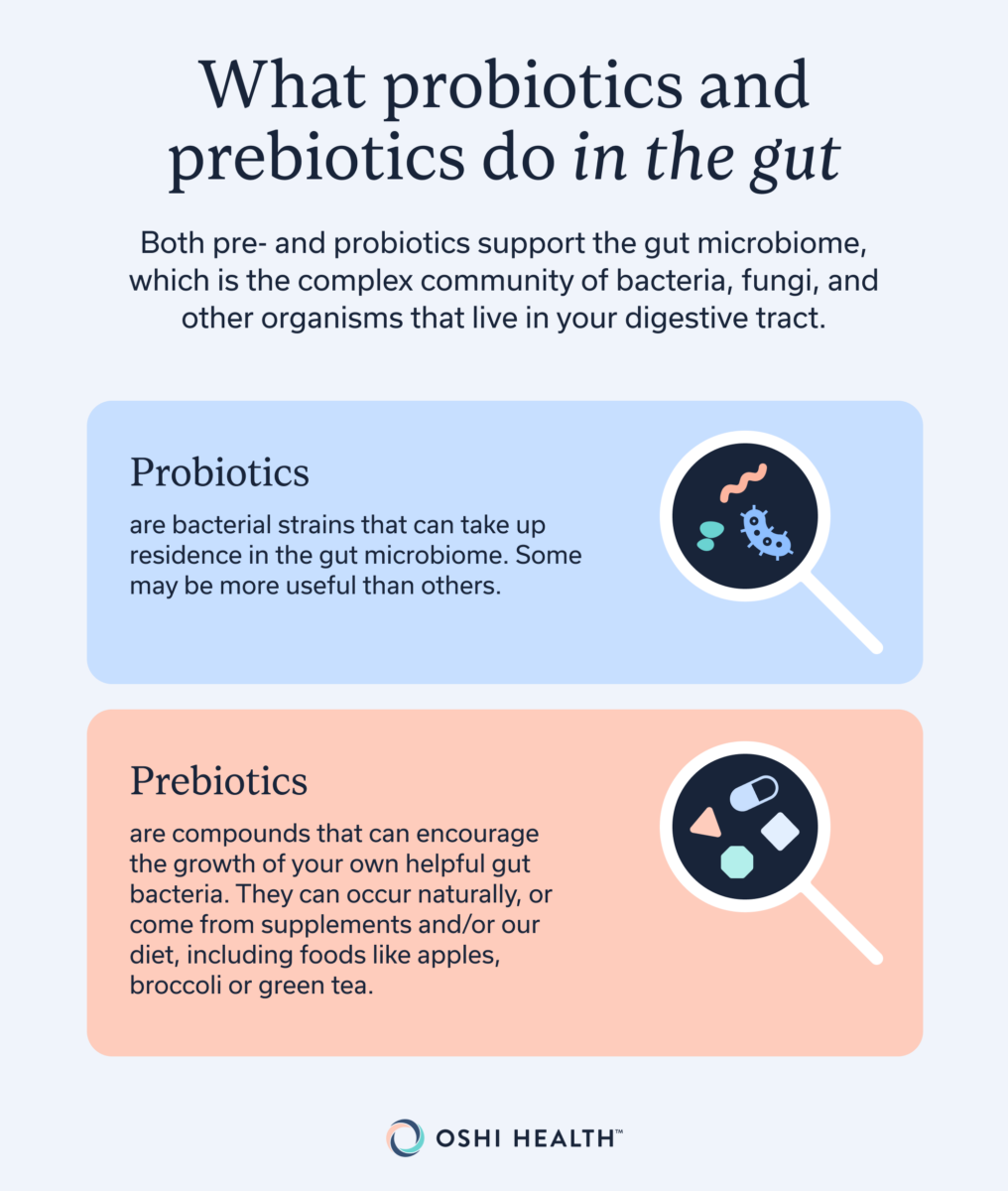
Probiotics are bacterial strains that can take up residence in the gut microbiome. They might be beneficial to overall health, though it’s important to point out that probiotics refer to many different strains and types. Some may be more useful than others, which we’ll get into more below.
Prebiotics, meanwhile, “are the compounds found in foods and supplement form that can encourage the growth of your own helpful gut bacteria,” says Ashley Hurst, MS, RD, LD, a registered dietitian specializing in inflammatory bowel disease (IBD), “They are a source of food for helpful gut bacteria.” These beneficial gut bacteria could occur naturally or could come from our diet.
Health benefits of pre and probiotics for women
Perhaps the most obvious benefit of prebiotics and probiotics is that they contribute to gut health. Some strains of probiotics may even reduce the risk of certain GI conditions, including Crohn’s disease and acute diarrhea.
Meanwhile, prebiotics may help facilitate smooth bowel function and increase GI comfort, especially for people with conditions that interfere with the digestive process, such as irritable bowel syndrome (IBS). “Prebiotics help to fuel our helpful gut bacteria, which ultimately help us in creating more SCFAs (short chain fatty acids) like butyrate, a key marker of gut health,” explains Hurst.
There is emerging evidence that both may help reduce overall symptom frequency and severity for many GI conditions, including IBS and GERD. Since conditions like IBS disproportionately affect those who menstruate, prebiotics and probiotics may be especially important for women’s gut health.
Beyond gut health: Other benefits for people who menstruate
A happy gut, which prebiotics and probiotics promote, leads to many other health benefits:
- Enhanced mental health: Have you ever felt butterflies in your stomach when nervous? That’s thanks to the gut-brain connection, which is the idea that mental health impacts gut health and vice versa. In clinical studies, pro and prebiotics have reduced symptoms of anxiety and depression. They may lower stress for people who menstruate as well.
- Fewer primary dysmenorrhea symptoms: Primary dysmenorrhea (PD), the medical term for period cramps, causes pain and negatively impacts quality of life. In a 2025 study, increasing probiotic intake, when combined with exercise, reduced PD pain, potentially due in part to how probiotics improve pain response. More research is required to confirm this finding, but it’s another potential benefit.
- Improved pain response: Prebiotics and probiotics may reduce inflammation in the gut and throughout the body, which may help improve pain responses.
- Improved vaginal health: The gut isn’t the only body part with a microbiome full of live bacteria. The vagina has a microbiome, too. Research suggests a healthy balance of probiotics in the vagina may reduce the chance of yeast infections, urinary tract infections, and bacterial vaginosis.
- Potential menopause symptom relief: In a few emerging studies, a diet high in prebiotics and probiotics reduced menopause-related dysbiosis (an imbalance in gut and vaginal microbiomes). Prebiotics may also help with calcium absorption, offsetting the increased risk of osteoporosis during and after menopause.
- Stronger immune functioning: Butyrate and other SCFAs aren’t just a marker of gut health, says Hurst. They also play a role in strengthening the immune function.
- Might influence autoimmune conditions: Prebiotics and probiotics may even help prevent autoimmune conditions, such as Rheumatoid arthritis and Sjogren’s disease, and reduce the symptoms of these conditions, though studies with human participants on this potential benefit are limited. That said, people who menstruate have a four times higher chance of getting an autoimmune condition, meaning this could be a major benefit if confirmed in future clinical trials.
Best probiotics for women: what the evidence actually shows
“When used the right way, probiotics can be an incredible tool,” says Hurst. For most of us, “the right way” includes adding more probiotics to our plate. In some cases, supplements may be recommended.
Foods with probiotics
Probiotics come in various strains, and one of the best ways to get a good mix of strains is to incorporate foods with probiotics into your weekly meal plan.
Good probiotics for women and people of all genders include:
- Balsamic vinegar
- Fermented pickles
- Fermented olives
- Fermented onions
- Kefir
- Kimchi
- Kombucha
- Lassi
- Miso
- Sauerkraut
- Some cottage cheeses
- Some types of fermented beers
- Tempeh
- Yogurt
When purchasing foods with probiotics, double-check that they contain live cultures. Yogurt, for example, may not contain probiotics if it’s frozen or has a long shelf-life. Usually, live, active strains of probiotics will be advertised or listed on the food label.
Probiotic supplements
Supplements may be helpful for some individuals, including those who:
- Experience chronic GI symptoms that aren’t getting better with other gut-friendly habits
- Don’t get enough probiotics from their diet
- Recently took an antibiotic, which can negatively reshape the gut microbiome and may require a short course of probiotics to repopulate the gut with beneficial bacteria
When a probiotic supplement is recommended, you don’t just want to go out and buy any old supplement–even one that claims to be a women’s probiotic. Instead, pay attention to what strains a supplement contains, and other quality markers–and a healthcare provider can help decide what strain to be on the lookout for.
“Some strains can be helpful for gut symptoms like bloating, and others can even be helpful in inflammatory conditions like Crohn’s and Ulcerative Colitis,” says Hurst, “Other strains are helpful for women’s health, like [combating] bacterial vaginosis. It’s crucial to match the right strain with what you are trying to treat.”
Hurst adds that it’s important to choose a product that lists a specific strain name, not just the benefits or a bacterial species. For example, Lactobacillus plantarum 299v is the name of a strain, but Lactobacillus plantarum is a species. Within that species are various strains, which may not all offer the same benefits.
A GI provider, such as a registered dietitian, nurse practitioner with GI training, or a gastroenterologist, can help someone find the right strain for their needs.
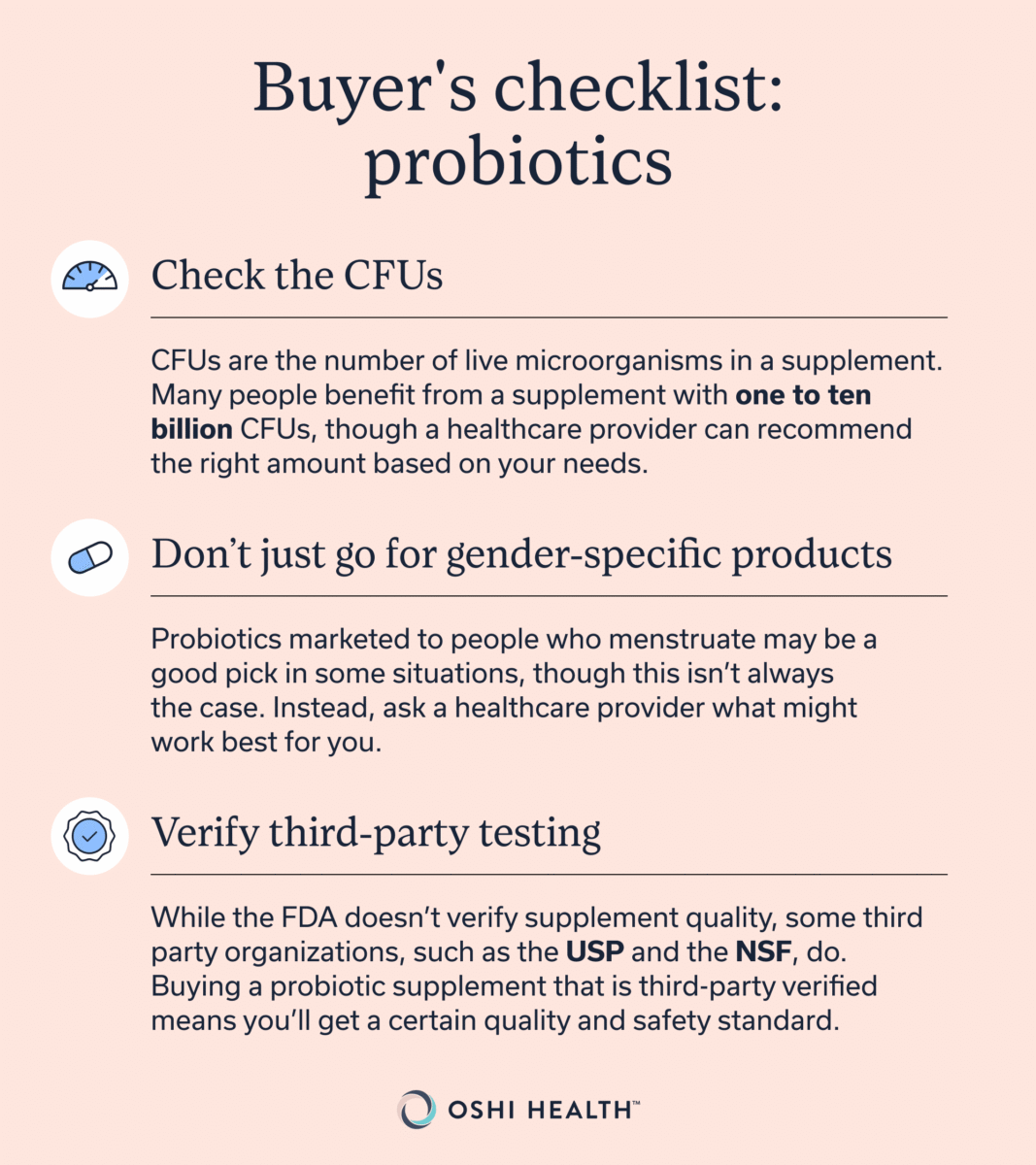
Since supplements are not regulated by the FDA in the same way as medication, you’ll also want to do a little groundwork to verify a product’s quality:
- Check the CFUs: Colony-forming units (CFUs) are the number of live microorganisms in a supplement. Many people benefit from a supplement with one to ten billion CFUs, though a healthcare provider can recommend the right amount based on your needs.
- Don’t just go for gender-specific products: Probiotics marketed to people who menstruate may be a good pick in some situations, though this isn’t always the case. Instead, ask a healthcare provider what might work best for you.
- Verify third-party testing: While the FDA doesn’t verify supplement quality, some third-party organizations, such as the United States Pharmacopeia (USP) and the National Sanitation Foundation (NSF), do. Buying a probiotic supplement that is third-party verified means you’ll get a certain quality and safety standard.
- Best prebiotics for women and when to consider supplements
Prebiotics are part of a balanced diet, meaning most of us can get enough of these nutrients from the food on our plate. Yet similar to probiotics, there are select cases when a prebiotic supplement may be a good idea.
Foods with prebiotics
“I wish more people knew how important prebiotics are–and how accessible they are,” says Hurst. Popular foods with prebiotics include:
- Apples
- Artichokes
- Asparagus
- Bannans
- Blueberries
- Broccoli
- Cabbage
- Chocolate
- Garlic
- Leafy greens, like kale or spinach
- Legumes (lentils, beans, chickpeas, etc.)
- Matcha and green tea
- Oats
- Onions
- Tomatoes
- Zucchini
Certain processed foods may also claim to have prebiotics. These include some cookies, cereal bars, granolas, and more. If these products contain prebiotics, they’ll usually list one of the following on their ingredients list:
- Chicory fiber
- Fructooligosaccharides
- Galactooligosaccharides
- Inulin
- Oligofructose
Note, however, that many of these prebiotic fibers added to products result in GI distress for many people . Generally speaking, it’s better to get prebiotics from whole foods over processed ones, which may contain added sugars that aren’t beneficial for gut health.
Prebiotic supplements
Similar to probiotics, a prebiotic supplement may be recommended if someone doesn’t get enough prebiotics from diet alone or if they have chronic GI symptoms that aren’t responding to other gut-friendly habits.
Sometimes, a GI provider might recommend a synbiotic, a supplement that contains both prebiotics and probiotics. In a synbiotic, the prebiotics might help improve the chance of the probiotic strains surviving while also promoting the growth of natural beneficial bacteria that are already in the gut.
Tips to add probiotics and prebiotics to your plate
When looking to add prebiotics and probiotics to your diet, remember that slow and steady wins the race. Gradual change is often sustainable, while overhauling everything you eat is not.
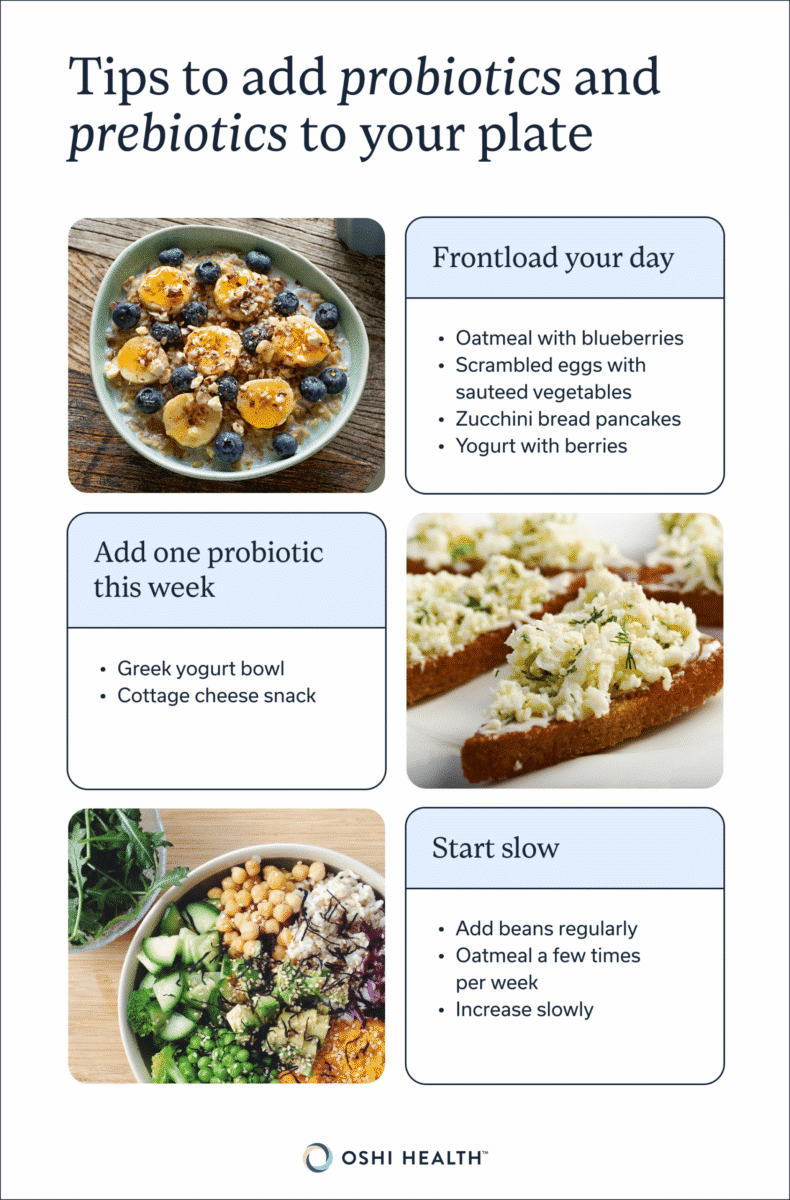
Here are some small ways to start adding both to your plate in a way that complements your current eating habits and won’t cause unintended GI effects:
- Frontload your day with a prebiotic breakfast: “I love suggesting oatmeal with blueberries to people,” says Hurst, “It’s something you can do first thing in the morning to set yourself up with a healthy dose of prebiotics.” Other breakfast options might be to saute vegetables with scrambled eggs, zucchini bread pancakes, or yogurt with berries (which offers prebiotics and probiotics).
- Pick one small way to add probiotics to your plate this week: Admittedly, prebiotics are a bit easier to eat. Probiotics can be trickier, which is why it’s a good idea to choose one small way to get more this week, such as swapping a dessert for a Greek yogurt bowl or snacking on cottage cheese with probiotics the next time you need a 3 pm pick-me-up.
- Start slow: “Adding in beans regularly and oatmeal a few times a week can be very helpful. A little goes a long way,” says Hurst, “It’s also important to adopt an attitude of going’low and slow’ with adding prebiotics and probiotics.”
When probiotics and prebiotics may help and when they may not
Probiotics and prebiotics are part of a balanced diet, but they aren’t miracle cures. Instead, they support a healthy lifestyle or might be used as one piece of a treatment plan if recommended by a healthcare provider.
While there is some evidence that prebiotics and probiotics help with specific GI conditions, such as IBS and acid reflux/GERD, current research does not suggest they are a medication replacement or cure.
Plus, results vary based on the individual, the sources of pro and prebiotics, and other factors. If experiencing chronic or severe symptoms, get support from a GI provider, which will likely be more effective than upping your prebiotic and probiotic intake on your own.
When gut symptoms need evaluation
If GI symptoms are the reason you’re looking into pre- and probiotics, it may be time to make an appointment with a GI provider, such as the team at Oshi Health. Concerning symptoms may include:
- Abdominal pain that’s severe or comes and goes often
- Blood in stool or rectal bleeding
- Burning sensation in the chest that keeps returning
- Chronic constipation
- Chronic diarrhea
- Excess gas
- Frequent bloating
- Increasingly urgent bowel movements
- Indigestion
- Nausea and/or vomiting
- Pain before or during bowel movements
- Trouble swallowing
If you’re experiencing debilitating symptoms, such as a high fever, abdominal pain that’s so severe it’s hard to get out of bed, or vomiting to the point where you can’t keep food down, seek immediate medical care.






Key takeaways
- For people who menstruate, getting enough prebiotics and probiotics may support gut health, vaginal health, mental health, and more.
- The best prebiotics and probiotics for women often come from diet. Prebiotics are found in an array of foods, including green vegetables, legumes, and berries. Probiotics are typically found in select fermented foods, such as yogurt, miso, and kefir.
- In some cases, a GI provider may recommend a prebiotic or probiotic supplement. Unless recommended, it’s better to try to get enough of each from your diet.
- To learn more about how to best implement probiotics and prebiotics, consider working with a GI provider, such as the team at Oshi Health.
Frequently asked questions (FAQs)
-
The best probiotics for women are typically found in food as opposed to supplements. Foods with probiotics include yogurt, some types of cottage cheese, and many fermented foods. If recommended by a GI provider, a probiotic supplement might be appropriate, and a provider may recommend a specific probiotic strain based on someone’s symptoms.
-
Prebiotics and probiotics are part of a balanced diet. Both support good gut health and can be found in many foods. While most people can get enough prebiotics and probiotics from diet alone, a GI provider may recommend a supplement for one or both in some situations.
-
The best prebiotics and probiotics for women with bloating are often found in a balanced diet. Probiotics are found in balsamic vinegar, yogurt, fermented products, and miso, among other foods. Popular foods with prebiotics include many green vegetables, tomatoes, legumes, onions, and garlic.
-
People with IBS symptoms may explore probiotics from foods like miso, yogurt, and kefir. If IBS symptoms are not getting better with dietary changes and a GI provider recommends a probiotic supplement, then it may be an appropriate measure to help reduce symptoms.
-
Aim to get prebiotics from food before supplements. Foods with prebiotics are natural sources that often contain other essential nutrients for overall health. To get started, consider adding apples, asparagus, bananas, berries, or green vegetables to your next meal, as all are excellent sources of prebiotics.
Take charge of your gut health with expert dietary support
Your nutrition plays a powerful role in your digestive well-being. But figuring out what to eat can be overwhelming, especially if you’re dealing with chronic or occasional GI symptoms.
Oshi’s registered dietitians have specialized knowledge in all GI symptoms and conditions. They work closely with you to:
✔ Identify foods that help—not hurt—your gut
✔ Develop personalized meal plans that fit your lifestyle
✔ Guide you through small, sustainable changes for symptom relief
✔ And so much more!
Ready to make mealtimes less stressful and feel in control again?