

Diverticulosis occurs when small pouches develop in your intestinal wall. Diverticulitis is when one or more pouches become inflamed or infected, leading to a flare. During diverticulitis flares, you may need to make some dietary changes until your symptoms resolve.
Your digestive tract is like a superhighway winding from your mouth to your anus. It sends food and waste on a long journey. Just as the actual roadways in your city can develop issues, so can your digestive system.
Diverticulosis and diverticulitis are two related conditions that may impact your digestive superhighway. Diverticulosis occurs when small pouches called diverticula form in the walls of your intestines. They develop when the intestinal lining pushes into weak spots in the outer wall because of pressure from food and waste.
In keeping with our roadway analogy, think of diverticulosis as your digestive tract having some potholes. These potholes may not cause any trouble, and you might not even know they’re there. You can generally eat your usual diet with diverticulosis. But what if those potholes do cause a problem? Enter diverticulitis.
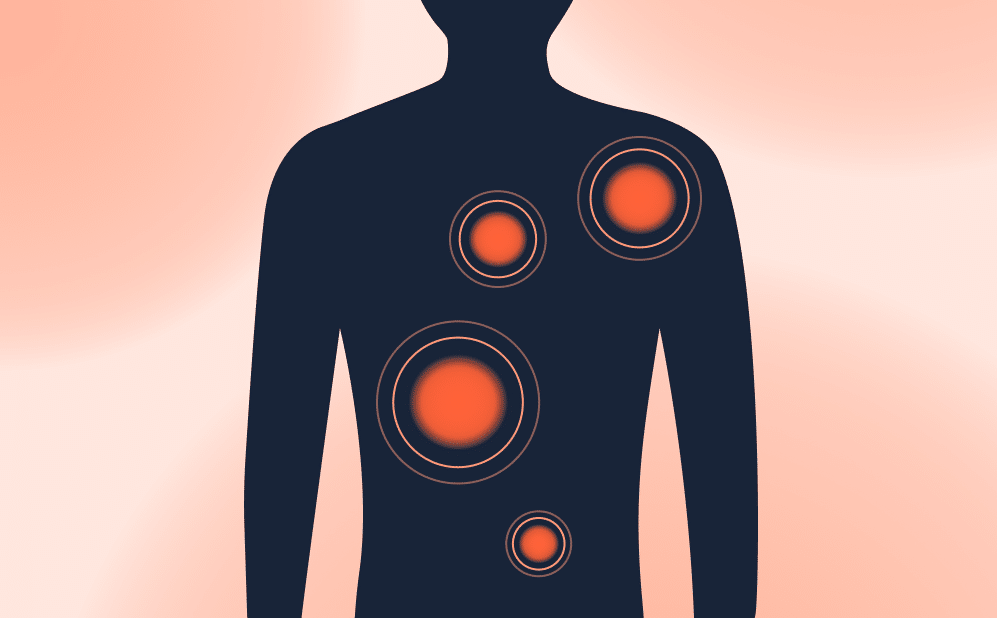
Diverticulitis occurs when one or more of the diverticula become inflamed, often due to or involving a bacterial infection, which may cause pain and other symptoms. During a diverticulitis flare, you may need to alter your diet until your symptoms resolve.
So what seven foods should you avoid with diverticulitis? And what should you eat instead?
Why certain foods can feel worse during a flare
Certain foods can be troublemakers during a flare and can lead to further irritation. Keep in mind that you don’t have to forgo these foods long term, just while the flare runs its course if your clinician recommends dietary restriction.
“Someone may need to temporarily change their diet during a diverticulitis flare because their intestinal wall is irritated, inflamed, and sometimes infected,” says Caroline Young, RD, founder of Whole Self Nutrition. “Reducing gastrointestinal (GI) activity by changing your diet during a flare can help support recovery and prevent further GI aggravation.”
The”seven foods to avoid with diverticulitis” list features foods that have a rough texture or that may irritate already sensitive areas.
For example, an inflamed digestive tract may have difficulty managing foods that bulk stool or have a rough texture. Additionally, high-fat or spicy foods may worsen pain, bloating, nausea, or other symptoms.
7 foods to avoid with diverticulitis during a flare
Your best diverticulitis diet will depend on flare type and severity. So be sure to talk to your clinician about what’s recommended for you.
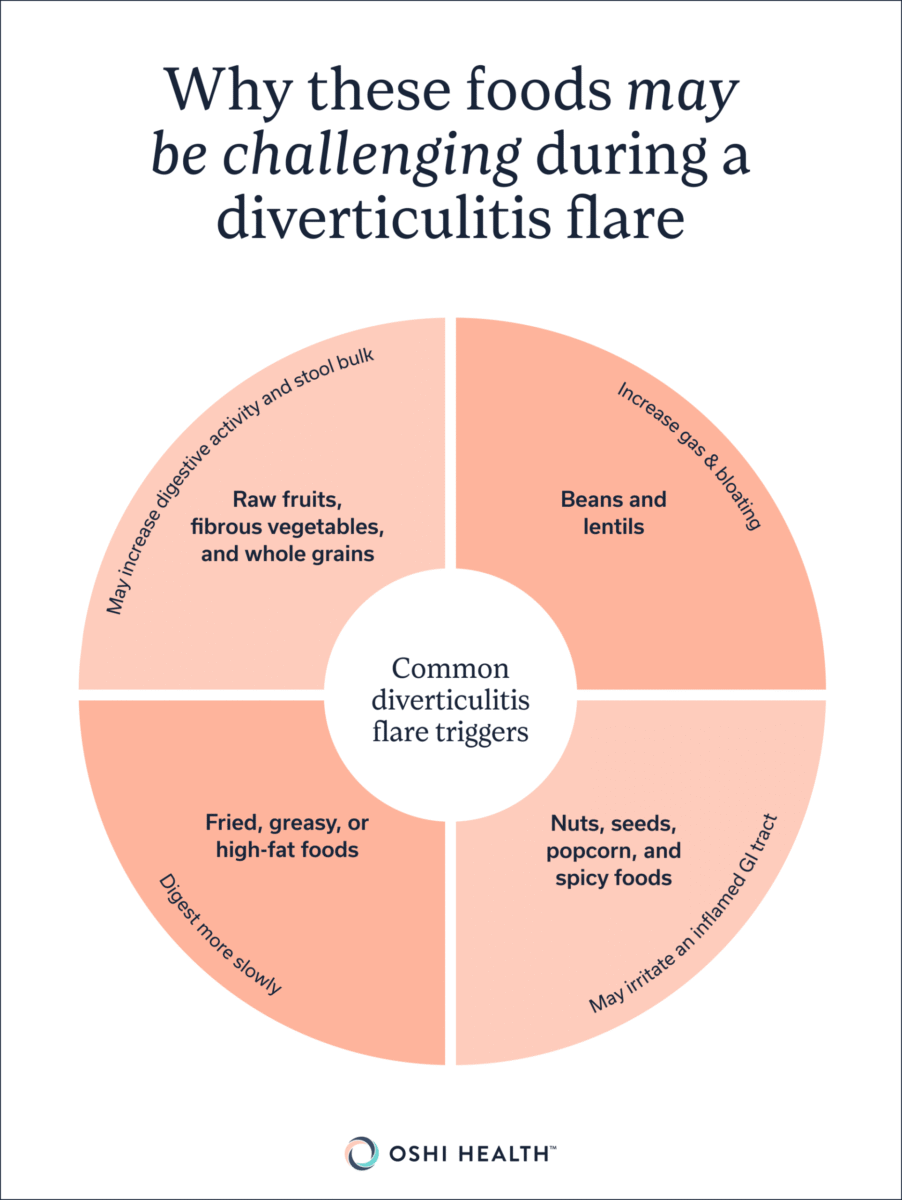
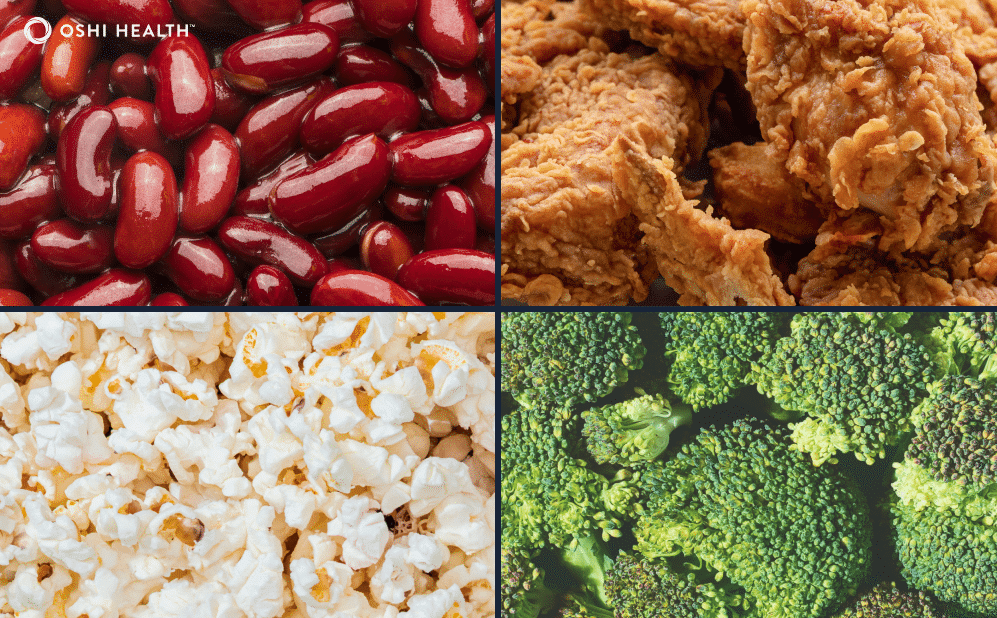
What not to eat with diverticulitis:
-
Beans and lentils are high in fiber, which may cause gas and bloating, leading to additional discomfort during a flare.
-
Fried, greasy, or high-fat foods digest more slowly, which may increase nausea, cramping, or other GI symptoms.
-
Nuts, seeds, and popcorn have a rough texture, which may irritate an already-inflamed GI tract.
-
Raw fruits with skins and seeds bulk stool, which can increase pressure and irritation during a flare.
-
Raw or fibrous vegetables require additional digestive work on an already-stressed GI system.
-
Spicy foods can exacerbate GI symptoms and general irritation.
-
Whole grains retain the bran that bulks stool, which can lead to bloating, gas, and GI discomfort during an active flare.
Are nuts, seeds, and popcorn off-limits forever?
The short answer is no! Nuts and seeds are generally healthy snacks and great additions to smoothies, meals, and more. And popcorn can be a healthy and satisfying nosh, whether you’re watching a movie or just craving a little crunch.
Talk to your clinician, but you likely only need to avoid nuts, seeds, and popcorn during an active flare. Once your flare has resolved, you can reintroduce these items slowly.
If you’re thinking, But I heard I have to avoid these , you’re not wrong. You may have previously read or heard that anyone diagnosed with diverticulosis needs to skip these rough-textured foods.
“Dietary guidance changed,” Young says, “because research found no evidence that nuts, seeds, or popcorn–the foods commonly avoided–increase the risk of diverticulitis.”
In fact, these foods may even do your gut good. “Studies now show these foods can actually be beneficial,” Young explains, “because their fiber content supports healthy digestion, regular bowel movements, and less intestinal pressure. Consuming them as part of a balanced and varied diet may actually help prevent flares.”
Diverticulitis diet: What to eat instead
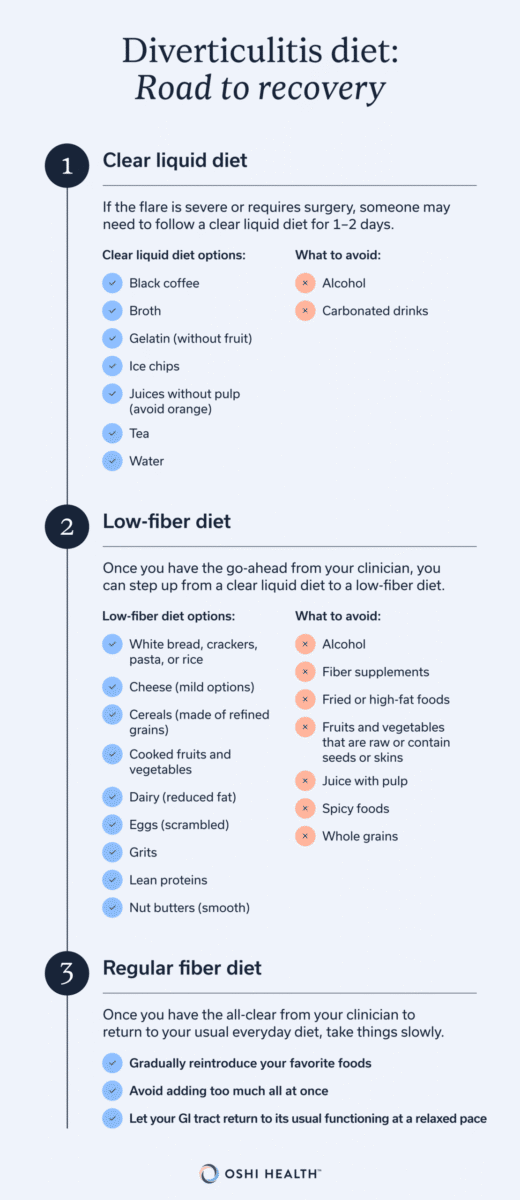
Recovering from a diverticulitis flare may involve taking a stepped-up or staged approach to dietary changes. But which stages you will need will depend on the severity of your flare and what treatment, if any, you require.
“If the flare is severe or requires surgery,” Young says, “someone may need to follow a clear liquid diet for one to two days. After that, a low-fiber diet will likely be recommended until the flare completely resolves.”
Your clinician can guide you on the best approach to your diet, but here are the general stages.
Clear liquid diet
A clear liquid diet gives your GI tract a rest from further irritation and allows it to heal. However, not every flare will require a clear liquid diet as the first step. Check with your provider before making any dietary changes.
Clear liquid diet options:
-
Broth
-
Gelatin (without bits of fruit)
-
Ice chips
-
Juices without pulp (avoid orange)
-
Tea
-
Water
-
Sports drinks
-
Popsicles or Italian ice
-
Clear nutrition drinks (ie Ensure Clear)
What to avoid:
-
Alcohol
Low-fiber diet
Once you have the go-ahead from your clinician, you can step up from a clear liquid diet to a low-fiber diet.
“A flare-up is a great example of when refined grains, like white rice, white bread, and white crackers, are actually the healthier option,” Young says. “Then, usually after several days and antibiotics, it’s safe to resume eating more fibrous foods regularly.”
Low-fiber diet options:
-
Applesauce
-
Bread (white)
-
Canned peaches or pears
-
Cheese (mild options)
-
Cereals (made of refined grains)
-
Cooked fruits and vegetables (without skins or seeds)
-
Crackers (white)
-
Dairy (reduced fat), as long as you are not lactose intolerant
-
Eggs (scrambled)
-
Grits
-
Lean proteins
-
Nut butters (smooth)
-
Pasta (white)
-
Rice (white)
What to avoid:
-
Alcohol
-
Fiber supplements
-
Fried or high-fat foods
-
Fruits and vegetables that are raw or contain seeds or skins
-
Juice with pulp
-
Spicy foods
-
Whole grains
Gradual return to a high-fiber diet
Once you have the all-clear from your clinician to return to your usual everyday diet, take things slowly. Gradually reintroduce your favorite foods.
Try to avoid adding too much all at once. This helps avoid irritation or GI discomfort. Remember that your GI tract has been on a bit of a vacation, getting some much-needed R&R during your flare.
Returning from a dietary”vacation” like the above can feel overwhelming to your digestive system. So go easy on your gut. Let your GI tract return to its usual functioning at a chill pace.
How diverticulitis is diagnosed
Before you alter your diet to address diverticulitis, talking to a GI clinician is a good idea. They can confirm that your symptoms are related to diverticulitis.
Your clinician might use several tools and processes to diagnose you with diverticulosis or diverticulitis. These include:
Medical and family medical history
They may ask you about your underlying conditions, previous procedures, medications, supplements, lifestyle habits, and more. This helps your clinician understand more about your risk factors for diverticulosis. Similarly, scientists have determined that about 50% of individual susceptibility to diverticulosis likely stems from genetic factors. So if someone in your family has diverticulosis, you may also be more at risk for it.
Testing for diverticulitis
No single test alone confirms diverticulitis. Instead, your clinician might perform a physical exam (checking your vital signs, feeling your abdomen, listening to bowel sounds with a stethoscope, or doing a rectal exam with a gloved finger) and/or lab work and imaging (this can help assess whether you have markers of inflammation or infection, both of which could indicate diverticulitis). A stool test can also help determine if you have rectal bleeding or a GI infection, which could indicate diverticulitis.
Imaging tests and procedures may include a computed tomography (CT) scan, magnetic resonance imaging (MRI), ultrasound, barium enema, flexible sigmoidoscopy, or a colonoscopy to help your clinician determine if you have diverticula, which would indicate you have diverticulosis.
Treating diverticulitis
If you have asymptomatic diverticulosis, you may not need any specific treatments. If you develop diverticulitis (a flare), you will likely need some form of treatment.
Seek immediate medical attention if you notice the following”red flag” symptoms:
-
Abdominal or back pain that is sudden and severe
-
Blood in your stool
-
Difficulty or inability to pass gas or stools, which may indicate a bowel obstruction
-
Fecal matter expelled from the vagina, which may indicate a fistula
-
High fever (over 100.4 degrees Fahrenheit) or related chills
-
Perforation, which may present as a sudden sharp pain with abdominal distention and difficulty breathing
-
Unexplained nausea and vomiting
The treatment that is right for you will depend on your specific symptoms, whether you have an infection, how often you’ve had diverticulitis in the past, and more. Many cases of diverticulitis resolve without surgery with conservative options. The dietary changes noted in this article are a great place to start.
If you have an infection, you may need a course of antibiotics to resolve it. Mild cases of uncomplicated diverticulitis can be managed conservatively with bowel rest and no antibiotics. Plus, not all cases of diverticulitis present with an infection.
If you are experiencing pain, your clinician may prescribe a medication or recommend an over-the-counter option to help ease your discomfort.
You may need to be hospitalized so that your doctor can monitor your flare symptoms. Surgical options may be necessary if you’ve had recurrent diverticulitis or experience complications such as a bscess formation or perforation. If you have pus-filled diverticula, for example, your clinician may need to perform percutaneous drainage. They will numb the affected area and use imaging tools to then insert a needle or catheter through the skin into the infected diverticula to drain the pus. Sometimes a drain may need to remain in temporarily.
In other cases, you might be able to remain at home for self-care while keeping in contact with your clinician.
Working with an Oshi Health provider
Since living with diverticulosis can mean experiencing diverticulitis flares, you may benefit from coordinated, multidisciplinary support from a team of experts like those at Oshi Health.
Your care team might include a GI provider (a nurse practitioner or physician associate), a GI registered dietitian, and/or a gut-brain specialist or psychologist, all overseen by board-certified gastroenterologists. They collaborate to help you soothe and manage GI conditions and symptoms.
Key Takeaways
-
Diverticulitis occurs when one or more diverticula (small pouches in your intestines) become inflamed or infected.
-
You may need to temporarily adjust your diet to let your digestive tract rest and heal from a flare.
-
Seek treatment with a GI provider, such as the specialists at Oshi Health, if you are experiencing diverticulitis or frequent flares.
FAQ
-
During a diverticulitis flare, you may need to temporarily avoid beans and lentils, high-fat foods, raw fruits with skins and seeds, raw or fibrous vegetables, spicy foods, whole grains, and nuts, seeds, and popcorn.
-
No, nuts and seeds do not cause diverticulitis attacks. In fact, these foods may help prevent flares. However, during an active flare, you may need to avoid these foods to calm irritation.
-
Dietary changes are just one way to help ease a diverticulitis flare. Whether you require further treatment will depend on whether you have an infection, complications, or severe symptoms. You might need antibiotics or other medications, and in some cases, surgery may be necessary.
Oshi is your partner in digestive health
Feel like your digestive concerns are running your life? You’re not alone—and we’re here to help you find lasting relief.
Oshi Health GI providers, gut-brain specialists, and registered dietitians work together to address your symptoms and find solutions that actually work for you.
Whether you’re dealing with chronic digestive issues or unpredictable symptom flare-ups, our GI specialists deliver:
✔ Personalized care plans tailored to your lifestyle
✔ Science-backed strategies to calm your gut
✔ Compassionate, whole-person care
✔ And so much more!
Ready to take control of your gut health?