


Your vomit can present a rainbow of colors, whether from food, drink, bile, or stomach acid. Not all shades are concerning, but some colors indicate that you should talk to a clinician to investigate what’s going on.
One of the more unpleasant side effects of not feeling well is throwing up. You might need to vomit for any number of reasons, whether from motion sickness, a viral or bacterial illness, overindulgence in alcohol, an underlying condition, or something else.
Not to be gross, but I once threw up red chunks during a nausea-inducing migraine attack. I was alarmed by the red chunks at first and racked my brain to figure out what they could be. I was weirdly worried that I had thrown up a part of my gastrointestinal (GI) tract!
Then it dawned on me in a palm-to-forehead moment. I’d eaten green olives as a snack earlier in the day. The red chunks were the pimentos that the olives had been stuffed with. You can imagine my relief at solving the mystery.
Like me, after you throw up, you might see your vomit in the toilet or another receptacle and wonder about its appearance. What does the color of your vomit mean? Vomit color can range from clear to black. But which colors warrant medical attention? Let’s unpack it and answer these questions.
What does the color of your vomit mean?
The color of your vomit can offer some clues about what you just threw up, whether food, bile, stomach acid, mucus, blood, or a combination. The most concerning of these, of course, is blood, which warrants talking to a doctor right away.
Blood might appear pink, red, brown, or black, or it might look like coffee grounds. But context also matters. For example, if you ate beets or drank cranberry juice, your vomit might have a pink or red tinge. We explore the topic of blood in vomit in-depth below. But first, what do the other potential colors mean?
Clear, white, foamy, or slimy vomit usually consists of saliva or mucus. These shades and textures generally indicate that you have a mostly empty stomach.
Other shades, including yellow, green, and orange, usually signal that you have bile in your vomit, which is generally normal, though it can also indicate inflammation or another concern. The bile may also be mixed with food, which generally leads to an orange or brown appearance.
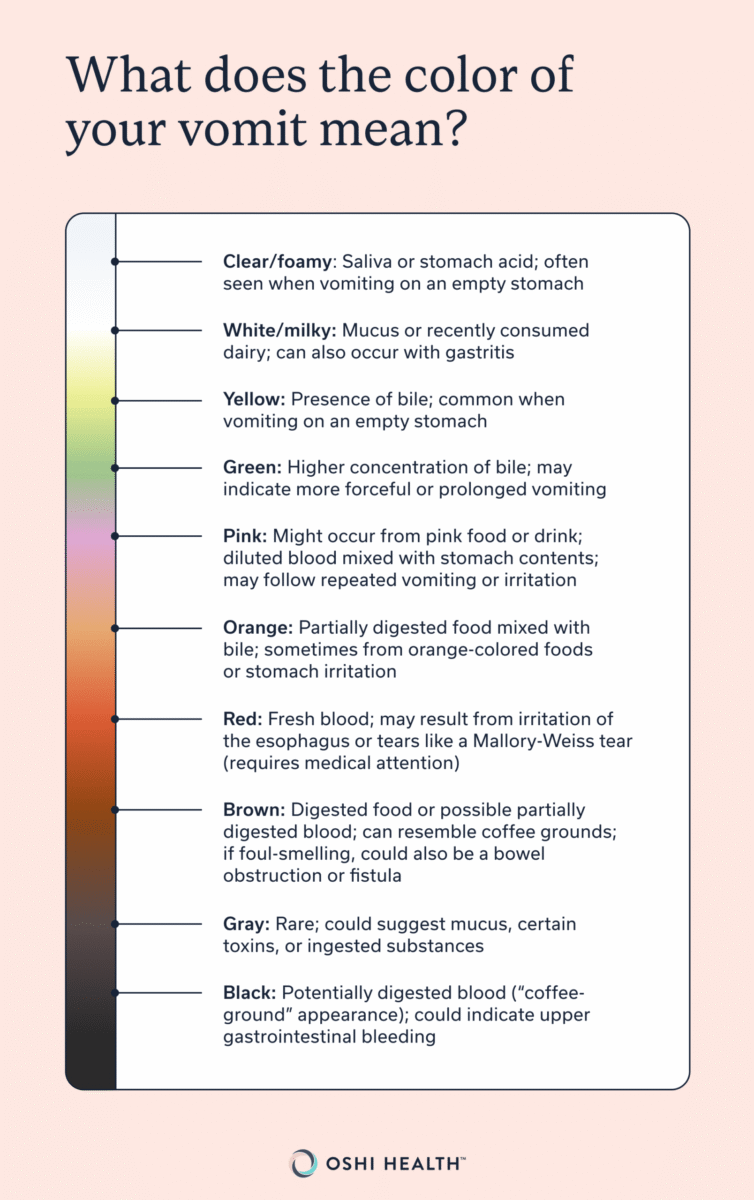
The following chart provides a quick summary.
Vomit color chart: What different colors may point to:
| Vomit color (light to dark) | What the color might tell you | What to do |
| Clear/foamy | Saliva or stomach acid; often seen when vomiting on an empty stomach | Wait and see: Might require medical attention with prolonged vomiting |
| White/milky | Mucus or recently consumed dairy; can also occur with gastritis | Wait and see: Might require medical attention with prolonged vomiting or flu-like symptoms (fever, aches, etc.) |
| Yellow | Presence of bile; common when vomiting on an empty stomach | Wait and see: Might require medical attention if ongoing |
| Green | Higher concentration of bile; may indicate more forceful or prolonged vomiting | Wait and see: Might require medical attention if bright-green, or ongoing.
Seek emergency medical attention if you’ve recently had abdominal surgery |
| Pink | Might occur from pink food or drink; diluted blood mixed with stomach contents; may follow repeated vomiting or irritation | Seek urgent medical attention: This is necessary if you suspect blood rather than pink or red foods |
| Orange | Partially digested food mixed with bile; sometimes from orange-colored foods or stomach irritation | Wait and see: This is generally a normal presentation unless vomiting is prolonged, then seek medical attention |
| Red | Fresh blood; may result from irritation of the esophagus or tears like a Mallory-Weiss tear (requires medical attention) | Go to the ER: This is necessary if you suspect blood rather than red foods |
| Brown | Digested food or possible partially digested blood; can resemble coffee grounds; if foul-smelling, could also be a bowel obstruction or fistula | Go to the ER: This is necessary for coffee-ground appearance or foul-smelling vomit |
| Gray | Rare; could suggest mucus, certain toxins, or ingested substances | Wait and see: Seek medical attention if prolonged |
| Black | Potentially digested blood (“coffee-ground” appearance); could indicate upper gastrointestinal bleeding | Go to the ER: This requires immediate medical attention |
What color is bile? And what does throwing up green bile mean?
One of the more common things to show up in your vomit is bile, which may turn your vomit yellow or green. This is called bilious vomiting.
“Bile is a yellow-green fluid produced by the liver and stored in the gallbladder,” says Gabriella McCarty, DNP, a nurse practitioner with Oshi Health. “When vomiting occurs on an empty stomach,” she adds, “bile may reflux into the stomach and be expelled.”
Although a small amount of bile is common in vomit, it can raise a red flag if it continues or is unusually bright green. “This can occur in gastroenteritis or prolonged vomiting,” McCarty says. “If persistent, this may raise concern for small bowel obstruction, gastric outlet obstruction, or post-surgical complications.”
Complications from surgery can occur because of adhesions that cause an obstruction. Adhesions are small bands of scar tissue that can twist, kink, pull, or compress the small bowel.
The small bowel moves digested food and gastric juices from your stomach to your colon. So if adhesions impact the small bowel, digested food and gastric juices may make their way back into the stomach, rather than continuing through the digestive tract. When you vomit because of this backup, the color may contain yellow to bright-green bile.
If you’ve recently had abdominal surgery or you have an underlying gastrointestinal disease, such as inflammatory bowel syndrome (IBD), and you experience vomiting, be sure to talk to your provider right away.
Other causes of bilious vomiting:
-
Bile reflux: You might have regular bile reflux if you’ve experienced damage to the pylorus valve, a band of tissue that separates the stomach from the small intestine and controls the flow of food. Bile reflux can also occur because of a functional GI disorder that affects motility, the rate at which food and waste move through your digestive tract.
-
Gallbladder removal: Sometimes the gallbladder needs to be removed because of gallstones or other issues. Normally, your gallbladder stores bile for later usage. But removal means that bile continuously flows from your liver to your small intestine, which may increase the likelihood of bile reflux and therefore vomiting bile.
-
Heavy alcohol consumption: Alcohol irritates the GI tract, and heavy or rapid consumption can lead to bile reflux.
-
Food poisoning: Repeated vomiting from a foodborne illness eventually empties any remaining food contents from your stomach, which can then lead you to throw up bile.
-
Hyperemesis gravidarum: This is a severe and ongoing form of morning sickness during pregnancy. It can cause bilious vomit.
What color is stomach acid?
Stomach acid is usually clear, white, or off-white, and it may be foamy. Generally, this appearance means you’re vomiting on an empty stomach, and naturally, you might only see gastric juices, mucus, and maybe some bile if your vomit has a yellow tinge.
Any foam is likely a result of air bubbles mixed in the vomit, which is usually a normal occurrence. It can also result from acid reflux or gastroesophageal disease (GERD), which is chronic acid reflux.
If you can’t stop vomiting or you can’t keep fluid down, talk to a healthcare provider right away. Additionally, if you frequently experience acid reflux that leads to vomiting, talking to a clinician is a good idea. They can help you treat and manage your GERD symptoms.
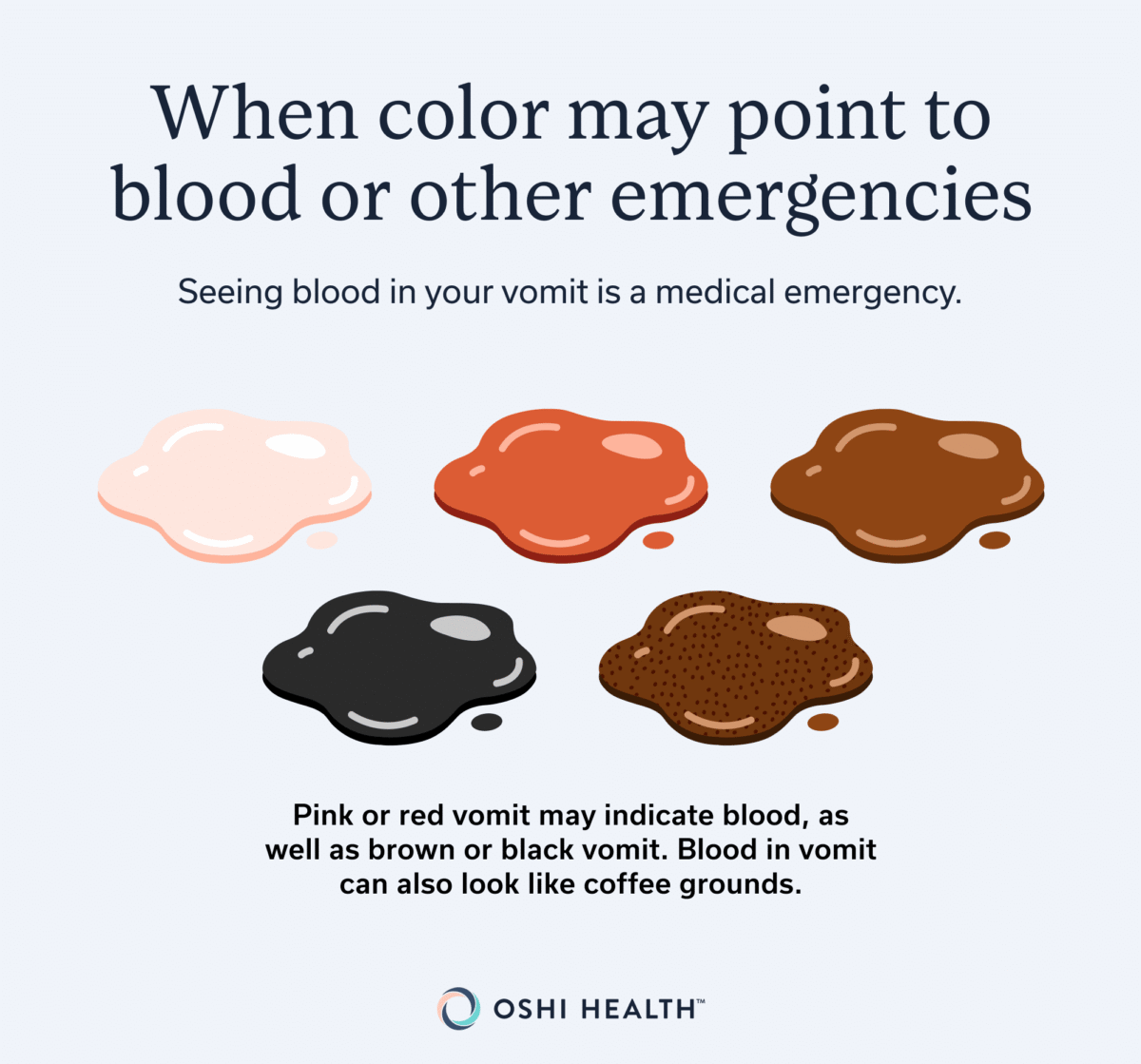
When color may point to blood or other emergencies
Seeing blood in your vomit is a medical emergency. Pink or red vomit may indicate blood. But so can brown or black vomit. Sometimes blood in vomit looks like coffee grounds. Causes of bloody vomit include peptic ulcer disease, severe reflux damage to the esophagus, or ruptured blood vessels in the esophagus or stomach in a patient with advanced liver damage.
McCarty says that the coffee-ground appearance of blood in vomit can result from stomach acid exposure, whereas bright red blood hasn’t yet been exposed to acid.
“Severe vomiting can lead to Mallory-Weiss tears, which can produce vomit that has streaks of blood in it,” she adds. Mallory-Weiss tears are lacerations in the mucus membrane where the lower esophagus (food pipe) meets the upper stomach.” These tears can also occur from severe coughing or dry-heaving, retching, but without producing vomit.
If you notice blood in your vomit, seek medical attention right away. But keep in mind that food might also be to blame.
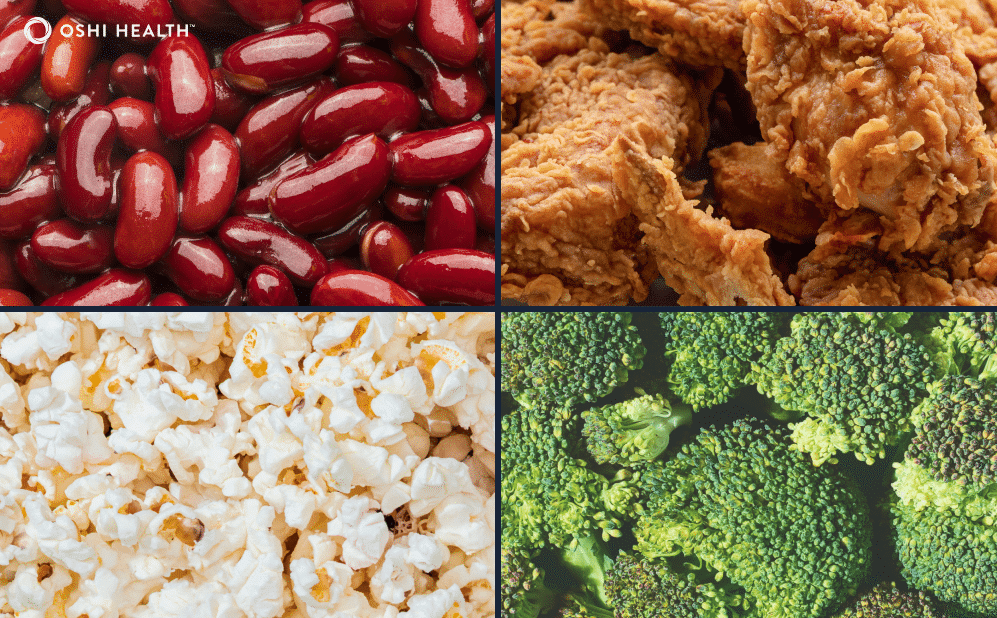
Foods that can mimic the appearance of blood in vomit:
-
Red: Naturally pink or red foods (e.g., beets) or dyed foods
-
Orange: Naturally orange foods (e.g., carrots or squash) or dyed foods
-
Brown or black: Chocolate or coffee
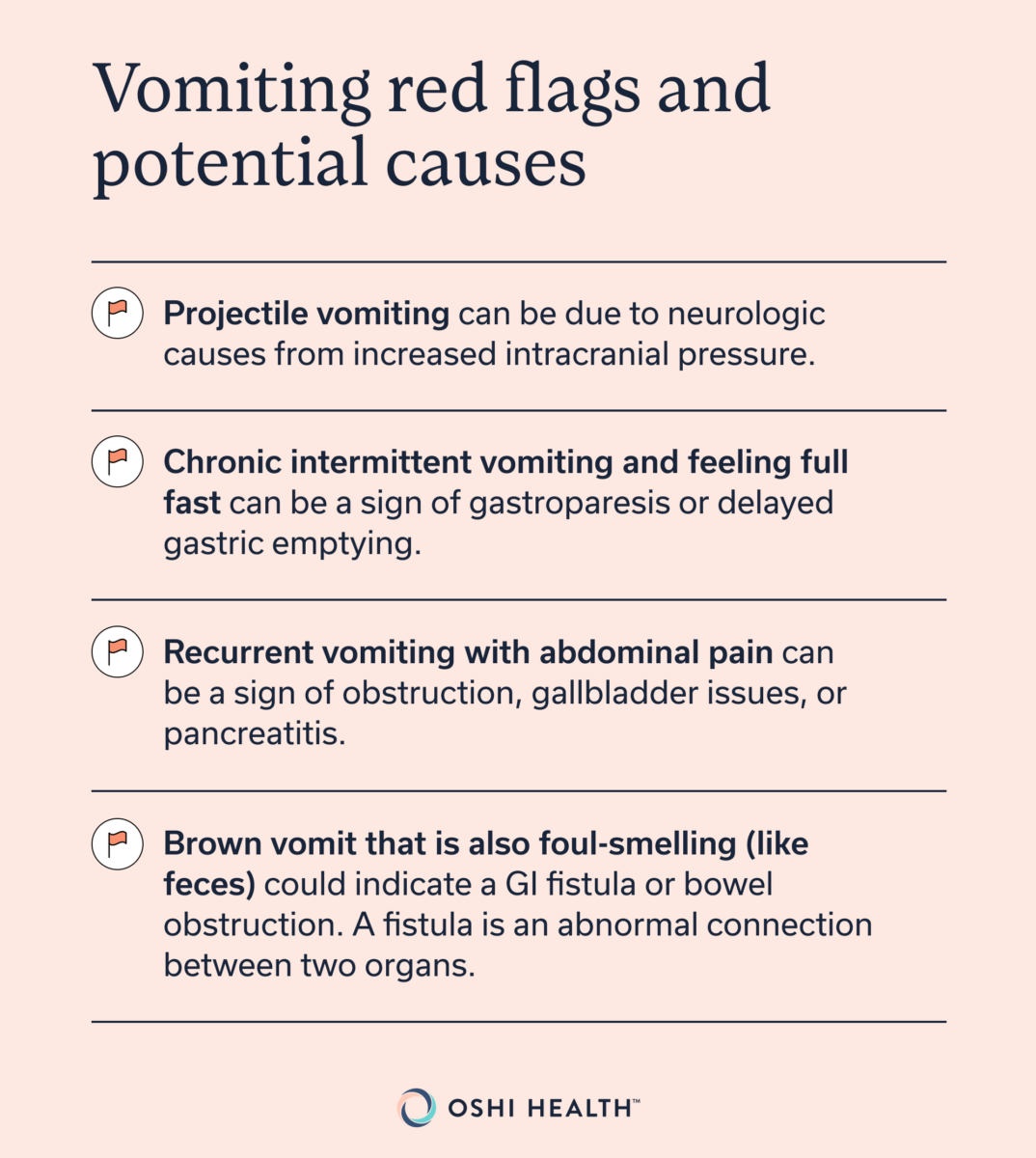
McCarty notes a few other vomiting scenarios, aside from seeing blood, that warrant urgent medical attention:
-
Projectile vomiting can be due to neurologic causes from increased intracranial pressure.
-
Chronic intermittent vomiting and feeling full fast can be a sign of gastroparesis or delayed gastric emptying.
-
Recurrent vomiting with abdominal pain can be a sign of obstruction, gallbladder issues, or pancreatitis.
-
Brown vomit that is also foul-smelling (like feces) could indicate a GI fistula or bowel obstruction. A fistula is an abnormal connection between two organs.
Why color alone is not enough to diagnose the cause
The shade of your vomit is not enough information on its own to diagnose the cause or anything else that might be going on. Instead, vomit color can only provide some clues as to what the issue might be.
If you are experiencing ongoing vomiting or your vomit has an unusual presentation, a knowledgeable clinician can help you figure out the reason.
They will likely ask you about your:
-
Additional symptoms (such as fever, abdominal pain, etc.)
-
Current underlying conditions
-
Current medications
-
Medical history
-
Recent illnesses
-
Recent meals, snacks, or beverages
They may also need to order bloodwork, imaging, or other lab tests to determine why you’re vomiting or why your vomit is a specific color.
Working with an Oshi healthcare provider
As we’ve covered, vomit color can offer some clues as to why you are vomiting or whether you have an underlying GI condition. But the color of your vomit alone isn’t enough to diagnose a cause. If you frequently experience nausea or vomiting, you may benefit from coordinated, multidisciplinary support from Oshi Health.
Your care team might include a GI provider (a nurse practitioner or physician associate), a GI registered dietitian, and/or a gut-brain specialist or psychologist, all overseen by board-certified gastroenterologists. They collaborate to help you improve your gut health, alleviate GI symptoms, and help empower you with strategies to better manage GI conditions over the long term.
Key takeaways
-
In most cases, vomit color is a reflection of what you recently ate or whether you’re throwing up bile or other gastric secretions.
-
In some cases, vomit color can reflect a potential emergency, especially if your vomit contains blood, which may appear red, brown, black, or like coffee grounds.
-
Oshi Health can help you determine what’s going on and tailor a treatment plan to your unique needs.
FAQ
-
If your vomit is bright green, pink, red, brown, black, or looks like coffee grounds, you might be experiencing an underlying problem and should seek medical attention. Bright green could indicate that you have more bile in your vomit, which can result from several causes. Pink, red, brown, or black could mean you have blood in your vomit. If your vomit looks like ground coffee, this may mean blood has been partially digested by stomach acid. One caveat: Think about the foods you recently ate. Red foods can mimic the appearance of blood.
-
Acid reflux puke may appear clear, white, or foamy. However, not all vomit that matches these descriptions will be a result of acid reflux. Sometimes vomit is clear because you are throwing up on an empty stomach that only contains mucus or saliva.
-
Liver failure isn’t diagnosed based on the appearance of your vomit alone. This is because vomit can be a sign of several other conditions. A more telling sign of potential liver failure or liver issues is jaundice, the yellowing of the skin or eyes.
Oshi is your partner in digestive health
Feel like your digestive concerns are running your life? You’re not alone—and we’re here to help you find lasting relief.
Oshi Health GI providers, gut-brain specialists, and registered dietitians work together to address your symptoms and find solutions that actually work for you.
Whether you’re dealing with chronic digestive issues or unpredictable symptom flare-ups, our GI specialists deliver:
✔ Personalized care plans tailored to your lifestyle
✔ Science-backed strategies to calm your gut
✔ Compassionate, whole-person care
✔ And so much more!
Ready to take control of your gut health?