

The gallbladder is a small organ in the digestive tract that can have a big and far-reaching impact on our health. When there’s an issue with this organ, someone may experience symptoms as varied as nausea, shoulder pain, a fever, and even chest pain that feels like a heart attack. Ahead, we’ll detail some weird signs of a bad gallbladder that you may not expect and when to seek medical care.
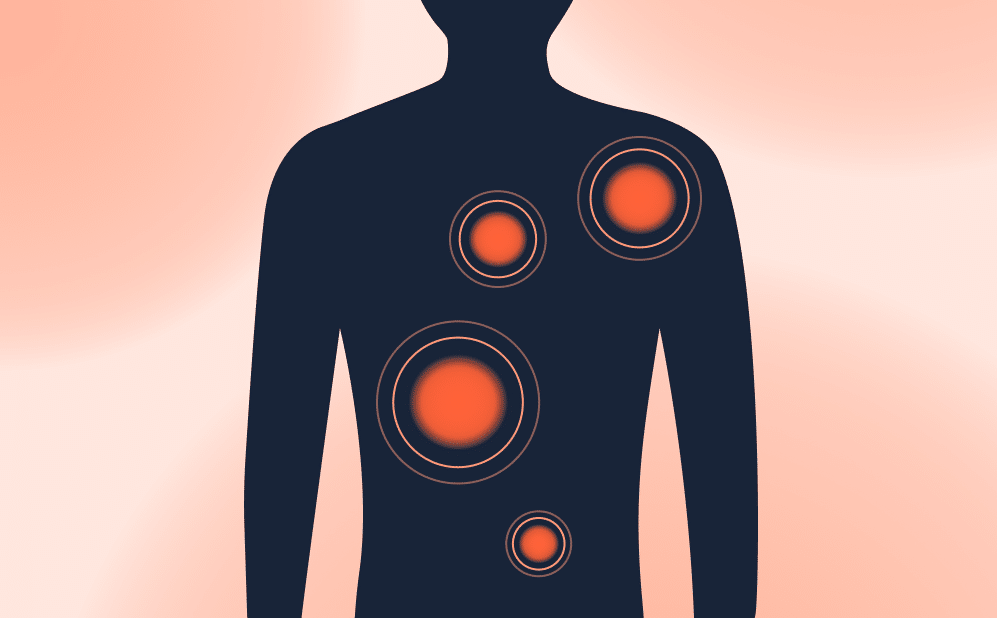
I can’t be the only one who is a bit too familiar with self-diagnosing random sensations. If you fall into that boat too, experiencing pain in your chest and right shoulder may make you suspect you’re having a heart attack.
Of course, chest pain should always prompt urgent evaluation by a medical professional. But, as long as cardiac conditions are ruled out, your provider will consider the secondary causes of chest pain, such as GERD (Gastroesophageal Reflux Disease) or your gallbladder. Yep, both pain in your chest and in your right shoulder could be signs of gallbladder issues (or other medical conditions, like acid reflux, but that’s for another article). In fact, there are a lot of weird signs of a bad gallbladder that can be mistaken for other health conditions, which is why it’s so tricky to diagnose gallbladder problems.
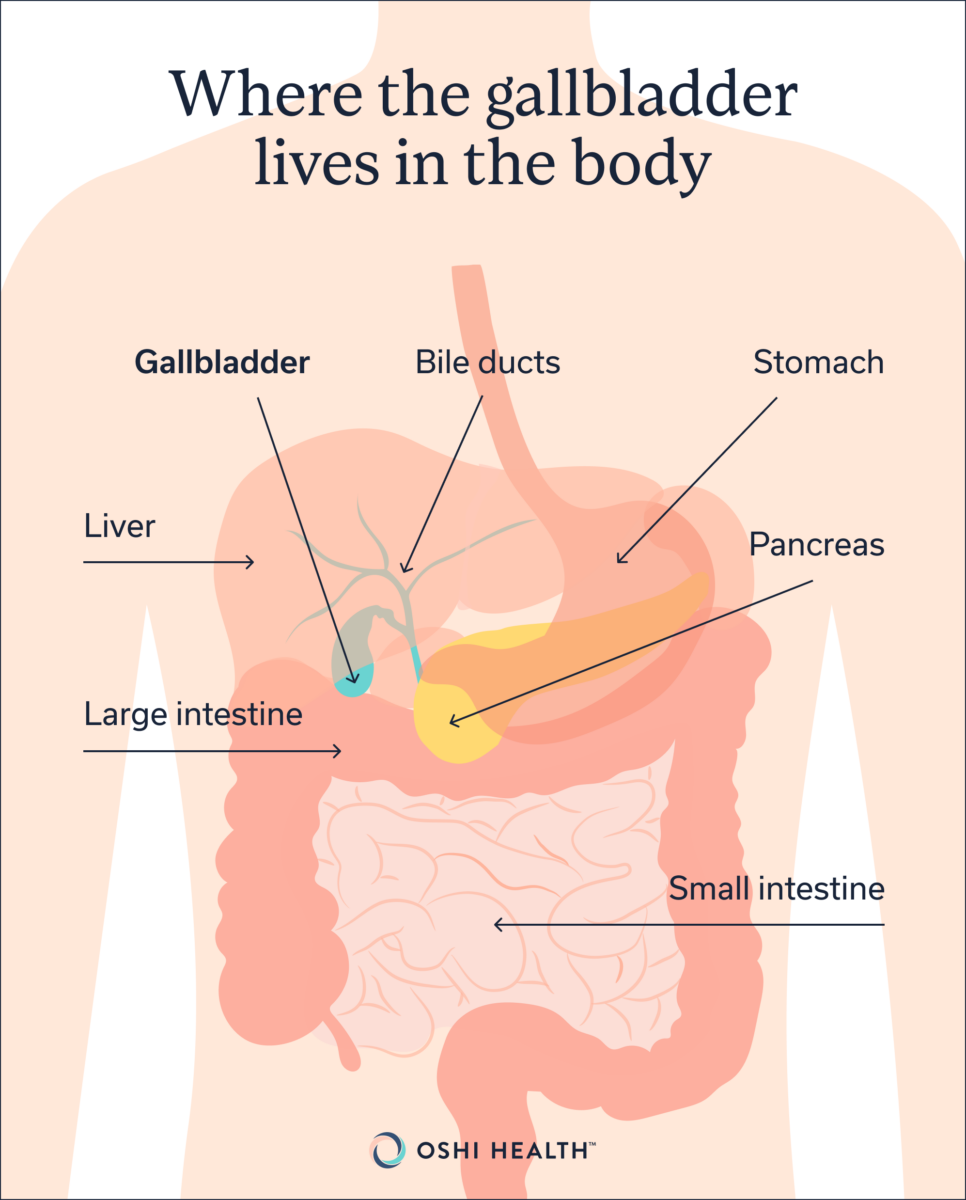
But before we get into the signs of a bad gallbladder, what even is this organ? The gallbladder is a pear-shaped organ that rests below the liver. It stores a bile produced by the liver and releases it into the common bile duct. The common bile duct then transfers the bile to the small intestine, where that bile can support healthy digestion.
The role of the gallbladder may seem small, but it’s a well-connected organ; the bile duct connects it to the rest of the digestive tract, and nerves connect it to other parts of the body, too. That means when there is an issue with this organ, there’s usually a ripple effect.
Weird signs of a bad gallbladder
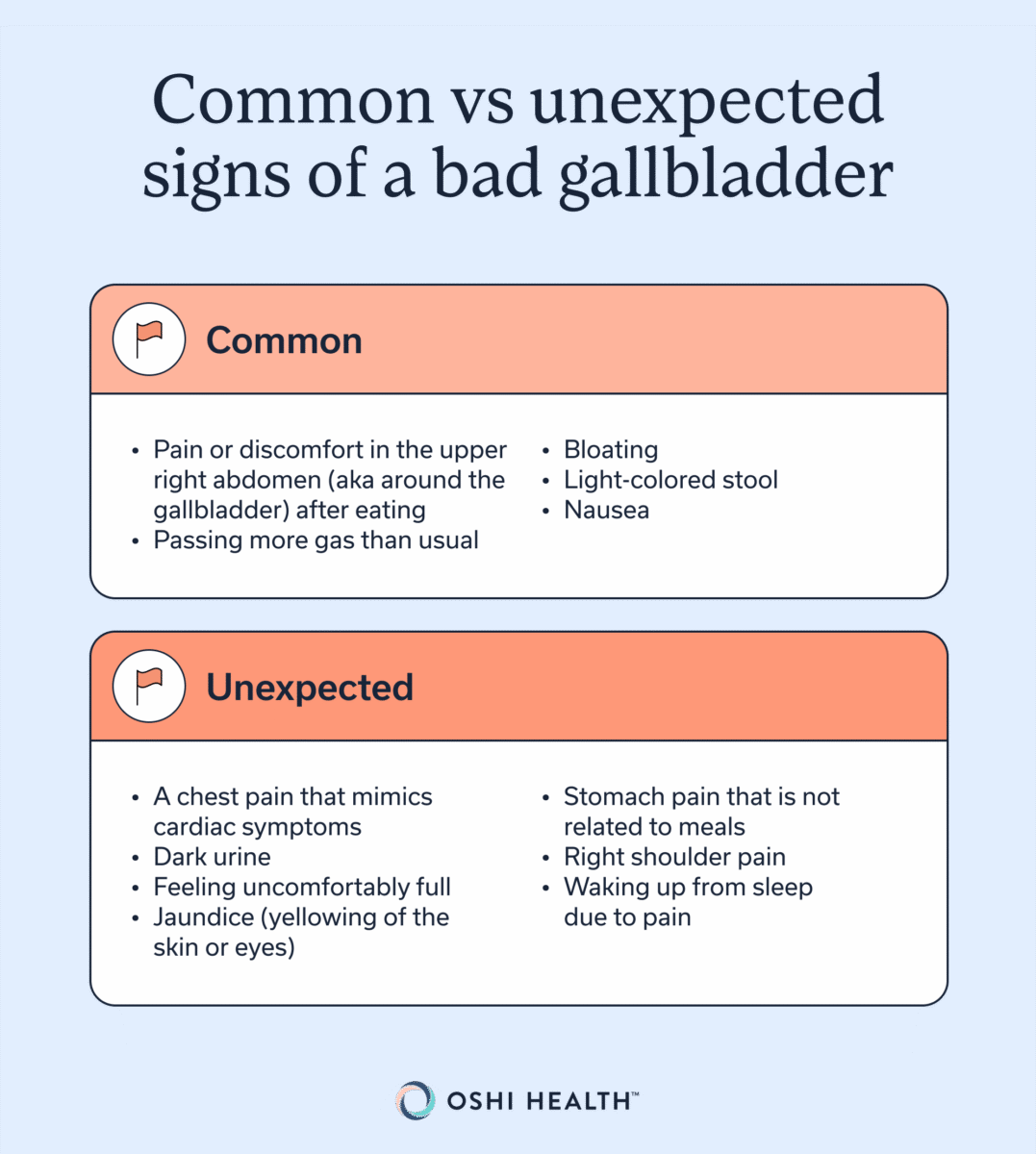
When gallbladder symptoms flare up, it’s unofficially referred to as a gallbladder attack. Some symptoms of a gallbladder attack are what you would expect from an organ in the digestive tract:
- Bloating
- Light colored stool
- Nausea
- Pain or discomfort in the upper right abdomen (aka around the gallbladder) after eating
- Passing more gas than usual
Other signs are more unexpected. Gabriella McCarty, DNP, MSN, NP-C, a GI provider at Oshi Health, shares some weird symptoms she commonly sees in patients:
- A chest pain that mimics cardiac symptoms
- Dark urine
- Feeling uncomfortably full
- Jaundice (yellowing of the skin or eyes)
- Stomach pain that is not related to meals
- Right shoulder pain
- Waking up from sleep due to pain
If someone develops acute cholecystitis, a gallbladder disease that leads to inflammation in this organ, they may experience more severe symptoms too, such as fever, chills, and vomiting. I don’t know about you, but I’d suspect the flu or norovirus before gallbladder disease if I had those symptoms.
All this to say that gallbladder symptoms aren’t always what you might expect, which is why it’s important to see a healthcare provider who can diagnose the underlying cause if experiencing any of these symptoms.
What are the first signs of a bad gallbladder?
Answering the question”What are the first signs of a bad gallbladder ?” is tricky, since they differ depending on the underlying cause. That said, McCarty reports that common initial indicators of gallbladder problems include indigestion, nausea, and pain in the upper right abdomen, especially after eating fatty or processed foods (think French fries, croissants, and potato chips).
Why gallbladder symptoms can feel”weird”
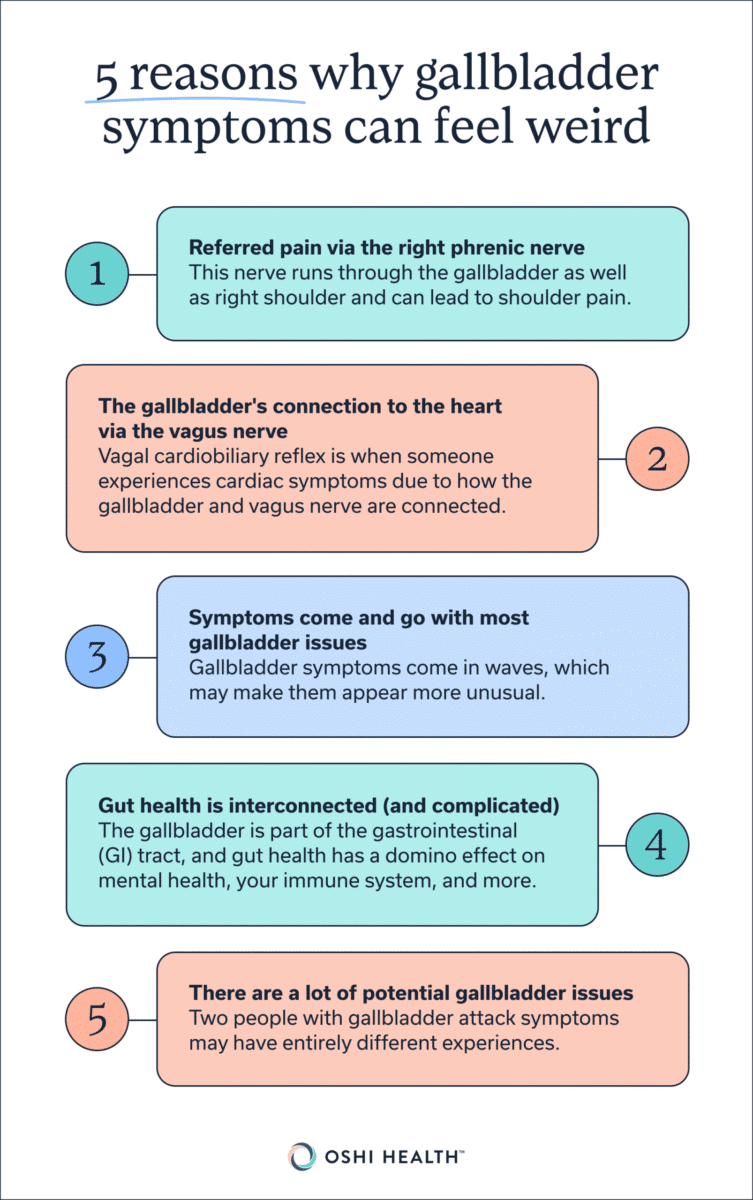
There’s no denying that gallbladder symptoms are a bit random and unexpected. But why exactly do these weird signs show up in the first place? There isn’t one straight answer because a few factors are at play.
Referred pain
Nerves send and receive messages between various parts of the body. One nerve that connects to the gallbladder is the right phrenic nerve. This nerve delivers sensory information to and from the gallbladder, but it also runs through the right shoulder and right side of the neck.
Because of this connection, someone may experience what is called “referred pain”, or pain in an area separate from where the problem arises. This is why right shoulder pain pops up on the list of bad gallbladder symptoms.
Proximity to the vagus nerve
The vagus nerve is a long nerve that runs from the brain to various internal organs, including the gallbladder. In rare cases, this connection means that other parts of the body, including the heart, which the vagus nerve also connects with, experience symptoms related to gallbladder issues.
In a 2021 case report, for example, a 46-year-old man experienced chest pain that appeared to indicate a cardiac condition. What he actually experienced was a “vagal cardiobiliary reflex” from gallstones. Vagal cardiobiliary reflex, also called cardio-biliary reflex, is when someone experiences cardiac symptoms due to how the gallbladder and vagus nerve are connected.
Symptoms may come and go
We often think of medical symptoms as consistent and ever-present. During allergy season, for example, I suffer from a stuffy nose day in and day out. Many gallbladder issues, such as gallstones, don’t work like that. Instead, symptoms come in waves, which may make them appear more unusual.
Gut health is complicated
The gallbladder is part of the gastrointestinal (GI) tract, which works together to digest food. If there’s a problem in one part of the tract, it may lead to symptoms throughout, such as diarrhea or nausea (both of which may stem from certain gallbladder problems).
And this is before taking into account that 70-80% of immune cells are in the gut and that the gut produces neurotransmitters involved in emotional regulation and stress responses. This means your gut health has a domino effect on mental health, your immune system, and more.
The variety of gallbladder issues
Last but not least, there’s just a lot of possible gallbladder issues, which we’ll detail below. Each comes with its own unique symptoms. This is part of the reason why two people who are discussing their gallbladder attack symptoms may have entirely different experiences.
Before Oshi, I was having really severe stomach problems and it felt like glass whenever I was digesting something. I was not able to get a new physician and I was just at the end of my ability to handle this, so I did try Oshi. Now, everything is just amazingly well.
— Oshi Health patient Denise K.
Read more about Denise's Oshi experienceWhat causes gallbladder problems?
We’ve alluded to this earlier, but a”bad gallbladder” could be due to many different issues. The most common are gallbladder disease and gallstones, though others exist as well:
- Gallbladder disease: An umbrella term for conditions that affect the function and structure of the gallbladder. The most common is cholecystitis, which is when there’s inflammation in the gallbladder. It can be acute (short-term) or chronic (ongoing).
- Gallstones: These are hard deposits that can be in the gallbladder and the common bile duct. About 10-15% of Americans have gallstones, though most don’t cause symptoms. They’re only symptomatic when they’re big enough to block the common bile duct.
- Gallbladder cancer: In rare cases, cancerous cells may be present in the gallbladder.
- Issues at birth: Some people have congenital defects of the gallbladder, which are structural or functional problems that someone is born with.
- Polyps: These abnormal tissue growths may be present in the gallbladder. Most gallbladder polyps are asymptomatic, but some may cause symptoms.
- Porcelain gallbladder : This rare condition occurs when calcium builds up in the gallbladder wall, making it brittle and hard.
Signs of gallbladder issues vs. reflux or stomach upset
Part of what makes gallbladder symptoms so weird is that they appear similar to other conditions, including acid reflux, cardiac conditions, and the many, many causes of an upset stomach (irritable bowel syndrome, stomach bugs, and food intolerances, just to name a few).
There are a few indicators that the gallbladder may be where the issue lies, says McCarty. The first is that if symptoms are caused by the gallbladder, changing posture (i.e., going from standing to sitting or vice versa), having a bowel movement, or taking antacids will not relieve them.
McCarty also mentions that the full chest heartburn associated with acid reflux is less common with gallbladder issues. Instead, the pain usually lingers on the right side of the body.
Gallbladder-related pain also tends to be episodic (aka comes and goes) versus a daily, constant presence.
While useful, these possible indications aren’t enough to definitively determine that the gallbladder is the problem. Only a diagnosis from a GI provider after a thorough evaluation and appropriate testing can determine the exact cause.
Diagnosis of gallbladder symptoms
If experiencing any of the symptoms mentioned in this article, make an appointment with a healthcare provider (ideally one with GI training, such as the team at Oshi Health). A GI provider”can help with accurate diagnosis, getting a good history and testing if necessary, and can help guide treatment decisions,” explains McCarty.
Even if symptoms go away before your visit, keep your appointment. Gallbladder symptoms have a tendency to return without the right treatment plan.
These professionals know what they’re talking about and they are able to help streamline some of the decision makings that weren’t going well. The team reviews different tests. They recommend tests, you know, anything from blood tests to different tests so that they can analyze them and they go over with them carefully with you.
— Oshi Health patient Denise K.
Treatment options for gallbladder issues
Many gallbladder issues are highly treatable. What that treatment plan looks like, however, depends on the underlying cause.
An effective treatment plan may include:
- Dietary changes: One of the most common adjustments is to avoid high-cholesterol foods (meat, shrimp, dairy products, egg yolks, etc.), since cholesterol may cause gallstones. A GI registered dietitian can help determine the right nutritional plan in your specific situation.
- Medications: When a bacterial infection is present, antibiotics may help. One drug that won’t? Antacids. “Gallbladder pain is not relieved by antacids or other acid suppressants,” explains McCarty.
- Surgery: If symptoms keep popping up, a GI provider may recommend cholecystectomy, a surgery to remove the gallbladder. Removing any body parts doesn’t sound like a great idea, but the gallbladder is not an essential organ. Many people live fine without it.
Red flags: when to seek care quickly
While most gallbladder issues can be addressed during a scheduled appointment with a healthcare provider (ideally a GI provider, such as a gastroenterologist or nurse practitioner who specializes in gastrointestinal care), some cases may require immediate medical attention.
Seek emergency care if experiencing:
- Chills
- Faintness or weakness alongside other symptoms
- Fever alongside other symptoms
- Jaundice, the yellowing of the eyes or skin
- Light colored stools
- Pain so severe, it’s impossible to walk or get out of bed
Key takeaways
-
Weird signs of a bad gallbladder include pain in the chest, pain in the right shoulder, waking up in the night due to pain, and feeling uncomfortably full. But chest pain should always be assumed to be of cardiac origin and needs urgent evaluation.
-
The reason why gallbladder symptoms may appear random is that the gallbladder interacts with many other parts of the digestive tract, as well as various nerves that run throughout the body.
-
There are also many possible gallbladder conditions, each with a unique set of symptoms. This is another reason why the signs of a bad gallbladder are so varied.
-
To help determine what’s causing your symptoms, work with a healthcare provider, such as the team at Oshi Health. At Oshi, our GI providers can get to the root cause and create a clinically-proven treatment plan that addresses any digestive issues from the medical, dietary, and gut-brain angles.
Frequently asked questions (FAQs)
-
Seek immediate medical care if gallbladder attack symptoms include jaundice (yellowing of eyes or skin), a fever, dark urine, vomiting, and/or pale stools. Gallbladder attacks without these severe symptoms still deserve medical attention, but someone can make an appointment with a GI provider instead of heading to the ER.
-
Some gallbladder problems can feel like acid reflux. Symptoms shared by these two conditions include pain in the chest, indigestion, and burping or passing more gas than usual. A GI provider, such as the team at Oshi Health, can assess your specific symptoms and determine the underlying cause.
-
Oshi Health connects people with GI symptoms to leading GI providers who are well equipped to diagnose gallbladder problems. Our approach includes whole-person care. This means that after a diagnosis is made, we create a comprehensive treatment plan that approaches gallbladder issues from all angles (medical, dietary, and gut-brain).
Oshi is your partner in expert gallbladder care
Gallbladder conditions like gallstones can be hard to manage on your own without clear guidance.
Oshi Health gives you access to GI providers, registered dietitians, and gut-brain experts who specialize in gallbladder health. They can evaluate your symptoms, order labs, and create a personalized care plan based on your needs.
Plus, with convenient virtual visits, our specialists can monitor your progress over time and adjust your plan based on your lab results and how you’re feeling.
You deserve clear answers and expert care for your gallbladder health.