

Your liver is essential to everyday functioning, which is why it can be so scary when bloodwork or new symptoms suggest something is off with this organ. Ahead, we’ll detail the seven signs your liver is dying and why it’s important to be proactive about liver health.
The liver is definitely an underappreciated, overworked body part. It’s one of our largest organs and performs more than 500 tasks to keep us alive and functioning. While it does many things amazingly, it’s not so great at providing warnings when something is wrong. In fact, you typically won’t notice signs of liver failure until the more advanced stages of liver disease.
Because the liver is an expert at struggling in silence, it’s important to be proactive about preventive health check-ins and to understand what a dying liver actually is. Continue reading to learn the seven signs your liver is dying and how to potentially catch any gastrointestinal (GI) diseases in the liver earlier.
What is a dying liver?
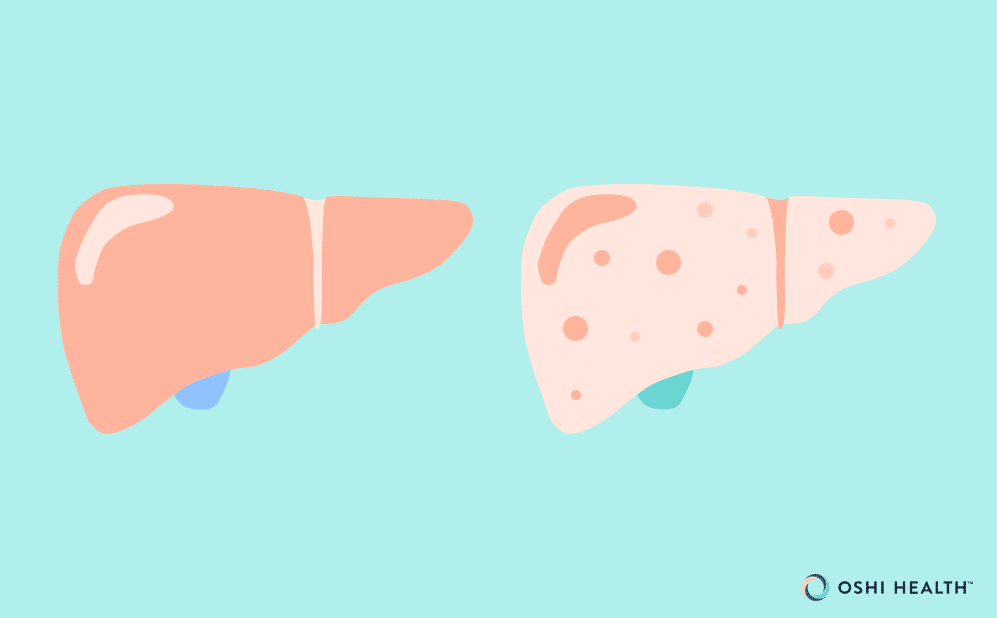
A dying liver is one that can no longer perform its normal functions, often due to inflammation or scarring. It’s tricky to spot since there aren’t always warnings or symptoms. And the word”dying” definitely conjures images of severe and noticeable symptoms.
“When people think of the term dying, they think, ‘Oh, I must feel sick, and I don’t feel sick, therefore my liver is okay,'” says Theodore C. Friedman, M.D., Ph.D., the Chief of the Division of Endocrinology, Molecular Medicine and Metabolism at Charles R. Drew University. “Even though their liver is sick, they might feel pretty normal, and the’dying’ means that the liver is not doing its proper functions.”
While we won’t bore you with all 500+ of the liver’s functions, here’s a small sampler of some of the most important:
- Metabolism: The liver supports metabolism, the process of breaking food into usable energy.
- Bile production: It creates bile, a fluid that assists in the breakdown and absorption of dietary fats.
- Mineral and vitamin storage: The liver stores, and sometimes metabolizes, essential vitamins and minerals.
- Hematologic assistance: Hemolysis, the breakdown of red blood cells, is a normal part of how the body functions. It also contributes to appropriate blood clotting, which is what stops the body from bleeding too much. The liver plays a role in maintaining normal hemolysis, helping to maintain healthy levels of red blood cells.
Another cool thing that the liver can do? Regenerate and repair after an injury or illness, which is why a dying liver is so uncommon. “The liver is actually incredibly resilient and can regenerate, but when it’s’dying,’ it has moved past simple inflammation,” says Vikram Tarugu, M.D., a board-certified gastroenterologist in Florida, “At this stage, the organ can no longer keep up with its 500+ vital jobs.”
7 signs your liver is dying
Most problems with the liver are silent and symptomless until the damage is severe. That means if there are signs your liver is struggling, such as the seven below, it’s best to seek prompt medical attention. Since many of the signs are nonspecific, they’re more of a reminder to visit a healthcare provider who can determine if a dying liver or something else is the culprit.
Sign #1: Jaundice and color changes (skin, eyes, urine, stool)
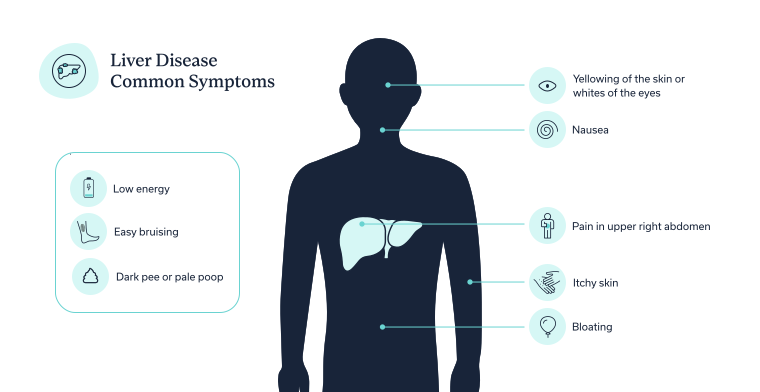
A common sign of severe liver disease or liver cancer is jaundice. This may look like yellowing eyes and skin, though it usually starts with a yellowing under the tongue, then spreads to other areas.
The reason a dying liver causes jaundice relates back to the liver’s role in getting rid of older red blood cells. This process occurs because the spleen and liver break down red blood cells into bilirubin. As an overachiever, the liver then breaks down that bilirubin further so it can leave the body. When the second half of that process is disrupted, which may be the case with a dying liver, there’s a buildup of bilirubin, which manifests as jaundice.
When the liver cannot properly process bile, the pigment (bilirubin) spills into the bloodstream and is excreted through the kidneys, resulting in very dark, tea-colored urine. At the same time, because bile flow to the intestine is stalled or blocked, your stool loses its normal brown color and becomes pale, white, or clay-colored.
Another frequent symptom that can accompany jaundice is intense, itchy skin (pruritus), which is caused by the accumulation of bile salts in the bloodstream.
Seek emergency care if: Experiencing jaundice alongside a fever, extreme abdominal pain that makes it difficult to move, or blood in vomit.
Sign #2: Abdominal fluid buildup (ascites)
Liver disease is usually accompanied by cirrhosis, scarring in the liver. This scarring disrupts the liver’s functioning, leading to fluid buildup in the liver. Eventually, that fluid spills into the abdomen, a symptom called ascites.
Ascites is usually quite noticeable, often manifesting as sudden, rapid weight gain, particularly in the waist area, that is too fast to be attributed to lifestyle factors such as diet or stress. The severely swollen abdomen can sometimes look like a basketball.
Seek emergency care if: Abdominal pain worsens or comes on suddenly, or if it’s accompanied by a fever or blood in vomit.
Sign #3: Peripheral swelling (edema)
Sometimes, fluid buildup may lead to swelling in the lower extremities as well as in the abdomen. When this occurs, it is referred to as edema and typically affects the ankles, legs, and feet.
Seek emergency care if: Swelling only occurs on one side or is accompanied by sudden breathlessness or chest pain.
Sign #4: Bleeding and easy bruising
Bleeding more than usual and bruising more easily than before are two possible signs of liver failure. Both may occur if the liver cannot fulfill its role in the blood-clotting process. This could take the form of frequent bruises, heavy periods, and/or prolonged bleeding.
Seek emergency care if: Experiencing any urgent warning signs, such as blood in vomit or stools, bleeding that won’t stop, fever, or debilitating abdominal pain.
Sign #5: Brain and mood changes (hepatic encephalopathy)
Mental confusion, which is referred to as hepatic encephalopathy when caused by liver failure, is another common sign. The liver helps process certain toxins, and if it can’t do that job, some may reach the brain and cause cognitive symptoms, according to Dr. Tarugu.
There’s a wide spectrum of what hepatic encephalopathy can look like, ranging from a subtle difficulty concentrating or experiencing brain fog to severe lethargy, personality alterations, and possibly even a coma in severe cases.
Seek emergency care if: Symptoms come on or get worse suddenly, or are accompanied by other severe symptoms.
Sign #6: Severe fatigue, weakness, and muscle loss
The liver is a crucial player in the metabolic process, which is how the body turns food into usable energy. If that process is disrupted, it often manifests as severe fatigue or weakness.
This is more than just feeling a little tired after a poor night’s sleep; it’s when someone struggles with everyday tasks. Workouts that they used to complete become impossible, they’re exhausted earlier in the day than usual, or their muscles feel weaker than before.
For liver disease to be a potential cause, these changes occur in the absence of highly restrictive diets, getting less sleep than usual, or other lifestyle factors that contribute to fatigue. Admittedly, many things can disrupt metabolism, and even more can cause fatigue. That means that while fatigue without lifestyle changes isn’t a guarantee that the liver is dying, it indicates that something is off.
Seek emergency care if: Severe fatigue occurs alongside other symptoms on this list or if it makes basic tasks, such as getting out of bed, impossible.
Sign #7: GI symptoms
The liver plays an important role in digestion. When it isn’t functioning properly, it can have a ripple effect on the gastrointestinal (GI) tract. One of the first signs Dr. Tarugu’s patients mention is changes in the color of urine or stool. If these changes occur, it usually manifests as extremely dark urine or very pale stools.
Other GI symptoms may include nausea, vomiting, reduced appetite, and a full or painful feeling in the upper right part of the abdomen.
Seek emergency care if: GI symptoms include vomiting blood, severe abdominal pain, or blood in stool.
What causes liver failure and advanced liver disease
When a patient comes in with a”dying liver,” Dr. Tarugu often finds a clinical diagnosis of end-stage liver disease (ESLD) or decompensated cirrhosis. As mentioned earlier, cirrhosis is scarring in the liver, which can be asymptomatic (compensated) or symptomatic (decompensated). ESLD is the most severe stage of liver disease.
Sometimes, certain genetic conditions, such as Wilson disease or hemochromatosis, or medications, including methotrexate and isoniazid, lead to liver disease and/or cirrhosis. However, neither is a common cause. More prevalent reasons include:
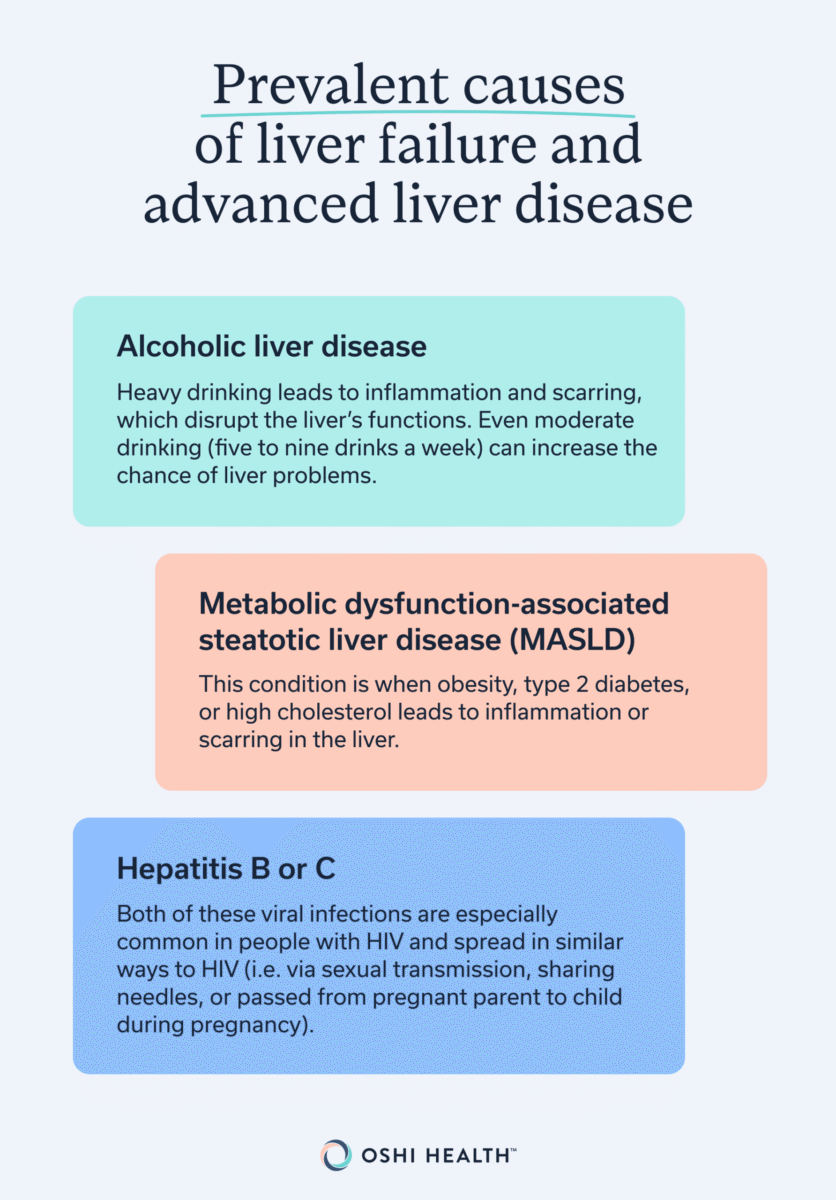
- Alcoholic liver disease: Somewhere between 60-70% of cases are caused by heavy alcohol consumption. While the liver can tolerate moderate alcohol intake, heavy drinking leads to inflammation and scarring, which disrupts the liver’s functions. Even moderate drinking (five to nine drinks a week) can increase the chance of liver problems when someone has other risk factors, such as diabetes or obesity.
- Metabolic dysfunction-associated steatotic liver disease (MASLD): This condition is when obesity, type 2 diabetes, or high cholesterol leads to inflammation or scarring in the liver. While about 10% of cases are due to MASLD, Dr. Tarugu mentions that this is a rapidly growing cause.
- Hepatitis B or C: Another 10% of cases are caused by chronic hepatitis B or C, two viral infections that cause inflammation in the liver. Both are especially common in people with HIV and spread in similar ways to HIV (i.e., via sexual transmission, sharing needles, or passed from pregnant parent to child during pregnancy).
While liver disease and related scarring are the most common causes of a dying liver, cancer may also be to blame. Liver cancer occurs when cancer cells form in liver tissue, often resulting in the same signs as liver disease and cirrhosis. To make matters more confusing, most of the causes of liver disease also increase the risk for liver cancer, and cirrhosis is a risk factor as well.
Diagnosis and testing: how clinicians evaluate suspected liver failure
For many people, the answer to the question”what are the first signs of a bad liver?” isn’t symptoms, but blood test results. Since liver problems are silent, most primary care providers regularly order bloodwork to detect any abnormalities in the liver, says Dr. Friedman. Bloodwork may be ordered more often for those with certain risk factors, such as diabetes, obesity, or heavy drinking habits.
Speaking of, diagnosing liver problems also includes a physical examination, during which a healthcare provider will ask questions about your medical history and lifestyle. While bloodwork can show abnormal liver function, this exam and any information about your overall health and habits help a provider figure out the underlying cause of any liver problems.
Depending on symptoms and someone’s overall health, a provider may also order imaging tests, such as a CT scan or ultrasound, which provide a more complete picture of what’s happening in the liver.
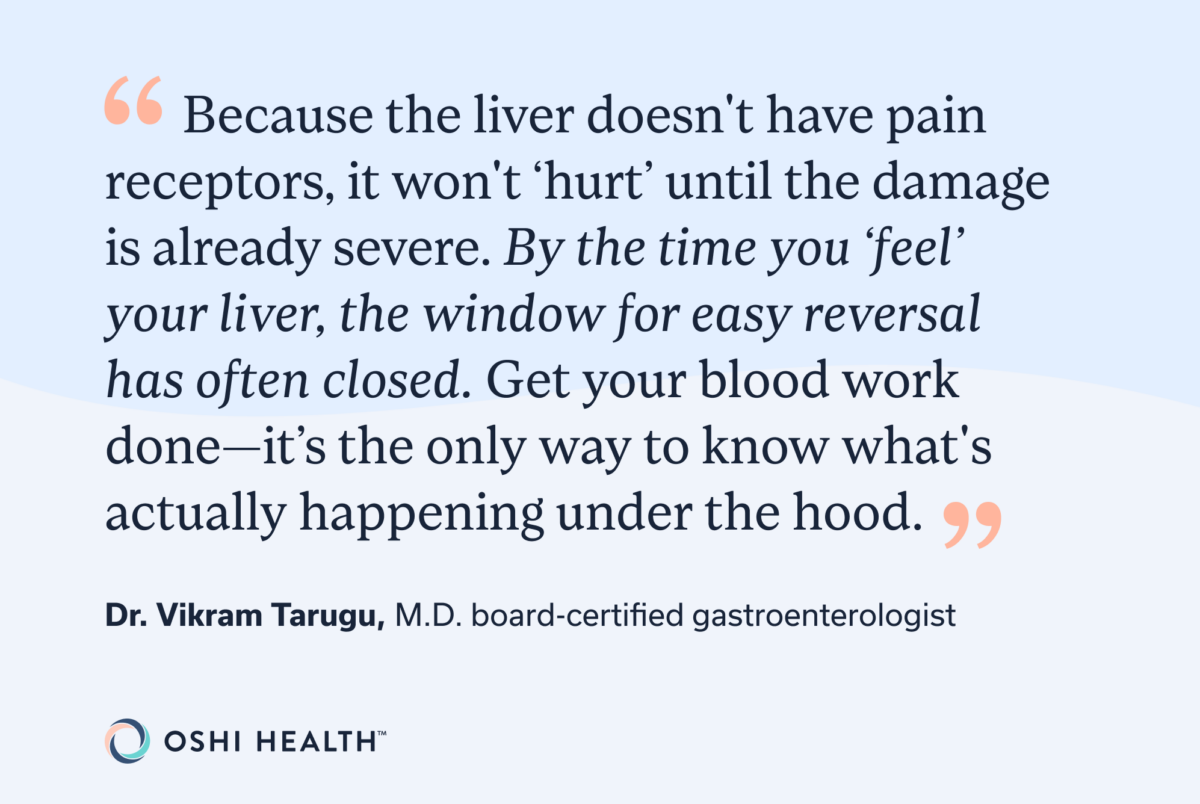
Dr. Tarugu stresses that it’s important to get any preventive bloodwork done as recommended, since liver disease is silent in the early stages. “Because the liver doesn’t have pain receptors, it won’t’hurt’ until the damage is already severe,” explains Dr. Tarugu, “By the time you’feel’ your liver, the window for easy reversal has often closed. Get your blood work done–it’s the only way to know what’s actually happening under the hood.”
Treatment options
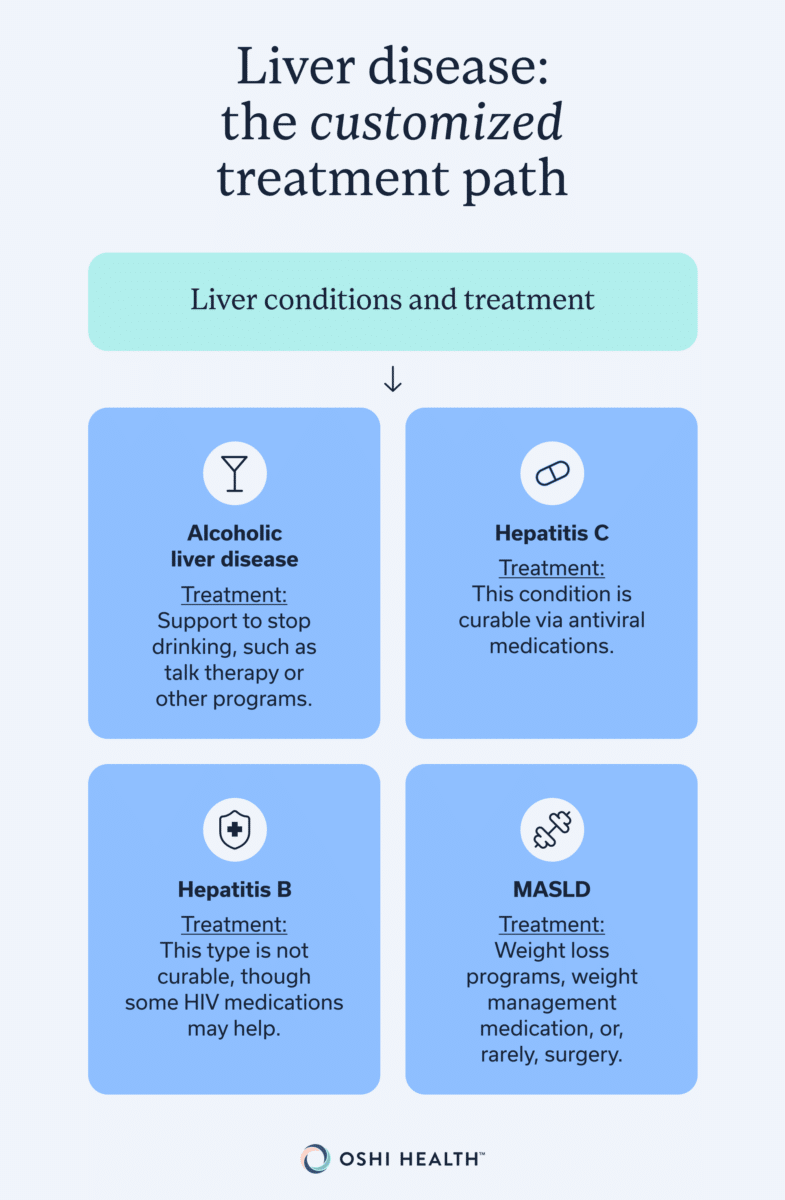
After diagnosing liver problems and the underlying cause, a healthcare provider will create a treatment plan. This plan is tailored to the underlying cause but might include:
- For alcoholic liver disease: Support to stop drinking, such as talk therapy, group therapy, or other accountability and support programs.
- For Hepatitis C: This condition is curable, and a healthcare provider will prescribe antiviral medications.
- For Hepatitis B: Unlike hepatitis C, this type is not curable, though some HIV medications may help.
- For MASLD: Weight loss programs are usually the most effective option for MASLD. Usually, this includes a lifestyle-based intervention where a registered dietitian or other healthcare provider addresses any nutrition and lifestyle gaps. Sometimes, a provider may recommend weight management surgery or a weight loss medication, such as a GLP-1, as well.
Even if MASLD isn’t present, lifestyle changes may still be part of a treatment plan, says Dr. Friedman. He adds that habits like regular exercise, getting seven to nine hours of quality sleep, and improving your diet all support liver health.

When to see a healthcare provider
When it comes to liver health, being proactive is the name of the game. That’s why primary care providers order blood tests that can indicate liver issues as part of routine healthcare screenings. If someone has any factors that increase their risk, their provider may order these tests even more often.
If bloodwork comes back with abnormal results or if you’re experiencing any of the above signs, make an appointment with a healthcare provider. Ideally, that appointment should be with a hematologist or GI-focused nurse practitioner, a physician’s assistant with GI training, or a gastroenterologist. That said, a primary care provider can also assess symptoms and refer you to a specialist.
Key takeaways
- A dying liver is often silent and symptomless until its later stages. That’s why many liver problems are difficult to diagnose and treat without proactive bloodwork.
- In the later stages, symptoms may include jaundice, abdominal fluid buildup, peripheral swelling, bleeding more than usual, easy bruising, and brain and mood changes. Someone may also experience severe fatigue or GI symptoms, such as changes in stool color or abdominal pain.
- Certain conditions, such as obesity or diabetes, put someone at a higher risk for liver disease and other liver problems. Certain lifestyle choices, such as eating a diet high in sugar or drinking moderately or heavily, also increase the likelihood.
- If you have symptoms of a dying liver or routine bloodwork suggests the liver isn’t functioning correctly, visit a specialist, such as a GI provider or hematologist.
Frequently asked questions (FAQs)
-
Four warning signs of a dying liver or a liver problem are jaundice, yellowing of the skin or eyes, unexplained and persistent fatigue, a full and painful feeling in the upper right side of the abdomen, and changes in stool or urine color. It’s important to remember that liver problems are often symptomless until the later stages, which is why those at risk of liver issues should have regular check-ups for their liver health.
-
Stage 3 liver disease is referred to as severe fibrosis. It’s when there is significant scarring in the liver with many septa, or bands of scar tissue. As the third of four stages, stage three is serious but may be reversed in some scenarios.
-
Part of the liver’s role is to help with the digestion of sugars and fats. That means eating copious amounts of ultra-processed foods that are high in one or both (such as donuts, fries, and hot dogs) for many years may make it more difficult for the liver to fulfill this role. Additionally, alcohol is toxic for the liver, so drinking heavily may increase the risk of liver inflammation and scarring.
-
Certain vitamin deficiencies are associated with liver disease. Important vitamins for liver health include vitamins A, C, D, E, K and B vitamins. Limited evidence suggests that increasing your intake of these vitamins, either through diet, supplements, or both, might help reverse liver disease. However, increasing your vitamin intake is best seen as part of a larger treatment plan, not a one-and-done solution to repair the liver.
Oshi is your partner in expert liver care
Liver conditions like fatty liver disease can be hard to manage on your own without clear guidance.
Plus, with convenient virtual visits, our specialists can monitor your progress over time and adjust your plan based on your lab results and how you’re feeling.
Oshi Health gives you access to GI providers, registered dietitians, and gut-brain experts who specialize in liver health. They can evaluate your symptoms, order labs, and create a personalized care plan based on your needs.
Ready to take control of your gut health?