

Your gallbladder pumps out bile to help digest certain foods, but gallstones can get in the way, leading to bile buildup and pain. Changing your diet and incorporating some fueling strategies can help keep your gallbladder pumping like a pro.
Your gallbladder isn’t something you likely think about all that much unless it causes you trouble. By trouble, we mean pain after eating certain foods.
You might be having a gallbladder attack if you’re experiencing pain after eating certain foods. Symptoms of a gallbladder attack typically show up suddenly and in the upper-right abdomen about half to a full hour after a meal or snack. The pain can be sharp or cramp-like and may cause nausea, bloating, or other symptoms.
If this sounds familiar, you might be looking for ways to tweak your diet to help avoid these gallbladder attacks. Every person is different, and foods that trigger attacks for you may be vastly different from meals that prompt attacks for others. However, we’ve compiled a list of some common trigger foods.
The good news is that even with a gallbladder that gets cranky sometimes, you can still craft a dietary plan that leaves you satisfied and with fewer symptoms.
What does the gallbladder do, and why does it cause pain?
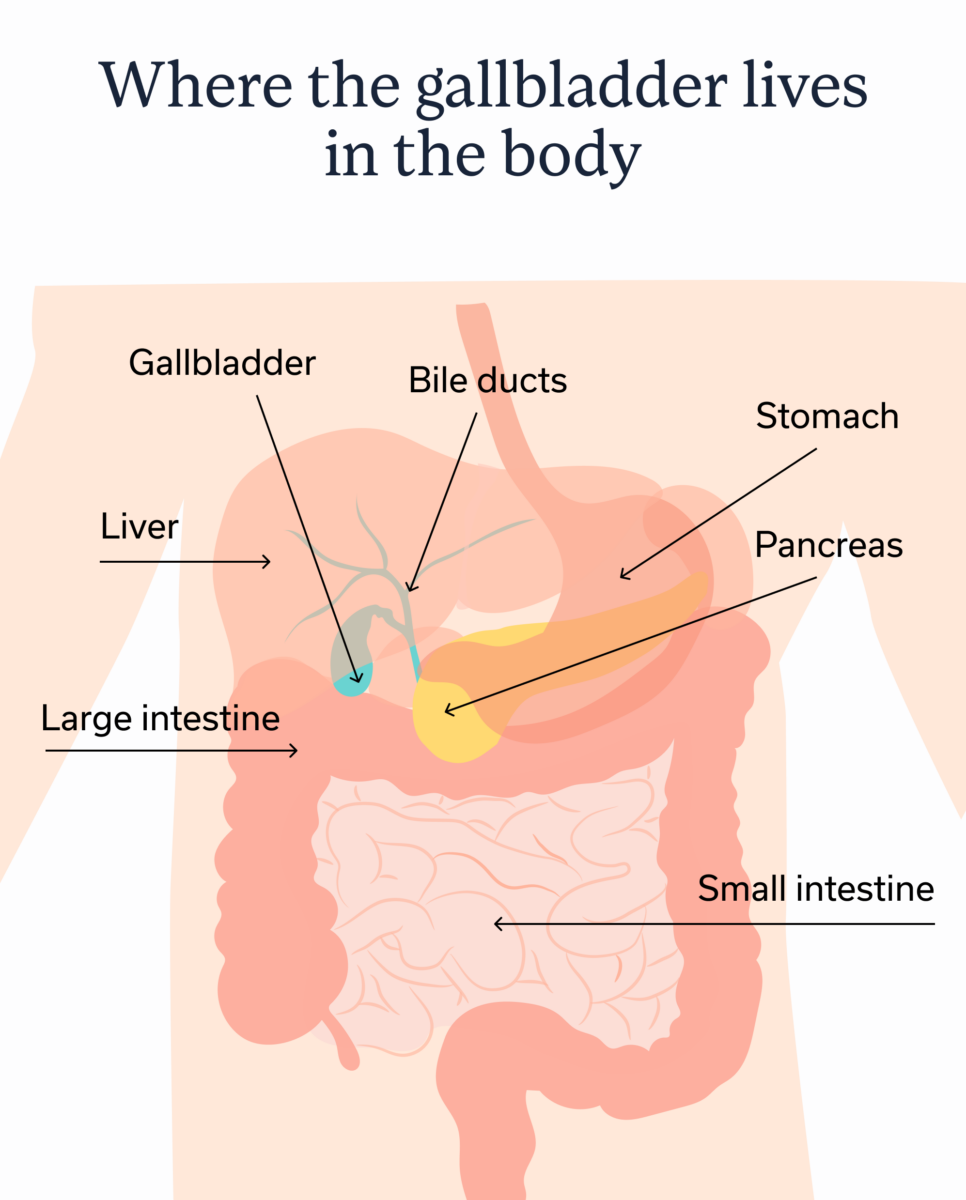
Your gallbladder, located just below your liver, is a storehouse for the bile your liver produces. Bile is a cocktail of salts, cholesterol, and water that is essential for digestion.
When you eat, nerve and hormonal signals prompt your liver to send bile into the small intestine. If bile isn’t needed right away, your liver diverts it to the gallbladder for storage. When you eat certain foods, the gallbladder contracts–almost like a pump–to shuttle that stored bile into the duodenum, the first part of your small intestine.
There, in a process called emulsification, bile helps break down large particles of fat into smaller droplets. Enzymes from your pancreas can then further break down the droplets into nutrients that your body can absorb.
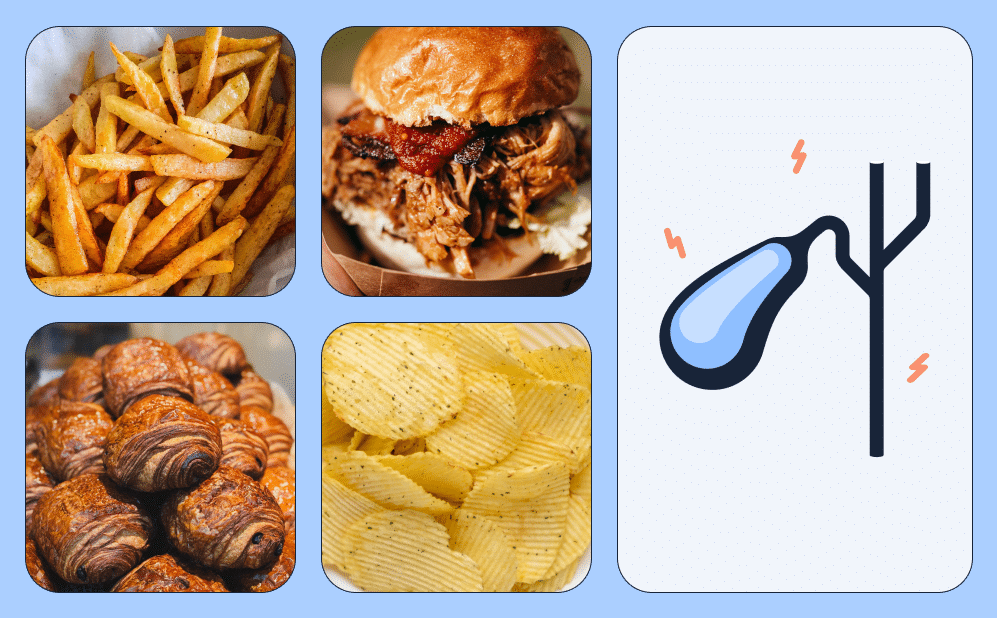
The pain associated with biliary colic (aka a gallbladder attack) is usually caused by gallstones. Gallstones are solidified bile deposits, typically made up of cholesterol and bilirubin (a byproduct from the breakdown of red blood cells). These stones arise from high cholesterol, excess bilirubin, or gallbladder stasis, which is when the organ doesn’t fully empty its bile when squeezing. A gallbladder attack occurs when a gallstone blocks the bile duct, preventing bile release and leading to pain and other symptoms. Since this blockage often occurs after a high-fat meal, dietary changes may be able to help prevent your gallbladder from acting up.
15 foods to avoid with gallbladder issues
What should you avoid if your gallbladder tends to get crabby after you eat? We’ve built a list of common attack provokers.
Maybe you’ll recognize the foods that are triggers for you. If you aren’t sure, keeping a food log for a few weeks and noting any gallbladder symptoms that arise can help you determine which foods you need to reduce in your diet or avoid altogether.
Two major culprits of gallbladder attacks include high-fat foods and high-carbohydrate foods. High-fat foods trigger gallbladder attacks because your small intestine needs bile to break down large fat particles. High-carbohydrate foods, which also include meals or snacks high in sugar, trigger gallbladder attacks because they increase cholesterol levels. High cholesterol is a gallstone risk factor.
But don’t worry: You have alternatives, so you don’t have to feel like your gallbladder diet is overly restrictive or complicated.
Fried foods
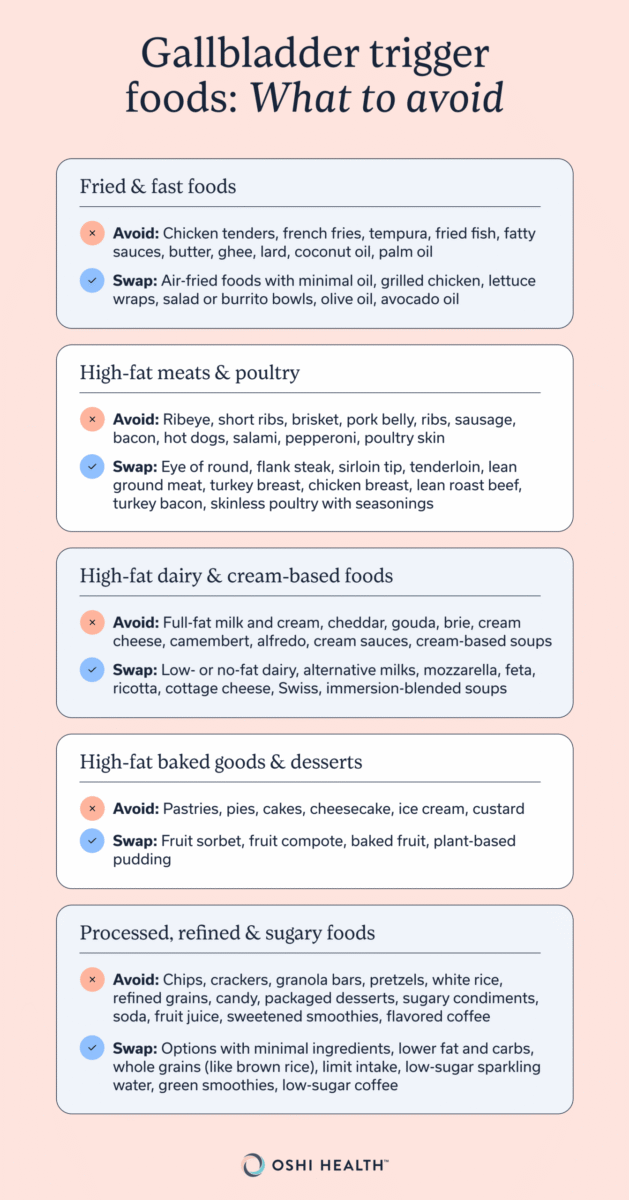
Fried foods get their crispy consistency from taking a bath in hot oil–and that oil drives up the fat content of the food. Examples of fried foods include chicken tenders or nuggets, French fries, vegetable or seafood tempura, fried fish, mozzarella sticks, fried mushrooms, pickles, and more.
If you like the crispy factor of fried foods, consider air fryer preparation as an alternative. Air-frying requires minimal oil, and you can choose olive oil as your go-to option. Olive oil may even help reduce your risk of an attack. This may be because olive oil is a monounsaturated fat that helps stimulate bile release and aids digestion.
Fast food
Fast food is a huge category. Many fast-food options are fried, have a high refined carbohydrate load (see below), or come with fatty sauces or condiments. You don’t have to avoid all fast foods, however.
Many fast food restaurants offer more gallbladder-friendly menu items. Consider ordering grilled chicken, “unbunned” options such as lettuce wraps, salad, or burrito bowls without high-fat ingredients, sauces, or dressings.
Fatty cuts of red meat
Red meat can be part of a well-balanced diet when eaten in moderation. But if you have gallbladder issues, choose lean cuts with minimal fat to reduce the likelihood of an attack.
The fattiest cuts of beef include ribeye steak, beef short ribs, brisket, porterhouse, chuck eye, top sirloin, and skirt steak. The fattiest cuts of pork include pork belly, shoulder, and ribs.
Leaner options include the eye of round, top or bottom round roast, flank steak, sirloin tip, and tenderloin. Plus, you can find lean ground beef or pork options.
Processed meats
Processed meats are also typically high in fat. Examples include sausage, hot dogs, bacon, salami, mortadella, pepperoni, and bologna. If you like deli meat on a sandwich, aim for oven-roasted turkey breast, chicken breast, uncured ham, lean roast beef, or turkey bacon.
Solid cooking fats
Fats that are solid at room temperature, such as butter, are called saturated fats. These fats are linked to an increased risk of gallstones. Be aware that cooking techniques can add saturated fats to your diet.
You may wish to avoid or reduce intake of foods cooked in butter, ghee (clarified butter), lard, coconut oil, and palm oil. Reach for olive oil and avocado oil for your cooking needs.
Poultry with skin
Poultry skin is high in fat. So sticking to skinless options is likely best for your gallbladder. If you like the skin for the crunch-factor, try searing your poultry in a cast-iron skillet to create a crispy layer. Add your favorite seasonings or spices to up the flavor.
Full-fat milk and cream
Full-fat dairy is high in saturated fat and may be a trigger for you. If it is, stick to low- or no-fat versions. Alternative milks are also a great substitute.
High-fat cheeses
High-fat cheeses include mascarpone, cheddar, gouda, blue cheese, triple-crème brie, camembert, and cream cheese. These might upset your gallbladder. However, that doesn’t mean cheese has to be off-limits. Consider mozzarella, feta, ricotta, cottage cheese, or Swiss.
Cream-based sauces and soups
Sauces and soups can be a sneaky source of saturated fat when they are creamy. Watch out for sour cream, crème fraiche, béchamel, alfredo, garlic cream, and vodka sauce when considering what to cook (or order when you’re eating out!). Soups to be wary of include anything with cream in the name (e.g., cream of mushroom), broccoli or beer cheese, and roux-based soups.
If you like a thicker texture, many soups can be immersion blended (or even partially) for that creamy experience.
Butter- or shortening-rich baked goods
Baked goods, such as pastries, pies, and cakes, are high in fat because of their butter or shortening content. Additionally, baked goods can also come with a high-carbohydrate count. For this reason, consider enjoying these items as occasional treats and being mindful of your portions.
High-fat desserts
Some desserts are fat-forward, especially cheesecake, pudding, ice cream, custard, and anything made with cocoa butter. Desserts can also be high in carbohydrates. If your sweet tooth strikes, a fruit sorbet, fruit compote, or baked apples, pears, or peaches can satisfy it. Or try a plant-based pudding or mousse.
Ultra-processed snack foods
Ultra-processed foods (UPFs) are associated with an increased risk for gallbladder attacks. UPFs are typically packaged convenience foods, including snackable items, such as chips, crackers, granola bars, pretzels, and more.
They’re called “ultra-processed” because they bear little resemblance to foods in their original state, and they typically have additives, including extra sodium, added sugar, dyes, and preservatives. Some of these foods are high in fat and carbohydrates, which is why they may be gallbladder foes.
Not all processed foods will be triggers, though. The key is to find options with minimal ingredients and ones you generally recognize. Stick to lower-fat and lower-carb options as well.
Refined carbohydrates
Refined carbohydrates are typically grains that have had their fiber and protein stripped out. White rice is a refined carbohydrate, for example. But whole-grain brown rice is not.
Refined carbohydrates can cause insulin surges from the pancreas to counteract blood sugar spikes. High insulin over time can lead to insulin resistance, which is a risk factor for high cholesterol. Having high cholesterol boosts your risk for gallstones and, therefore, gallbladder pain.
Reach for whole grains whenever possible while limiting your intake of refined carbohydrate foods.
Sugary treats and sweetened items
Sugar is a carbohydrate, and a sneaky one too. It’s found in more than 60% of foods at the grocery store. Added sugar is in some obvious items, such as candy and packaged desserts. But it also sneaks into condiments, such as traditional ketchup, jellies or jams, and more.
If you have gallbladder issues, you don’t have to completely exclude sugar from your diet, but limiting how much you consume can be helpful.
Sugary drinks
Additional sneaky sugar sources include traditional sodas, fruit juices, some smoothies, flavored coffee drinks, and more. Skipping these can be helpful for your gallbladder. But you can find alternatives.
Consider low- or no-sugar flavored sparkling water in place of sodas and juices. Opt for green smoothies instead of ones that are heavy on fruit or overly sweetened with agave or honey. And keep your coffee order low on sugar (and cream).
How to eat for reduced gallbladder symptoms
Now that you know which foods to avoid with gallstones or gallbladder symptoms, you might be looking for eating strategies that further keep your gallbladder and overall digestive system happy.
Here are a few tips:
-
Eat regularly: Regular meals help prevent bile buildup in the gallbladder. And research shows that skipping meals, including breakfast, can increase the risk for gallbladder attacks.
-
Avoid fasting: Intermittent fasting, or fasting in general, has become a popular weight-management strategy, but it means you might eat less regularly. So it could be an underlying factor in attacks. If you do like intermittent fasting, consider keeping your fasting window on the shorter side, such as 12 or 14 hours rather than 16 or longer. You’ll still get the intermittent fasting benefits.
-
Try smaller meals: If you keep your regular meal portions on the smaller side, you reduce the amount of food, and therefore the nutrients (including fat), that your body needs to process at one time. But that doesn’t mean you have to eat less overall. You can make up the difference with snacks between meals.
-
Eat dried fruit: Although scientists don’t yet know the reason, research has found that dried fruit helps reduce the risk of gallstones. Just be mindful of how much you eat, as dried fruit can be high in sugar. But it makes for a great snack with a few nuts or added to your low-fat yogurt.
-
Boost your fiber intake: Fiber, according to research, helps reduce the risk of gallstones. Fiber helps keep your cholesterol levels in check and lowers the cholesterol in bile deposits. It also helps the movement of food through your digestive system, which may be helpful for reducing gallbladder attacks.
-
Stay hydrated: Hydration helps keep your bile cocktail thin rather than sludgy, which helps prevent gallstone formation. It also helps food move through your digestive system.
When to see a doctor
Hopefully, some of the above strategies help reduce your gallbladder symptoms. Keep in mind that sometimes a gallbladder attack needs attention right away.
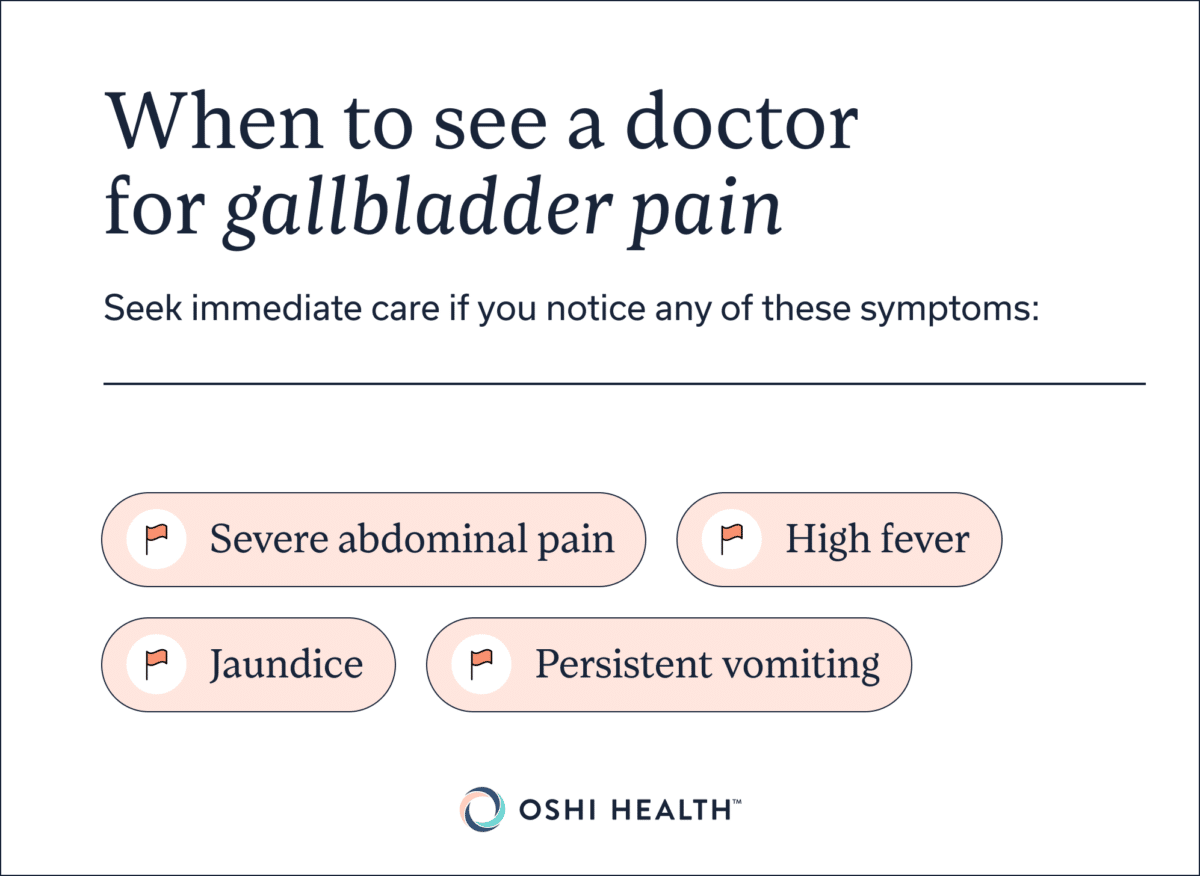
Seek immediate care if you notice any of these symptoms:
-
Severe/persistent abdominal pain
-
High fever
-
Persistent vomiting
-
Jaundice (yellowing of the skin or eyes)
Working with an Oshi Health provider
Crafting a diet for gallbladder pain can get tricky, especially since what triggers you may be different from what triggers someone else. For this reason, you may benefit from coordinated, multidisciplinary support from a team of GI specialists like those at Oshi Health.
Your care team might include a GI provider (a nurse practitioner or physician associate), a GI registered dietitian, and/or a gut-brain specialist or psychologist, all overseen by board-certified gastroenterologists. They collaborate to help you soothe and manage GI conditions and symptoms, and more.
A GI registered dietitian can be especially helpful for outlining a dietary pattern that helps prevent gallbladder attacks while ensuring optimal nutrition.

Key takeaways
-
The gallbladder stores bile and releases it in response to certain foods, especially those high in fat.
-
A gallbladder attack happens when a gallstone blocks bile flow, but dietary strategies can reduce your risk for gallstones and attacks.
-
Oshi Health can help you craft a dietary plan that works for you and help you manage gallbladder symptoms.
FAQ
-
High-fat meals tend to aggravate the gallbladder the most in the short term. However, diets high in carbohydrates can also cause trouble in the long run.
-
Staying hydrated by drinking water can help thin the bile stored within the gallbladder, which can help resolve an attack.
-
Yes, you can eat eggs if you have gallstones. However, since most of the fat content of an egg resides in the yolk, you may find that sticking to egg whites only helps reduce your risk for gallstones or gallbladder attacks.
Oshi is your partner in digestive health
Feel like your digestive concerns are running your life? You’re not alone—and we’re here to help you find lasting relief.
Oshi Health GI providers, gut-brain specialists, and registered dietitians work together to address your symptoms and find solutions that actually work for you.
Whether you’re dealing with chronic digestive issues or unpredictable symptom flare-ups, our GI specialists deliver:
✔ Personalized care plans tailored to your lifestyle
✔ Science-backed strategies to calm your gut
✔ Compassionate, whole-person care
✔ And so much more!
Ready to take control of your gut health?