


Have you ever eaten a meal and felt overly full after? That fullness may actually be bloating. There are many ways to relieve bloating, including eating foods rich in probiotics. However, when to take probiotics for bloating can be complicated, so let’s dive into what to realistically expect. Ahead, everything to know about probiotics for gas and bloating.
If your stomach has ever felt uncomfortably full or swollen, you’re not alone. That sensation is called bloating, and it’s something one in seven Americans experienced in the past week alone. Usually, bloating stems from excess gas in the gastrointestinal (GI) tract, which can be a one-off or a recurring issue. When bloating is chronic, it’s normal to look for solutions, which might include probiotics for bloating.
But probiotics aren’t a quick fix, and their usage in medicine is nuanced. While they may be recommended as part of a long-term solution, they’re unlikely to be used as a primary treatment. In fact, some strains of probiotics may actually make bloating worse under certain circumstances. Continue reading to learn about the best probiotics for bloating and when they will (and won’t) help.
What are probiotics?
Before we get ahead of ourselves, what are probiotics? They’re bacterial strains that may benefit the gut microbiome (the complex community of bacteria, fungi, and other organisms that live in your digestive tract) and can support microbial balance. While bacteria and fungi sometimes get a bad rep, many of them play helpful roles in digestion and overall gut health. Probiotics can be consumed through foods or supplements, but the clinical perspective is that food sources are a better choice than supplements.
Probiotics from food
For most of us, the best way to get probiotics is through diet. There are exceptions to this suggestion, which we’ll get into in the next section, but eating probiotic-rich food is a good way to get a diverse array of probiotic strains and to improve overall gut health.
Foods with probiotics include:
- Balsamic vinegar
- Fermented beets
- Fermented cabbage
- Fermented pickles
- Fermented olives
- Fermented onions
- Kefir
- Kimchi
- Kombucha
- Lassi
- Miso
- Sauerkraut
- Some cottage cheeses
- Some types of fermented beers
- Tempeh
- Yogurt
For some of these, like yogurt or cottage cheese, double-check that they contain live, active probiotic cultures before purchasing. Most Greek yogurt, for example, contains those cultures, while frozen or long-shelf-life yogurt doesn’t.
If a product features probiotics, it should either advertise that it contains live, active cultures or list specific probiotic strains on its ingredients list.
Probiotic supplements
As noted above, while supplements can sometimes be a piece of a larger solution to bloating, they are far from a cure-all. “I rarely recommend probiotic supplements to patients with bloating,” says Megan Koistinen, MS, RD, LDN, “In many cases, after a full assessment and other diet modifications, we can improve or resolve bloating. If a patient is curious about probiotics, I often encourage them to get probiotics from foods. We do know that foods have a wider range of bacterial strains, which improves your chances of matching your specific gut microbiome and improving gut health.”
All that said, supplements may be helpful for those who:
- Are experiencing chronic GI symptoms that aren’t getting better with other gut-supportive habits
- Don’t get enough probiotics from diet alone
- Recently took an antibiotic
If you’re a little confused by antibiotics’ cameo on the list, let’s talk through it. Antibiotics reshape the gut microbiome, so after someone finishes a course of antibiotics, a probiotic supplement can help”repopulate” the microbiome with beneficial bacteria, but it’s a short-term solution, not something someone must take for life.
No matter the dose, verifying a supplement’s quality and ingredients is tricky. The FDA doesn’t regulate supplements the same way it regulates medications, meaning there isn’t a government agency checking the quantity or quality of supplement ingredients.
That means you need to be extra-vigilant when purchasing a probiotic supplement, looking out for:
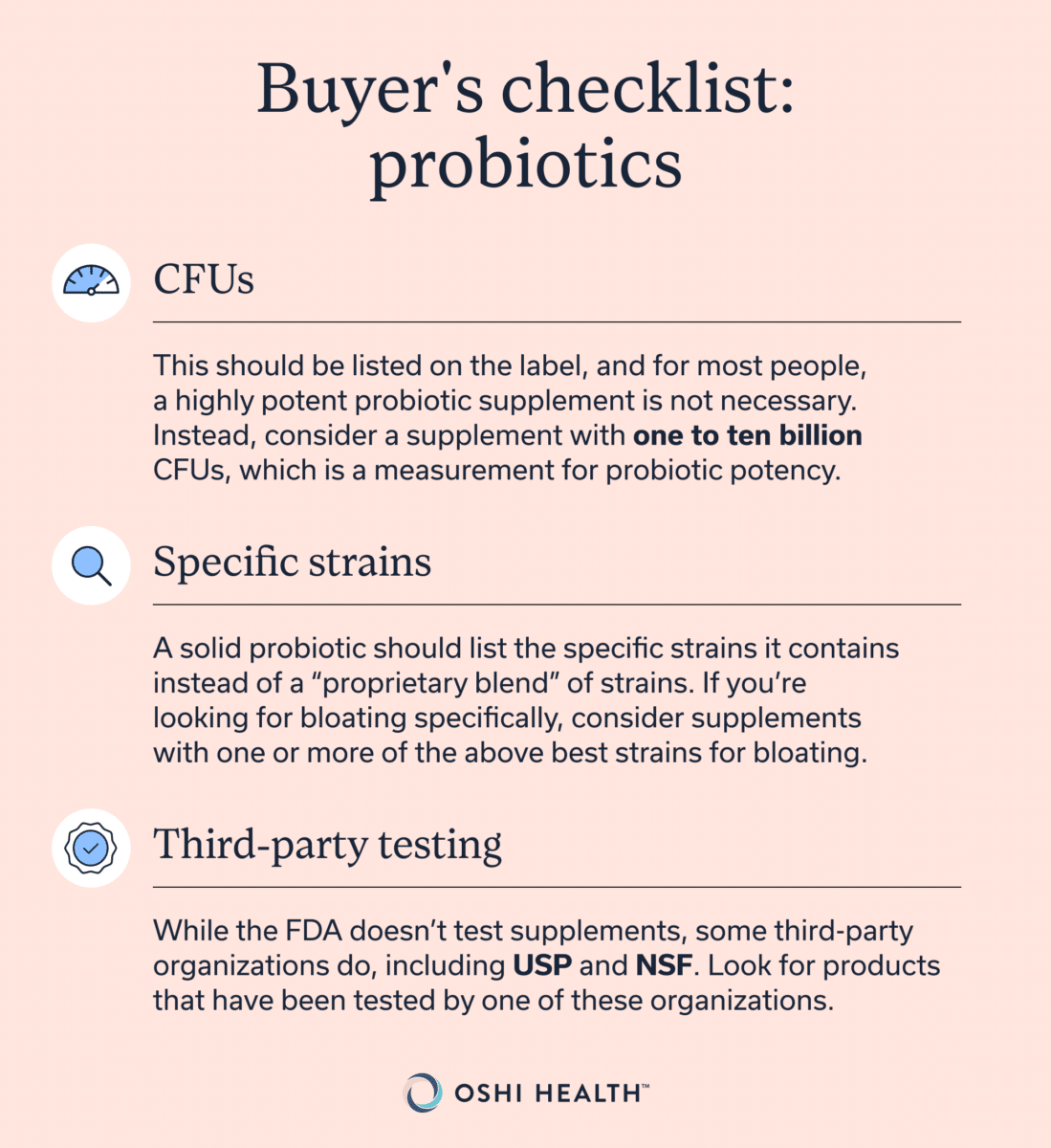
- CFUs: This should be listed on the label, and for most people, a highly potent probiotic supplement is not necessary. Instead, consider a supplement with one to ten billion CFUs, which is a measurement for probiotic potency.
- Strains: A solid probiotic should list the specific strains it contains instead of a”proprietary blend” of strains. If you’re looking for bloating specifically, consider supplements with one or more of the below best strains for bloating.
- Third-party testing: While the FDA doesn’t test supplements, some third-party organizations do, including the United States Pharmacopeia (USP) and the National Sanitation Foundation (NSF). Look for products that have been tested by one of these organizations.
“Probiotic supplements should be considered thoughtfully, not automatically,” reiterates Koistinen, “I occasionally recommend considering them only after a full assessment with a healthcare provider or dietitian to ensure diet, lifestyle, and gut-supportive habits are optimized first. When they are used, the focus should be on evidence-based strains and quality–not marketing claims or high-dose formulas.”
Do probiotics help with bloating and gas?
They sure can. You can think of the gut microbiome like a college dorm, and the gut bacteria are the residents. If there are unruly residents (aka”bad” bacteria), the dorm will be chaotic and dirty, and they’re likely to invite classmates over for parties.
If there are good residents (aka beneficial bacteria), the dorm is more likely to be a calm environment conducive to studying. In this metaphor, probiotics are in the good resident category. For those with bloating, introducing healthy probiotic strains can help balance the gut microbiome.
That balancing effect mentioned above can improve how food moves through the digestive system and may reduce gas and bloating. Plus, probiotics may help reduce gut inflammation, another contributing factor.

Which probiotics are best for bloating?
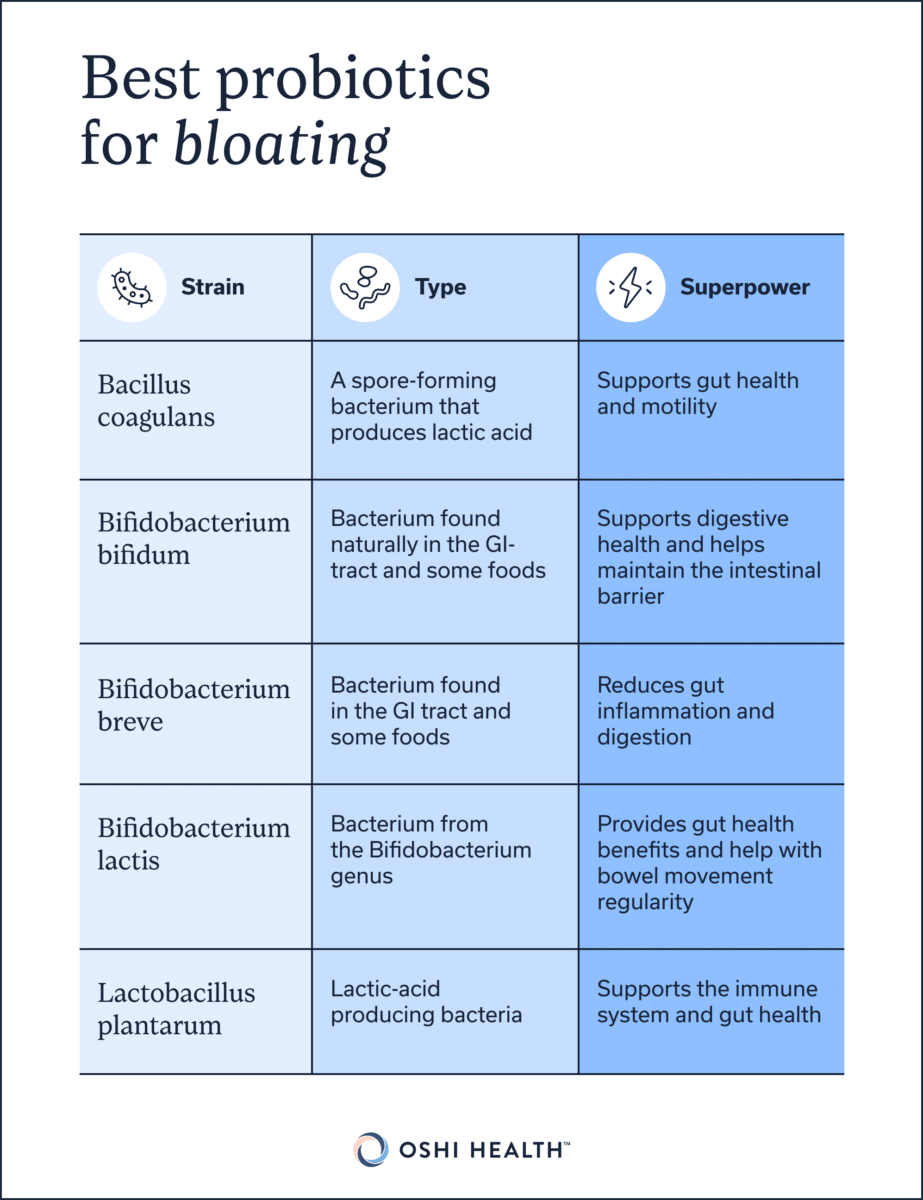
When discussing probiotics, keep in mind that, like different foods, not all probiotic strains offer the same benefits. Some studies suggest specific strains are the best probiotics for gas and bloating:
-
Bacillus coagulans: A spore-forming bacterium that produces lactic acid that supports gut health and motility.
-
Bifidobacterium bifidum: A type of bacterium found naturally in the GI-tract as well as in some foods that supports digestive health and helps maintain the intestinal barrier.
-
Bifidobacterium breve: Another bacterium found in the GI tract and foods that’s particularly effective at reducing gut inflammation and digestion.
-
Bifidobacterium lactis: A third bacterium from the Bifidobacterium genus that may provide gut health benefits and help with bowel movement regularity.
-
Lactobacillus plantarum: A lactic-acid-producing bacteria that supports the immune system and gut health.
It’s important to note that all of these studies were limited to specific populations, such as individuals with no GI conditions, people with irritable bowel syndrome (IBS), or populations with inflammatory bowel disease (IBD). That means these strains might not be beneficial for all cases of bloating.
To make matters more complicated, many foods and supplements contain multiple probiotic strains. In fact, consuming more than one strain may be even more effective at reducing unwanted bloating, which is why getting your probiotics from food rather than supplements is often the recommended way to increase your intake. Working with a team of GI providers like those at Oshi Health can help you most effectively choose and implement supplements rather than attempting trial and error on your own.
Bloating 101: common causes probiotics won’t”fix” on their own
When it comes to bloating, probiotics might help, but they won’t”fix” the underlying cause on their own. Reasons for bloating include:
- Chewing with your mouth open
- Constipation
- Eating large meals
- Fermentation of certain fibers and sugars in the large intestine
- Having an extremely sensitive gut
- Menstrual periods
- Some medications, such as non-steroidal anti-inflammatory drugs (NSAIDs) and GLP-1s
- Swallowing air
When bloating shows up regularly, especially alongside other GI symptoms, such as diarrhea or abdominal cramping, it could indicate an underlying GI condition. Common culprits are:
- Celiac disease: A chronic condition where the small intestine cannot process gluten
- IBS: A chronic condition impacting the digestive tract
- IBD: A group of conditions, including Crohn’s disease and ulcerative colitis, that cause chronic inflammation in the gut
- Food intolerances: Sensitivities or intolerances to certain foods, like wheat or dairy products
- Gastroparesis: A condition that delays gastric emptying from the stomach to the small intestine
- Small intestinal bacterial overgrowth (SIBO): Bacterial overgrowth in the small intestine
SIBO deserves some extra attention, since it’s one case where taking a probiotic supplement may actually make bloating worse. At least, this is the case with most probiotic strains, though S. boulardii CNCM 1-745, a yeast-based probiotic, may improve SIBO symptoms.

Gut-friendly habits to reduce bloating
“A simple way to add more probiotic-rich foods is to think in terms of small, consistent habits rather than big changes,” says Koistinen, “I typically suggest aiming for one probiotic-rich food per day. However, if someone currently eats very few of these foods, a more realistic starting point is two to three servings per week, gradually increasing from there as it becomes routine. The goal isn’t perfection, it’s exposure and consistency!”
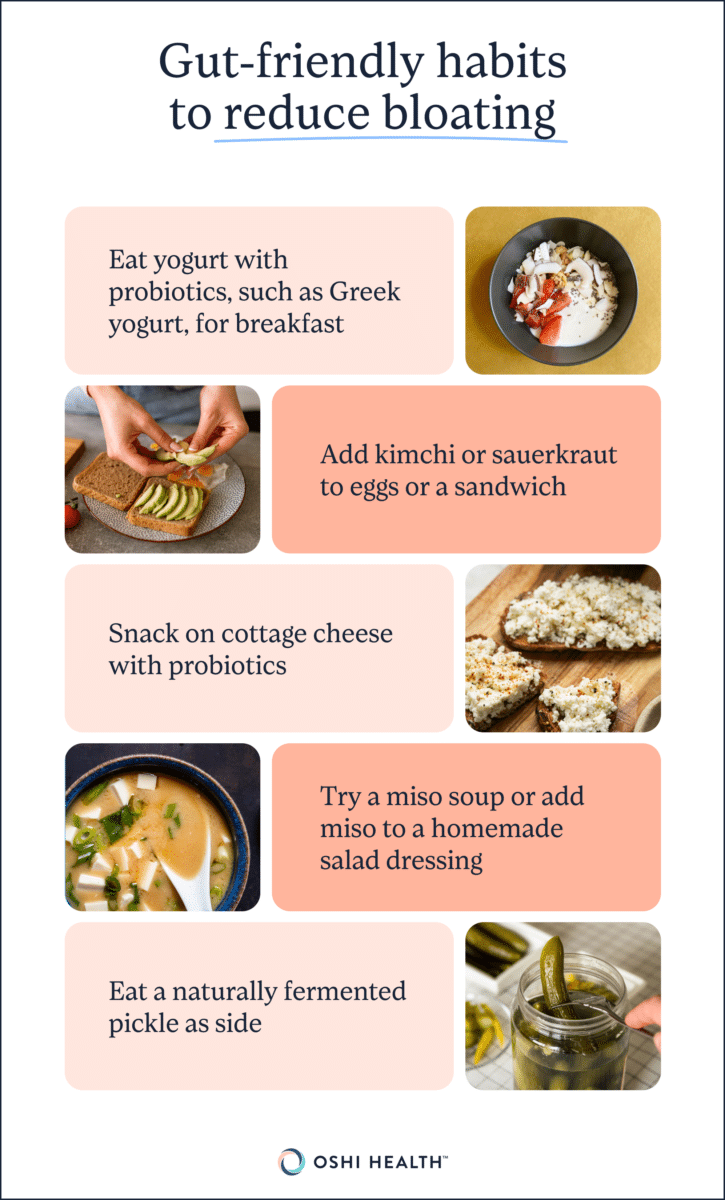
Koistinen provides some easy ways to start adding probiotics to your plate:
- Eat yogurt with probiotics, such as Greek yogurt, for breakfast
- Add kimchi or sauerkraut to eggs or a sandwich
- Snack on cottage cheese with probiotics
- Try a miso soup or add miso to a homemade salad dressing
- Eat a naturally fermented pickle as a side
You also can’t”out-probiotic” a lifestyle or diet that isn’t healthy for your gut. Instead, eat more probiotics alongside other gut-friendly habits, such as managing stress, eating other beneficial nutrients like fiber and prebiotics, and staying active.

When to seek care
“Bloating alone isn’t always indicative of a serious condition,” says Koistinen, “For many people, bloating is related to common, non-serious factors like diet, constipation, food intolerances, stress, hormonal changes, or changes in gut motility. Occasional bloating that improves with simple interventions– and can often be managed with the help of an RD and/or BH .”
However, someone should see a provider, ideally a GI specialist, if bloating is:
- Interfering with your everyday routine or reduces your quality of life for weeks
- Severe or painful
- Progressively getting worse
- Experienced alongside unexplained weight loss or gain
- Accompanied by blood in stool, vomiting, persistent diarrhea, constipation, fever, or difficulty swallowing
Key takeaways
- Probiotics may help reduce bloating because they balance the gut microbiome, help with digestion, and may reduce intestinal inflammation. Some probiotic strains, such as Lactobacillus plantarum or Bifidobacterium bifidum are particularly effective at reducing bloating.
- Probiotics are best used as part of an overarching plan to reduce bloating, not as a cure-all. Other lifestyle changes that can help reduce bloating include regular exercise, stress reduction, and a balanced diet featuring a variety of whole foods.
- Navigating probiotics and determining what’s causing the bloating can be tricky. Luckily, you don’t have to do it alone. A GI specialist, such as the team at Oshi Health, can help treat chronic bloating and offer guidance on probiotics for people with a GI condition.
Frequently asked questions (FAQs)
-
Some of the best probiotic strains to reduce bloating include Lactobacillus plantarum ,, Bifidobacterium bifidum , and supplements with multiple probiotic strains. However, for most people, it’s best to get probiotics through foods like miso and kimchi. Keep in mind that probiotics won’t reduce bloating on their own and should instead be viewed as part of a gut-friendly diet and lifestyle.
-
In some cases, probiotics can help reduce bloating since they balance gut flora, reduce inflammation, and help with the breakdown of foods. However, they should be part of a gut health plan, not a magic bullet to get rid of bloating on their own. In some cases, such as when someone has SIBO, some strains of probiotics make symptoms worse. If bloating gets worse after upping your probiotic intake, see a primary care provider or GI specialist, such as the team at Oshi Health.
-
The best way to relieve a bloated stomach depends on the cause. Some tips that may help include eating smaller meals, chewing with your mouth closed, eating a balanced diet, and massaging the stomach from left to right to help release trapped air. When these don’t help, contact a GI specialist to determine if there’s an underlying cause and next steps.
-
If someone has chronic digestive issues, such as recurring bloating, constipation, diarrhea, or stomach cramps, they may benefit from a probiotic. Other signs include frequent illnesses, constant fatigue, or recent antibiotic use.
Take charge of your gut health with expert dietary support
Your nutrition plays a powerful role in your digestive well-being. But figuring out what to eat can be overwhelming, especially if you’re dealing with chronic or occasional GI symptoms.
Oshi’s registered dietitians have specialized knowledge in all GI symptoms and conditions. They work closely with you to:
✔ Identify foods that help—not hurt—your gut
✔ Develop personalized meal plans that fit your lifestyle
✔ Guide you through small, sustainable changes for symptom relief
✔ And so much more!
Ready to make mealtimes less stressful and feel in control again?