



Nausea that comes and goes can be frustrating and disrupt your daily life. After all, it’s hard to get things done and enjoy yourself if you feel queasy or don’t know when that feeling’s going to come back. A personalized evaluation can identify the underlying cause of your nausea and get you on track to feeling better.
Most of us have been there at one time or another: you’re minding your own business, and then that sick, unsettled sensation bubbles up in your stomach, setting you on the brink of barfing, but not quite there. This is nausea.
Experiencing nausea once in a while is pretty normal. Personally, I’m prone to motion sickness. When I start feeling hot and nauseous in the passenger seat, it’s quite clear what the culprit is. Eventually, the nausea goes away, either after I get out of the car or after I end up vomiting.
In other cases, though, the reason behind nausea can be a little less clear-cut. Some people experience nausea that comes and goes, meaning they might feel nauseous one day, but fine the next. Or perhaps they feel nauseous at a certain time of day, or intermittently. There are a lot of potential causes, ranging from pregnancy and migraines, to infections, medications, digestive conditions, anxiety and stress, and more.
Whilst the occasional bout of nausea is pretty common, experiencing nausea repeatedly, especially if it’s interrupting your daily life in any way, deserves a closer look.
Nausea that comes and goes: What it can mean
While nausea isn’t an official medical diagnosis, as a symptom it can be a sign of many possible things. It also doesn’t look or feel the same for everyone. For some people, nausea episodes are brief. For others, nausea may last longer (think hours or days) before subsiding. It might come on gradually or suddenly, and its symptoms can be mild to severe.
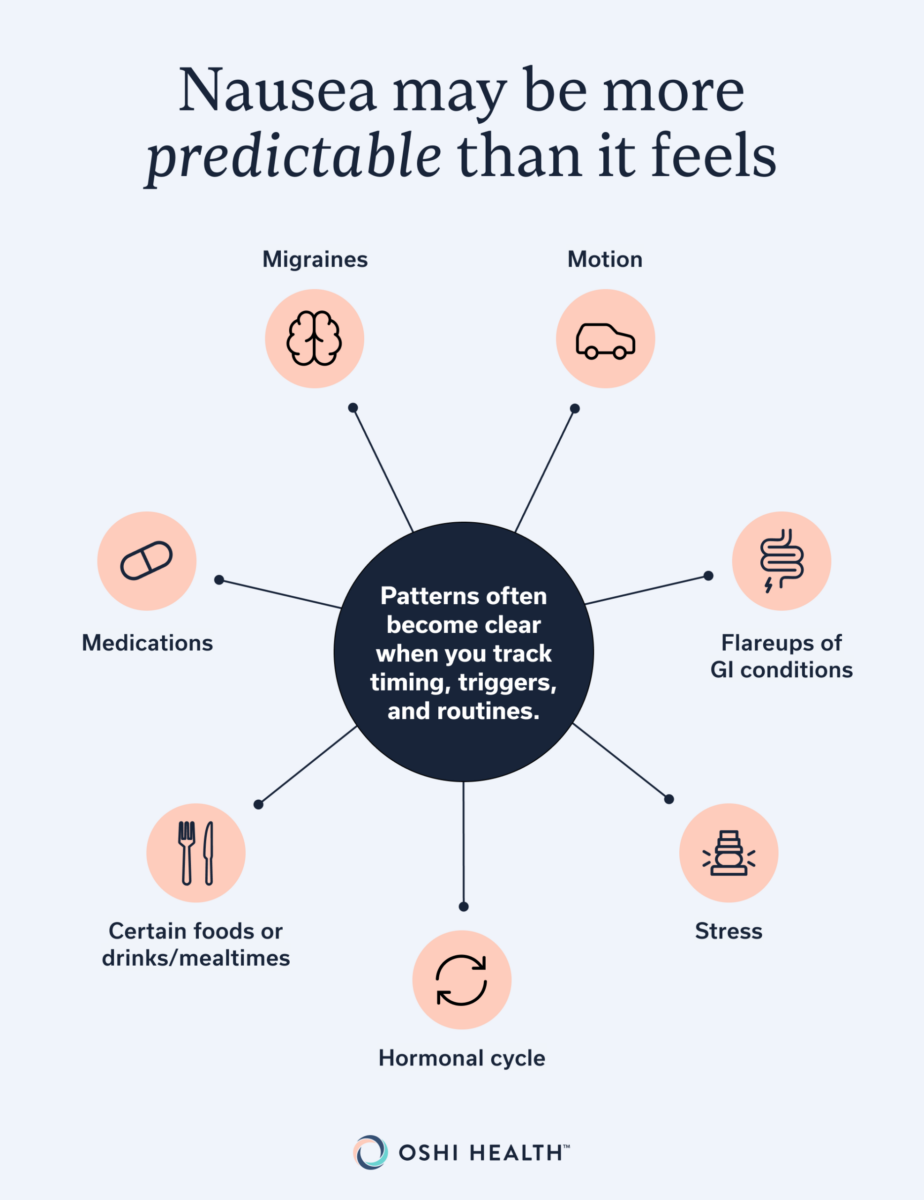
If your nausea keeps coming back, then it might feel like it’s happening at random. But often, it’s possible to identify a pattern if you take a closer look. This might be feeling nauseous at a certain time of day or month, after certain activities, or around mealtimes. Some potential triggers include:
- Certain foods or drinks
- Flareups of gastrointestinal (GI) conditions
- Hormonal cycle
- Mealtimes
- Medications
- Migraines
- Motion
- Stress
It’s important to pay attention to these triggers, as well as any timing patterns. This can help your medical team figure out what’s causing your nausea specifically.
Recurring nausea isn’t just a sign of a “sensitive stomach.” It’s often a symptom of a larger issue, which you deserve to have examined and treated, so that you can start feeling better.
What is nausea and what do nausea symptoms feel like?
Let’s go back to basics for a minute. You might be wondering what exactly nausea is, and how to tell if you’re really experiencing it.
Nausea is that classic sick to your stomach feeling, like you might get before needing to sprint to a toilet to barf. However, nausea doesn’t always lead to vomiting.
Other nausea symptoms, or symptoms that accompany nausea, include:
- Bloating
- Constipation
- Diarrhea
- Dizziness
- Headache
- Reflux
- Stomach pain and cramping
- Sweating
These symptoms vary based on the underlying cause of your nausea.
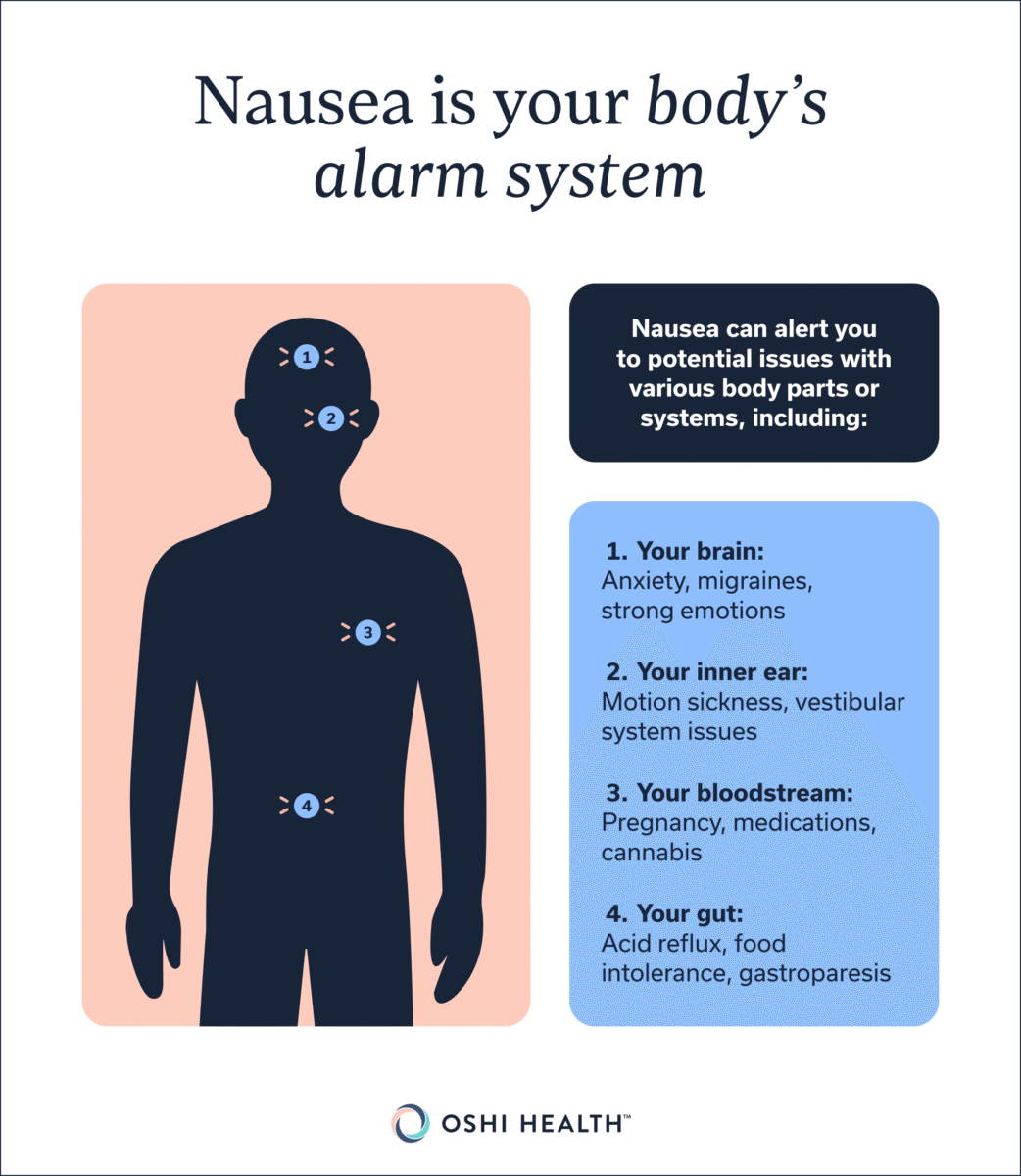
“I often tell my patients that nausea is your body’s sophisticated, albeit very unpleasant, internal alarm system,” says Daksesh Patel, DO, a board-certified gastroenterologist with GI Alliance of Illinois. “It occurs because of a complex communication loop between your brain and your digestive tract,” he explains.
In simple terms, when your brain receives signals from your gut, inner ear, or even your bloodstream that something’s off, this can make you feel nauseous. This might be a toxin, a physical blockage, or another imbalance, which triggers a wave of unease to essentially make you stop whatever you’re doing that your body doesn’t like. In essence, nausea is an annoying and extremely unpleasant protective instinct.
Common GI causes of nausea that comes and goes
It makes sense that feeling “sick to your stomach” might be related to something wonky happening in your GI tract, which your stomach is part of. This is true for many, but not all, cases of nausea.
“When a patient describes chronic or intermittent nausea, I become a bit of a medical detective,” says Dr. Patel. He starts by looking at the most common GI causes of nausea, such as:
- Acid reflux: Lots of people with acid reflux experience nausea as a symptom. Clues that your nausea could be related to acid reflux are additional symptoms like heartburn, regurgitation, and specific food triggers like spicy or fried foods.
- Food intolerance: If you’re intolerant or sensitive to a specific food, then eating that food may result in nausea or even vomiting.
- Gastroparesis: This is when your stomach is slow to empty, and it can cause feelings of nausea. Other symptoms people with gastroparesis experience include a feeling of fullness too soon after eating and for a long time after eating, bloating, belching, poor appetite, and more.
Nausea is also a symptom of other GI conditions, including:
- Celiac disease: This is an autoimmune disease in which the immune system attacks the lining of the small intestine if you consume gluten. Nausea and vomiting are common symptoms of celiac disease.
- Cyclic vomiting syndrome (CVS): People with CVS experience sudden and repeated “attacks” of severe nausea and vomiting.
- Functional dyspepsia: Nausea directly after meals could be a sign of functional dyspepsia, which is a functional GI disorder that results in upper abdominal discomfort after eating.
- Irritable bowel syndrome (IBS): Nausea is a symptom of IBS for some people. A clue that your nausea is due to IBS is if it overlaps with other GI symptoms like constipation or diarrhea.
- Obstruction: An intestinal obstruction is when something is blocking your intestines—and it is a medical emergency. Severe nausea and vomiting are key symptoms of an obstruction. Other symptoms include severe abdominal pain and swelling, vomiting, and constipation.
- Peptic ulcer disease: Stomach ulcers often cause nausea, alongside other symptoms like bloating, fullness too soon after eating, upper abdominal pain, and belching.
Other causes of nausea outside the gut
It might surprise you, but your gut isn’t the only culprit when it comes to nausea. Lots of factors outside of your GI system can also contribute to nausea.
Some of these possible causes include:
- Abdominal migraine: These are repeated episodes of severe abdominal pain, including nausea and sometimes vomiting. They last two to 72 hours, without any symptoms between episodes. Unlike classic migraine, it doesn’t include head pain. Abdominal migraine is most common in children, but can also affect adults.
- Anxiety and stress: Psychological factors can also be at play. Anxiety and stress are known triggers for nausea. “We can’t overlook the gut-brain axis,” says Dr. Patel. “[This is] where chronic stress or anxiety manifests as physical nausea.”
- Cannabis: Marijuana, or cannabis, can cause nausea, especially when used long term. In its most severe form, this is called cannabis hyperemesis syndrome (CHS), and results in repeated episodes of nausea and vomiting.
- Food poisoning or viral illness: Nausea can be a consequence of foodborne or waterborne illness. Diarrhea, vomiting, stomach cramps, and fever are other symptoms that could point toward this diagnosis.
- Gallbladder issues: Problems with your gallbladder, including gallstones, can cause feelings of nausea due to blockage of the bile duct. You may also experience upper right-side abdominal pain and vomiting.
- Hormonal shifts: Fluctuating hormone levels can cause nausea. This could be due to shifts in your menstrual cycle, perimenopause, and ovulation.
- Medications: Lots of common medicines can irritate your stomach lining and lead to nausea. You may also feel nauseous as a side effect from anesthesia or chemotherapy.
- Migraine: Up to 50% of people with migraine report that over half of the time, their migraine attacks include nausea. Migraine also involves severe head pain, and other symptoms like visual and auditory disturbances, vomiting, and more.
- Motion sickness: When there’s a mismatch between your vestibular system (inner ear) and visual system, this can result in motion sickness. Nausea is the primary symptom of motion sickness.
- Pregnancy: Up to 80% of pregnant people will experience nausea as a result of pregnancy and its related hormonal changes.
- Thyroid dysfunction: Nausea is a symptom of hyperthyroidism, which is when your thyroid gland (a butterfly-shaped gland in your neck) produces more thyroid hormones than your body needs.
- Vestibular system issues: Your vestibular system includes your inner ear, as well as a complicated system of neurons. It helps us know where we are in space, and when it’s disrupted it can result in nausea, as well as symptoms like vertigo, vomiting, vision and hearing changes, dizziness, and more.
Acute nausea vs. chronic nausea vs. episodic nausea
Sometimes nausea happens as a one-off experience, and other times it becomes more chronic. “The pattern of the nausea tells me a lot about the likely cause,” says Dr. Patel. “While acute nausea is usually about a temporary ‘invader,’ chronic and episodic cases are typically about a functional ‘glitch’ in how the body processes food or signals.”
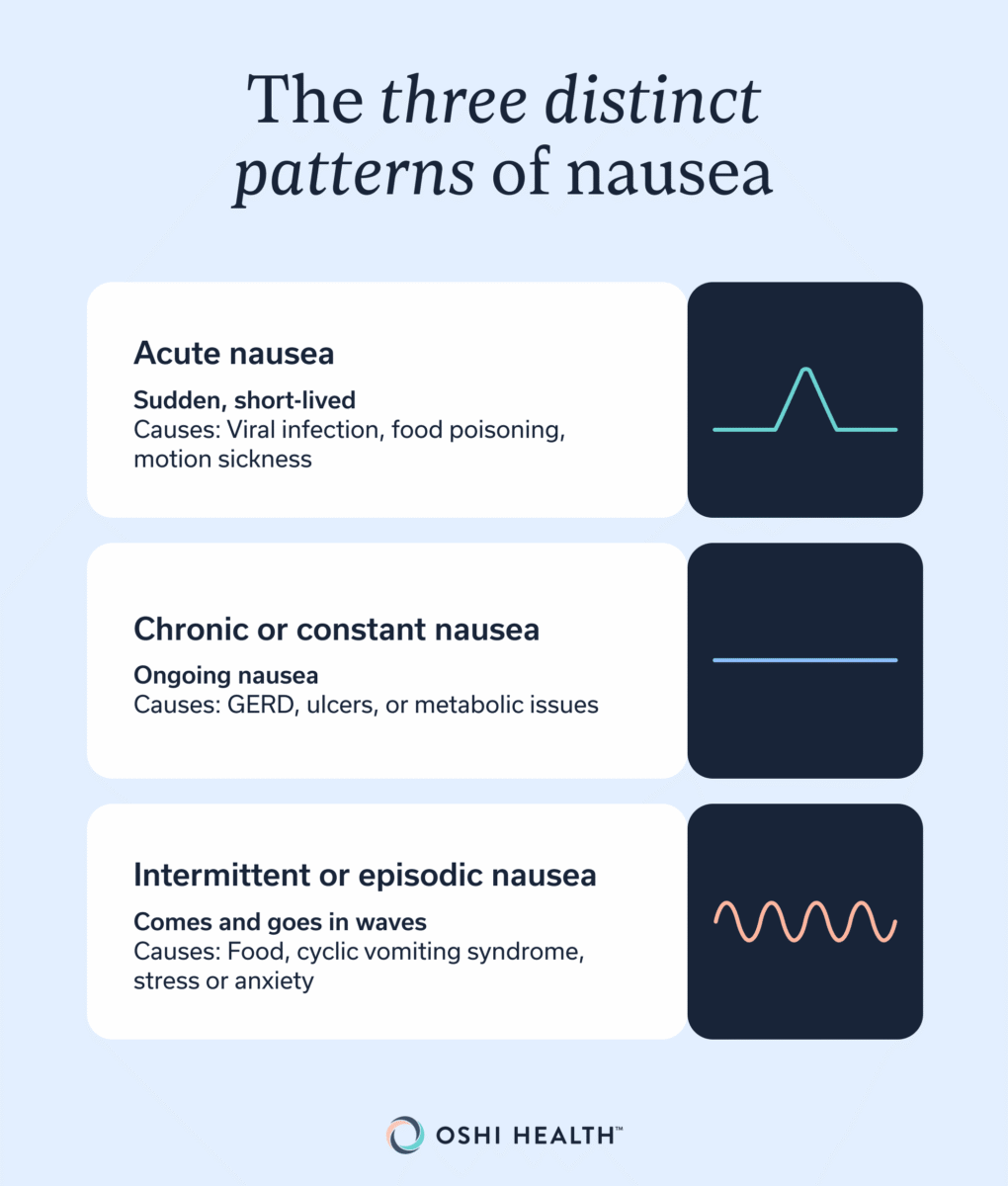
The following are three distinct patterns of nausea:
- Acute nausea: This is a sudden, short-lived episode of nausea. It’s often caused by a viral infection, food poisoning, or a specific event like motion sickness from traveling in a vehicle or boat.
- Chronic or constant nausea: People with constant or chronic nausea experience ongoing nausea that persists for weeks. According to Dr. Patel, it’s more likely to be linked to ongoing conditions like GERD, ulcers, or metabolic issues.
- Intermittent or episodic nausea: This is when nausea comes and goes in waves. This pattern often points toward triggers like specific foods, cyclic vomiting syndrome, or psychological issues like stress or anxiety.
What causes nausea after eating, in the morning, or at random times?
Figuring out what causes nausea, for you specifically, involves taking a deeper look at the timing. Some common ones include:
- After eating: Nausea after eating a meal points toward issues relating to digestion, such as acid reflux, gastroparesis, ulcers, or specific food triggers. Rich or fatty meals may also trigger nausea related to gallbladder issues.
- Morning: Some people are more likely to experience nausea in the morning, or even wake up in the night feeling nauseous. Morning nausea is a classic symptom of early pregnancy, due to hormonal fluctuations that happen during the first trimester. It could also be related to morning medication side effects, reflux, anxiety, or stress.
- Random or wave-like: In many cases, it can be tough to suss out an obvious pattern to your nausea, without help from a healthcare provider. Seemingly random nausea may be caused by changing stress levels, vestibular issues, cyclic vomiting syndrome, migraines, large or greasy meals, dehydration, food sensitivities, and more.
Your symptom timing won’t necessarily provide a diagnosis, but it can greatly help guide the next steps in your GI evaluation.
“I encourage you to keep a simple log of when it happens and what you’ve eaten,” says Dr. Patel. “That data is gold for your doctor.”
Consider tracking your nausea timing and symptoms alongside potential triggers (like meals, sleep, stress, and medications). You can do this in a note on your phone, in a journal, or even using an app (such as Bearable, Flaredown, or Wave Health).
How to fix nausea at home—and when it may help
If nausea is disrupting your daily life, then chances are you’re looking for some ways to address it at home—at least temporarily—so you can get your head out of the loo and back to daily life.
“On the home-remedy side, I’m a big proponent of ginger,” says Dr. Patel. “Whether in tea, capsules, or chews, it has a natural prokinetic effect that helps the stomach empty.” This isn’t just a folk remedy, either. There’s a large body of scientific evidence that shows ginger can help reduce feelings of nausea.
Peppermint is another popular home remedy for nausea with evidence to back it up. It can be soothing for the gastric lining, according to Dr. Patel, who often recommends it to his patients with intermittent nausea. You might try peppermint tea after meals, smelling peppermint oil, or chewing on some fresh peppermint leaf when you feel nauseous.
Some other strategies that can help when you’re feeling nauseous include:
- Avoid any known triggers
- Avoid strong scents
- Drink fluids to avoid dehydration, but in small sips to avoid triggering vomiting
- Get plenty of rest, as well as fresh air when you’re able
- Favor small, bland meals instead of large, heavy, greasy, spicy, or strong-smelling meals
Keep in mind that these home remedies target the symptom of nausea, without treating its underlying cause. Without addressing that, your nausea is likely to continue coming back. Repeated episodes of nausea require more than just symptom management and can benefit from evaluation by a health professional, such as those who work with Oshi Health.
How doctors evaluate recurring or chronic nausea
“If you are living with nausea that pops up and disrupts your life, please know that you do not have to ‘just live with it,’” says Dr. Patel. Nausea may be something that nearly everyone experiences at some point in their life, but it can also be incredibly exhausting and debilitating if you experience it on a recurring basis. “It is also very treatable once we find the root cause,” says Dr. Patel.
Consider making an appointment with the multidisciplinary GI team at Oshi Health if you’re experiencing recurring nausea. You’ll work together with a team of GI providers, registered dietitians, and gut-brain specialists to diagnose and treat the underlying cause of your nausea. You should also let your primary care doctor know about chronic nausea, because many other things can manifest in this way, unrelated to GI issues—including medication side effects.
Your GI provider will likely start out by doing a review of your medication and medical history. They’ll also ask questions about nausea pattern, timing, and accompanying symptoms, such as weight loss, appetite, bloating, or headache.
Testing will depend on what the suspected cause of your nausea is, because it’s essential to treat this cause directly rather than slapping a bandaid over your symptom of nausea. Some testing you might undergo includes:
- Bloodwork
- Endoscopy
- Gastric emptying test
- Imaging
- Stool tests
- And more
How doctors treat recurring nausea with medication
“For nausea that fluctuates, I typically recommend a strategy that combines lifestyle ‘quick fixes’ with targeted medical interventions,” says Dr. Patel. If the home remedies discussed above aren’t enough, then it’s time to move on to a more clinical toolkit.
To relieve nausea immediately, your GI provider might prescribe anti-nausea medications like Ondansetron (Zofran), which is highly effective at blocking the chemical signals that trigger the vomiting reflex.
If your GI provider has identified that your nausea is due to slow stomach emptying, then they may instead prescribe medications like Metoclopramide (Reglan) or Erithromycin, which stimulate your stomach muscles to move food along through your digestive tract.
For people with acid reflux triggering their nausea, a course of proton pump inhibitors (PPIs) or H2 blockers often resolves nausea by reducing irritation in the esophagus.
And, in cases where a hypersensitive gut-brain axis is suspected, then your GI provider might prescribe neuromodulator medications, such as low-dose tricyclic antidepressants (TCAs), such as Nortriptyline. “These aren’t being used for mood in this context,” explains Dr. Patel. “Rather, they act as a ‘volume knob’ to turn down the overactive pain and nausea signals traveling from the gut to the brain.”
Gut-brain treatments for recurring nausea
Medication isn’t the only treatment that can seriously help alleviate nausea. There’s been a rise in nausea due to modern lifestyles, with high stress environments and highly processed diets playing a big role in this.
“Never underestimate the power of the ‘rest and digest’ nervous system,” says Dr. Patel. “Sometimes, the most effective ‘medicine’ is simply slowing down and allowing our bodies the environment they need to process what we put into them.”
This might look like deep breathing techniques, yoga or meditation, cognitive behavioral therapy (CBT), and more. Regulating your nervous system (and gut) is often easier said than done, so working with a professional gut-brain specialist, like those who work with Oshi Health, can guide you through this process.
When to seek care
Nausea that lasts more than a few days or keeps returning on a regular basis deserves evaluation by a healthcare provider. In some cases, nausea is a sign of something more urgent.
Red flags accompanying nausea include:
- Any reason to believe your nausea could be due to poisoning
- Black, dark, or tarry stools
- Blood in vomit
- Chest pain
- Difficulty keeping food or fluids down
- Repeated vomiting over a period of 24 hours or longer
- Severe abdominal pain and cramping
- Severe headache and stiff neck
In these cases, head to urgent care or the emergency room to have your nausea evaluated in person as soon as possible.
Key takeaways
- Intermittent nausea is a symptom of a number of health conditions, such as acid reflux, IBS, functional dyspepsia, viral infection, thyroid or gallbladder issues, and more.
- It can also result from factors like hormonal changes, food poisoning, stress, motion sickness, medication side effects, and so much more.
- Identifying the pattern and timing of your nausea is key to identifying your underlying cause, so that your nausea can be treated most effectively.
Frequently asked questions (FAQs)
When does nausea become chronic nausea?
There’s no formal definition of chronic nausea, because it’s considered to be a symptom rather than a diagnosable health condition. However, experts generally think of chronic nausea as symptoms of nausea that persist for several weeks or longer. For some people, this nausea might be constant, and for others it could be intermittent.
Why do I have constant nausea, but I’m not throwing up?
Some people think of nausea as a “spectrum” that eventually leads to vomiting, but this isn’t true. It’s possible to have nausea as a standalone symptom, without throwing up. In fact, the majority of people with chronic nausea report that they experience nausea without vomiting.
How to fix nausea at home?
Ginger and peppermint are popular herbal remedies for nausea with research to support their effectiveness. You can also relieve nausea by eating bland meals, drinking plain fluids, avoiding strong scents, and identifying any triggers.
Oshi is your partner in digestive health
Feel like your digestive concerns are running your life? You’re not alone—and we’re here to help you find lasting relief.
Oshi Health GI providers, gut-brain specialists, and registered dietitians work together to address your symptoms and find solutions that actually work for you.
Whether you’re dealing with chronic digestive issues or unpredictable symptom flare-ups, our GI specialists deliver:
✔ Personalized care plans tailored to your lifestyle
✔ Science-backed strategies to calm your gut
✔ Compassionate, whole-person care
✔ And so much more!
Ready to take control of your gut health?