


There’s no universal Crohn’s disease diet. But while no one diet has been shown to reduce Crohn’s flares, a few eating patterns have been linked to improved quality of life and inducing remission if you’re already in a flare. The Mediterranean diet (which incorporates lots of colorful fruits and veggies, healthy fats, and lean meats) is recommended to improve well-being for people with Crohn’s disease. However, this isn’t one-size-fits-all. It might need to be adjusted during flares, if someone has intestinal strictures, or to accommodate personal food triggers.
Navigating Crohn’s disease diet advice can be incredibly confusing, especially during a flare. There are a lot of conflicting recommendations out there. Maybe your cousin’s friend with Crohn’s thrives on a gluten-free diet, whereas your social media feed is blowing up with anti-inflammatory recipes. Foods that work for you in remission might have you running to the nearest toilet during a flare. What gives?
The truth is that there isn’t a single, correct diet that works for everyone with Crohn’s disease. And whatever diet does work best for you might need a little switcheroo when your Crohn’s is more active. This might sound vague, but luckily, there are some rules of thumb that will benefit most people. A whole-food, Mediterranean-based approach that avoids ultra-processed foods is often recommended, but there are a few caveats.
This article digs into the details of Crohn’s disease diet (during both remission and flares), common triggers, when to seek care, and more.
Crohn’s disease diet: What it can and can’t do
Before we get into the specifics, it’s important to know that adopting a Crohn’s disease diet will not cure the condition. It also isn’t a substitute for care from a GI specialist, which may include medications, gut-brain therapy, and lifestyle adjustments in addition to nutritional support.
“Many people want to heal their Crohn’s disease with nutrition alone,” says Brooklin White, MS, RD, LD, an inflammatory bowel disease (IBD) dietitian. “But remission often requires a balance of both medical and nutrition therapy.”
Even though diet alone can’t cure your Crohn’s, it can still make a big difference to your symptoms and quality of life. The main goals of nutrition therapy for Crohn’s are:
- Avoiding vitamin and nutrient deficiencies
- Balancing electrolytes, especially during episodes of diarrhea
- Building tolerance for a wide variety of foods
- Maintaining weight and muscle
- Minimizing unnecessary restrictions and food fear
- Remaining hydrated
“I typically frame it as ‘let’s set the body up for as much success as we can with nutrition,’” says White. Think of it like teamwork: if your body has the tools it needs to create as anti-inflammatory a state as it can through diet, then this can help your medication work quickly and effectively.
“Best diet for Crohn’s disease”: What the evidence supports
No diet is proven to reduce flares of Crohn’s disease. However, there are a couple of diets that may improve quality of life or bring on remission from a pre-existing flare.
Mediterranean diet
According to the American Gastroenterological Association’s (AGA)most recent clinical practice update, all patients with IBD should follow a Mediterranean diet for their general health and well-being, unless they have contraindications (such as intestinal strictures or obstructions).
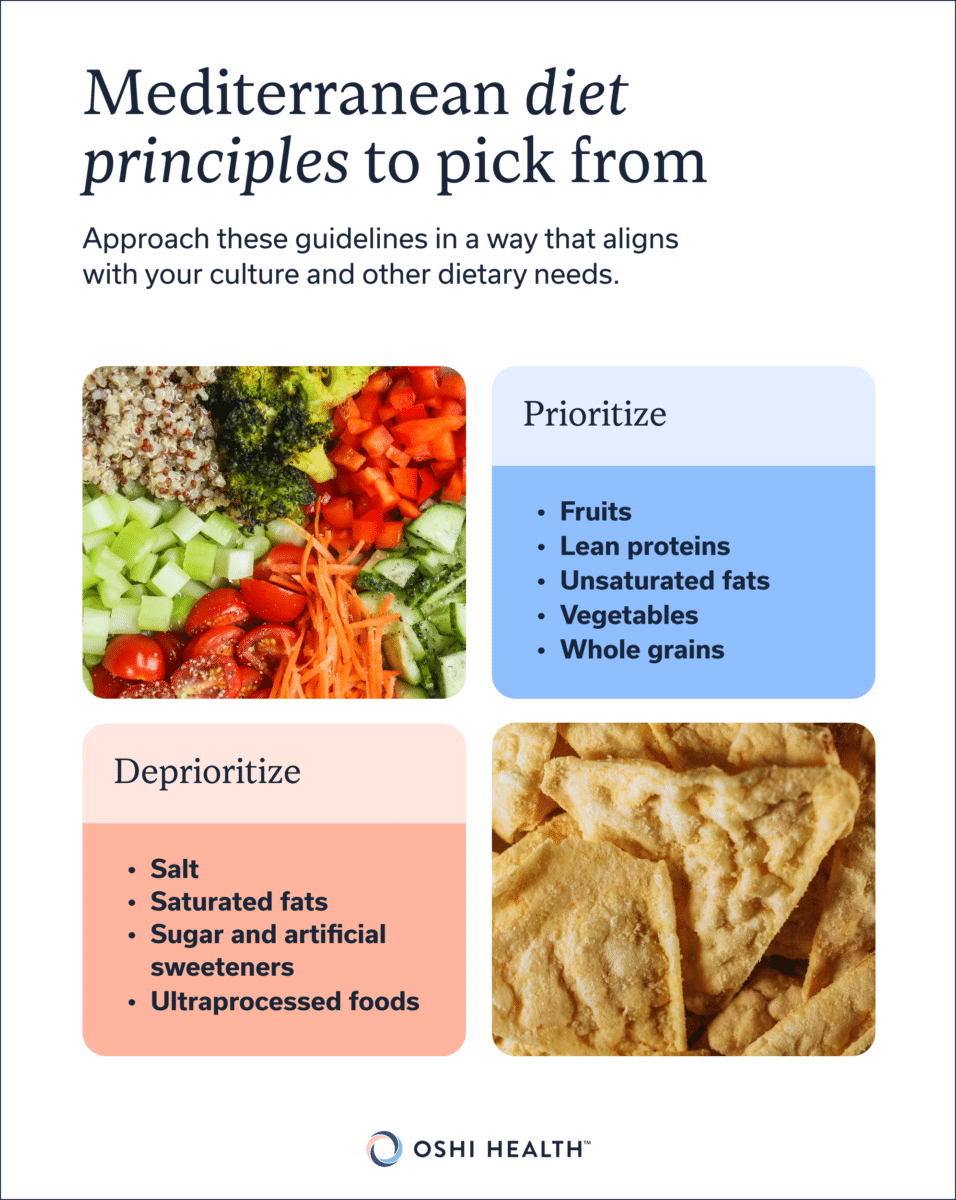
The Mediterranean diet includes lots of:
- Fruits
- Lean proteins
- Unsaturated fats (such as olive oil, nut butters, avocado, and wild fish)
- Vegetables
- Whole grains
It’s low in:
- Salt
- Sugar
- Ultraprocessed foods
You can also think of the Mediterranean diet as a whole foods, heritage-type diet pattern. “Many of our patients [at Oshi Health] come from different cultures, so I emphasize that they don’t need to change their food patterns specifically to Mediterranean,” says White.
Instead, swap out ultra-processed foods or saturated fats for whole foods, herbs, and unsaturated fats that align with your own culture.
Crohn’s disease exclusion diet (CDED)
The Crohn’s disease exclusion diet (CDED) is another diet with some evidence behind it, but it should only be used under the close guidance of professionals. This diet is designed to exclude foods that are thought to harm nutrient absorption, disrupt the gut microbiome, or increase inflammation.
Partial enteral nutrition (PEN), which can entail oral nutrition support or “tube feeding,” is also required during this diet, so that you can get enough calories and nutrients.
The AGA recommends CDED for people with a mild to moderate Crohn’s flare to bring on remission. Because it is so restrictive, it should only be used for a short period of time.
Foods that you need to avoid on this diet include:
- Additives
- Animal fat
- Dairy
- Processed foods
- Red meat
- Wheat
Foods that you can eat during the CDED include:
- Eggs
- Fruits
- Lean meats
- Potatoes
- Rice
- Vegetables
The CDED is often done in three phases, to provide your intestines relief before strategically reintroducing foods. These phases include:
- Phase 1: 50% of your calories come from PEN formula and 50% from allowed foods, for six weeks.
- Phase 2: 25% of your calories come from PEN formula and 75% from allowed foods, for six weeks.
- Maintenance phase: From 12 weeks onward, your diet is expanded, and PEN may be reduced as recommended by your GI provider or GI dietitian.
“It’s extremely important to work with an IBD-trained dietitian and make sure your medical provider is aware before implementing [CDED] as it can feel quite restrictive without proper guidance,” warns White.
What to eat in remission: Build a strong baseline
One of the trickiest aspects of working out your own personal Crohn’s disease diet is that what you eat during remission is often different from what works for you during a flare.
During remission, your body’s inflammation is at its lowest, and symptoms are more manageable. This is the ideal time to use the Mediterranean diet as a framework (rather than a rulebook) and add in plenty of colorful fruits, veggies, whole grains, and healthy fats.
“I always like to emphasize what the patient can add in rather than what they need to take out,” says White. If you’re adding in more nutritious foods, then you’ll naturally eat less ultra-processed foods, which White notes is helpful for supporting remission.
Diet for Crohn’s disease during a flare: Go gentle and strategic
Most people with Crohn’s disease will need to switch up their diet during a flare, but the degree to which you do this is different for each individual and depends on the severity of your flare.
Some tips that might help you include:
- Chew your food thoroughly (aim for 20 or more chews per bite)
- Cook your vegetables
- Eat smaller, more frequent meals instead of large portions
- Focus on soft, bland, pureed foods
- Keep your fluid intake up
- Opt for tender proteins, like eggs, fish, tofu, or poultry
- Peel your fruits
It’s also important to remember that the diet you eat during a Crohn’s flare is meant to be short-term support, and not a forever diet.
Common trigger foods (and smarter swaps)
“Trigger foods” refer to any food or ingredient that makes your symptoms worse. You’ll find that some foods trigger symptoms only during a flare, whereas others trigger symptoms even when you’re in remission. Everyone is different, but there are some common trigger foods that many people with Crohn’s disease report reacting to:
- Added sugars (such as in soda, fruit juice, sports drinks, or sweets)
- Additives, such as carboxymethylcellulose, maltodextrin, or polysorbate-80
- Alcohol
- Caffeine
- Carbonated drinks
- Greasy, fried foods
- Insoluble fibers (such as raw veggies, popcorn, and whole nuts)
- Processed or fatty meats
- Spicy foods
- Sugar alcohols, such as aspartame, mannitol, saccharin, sorbitol, sucralose, or xylitol
Limiting these foods, especially during a flare, could help you feel better. If it sounds overwhelming to figure out what your personal triggers are, consider working with a registered dietitian.
Hydration
You’ll also need to watch your hydration during a Crohn’s flare, especially if you’re having diarrhea or high ostomy output.
Your dietitian may recommend oral rehydration solutions (like Liquid IV or Pedialyte) instead of sports drinks or even plain water.
Fiber
To fiber, or not to fiber? That’s certainly a controversial question among people with Crohn’s.
A lot of people with Crohn’s disease avoid fiber altogether, but it’s really important to include a wide variety of colorful, plant-based foods in your diet. Eating fiber can reduce inflammation, support a healthy microbiome, and even help prevent colorectal cancer.
High fiber diets have actually been linked to improved rates of remission for people with Crohn’s disease. So, why does the idea that people with Crohn’s disease should avoid fiber persist?
According to White, whilst there’s no evidence that high fiber foods cause a flare, high roughage and insoluble fibers (like kale, raw veggies, nuts, seeds, and popcorn) can aggravate inflammation that’s already there, and potentially worsen your symptoms during a flare.
“During a flare, I always explore how fiber is tolerated,” says White. “Rather than avoiding fiber altogether, I encourage more gentle forms of fiber during a flare.”
During Crohn’s flares, White encourages her patients to focus on soluble fiber over insoluble fiber. This type of fiber can absorb fluid and bulk up your stool, and reduce episodes of diarrhea. Think of soluble fiber as the fleshy, inner part of plants, such as:
- Bananas
- Melons
- Peeled apple
- Peeled sweet potato
- Rice
- Rolled oats
You can also break down fibrous foods into smaller particles, which can be easier to digest. For example, try:
- Apple sauce
- Cooked vegetables
- Hummus
- Pureed soups
- Smoothies
- Smooth nut butters
Tolerance can vary between individuals, but also between flare-to-flare. A specialist IBD dietitian can help guide you through this process and offer personalized advice.
After a flare: how to reintroduce foods without triggering symptoms
You might need to limit your diet during a Crohn’s disease flare—whether that’s cutting out raw veggies or even switching to PEN formula. It’s important to know that these restrictions aren’t meant to be long-term.
Restricting your diet unnecessarily in the long term can lead to malnutrition and even eating disorders. It’s essential that you reintroduce foods, but understandably, you might be worried about triggering another flare. Working with a specialist IBD dietitian can help.
“When people feel like they don’t have control over their symptoms, it can lead to extreme food restriction, food fear, and isolation,” says White. When she works with these patients, she asks them questions like:
- Do small meals feel better?
- How do you feel when you consume more refined carbs or protein shakes?
- How would a gentle smoothie or pureed soup sit, if sipped on slowly throughout the day?
- If you eat dinner earlier, do you have less night-time symptoms?
- What foods do you feel safest with?
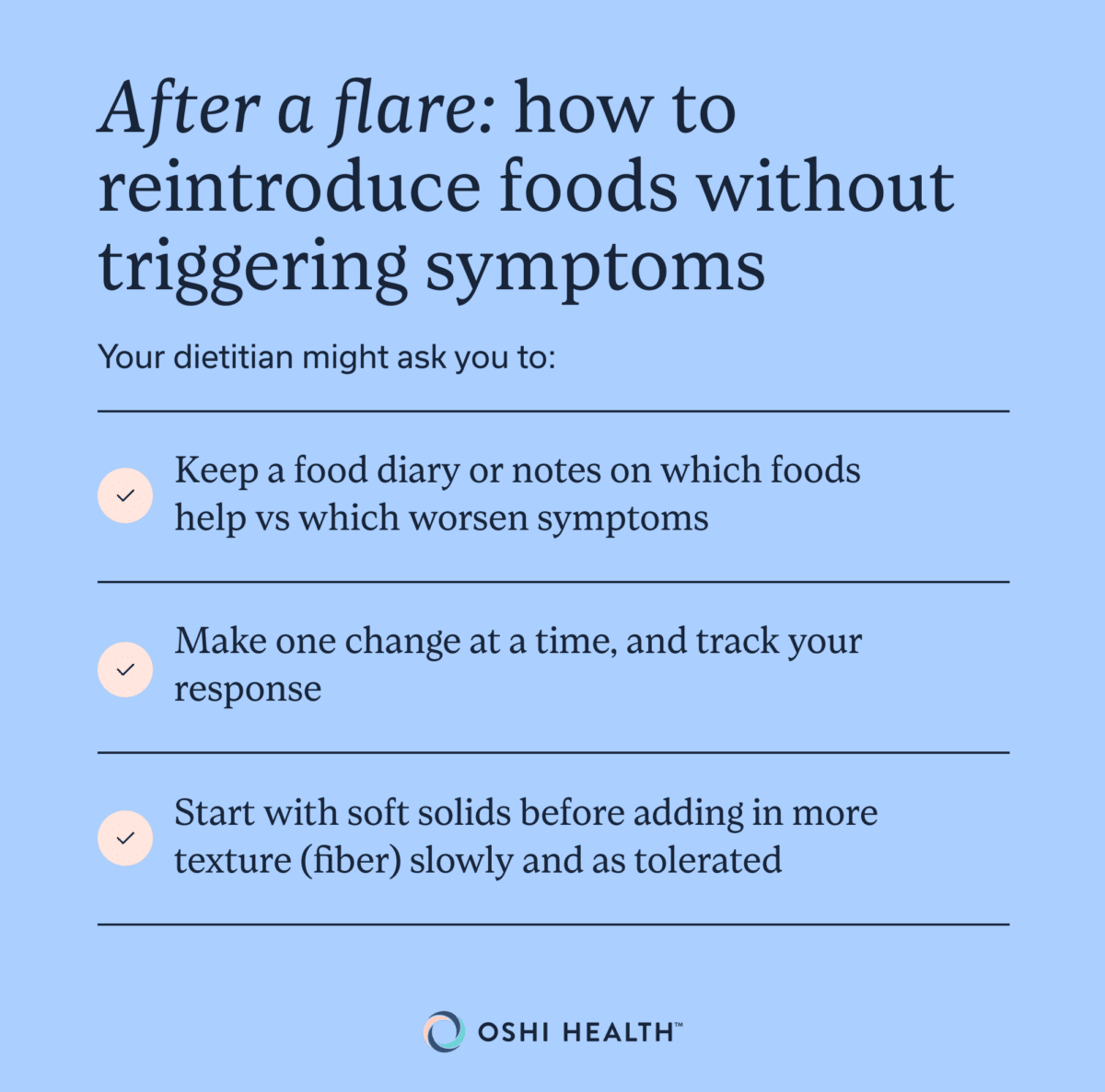
From there, you might explore what types of foods you feel comfortable incorporating. Your dietitian might ask you to:
- Keep a food diary or notes on which foods help vs which worsen symptoms
- Make one change at a time, and track your response
- Start with soft solids before adding in more texture (fiber) slowly and as tolerated
Try to think about your diet as a flexible, personalized approach. Focus on selecting all the delicious foods that make you feel good, rather than cutting out tons of your favorite foods and limiting your diet.
Special situations that change the food plan
There are some specific cases where you’ll have to consider some modifications to the typically recommended Mediterranean diet:
- Malnutrition: If you’re in a severe Crohn’s flare or struggling with weight loss and malnutrition, then your GI team may recommend formulas, tube feeding, the CDED diet, or other dietary measures.
- Ongoing diarrhea: Chronic diarrhea or high ostomy output can dehydrate you and lead to electrolyte imbalances. You might need to take oral rehydration solutions and focus on foods that have high water content.
- Other health conditions: Having food allergies or other autoimmune diseases (like celiac disease) requires additional dietary restrictions.
- Strictures: If you have narrowing of your intestines, then you might not tolerate high-fiber plant-based foods (like raw veggies and fruits) very well. Blending, pureeing, cooking, and thorough chewing can make them more tolerable and lessen the risk of obstruction.
- Surgery: If you’ve recently had surgery for Crohn’s disease or if you have an upcoming surgery, then you may be instructed to adjust your diet.
It’s important to coordinate any major changes in your diet with your GI team and a GI registered dietitian.
When to see a registered dietitian
There are a number of instances when you might work with a registered dietitian if you have Crohn’s disease. Some are more urgent than others.
The AGA recommends that everyone who is newly diagnosed with Crohn’s disease see a registered dietitian. If you haven’t seen one yet, consider making an appointment with the GI registered dietitians who work with Oshi Health.
It’s also recommended that everyone with IBD get regular screening for malnutrition. Your GI provider will look for:
- Edema and fluid retention
- Fat and muscle loss
- Unintended weight loss
They’ll also run blood tests to look for vitamin and nutrient deficiencies, specifically:
- B12, if you have a disease in your ileum (the longest section of your small intestine) or have had ileal surgery
- Iron
- Vitamin D
If any signs of malnutrition are noted, then you should be referred to a registered dietitian. You can also refer yourself to a multidisciplinary GI service, like Oshi Health.
Some cases are more urgent than others. “If you are not able to eat very much food or are experiencing unintentional weight loss, please try to see a registered dietitian as soon as possible,” urges White.
It’s okay to rely on oral nutrition supplements as much as you need until you get an appointment. White recommends supplements such as:
- Boost
- Ensure
- Kate Farms
- Orgain
- OWYN
- Premier
Crohn’s disease self-care beyond food
Food can be an extremely difficult topic for many people with Crohn’s disease. Sometimes it can feel like you need food to survive, but your body is rejecting whatever you put in it. Finding recipes that make you feel good, let alone going out to eat with friends, can be tough. This frustration is so valid.
“I first want people to understand that they are not alone or wrong in feeling that way,” says White. Joining an IBD support group, such as the ones offered through the Crohn’s and Colitis Foundation, can help you connect with others who are going through the same thing and truly understand your concerns.
Gut-brain relaxation techniques, which support the “rest and digest” aspect of digestion, can also make you more comfortable around food. Some techniques include:
- Diaphragmatic breathing
- Gentle stretching or yoga
- Gratitude journaling
- Meditation
In addition to working with a GI registered dietitian, you might also consider meeting with a GI-trained mental health provider. They can support you in your emotions around food, guide you to work through food restriction or disordered eating, find ways to relieve stress, and more.
When to seek care: red flags to take seriously
Keep an eye out for red flags that should have you heading to urgent care or the emergency room. These include:
- Bloody diarrhea
- Dizziness and fainting
- Fever
- High heart rate
- Rigid abdomen
- Severe abdominal pain
- Persistent vomiting
The takeaway
- A Crohn’s-friendly eating plan is personalized, flexible, and changes with flares vs remission.
- The AGA recommends the Mediterranean diet to most people with Crohn’s disease, but this may need to be adjusted during flares.
- Instead of restriction, prioritize nourishment, hydration, and a variety of colorful plant-based foods, including both soluble fibers and select insoluble fibers.
- Working with a GI care team can help you discover your personal Crohn’s triggers, adjust your diet during a flare, reintroduce a variety of foods post-flare, and work through any tough emotions around food.

Frequently asked questions (FAQs)
What foods should people with Crohn’s avoid?
If you have Crohn’s disease, avoid eating ultra-processed foods and processed meats. You might also want to avoid certain artificial sweeteners and additives, which can irritate your gut. During a flare, opt for soluble fiber over insoluble fiber (but try not to cut out fiber entirely, because it’s good for your gut health in the long term).
What is the life expectancy for Crohn’s disease?
Generally speaking, people with Crohn’s disease have the same life expectancy as people without Crohn’s disease. Managing your Crohn’s disease with both medication and diet can help improve your quality of life.
What is the best food to eat for Crohn’s?
There’s no single “best” food to eat for Crohn’s disease. It’s important to eat a diverse diet, filled with a variety of fruits, vegetables, and whole grains.
What helps a Crohn’s flare-up at home?
Adjusting your diet can sometimes help you cope with the symptoms of a Crohn’s flare-up. Focus on soft, bland foods and smooth, blended soluble fibers (like applesauce, bananas, or soups). Be sure you’re staying hydrated, possibly with oral rehydration solutions, especially if you have diarrhea.
Supportive, expert-led care for Crohn's
Crohn’s disease symptoms can often turn life upside down. And it can be tough to navigate the medical system when you’re constantly dealing with the unexpected.
We’re here to help. Oshi Health GI providers, gut-brain specialists, and registered dietitians work together to address complex conditions like Crohn’s.
Our GI specialists will work with you to reduce flare-ups through:
✔ Personalized care plans tailored to you
✔ Evidence-based IBD nutrition guidance
✔ Science-backed treatments
✔ Ongoing care when you need it, including evenings and weekends
✔ And so much more!
Ready to feel more in control of your Crohn’s?