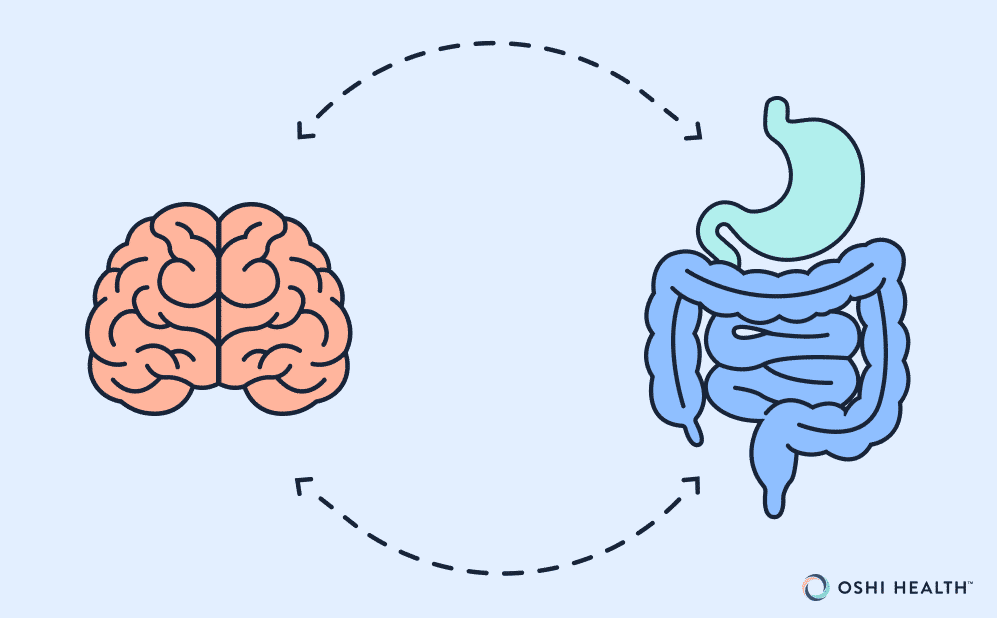



Irritable bowel syndrome (IBS) has many potential treatments that differ based on your symptom profile. For example, different diets and prescription medications are used to treat IBS-D vs. IBS-C. Gut-brain therapy—focused on stress relief and mindfulness practices—can also treat IBS.
Key takeaways
- IBS treatment should be targeted to your personal IBS subtype and symptoms, and include multiple modalities.
- Several prescription medications are approved to treat IBS-related abdominal pain, constipation, and diarrhea.
- Gut-brain therapies (such as CBT, hypnotherapy, mindfulness, and more) are effective at treating IBS.
- Nutritional changes, such as the low FODMAP diet, can also treat IBS.
- IBS treatment is complicated and individual. Oshi Health offers a multidisciplinary team of GI providers, dietitians, and gut-brain therapists so your IBS treatment can be cohesive and thorough.
If you have IBS, you already know it can feel all-consuming. The sudden urgency, the bloating that makes it feel like nothing in your closet fits quite right, the way you start mapping out where the bathrooms are before you leave the house. It’s exhausting in a way that’s hard to explain to people who haven’t lived it.
The good news is that IBS treatment works—but it has to be the right treatment for your specific symptoms. Too often, people end up patching together over-the-counter fixes or cutting out entire food groups on their own, only to find that easing one symptom makes another one worse.
That’s because IBS isn’t one symptom with one fix. Effective treatment should be personalized to you, depending on your subtype, your triggers, and what’s bothering you most. This is why working with an integrated GI team, like the one at Oshi Health, tends to get better results than going it alone. Here’s what actually goes into treating IBS.
IBS treatment starts with identifying your symptoms and subtype
The first step to treating IBS is identifying your symptoms and subtype. IBS treatment follows a symptoms-first approach. This means that different symptoms benefit from different treatments. There isn’t one overarching IBS treatment that will help everyone.
The three IBS subtypes include:
- IBS-C: Constipation-predominant IBS.
- IBS-D: Diarrhea-predominant IBS.
- IBS-M: Mixed/alternating symptoms of both constipation and diarrhea.
Regardless of IBS subtype, people with IBS also experience abdominal pain, cramping, discomfort, or bloating in addition to their change in bowel habits.
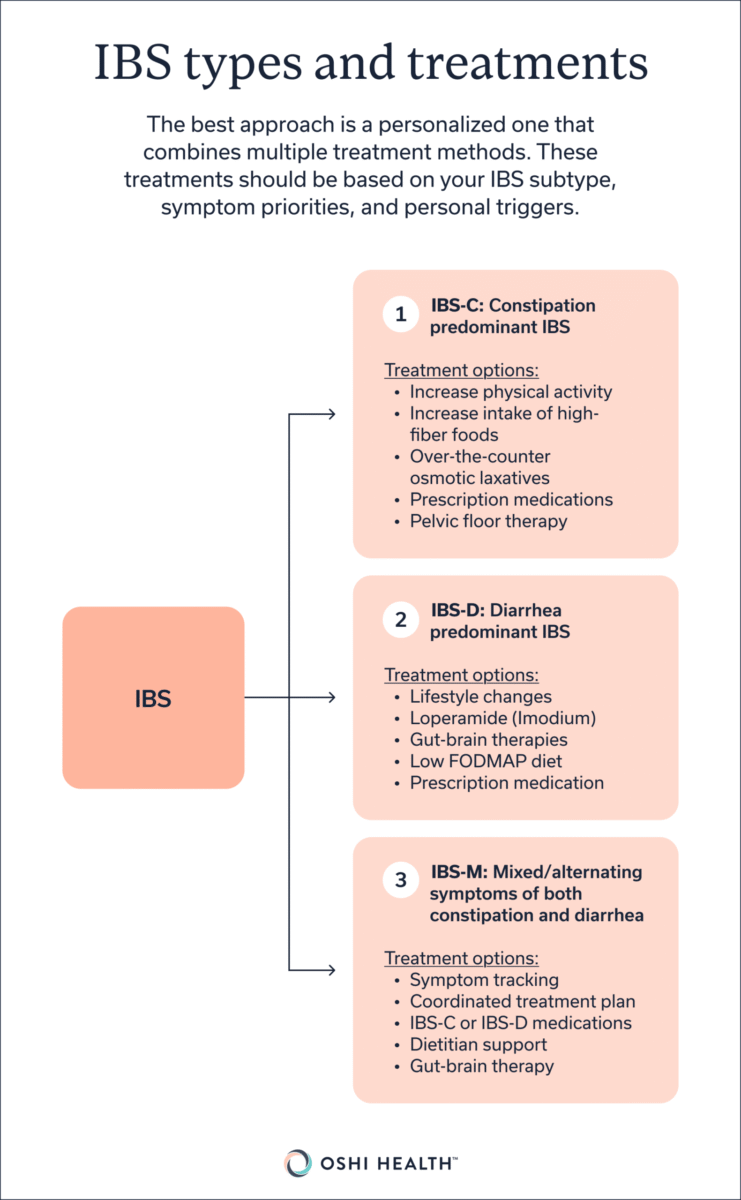
To figure out your IBS subtype, your GI provider will ask you about your symptom pattern and bowel habits. Keep in mind that it’s also possible for your bowel patterns to shift from one end of the spectrum to the other over time.
Confirming IBS before starting treatment
Before starting treatment for IBS, your GI provider should examine you for other possible explanations to your symptoms. After all, you don’t want to solely treat IBS if something else is actually causing your symptoms.
Assessment will likely include:
- Medical history
- Medication review
- Physical assessment
- Blood tests, including testing for celiac disease
- Stool test
- Imaging or other tests when appropriate

IBS-C treatment: From fiber and laxatives to prescription medication
If you have IBS-C, then you struggle with hard or infrequent stools. The goal of treating IBS-C is to help you pass stools easily and more completely, at a greater frequency, and without pain and bloating.
“The initial treatment approach [for IBS-C] often includes increasing physical activity,” says Dr. Harvey H. Allen, Jr., MD, a gastroenterologist and director of endoscopy at Wynn Hospital. This might look like gentle walks, swimming, cycling, or regular gym seshes. Moving your body helps stool move through your intestines.
Other initial IBS-C treatments, according to Dr. Allen, include:
- Avoiding constipating medications, such as opioids, nonsteroidal anti-inflammatory drugs (NSAIDs), iron supplements, or antacids, if possible
- Increasing intake of high-fiber foods, with guidance from a registered dietitian to identify and avoid triggers
- Over-the-counter osmotic laxatives, as needed
If your IBS-C symptoms persist, then your GI provider may prescribe medication. There are several different FDA-approved medications for IBS-C, and they work in different ways—more info on that below.
Pelvic floor therapy can also help with IBS-C if your constipation is caused by pelvic floor dysfunction (in simple terms, the muscles in your pelvis aren’t firing correctly to help you pass bowel movements).
Secretagogues vs. retainagogues for IBS-C
Recent years have brought new prescription medication treatments for IBS-C to the market. There are now more options than ever before, but they work in different ways.
Prescription medications that treat IBS-C include:
| Category of medication | How it works | Examples |
| Secretagogue | Increase fluid within the intestines by reducing sodium absorption. |
|
| Retainagogue | Keep more fluid within the intestine by reducing sodium absorption. Can also reduce gastrointestinal pain by blocking pain-sensing receptors. |
|
| Serotonin Receptor Agonists | Speed up movement of stool through the intestines by increasing colon contractions. |
|
“The main difference between a secretagogue and a retainagogue lies in how they increase fluid in the gut,” says Dr. Allen. “Secretagogues actively stimulate fluid secretion in the intestine, while retainagogues block fluid absorption to keep water inside the intestine.”
Your clinician will guide you through your medication options and make a recommendation that’s suitable for you.
Some of these medications come with side effects (most commonly diarrhea and nausea), so be sure to discuss this. Your clinician may start you at a lower dose or recommend taking your medication at certain times, such as alongside meals, to prevent side effects.
IBS-D treatment options
People with IBS-D deal with loose and watery stool, often rushing to the bathroom multiple times per day, and sometimes dealing with sudden urges or incontinence. IBS-D treatment addresses not just diarrhea, but also urgency and abdominal discomfort.
Similar to IBS-C, initial treatment starts with less-invasive lifestyle changes and over-the-counter options. Loperamide (Imodium) is an over-the-counter medication that reduces loose stools, frequency, or urgency, but doesn’t necessarily treat abdominal pain (and should only be taken long-term under medical supervision).
Gut-brain therapies and the low FODMAP diet (discussed above) can be particularly helpful for treating IBS-D.
When it comes to prescription medication, there are multiple options. Prescription medications approved to treat IBS-D include:
-
- Rifaximin: A poorly absorbed antibiotic and common second-line treatment for IBS-D, if loperamide doesn’t resolve symptoms. “This treatment modifies gut flora,” says Dr. Allen. “However, it often requires multiple treatments [to be effective].”
- Eluxadoline (Viberzi): An IBS-D medication that reduces visceral hypersensitivity and slows bowel activity. However, it’s contraindicated for those without a gallbladder or who drink more than three alcoholic beverages per day.
- Alosetron (Lotronex): A serotonin receptor agonist that is a third-line treatment for IBS-D, reserved for severe cases when other approaches haven’t worked. “However, it has many limitations and side effects,” warns Dr. Allen.
- Bile acid-targeted treatment: These may be suggested if bile acid diarrhea is suspected.
You’ll work together with your clinician to choose the right medication for you. Your clinician will take into account your dominant problem (urgency vs stool frequency vs pain), any side effects you had from previous medications, and more.
Treating mixed or changing IBS symptoms
People with Mixed IBS, or IBS-M, have alternating symptoms of diarrhea and constipation. “There is no specific FDA-approved therapy for IBS Mixed,” says Dr. Allen. “It is much more difficult to treat.” However, you still have options.
Dr. Allen notes that some studies recommend an abdominal X-ray to look for fecal overload, as well as symptom tracking, among people with IBS-M. “This ensures that patients do not have constipation with overflow diarrhea,” he says.
You may be tempted to alternate over-the-counter antidiarrheals (for loose bowel movements) or laxatives (for constipation) in an attempt to treat your IBS-M at home. However, this can make your symptoms worse over time.
A coordinated plan, put together with an interdisciplinary GI team like Oshi Health, can help you feel better. This may include medications approved for IBS-D or IBS-C, as well as ongoing treatments that support abdominal pain and discomfort, such as antispasmodics, SSRIs, or TCAs. Working with a dietitian and gut-brain therapist can also be incredibly helpful for people with IBS-M.
Treatments for IBS pain, cramping, and bloating
“IBS is characterized by abdominal pain, cramping, and bloating,” says Dr. Allen. Everyone with IBS experiences abdominal pain at least one day per week—this is part of the Rome Criteria, which is the set of criteria that must be met for an IBS diagnosis.
It follows that treating this abdominal pain is an important part of overall IBS treatment.
IBS medication for abdominal pain
Antispasmodic medications are a primary treatment for IBS-related abdominal pain, per the American Gastroenterological Association guidelines. These work by relaxing smooth muscle and possibly lowering visceral hypersensitivity (which is when your internal organs become extra sensitive to normal stimuli—like waste passing through your intestines—and perceive these as pain).
Examples of antispasmodic medications include:
- Dicyclomine
- Hyoscine
- Peppermint oil
Selective serotonin reuptake inhibitors (SSRIs) can also be used to treat IBS-related pain. In addition to treating anxiety and depression, these medications can help with IBS pain through neuromodulation—or in other words, changing how your brain processes pain signals from your gut.
Examples of SSRIs used to treat IBS include:
- Citalopram
- Fluoxetine
- Paroxetine
Tricyclic antidepressants (TCAs) are another class of antidepressant medications that can also be used to treat IBS-related pain. They act on the peripheral and central nervous system and can affect gut sensation, motility, and secretion.
Examples of low-dose TCAs used to treat IBS include:
- Amitriptyline
- Desipramine
- Doxepin
- Imipramine
- Trimipramine
Gut-brain therapy for IBS abdominal pain and other symptoms
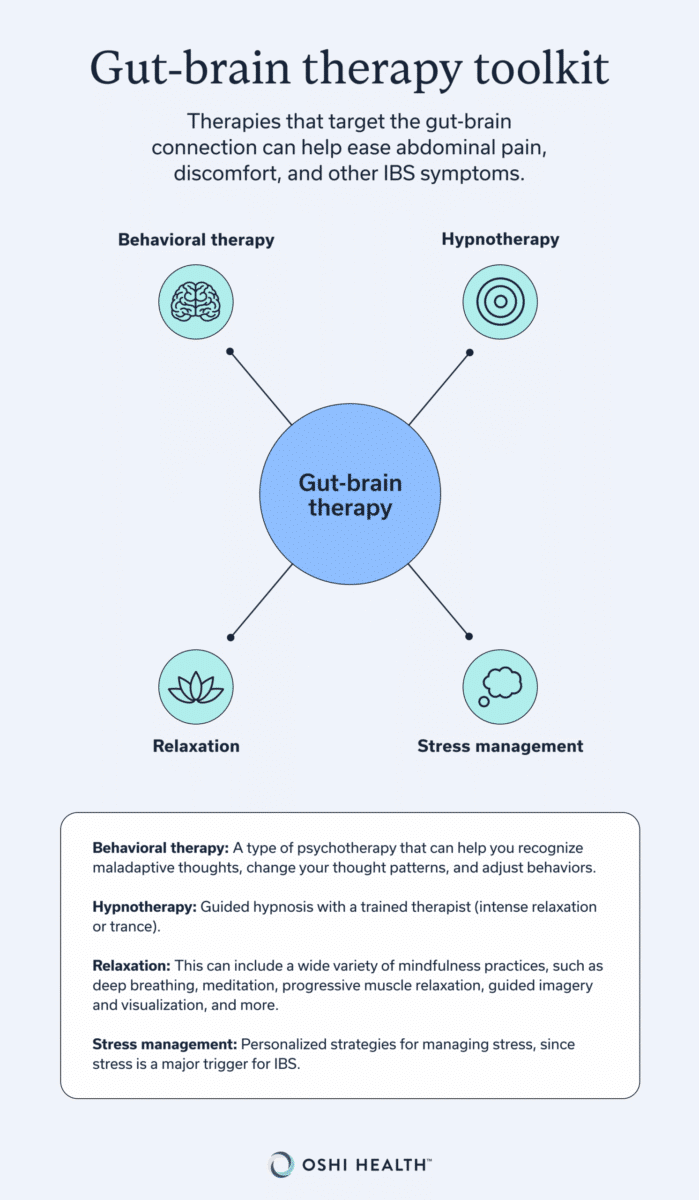
Medication isn’t the only way to treat IBS-related pain. IBS has been reclassified as a disorder of gut-brain interaction, and there’s a growing body of evidence that therapies that target this gut-brain connection are effective at treating abdominal pain, discomfort, and other IBS symptoms.
At Oshi Health, highly trained gut-brain therapists specialize in IBS and other gastrointestinal disorders and can guide you through treatment.
Some examples of gut-brain therapies used to treat IBS include:
- Cognitive behavioral therapy: An evidence-based psychotherapy that addresses the communication loop between the central nervous system and the gastrointestinal tract, known as the gut-brain axis, to help with symptom relief.
- Gut-directed hypnotherapy: A therapist will guide you through hypnosis (intense relaxation or trance) to improve IBS symptoms.
- Relaxation training: This can include a wide variety of mindfulness practices, such as deep breathing, meditation, progressive muscle relaxation, guided imagery and visualization, and more. This will help manage the autonomic nervous system by down-regulating the sympathetic, aka “fight or flight” branch and stimulating the parasympathetic or “rest and digest” branch.
- Stress management techniques: Stress is a major trigger for IBS. You will learn personalized strategies for managing stress.
Nutrition strategies for bloating and irregular bowel movements
Nutrition is a big area of IBS treatment focus, but trying to address this on your own can be overwhelming and lead to overly restrictive dieting. Working with a GI registered dietitian who’s experienced in treating IBS, such as those who work with Oshi Health, can make a big difference in your journey and how soon you find relief.
Your dietitian may start out by recommending general IBS dietary advice:
- Drink plenty of water.
- Eat a balanced diet with plenty of high-fiber foods, which add bulk to your stool and help it pass through your intestines.
- Increase your fiber intake gradually to avoid constipation and other symptoms like gas or bloating.
- Keep a food and symptom diary to help identify possible triggers.
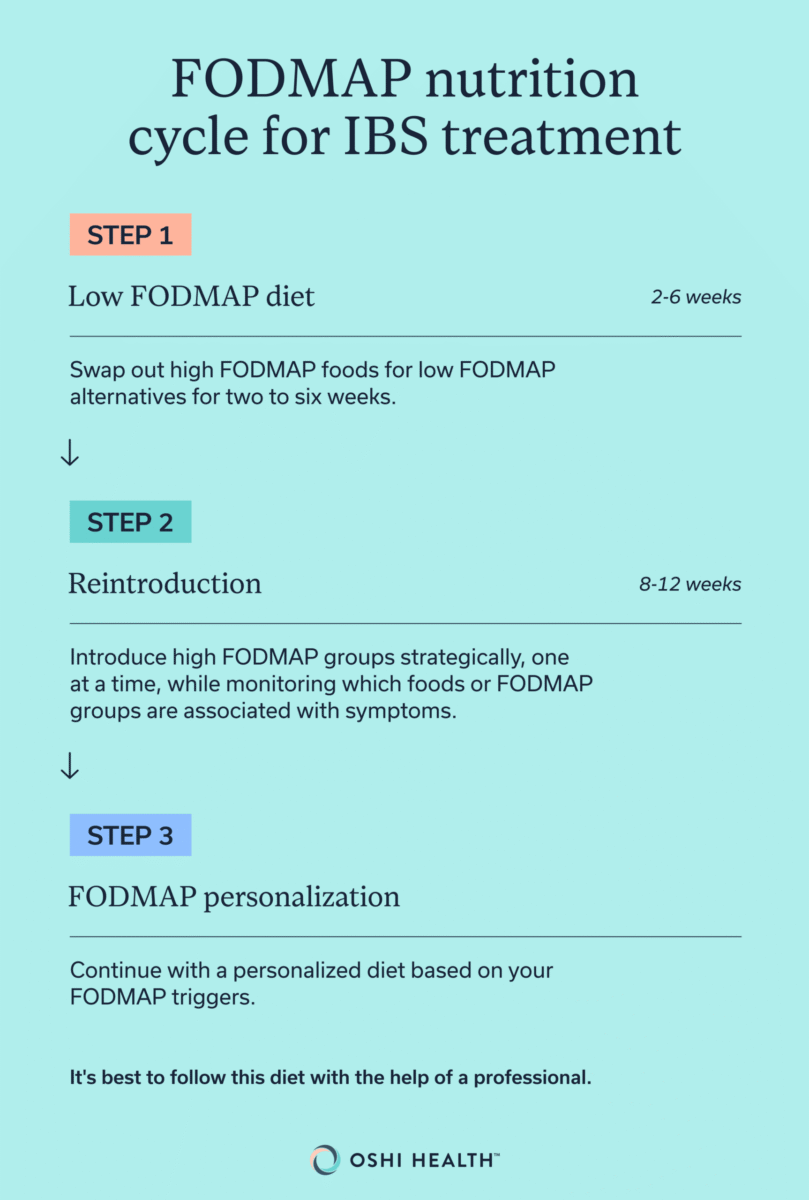
If your IBS symptoms persist, then your dietitian might guide you through a low FODMAP diet trial. This is a specialized diet developed at Monash University in Australia, designed specifically to treat IBS.
The idea behind the low FODMAP diet is that certain fermentable short-chain carbohydrates don’t get fully digested in the intestines. These can draw in water and produce gas in your intestines, which for people with IBS can be perceived as painful.
The low FODMAP diet involves three main stages:
- Low FODMAP diet: Swap out high FODMAP foods for low FODMAP alternatives for two to six weeks.
- Reintroduction: Introduce high FODMAP groups strategically, one at a time, for eight to 12 weeks, whilst monitoring which specific foods or FODMAP groups are associated with symptoms.
- FODMAP personalization: Continue with a personalized diet based on your FODMAP triggers.
It’s worth noting that the low FODMAP diet is more effective at treating IBS-D than IBS-C, per Clinical Nutrition, although it may be helpful for treating gas, bloating, or abdominal pain in both subtypes.

Can IBS be cured permanently?
There’s no guaranteed permanent cure for IBS, but many people find that their symptoms become more manageable once they find the right IBS medication and overall treatment combination.
For example, avoiding onion and garlic (if that’s your personal FODMAP trigger) may help your bloating and diarrhea long-term. Or, taking your prescription IBS-C medication may keep your bowel movements regular.
“One of the most important components of treatment lies in the establishment of a therapeutic physician-patient relationship, coupled with patient education,” says Dr. Allen. “Patient education should be in the forefront of therapy,” he says.
It’s also possible that your IBS symptoms might go away and you can discontinue treatment, especially if it was triggered by an infection or stress that’s now resolved.
For many people with IBS, though, treatment is ongoing and may need to be adjusted as life circumstances or symptoms change over time.
Meet the GI providers who understand IBS
IBS can be complicated. Our GI providers take the time to understand your symptoms, triggers, and goals so you can get care that’s personalized to you.













Red flags that may point to something other than IBS
There are a few instances when your IBS symptoms may indicate something more severe, and require urgent attention.
If you experience the following symptoms, head to urgent care for prompt clinical evaluation:
- Black stools
- Blood in your stools or from your rectum
- Fever
- Persistent vomiting
- Severe progressive pain
- Unexplained weight loss
When IBS treatment is not working
If you’ve been struggling with disconnected IBS treatments or even attempting to treat your IBS at home, then it might be time for you to consider working with a multidisciplinary GI team like Oshi Health.
It’s easy to book your first virtual visit with Oshi Health and take the first step toward a personalized IBS treatment plan that works for you. Oshi Health is in-network with most major insurance plans, so you’ll only have to cover a copay.
It’s common to try multiple IBS treatment options before you find the combination that’s right for you, which is why continuing support is essential. If your current treatment isn’t working (or perhaps stopped working), your GI provider may recommend an alternative.
Sometimes stress, sleep disruption, or even fear of symptoms could be reinforcing the gut-brain cycle of IBS and preventing you from feeling better. This isn’t to say that IBS is “in your head,” but it can certainly be influenced by what’s happening in your brain. Oshi Health’s gut-brain therapists can help you identify these patterns and work through them.
It’s also possible that IBS isn’t what’s causing your symptoms after all. In those cases, your GI provider may recommend additional testing to confirm the diagnosis.
Frequently asked questions (FAQs)
Can probiotics help IBS?
The jury’s still out on whether probiotics help IBS, and if so, which type, strain, or dosage. So far, research on probiotics for IBS has been limited and low-quality, and the American Gastroenterological Association does not recommend probiotics as IBS treatment. “It’s interesting and noteworthy that data have shown that probiotics, food allergy testing, and fecal transplant have not been shown to improve IBS,” says Dr. Allen.
Can IBS cause nausea?
Yes, people with IBS can experience nausea. Nausea affects roughly 22% of people with IBS-C, 26% of those with IBS-D, and 30% of those with IBS-M, per the American Gastroenterological Association. Nausea can also be a side effect of medications used to treat IBS.
How long does an IBS flare usually last?
IBS is a chronic condition, but its symptoms often come and go in episodes called “flares.” There’s no universal answer for how long an IBS flare lasts, but people often report IBS flares lasting anywhere from a couple of hours to several days or even weeks. Keeping a symptom diary can help you track how long your own IBS flares tend to last.
What’s the best treatment for IBS?
There’s no “best” treatment or medication for IBS. IBS is rarely successfully treated with one method alone, and this could be why you’re still struggling with IBS symptoms. Coordinated medical, nutrition, and gut-brain care—that Oshi Health offers—can make the difference between ongoing life-controlling symptoms and finally understanding your IBS and feeling better.
Find lasting relief from IBS symptoms
Feel like irritable bowel syndrome (IBS) is getting in the way of enjoying your life? You’re not alone—and we’re here to help.
Oshi Health GI providers, gut-brain specialists, and registered dietitians work together to address symptoms like indigestion, bloating, and stomach pain, and find solutions that actually work for you.
Our GI specialists will work with you to reduce symptom flare-ups through:
✔ Personalized care plans tailored to your lifestyle
✔ Evidence-based IBS nutrition guidance
✔ Science-backed strategies to calm your gut
✔ Compassionate, whole-person care
✔ And so much more!
Ready to take control of your IBS symptoms?