


Linzess medication relieves constipation, bloating, and gas for many people, but it can cause serious side effects in some cases. So when and why is Linzess dangerous? Continue reading to learn more about the drug’s side effects, who should avoid it, and who may be a good candidate for Linzess.
Linzess (generic name linaclotide) is an FDA-approved medication for irritable bowel syndrome with constipation (IBS-C), pediatric functional constipation, and chronic idiopathic constipation. The three uses might have already given this away, but it’s sometimes viewed as a”constipation pill” because it’s often prescribed to relieve constipation and other symptoms like abdominal pain and bloating. That said, it may not be the best fit for patients with certain medical histories.
To better understand if Linzess is a possible option for you, continue reading. We’re about to discuss when this medication makes sense, Linzess side effects, and when (and why) Linzess is dangerous in some cases.
Why is Linzess dangerous for some people?
Linzess can be dangerous if someone is already prone to diarrhea or severe dehydration. That’s because this medication increases the risk of both. It’s also not recommended for those with an allergy to one or more of the drug’s ingredients or a gastrointestinal (GI) mechanical obstruction.
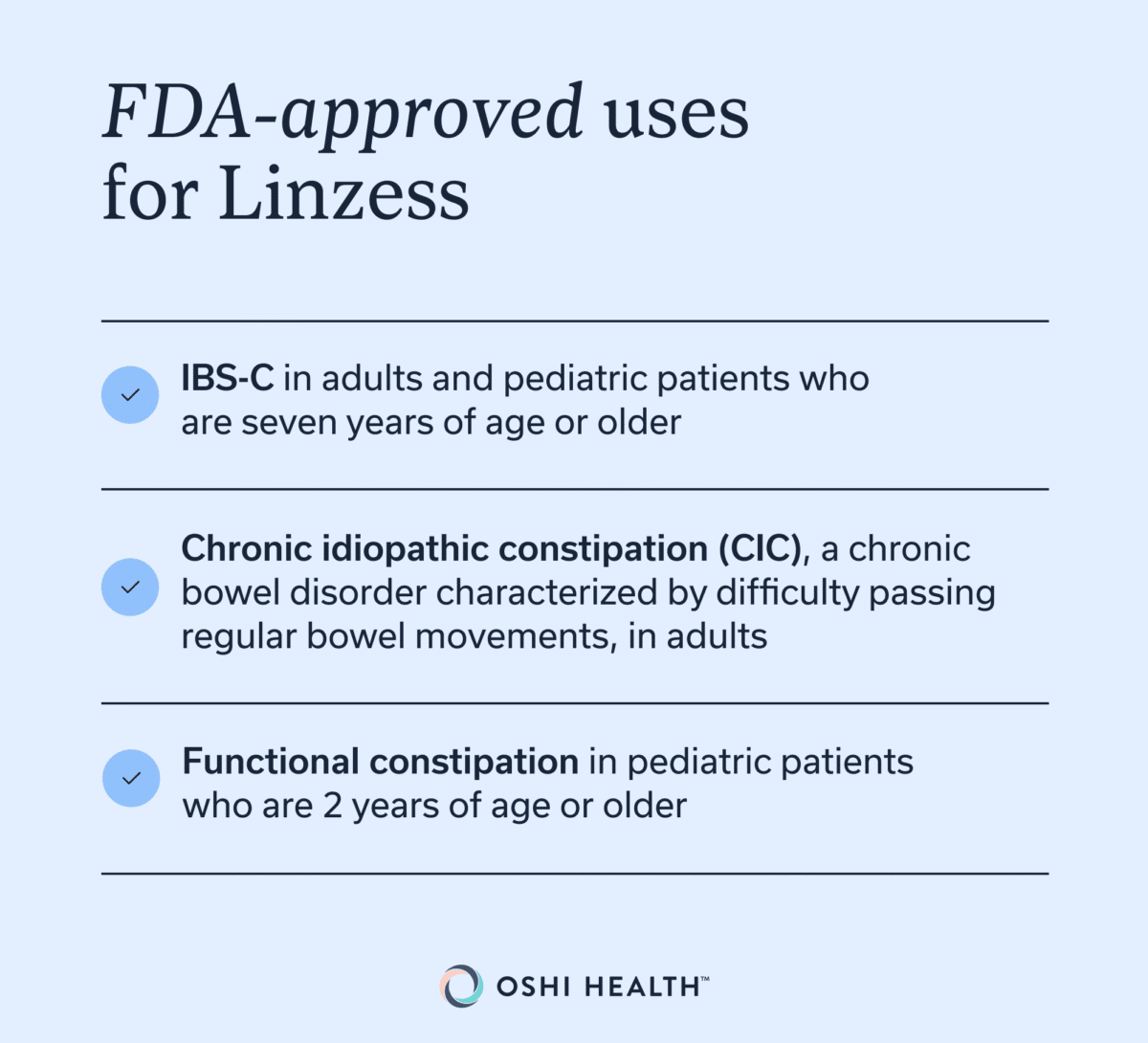
But for most people, Linzess is not dangerous. It’s FDA-approved for:
- IBS-C in adults and pediatric patients who are seven years of age or older
- Chronic idiopathic constipation (CIC), a chronic bowel disorder characterized by difficulty passing regular bowel movements, in adults
- Functional constipation in pediatric patients who are 2 years of age or older
It’s perhaps most commonly used for IBS-C. “I can’t really think of anyone with IBS-C who would not be a good candidate for at least a trial of Linzess,” says Pradnya Mitroo, M.D., a gastroenterologist at Fresno Digestive Health.
If that C at the end of IBS confused you, you’re not alone. That C indicates a specific type of IBS. There are three main types to be aware of:
- IBS-C: When constipation is ongoing or recurrent
- IBS-D: When someone experiences diarrhea regularly
- IBS-M: When someone has mixed bowel movements (hence the M). With this type, someone switches from going too much to going too little, and vice versa. Many times, with this mixed type, it is underlying constipation with overflow diarrhea (the loose stool is getting around what is backed up).
Linzess is not recommended for IBS-D or IBS-M, as it can increase bowel movements, potentially leading to severe diarrhea. Diarrhea can lead to dehydration from fluid loss, and other serious symptoms that are dangerous to overall health.
Additionally, a 2022 review in Therapeutic Advances in Gastroenterology reports that Linzess is sometimes used off-label as a laxative for people with obesity or an eating disorder. Linzess is not a traditional stool softener or stimulant laxative; its hormone-mimicking mechanism works differently, and using it purely as a laxative substitute may increase side-effect risk without the intended benefit.
Linzess uses and how the medication works
Before we get ahead of ourselves, how does Linzess work? Linaclotide, the drug’s generic name, is an agonist of guanylate cyclase-2C. That’s a complicated way of saying it latches onto specific receptors in the intestinal lining. Once attached to these receptors, the drug mimics the naturally occurring hormones guanylin and uroguanylin. These two hormones play a role in softening stool and increasing fluid in the gut. They make it easier to have a bowel movement.
As far as constipation medications go, Linzess is effective at getting things moving. A 2024 review in Gastroenterology and Hepatology points out that no IBS medications have strong or definitive evidence, but that Linzess has a more robust evidence base than most Linzess alternatives.
Further, a 2025 article in the Journal of Gastroenterology and Hepatology suggests that this medication was more effective at relieving symptoms of IBS-C than lactulose, an alternative medication. The Lancet published results from a large clinical trial affirming its effectiveness for functional constipation in children.
Dr. Mitroo adds that this medication doesn’t just alleviate constipation. It may also reduce other symptoms like bloating, gas, or abdominal pain when it’s prescribed to an appropriate patient.
Common Linzess side effects
“An advantage of Linzess is that it stays within the gut. Therefore, it has minimal systemic side effects,” says Dr. Mitroo. But minimal doesn’t mean no side effects.
Common side effects of Linzess include:
- Diarrhea
- Feeling uncomfortably full
- Gas
- Headache
- Pressure in the abdomen
- Stomach pain
More severe side effects are:
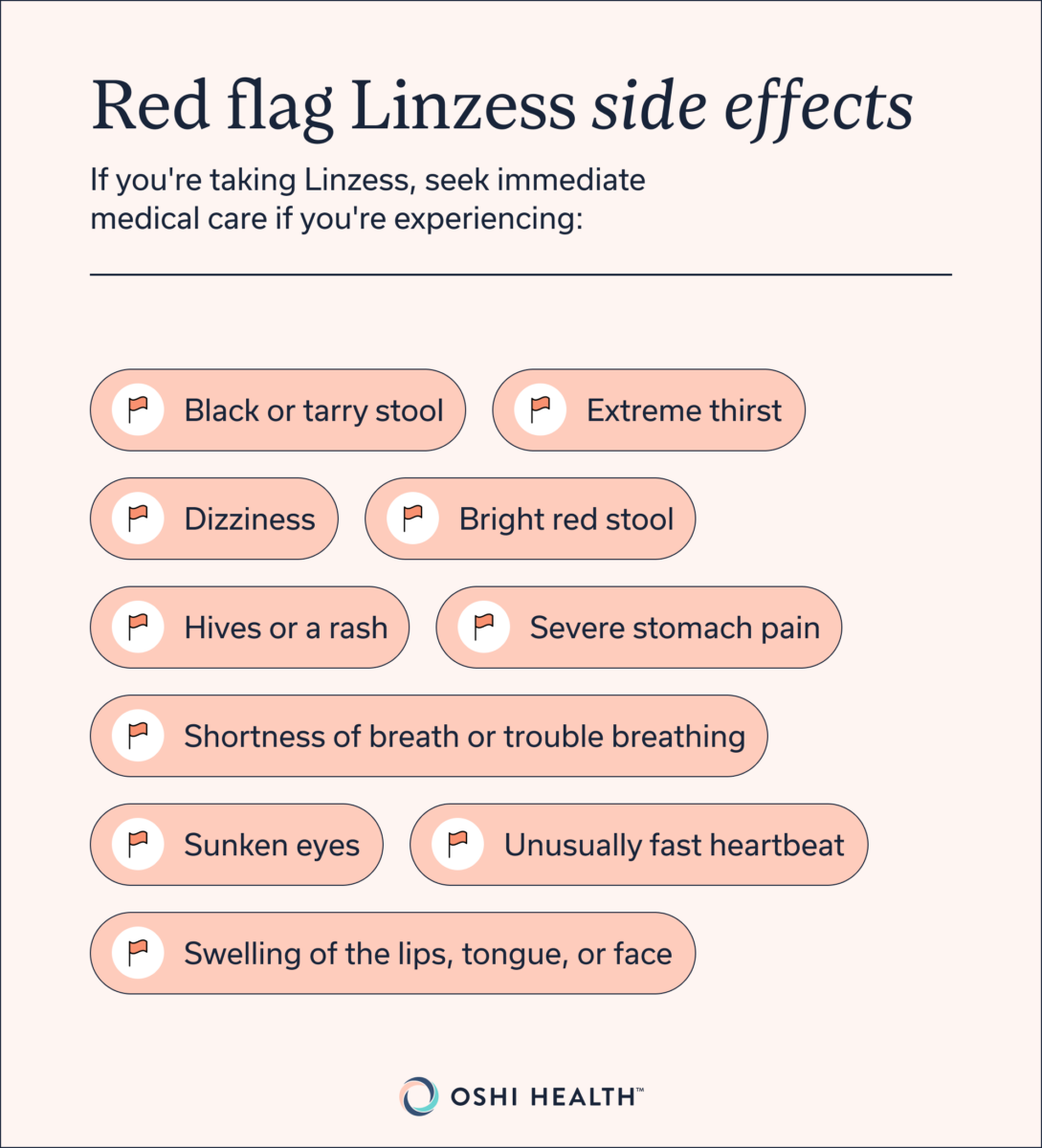
- Black or tarry stool
- Bright red stool
- Dizziness
- Extreme thirst
- Hives or a rash
- Severe stomach pain (i.e., you can’t get up or walk around because the pain is so intense)
- Shortness of breath or trouble breathing
- Sunken eyes
- Swelling of the lips, tongue, or face
- Unusually fast heartbeat (i.e., significantly faster than an increased heartbeat before a first date or big work presentation)
If you are experiencing any severe side effects, stop taking the medication and contact the prescribing GI provider. If you can’t see them promptly, seek emergency medical care. When left untreated, some severe side effects may be life-threatening.
Serious Linzess risks and contraindications
According to the FDA, Linzess is safe when prescribed to adults or children who are suitable candidates. If a serious complication arises, it’s typically severe diarrhea. When severe, diarrhea has a ripple effect on health.
This includes a higher chance of dehydration and/or an imbalance of electrolytes, minerals found in fluids in the body that help with many essential biological processes. Warning signs of dehydration include:
- Dark, yellow urine
- Dry mouth
- Extreme thirst
- Feeling extremely fatigued
- Feeling lightheaded or dizzy
- Sunken eyes or cheeks
- Urinating less than usual
When someone is dehydrated, it may seem logical to drink more water. If someone is dehydrated due to a long hike where they forgot water, this may work on its own. When dehydration is caused by diarrhea, this won’t 100% solve the issue, because with diarrhea, the water and electrolytes leave the body too quickly to be of use.
That’s why it’s important to visit a healthcare provider immediately if experiencing signs of severe dehydration and diarrhea together–but feel free to drink water or a drink with electrolytes while waiting for emergency care.
Diarrhea may also lead to malabsorption, which is when the body cannot absorb nutrients from food. The body uses nutrients to complete everyday tasks, so malabsorption may negatively impact quality of life and overall health.
Linzess also has a boxed warning for a risk of serious dehydration in children younger than two. A boxed warning is the highest safety warning from the FDA, and it means this drug is absolutely a no-go for patients younger than two.
Who may need extra caution before taking Linzess?
Linzess is contraindicated (or not recommended) for people who:
- Are less than two years old, since children under two are at a greater risk of severe dehydration
- Have experienced hypersensitivity reactions to Linzess or any ingredients in Linzess in the past
- Have known or suspected mechanical obstruction in the GI tract
A healthcare provider may exercise increased caution in other circumstances, even if Linzess isn’t specifically contraindicated. These include if someone:
- Already takes laxatives or another medication associated with fluid loss
- Has a history of dehydration
- Has a complex medical history or takes multiple medications
- Has frequent diarrhea
- May have difficulty recognizing signs of dehydration
How to take Linzess safely
When a patient starts Linzess, Dr. Mitroo sets expectations of what the first few weeks might look like. “When patients first start the medicine, they may get diarrhea,” she says, “but their colon will get used to it, and the goal is to just completely empty so that the gas, bloat, and abdominal pain improve.”
Dr. Mitroo also runs through the guidelines on how to take Linzess safely. And spoiler alert: It’s a bit more complicated than just swallowing a pill whenever you have time.
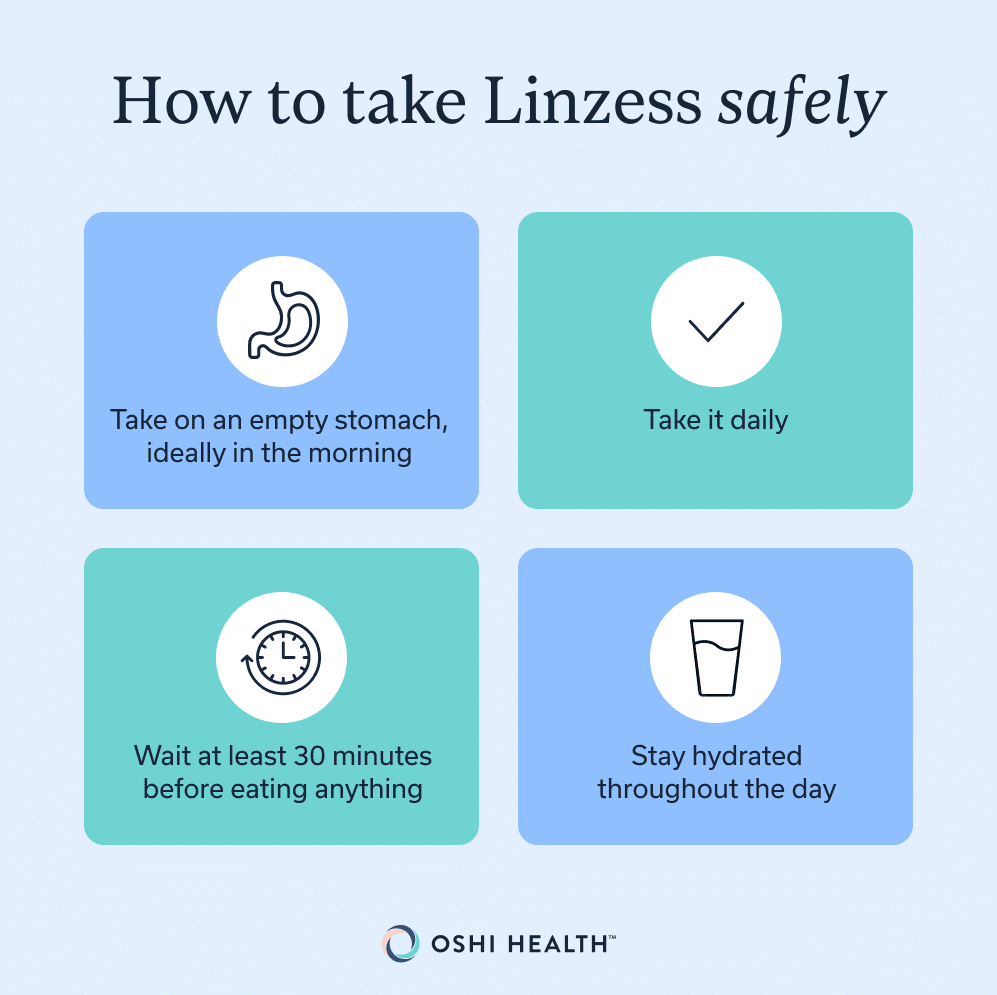
Linzess is a once daily oral medication. It should be taken on an empty stomach, ideally in the morning. After taking the medication, someone should wait at least 30 minutes before eating. Throughout the day, you’ll want to stay hydrated, since adequate fluid intake decreases the chance of dehydration and may help bowel movements become more regular.
Since Linzess doesn’t work for everyone, you should view the first few weeks as a trial period. Track bowel movements, meal timing, and symptoms to identify patterns and see if symptoms are getting worse. A GI provider will schedule regular check-ins, which are opportunities to share any information you’ve tracked.
How to manage or reduce Linzess side effects
Any Linzess side effects should be brought up with a healthcare provider who can offer personalized next steps. However, mild side effects are not always a sign to stop the medication. Instead, there may be ways to manage them, such as the three tips below.
1 | Take the medication as directed
Linzess is not the type of medication you can take at any time of day. It should be taken at least 30 minutes before eating and on an empty stomach. That’s why an ideal time to take this medication is right after you wake up. You could even leave the medication on your nightstand if you tend to forget about it.
2 | Manage gas and bloating
Some people experience symptoms like gas or bloating. Changes to the way you eat and drink may help, such as:
- Chew slower to minimize swallowed air
- Consume fewer artificial sweeteners
- Drink fewer carbonated beverages
- Try the low FODMAP diet (under guidance from a registered dietitian)
3 | Stay hydrated
While water alone won’t stop dehydration caused by diarrhea, it may help. While on this medication, continue to drink plenty of hydrating fluids, such as water and decaffeinated teas.
Is Linzess the right treatment for your constipation?
“I have found that using Linzess allows patients with IBS-C to be able to tolerate fibers much better,” says Dr. Mitroo, “and we know fiber feeds the good gut bacteria and helps restore a healthy microbiome.”
That means that for people with IBS-C, Linzess can help improve digestion, making sure your body gets the nutrients it needs to stay healthy and complete day-to-day tasks without fatigue or GI symptoms getting in the way. This may also be the case for kids over seven with functional constipation and adults with CIC.
The good news is that you don’t need to decide if Linzess is the right choice on your own. It’s a prescription medication, meaning a GI provider will determine if it’s an appropriate part of your treatment plan. They will also monitor progress throughout to determine if symptoms are improving or not with Linzess use.
Working with a GI care team
Dr. Mitroo often tells patients Linzess doesn’t have to be a lifelong medication. It’s a way to get the digestive tract moving so she can then work with the patient on rebuilding a healthy gut microbiome. She views Linzess as part of a treatment plan, not a cure-all pill.
For sustainable results, work with a GI provider who views Linzess as part of treatment and offers other strategies to manage GI symptoms and improve gut health. Ideally, they can help assemble a GI care team who can assess gut health from every angle. At Oshi, for example, GI providers may connect patients with gut-brain specialists or GI registered dietitians so treatment addresses the whole person, not just the immediate symptoms.
Key takeaways
- Linzess (linaclotide) is an FDA-approved medication for IBS-C, functional constipation in children, and CIC in adults. It may help relieve constipation and potentially other GI symptoms, like bloating or abdominal pain.
- Linzess is not recommended for people with IBS-D or IBS-M. Even in people with IBS-C, some may experience side effects that interfere with daily life.
- A GI provider, such as the team at Oshi Health, can help determine if Linzess is a suitable medication option.
- This medication is a team player; that means it should be used alongside dietary changes, stress management, and lifestyle adjustments. For a sustainable plan that relieves IBS symptoms in the long-term, work with a GI provider who takes a whole-person approach to gut health.
Frequently asked questions (FAQs)
-
Linzess is not a traditional stool softener or laxative, although it is commonly used to treat constipation.. While both a stool softener and Linzess may help with hard stools, the two medications are not interchangeable. A GI provider, such as the team at Oshi Health, can help determine which is appropriate for you.
-
Linzess may begin to relieve constipation in less than four weeks. However, the American Journal of Gastroenterology states that it can take four to twelve weeks for some people to see a reduction in constipation and other GI symptoms from this medication.
-
Linzess does not normally affect the kidneys. There are a few cases, such a recent 2025 one in Clinical Nephrology Case Studies, where patients experience kidney issues while taking Linzess, but this could be a correlation; causation has yet to be established.
Find lasting relief from IBS symptoms
Feel like irritable bowel syndrome (IBS) is getting in the way of enjoying your life? You’re not alone—and we’re here to help.
Oshi Health GI providers, gut-brain specialists, and registered dietitians work together to address symptoms like indigestion, bloating, and stomach pain, and find solutions that actually work for you.
Our GI specialists will work with you to reduce symptom flare-ups through:
✔ Personalized care plans tailored to your lifestyle
✔ Evidence-based IBS nutrition guidance
✔ Science-backed strategies to calm your gut
✔ Compassionate, whole-person care
✔ And so much more!
Ready to take control of your IBS symptoms?