

We all experience nausea, upper abdominal pain, or a loss of appetite from time to time. When these symptoms are due to inflammation in the stomach, it’s referred to as gastritis. The good news is that gastritis can be managed. The caveat is that the optimal gastritis treatment plan depends on what’s causing the inflammation in the first place.
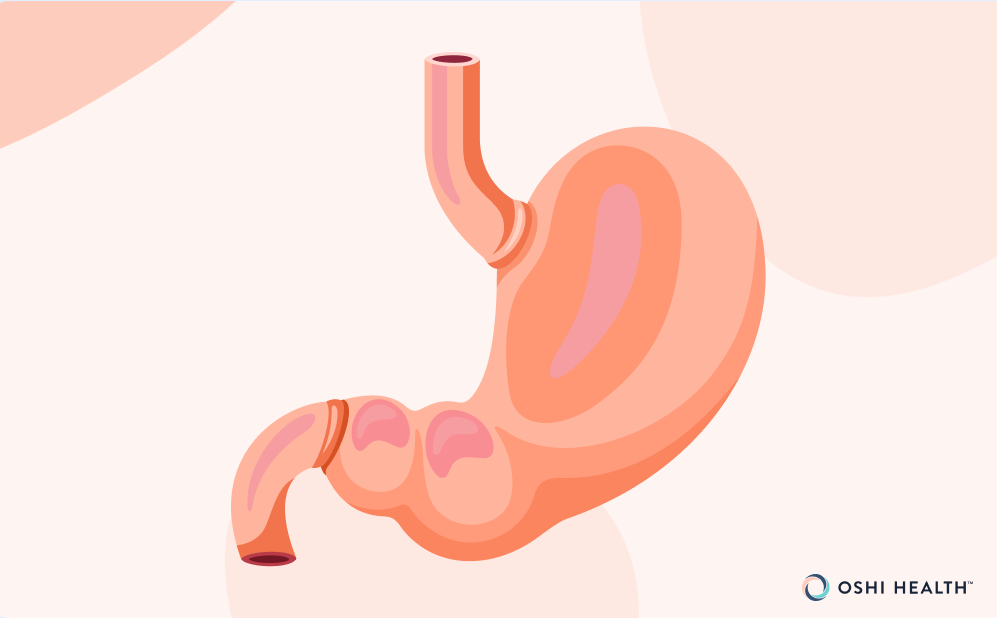
Gastritis is a relatively common phenomenon characterized by an inflammation of the stomach lining. This, in turn,”can result in the lining’s thinning out or erosion,” explains Tamara Duker Freuman, MS, RD, CDN, a registered dietitian specializing in digestive and metabolic diseases. “When this happens, the nerves of the stomach wall have less of a barrier protecting them from irritants, such as stomach acid or chemical irritants from food.” But many conditions can cause gastritis, and because it leads to gastrointestinal (GI) symptoms (such as nausea, pain in the upper abdomen, and feeling full after eating) that could be due to other health concerns too, it can be hard to pinpoint the right treatment for it.
A successful gastritis treatment plan starts with discovering the underlying cause, then determining the treatment for gastritis. This guide dives into how GI providers recommend treatments and the many underlying conditions associated with gastritis.
Gastritis treatments start with finding the cause
Gastritis is a recognized medical condition defined by inflammation of the stomach lining, and it is something to take seriously. But what exactly can trigger the gastritis alarm? Turns out, there are quite a few things. They can be divided into two categories: reasons for acute (short-term) gastritis and causes of chronic (ongoing) gastritis.
Possible reasons for acute gastritis are:
- Stress: Severe physical stress, such as critical illness, shock, sepsis, burns, major injury, or surgery, is a recognized cause of acute gastritis. Emotional stress and anxiety can also cause or worsen upper stomach symptoms and may contribute in some people, but they do not necessarily mean that true acute gastritis is present.
- Uremia: This kidney function complication may lead to inflammation in the stomach lining.
- Reduced blood flow to the stomach: When blood flow to the stomach lining drops, such as during shock, severe injury, or critical illness, the lining can be damaged and develop inflammation or erosions.
- Medications: Certain drugs and radiation therapy for cancer may trigger acute gastritis. This is part of the reason why a GI provider reviews the medications that a patient takes during the diagnostic process–they’re looking to see whether something you’re taking may be triggering your inflammation and other symptoms.
- Trauma: When we experience severe physical trauma, blood flow may temporarily slow or stop to the stomach. This may lead to acute gastritis.
- Use of certain substances: Cocaine, alcohol, and ingesting poisonous substances are associated with acute gastritis. Heavy drinking may also contribute to chronic stomach lining inflammation.
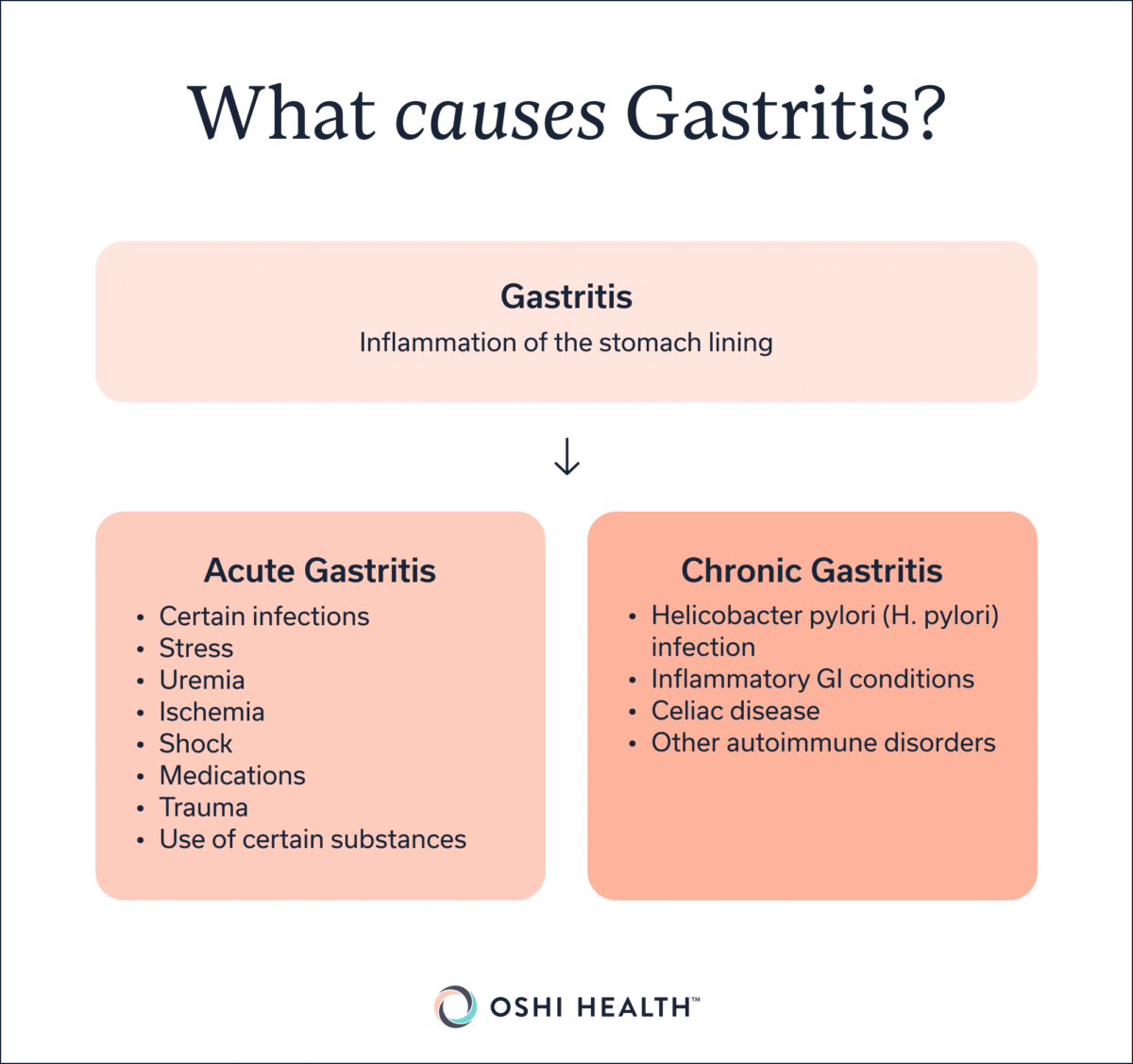
Possible causes of chronic gastritis are:
-
Helicobacter pylori (H. pylori) infection: H. pylori is a type of bacteria that can damage the stomach lining. According to the National Institute of Diabetes and Digestive and Kidney Diseases, it’s the most common cause of gastritis. If the infection is not treated, it can also lead to stomach ulcers and, over many years, increase the risk of stomach cancer.
-
Inflammatory GI conditions: Conditions that cause inflammation in the GI tract, such as Crohn’s disease, may be to blame.
-
Celiac disease: In some cases, Celiac disease, an autoimmune disorder triggered by eating gluten, may lead to chronic gastritis.
-
Other autoimmune disorders: Other autoimmune conditions, such as thyroid disease and type I diabetes, may cause gastritis if they lead to inflammation in the stomach lining.
Even if one or two stand out as likely causes, you can’t self-diagnose what is causing gastritis. Instead, a GI provider must determine what’s causing gastritis or gastritis-like symptoms.
How gastritis is diagnosed before treatment begins
To diagnose gastritis, a GI provider will start by asking about symptoms, your medical history, any medications you take, and your lifestyle. From there, they will perform a physical examination, which often involves feeling the stomach to check for tenderness and help rule out other possible causes of symptoms.
What they can’t physically feel is inflammation in the stomach lining. To inspect this, a GI provider will recommend an upper endoscopy, which is a procedure where a tube with a camera is inserted into the top part of the GI tract, so they can see what’s going on. A doctor may also order a breath test, stool test, and/or blood test.
Using the results from these tests, insight from their physical examination, and the patient’s self-reported symptoms, a GI provider will diagnose the underlying cause. That cause will then inform the recommended treatment plan.
Gastritis treatment types
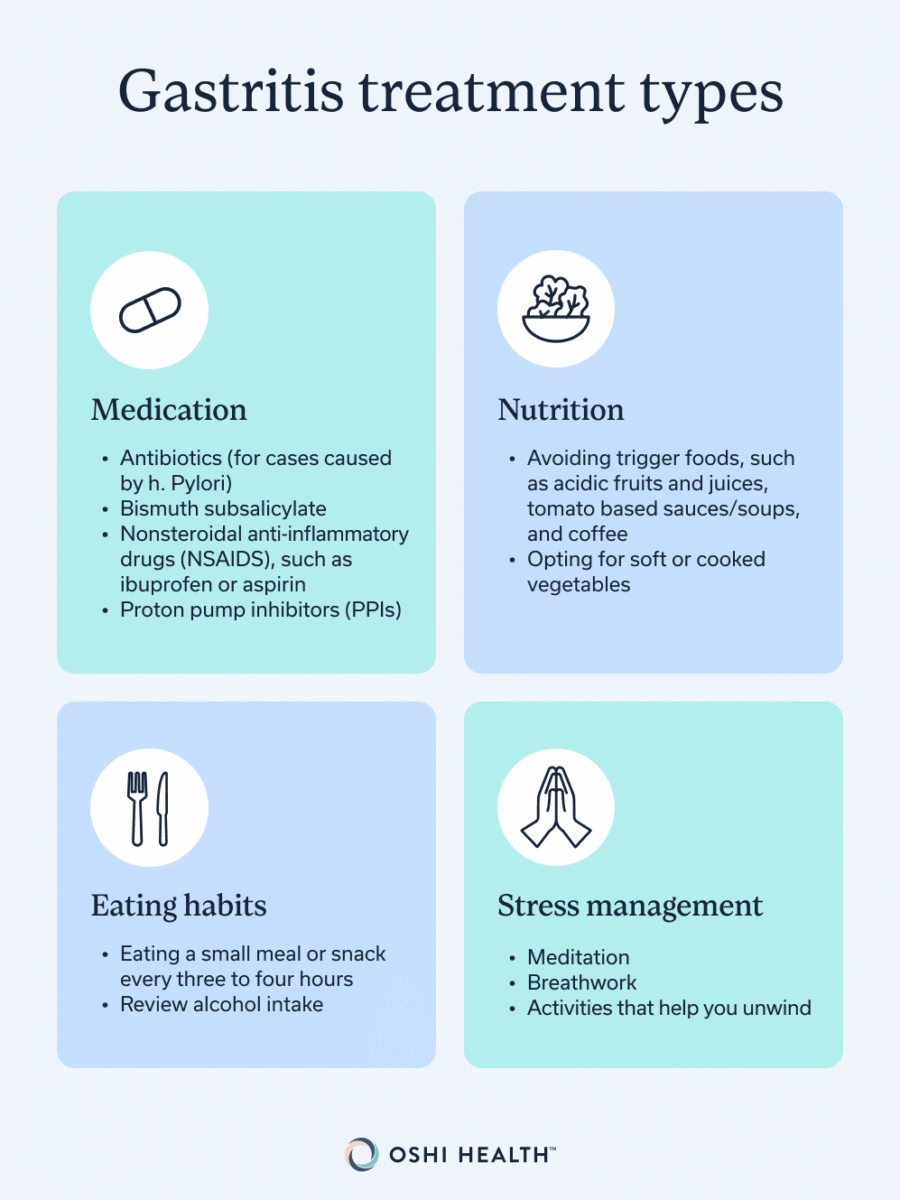
Gastritis treatment falls into four main camps: medication, nutrition, eating habits, and stress management. Often, a GI provider recommends a treatment plan that encompasses multiple of these categories.
Gastritis medication
Traditionally, gastritis medication was the front-line treatment for all cases. It’s still effective, either on its own or alongside other treatments, in many cases. However, some medications may only relieve symptoms, rather than treating the underlying cause. Treatment of gastritis is dependent on the underlying cause (e.g., antibiotics for H. Pylori gastritis) and avoiding the underlying cause, if any (e.g., NSAIDs, alcohol).
Common medications prescribed for gastritis include:
- Antibiotics: If gastritis is caused by H. pylori, treatment includes antibiotics. Some regimens also include bismuth, the active ingredient in Pepto-Bismol.
- Proton pump inhibitors (PPIs)
Other drugs may be prescribed as well, depending on why gastritis is happening in the first place.
Diet for gastritis
Sometimes, nutrition won’t play a role in the treatment. Other times, a diet for gastritis may help reduce inflammation. And in all gastritis cases, avoiding trigger foods is a good way to make sure inflammation doesn’t get worse.
When Freuman works with a patient who has gastritis, she recommends avoiding foods that are known as GI irritants. Triggers vary from person to person, but common gastritis triggers are acidic fruits and juices, tomato-based sauces/soups, and coffee.
If you’re a coffee lover like me, you might have scoffed at that last one. For those of us with a caffeine addiction, Freuman advises, “If giving up coffee is too difficult, I recommend drinking it on a full stomach rather than an empty one.”
She also recommends choosing a milkier coffee, because the milk helps buffer the coffee’s acidic quality. That means a gastritis flare may be the time to indulge in a cappuccino or iced latte (though you may want to limit or skip any extra sugar or syrups).
Some of Freuman’s patients also report that, when dealing with gastritis, soft or cooked vegetables are easier to digest. Freuman explains, “This may be because softer forms of fiber take less time (and therefore require less gastric acid) to break down in the stomach compared to coarse, ‘roughage’ type fibers.”
Eating habits for gastritis
While Freuman says it’s important to reflect on what you eat, she also helps patients adjust how they eat too. “I always tell my patients that an empty stomach is an acidic stomach, and constant exposure to a very acidic pH can aggravate gastritis and provoke symptoms,” she says. “For this reason, I recommend eating a small meal or snack every three to four hours.”
It’s also recommended to review alcohol intake and nonprescription pain-reliever use, since these can trigger stomach lining inflammation. If someone can’t 100% abstain from alcohol, Frueman advises that they should never drink on an empty stomach.
Stress management and gastritis
It’s also crucial to manage your stress levels. Worrying or anxious thoughts may further trigger stomach lining inflammation. Sometimes, stress is the primary cause of gastritis as well. If your life is anything like mine, it’s not possible to get rid of all stressors. But you can develop practices that make you more resilient and better able to handle stressful situations.
A gut-brain specialist can help you find the right stress management practices for you. Common ones include meditation, breathwork , and even having an analog hobby you enjoy, like reading.
How to relieve gastritis pain fast
A lot of the treatment options we’ve discussed so far take time to work. If you’re wondering how to relieve gastritis pain fast, the answer is you might have to cultivate patience. Treating the underlying cause and reducing inflammation takes time.
But before you click off this article frustrated, there are some tips that may help the symptoms (not the underlying cause) go away faster:
-
Avoid alcohol or any personal trigger foods when symptoms occur.
-
Eat smaller meals. Large portions may make gastritis symptoms worse.
-
Try a quick stress relief exercise, such as this two-minute boxed breathing video.
How long gastritis treatment takes to work
Before going on a road trip, you probably enter the destination into your phone or GPS. The device gives you an estimated trip duration down to the minute and updates it regularly as you drive.
Gastritis doesn’t work like that. Instead, it’s more similar to a pre-GPS adventure. You can bring along an atlas (aka the treatment plan created by a GI provider), and there may be an estimated time of arrival, but there isn’t a live location tracker updating how long recovery will take.
The estimates on how long treatment may take differ depending on if gastritis is acute or chronic. For acute gastritis, it may take a few days for inflammation to go away. Chronic gastritis may require several weeks or months of treatment. Depending on the cause, it can take six months for inflammation to fully disappear.
Plus, it may reappear if triggered, making gastritis management an ongoing task for some individuals.
When to seek care
If experiencing any symptoms associated with gastritis for more than a few days, seek medical care. These include:
- Discomfort in the upper abdomen
- Feeling more tired than usual
- Feeling too full during or after eating
- Loss of appetite
- Nausea
- Upper abdominal pain
- Vomiting
These symptoms are nonspecific, meaning they could stem from many GI conditions. The only way to know the cause for sure is to get a diagnosis from a GI provider, such as the team at Oshi Health.
Even if symptoms are mild and relatively manageable, it’s still important to seek care. While gastritis itself may not be life-threatening, certain causes increase the risk of stomach cancer.
Building a personalized treatment plan with a GI care team
Let’s say two people want to have an amazing vacation. Their definitions of”amazing” may differ. For one person, it could be a relaxing week on the beach, while the other might enjoy a fast-paced trip hopping between European cities. Like a trip itinerary, the right gastritis treatment plan is personalized too.
That’s why it’s important to work with a GI provider who takes a whole-person approach. These providers will diagnose the underlying cause, consider if medication is suitable, and provide any nutrition or lifestyle guidance that may help manage symptoms. At Oshi Health, GI providers even connect people with GI-specialized registered dietitians and gut-brain specialists when appropriate.
Get expert support for persistent gastritis symptoms
Our GI providers, registered dietitians, and gut-brain specialists work together to identify your triggers and deliver coordinated, comprehensive care, all in one place.













Key takeaways
- Gastritis refers to inflammation of the stomach lining. There are many potential causes of this sensation, and finding the underlying reason for gastritis is the first step in treating it.
- When looking at how to treat gastritis, a GI provider may recommend medication, dietary changes, and lifestyle adjustments. Sometimes they recommend a mix of treatment options.
- Gastritis treatment can take time to work, and results are often better when someone consistently follows their treatment plan.
- That treatment plan should be customized to the individual and created by a GI provider who takes a whole-person approach, such as the team at Oshi Health.
Frequently asked questions (FAQs)
-
Gastritis refers to inflammation in the stomach lining. This sensation won’t directly cause diarrhea, but some underlying causes of gastritis can lead to diarrhea as well. A h. Pylori infection and Crohn’s disease, for example, may cause both gastritis and diarrhea.
-
Gastritis itself is not contagious. Some of the causes of gastritis, including helicobacter pylori (H. pylori), are. This bacteria is one of the common causes of gastritis, and it may spread from person to person, as well as through contaminated food and water.
-
Gastritis, GERD, and stomach ulcers are three distinct medical terms. Gastritis refers to inflammation in the stomach lining. GERD is a medical condition where someone often experiences acid reflux (heartburn). A stomach ulcer is an open sore in the stomach. The three may have overlapping symptoms, such as nausea and upper abdominal pain, but they are different.
-
Gastritis can return after treatment. This may happen if the treatment didn’t fully resolve the inflammation or if there’s a new trigger, resulting in a new wave of inflammation in the stomach lining.
-
Gastritis may lead to chest discomfort or pain in rare cases. If chest pain is due to gastritis, it will radiate up from the upper abdomen. If you’re experiencing a sharp, sudden chest pain, this is likely not due to gastritis and may be a sign of a medical emergency, such as a heart attack.
Find lasting relief from gastritis symptoms
Feel like gastritis is getting in the way of enjoying your life? You’re not alone—and we’re here to help.
Oshi Health GI providers, gut-brain specialists, and registered dietitians work together to address symptoms like indigestion, bloating, and stomach pain, and find solutions that actually work for you.
Our GI specialists will work with you to reduce symptom flare-ups through:
✔ Personalized care plans tailored to your lifestyle
✔ Evidence-based nutrition guidance
✔ Science-backed strategies to calm your gut
✔ Compassionate, whole-person care
✔ And so much more!
Ready to take control of your gastritis symptoms?