

Knowing what to eat when you have diarrhea is challenging. On one hand, it’s important to get enough nutrients so your body can combat whatever is causing the gastrointestinal (GI) distress. On the other, the wrong foods can make diarrhea worse. Here’s what to eat when you have diarrhea, as well as the signs that diarrhea requires medical care.
It’s safe to say diarrhea is a stressful and draining experience (emotionally and, well, physically). When you have the runs, it can be hard to know what will help and what will leave you dashing to the toilet more often. That’s especially true when it comes to food. Often, it feels safer to go without eating, but a lack of calories, fluids, and electrolytes makes it harder to fight whatever is causing diarrhea in the first place.
Learning what to eat when you have diarrhea can be a game-changer—and that’s exactly what this guide provides. We’ll also go over eating habits, drinks, and lifestyle strategies to ease diarrhea, as well as when it’s time to see a GI provider.
Understanding diarrhea: What’s happening in your gut
Most of us probably have a pretty good idea of what diarrhea is. It’s a series of loose, watery poops that usually come on with little to no warning. To be classified as diarrhea, those runny bowel movements must happen at least three times a day. This GI symptom can last for a few days or longer than two weeks, depending on the cause.
When symptoms last 14 days or less, it’s referred to as acute diarrhea, and we have probably all experienced this at one point or another. Typically, acute diarrhea is caused by food poisoning, a medication, or a viral infection that impacts the gut, such as norovirus.
Chronic diarrhea, when someone has the runs for longer than two weeks, is rarer—around 5 percent of Americans experience it. When chronic, diarrhea is often due to GI tract disease, a food or intolerance, abdominal surgery, chronic stress, or regularly using a medication with diarrhea as a side effect.
No matter how long diarrhea lasts, it can have a ripple effect on overall health. When functioning properly, the digestive system works like a well-oiled machine; it absorbs nutrients from foods and drinks, which the body then uses for everyday activities and to maintain health. But when you’re experiencing diarrhea, food and drink don’t remain in the digestive system long enough for the body to absorb all nutrients. This can contribute to nutritional deficiencies, especially when diarrhea is chronic. The loss of liquids from diarrhea also increases the risk of dehydration, which is when the body does not have enough fluids to work properly.
What to eat when you have diarrhea: Foods that are easier on your gut
When you have diarrhea, the last thing you want to do is eat. Yet it’s important to get in at least a few calories, even if you can’t eat as much as usual. Those nutrients can help your body address whatever is causing diarrhea, potentially getting you back to business as usual faster.
But what are the best foods to eat when you have diarrhea? It may be best to follow the bland diet, which emphasizes easy-to-digest foods. The bland diet’s exact list of foods for diarrhea, however, depends on what’s causing the diarrhea. Kaitlin Voicechovski, MS, RD, LDN, lead registered dietitian at Oshi, explains, “There are a multitude of potential causes of diarrhea, and the foods that will work best for someone with diarrhea may vary based upon the cause.”
This diet, however, is not the same as the BRAT diet, which is a highly restrictive diet in which someone eats only bananas, (white) rice, applesauce, and toast (made with white bread) when experiencing diarrhea and/or vomiting. Growing up, my family turned to the BRAT diet when someone had a stomach bug. If yours did too, it may be time to expand your diarrhea diet, though those four foods are good examples of bland diet-approved options.
Voicechovski explains that some other options that work for many people with diarrhea include sources of lean protein (grilled or baked, and not fried) as well as sources of soluble fiber. The word soluble there is very important, since fiber falls into two categories:
- Soluble: Dissolves in water
- Insoluble: Doesn’t dissolve in water
“Soluble fiber can help to slow transit in the GI tract and can absorb water, producing more formed stool,” explains Voicechoski. Sources of soluble fiber include oats, barley, nuts, squash, some cooked veggies, like peas, and some fruits where you don’t eat the skin, like bananas.
Portions and eating habits for diarrhea
You may also want to pay attention to portion sizes and when you eat. “Managing appropriate portions at meal times and spacing foods appropriately can help to better manage diarrhea as well,” says Voicechovski, “Every time we eat, we trigger motility within our GI tract, and this reflex is amplified by larger portions. Consuming well-timed, appropriately portioned meals can support the right pace of passage for the contents in the GI tract.”
This may translate to eating smaller portions than usual, especially when testing the waters with foods that may potentially trigger symptoms. A GI dietitian can help determine the right timing for meals, depending on diarrhea’s underlying cause.

Foods and eating habits that may make diarrhea worse
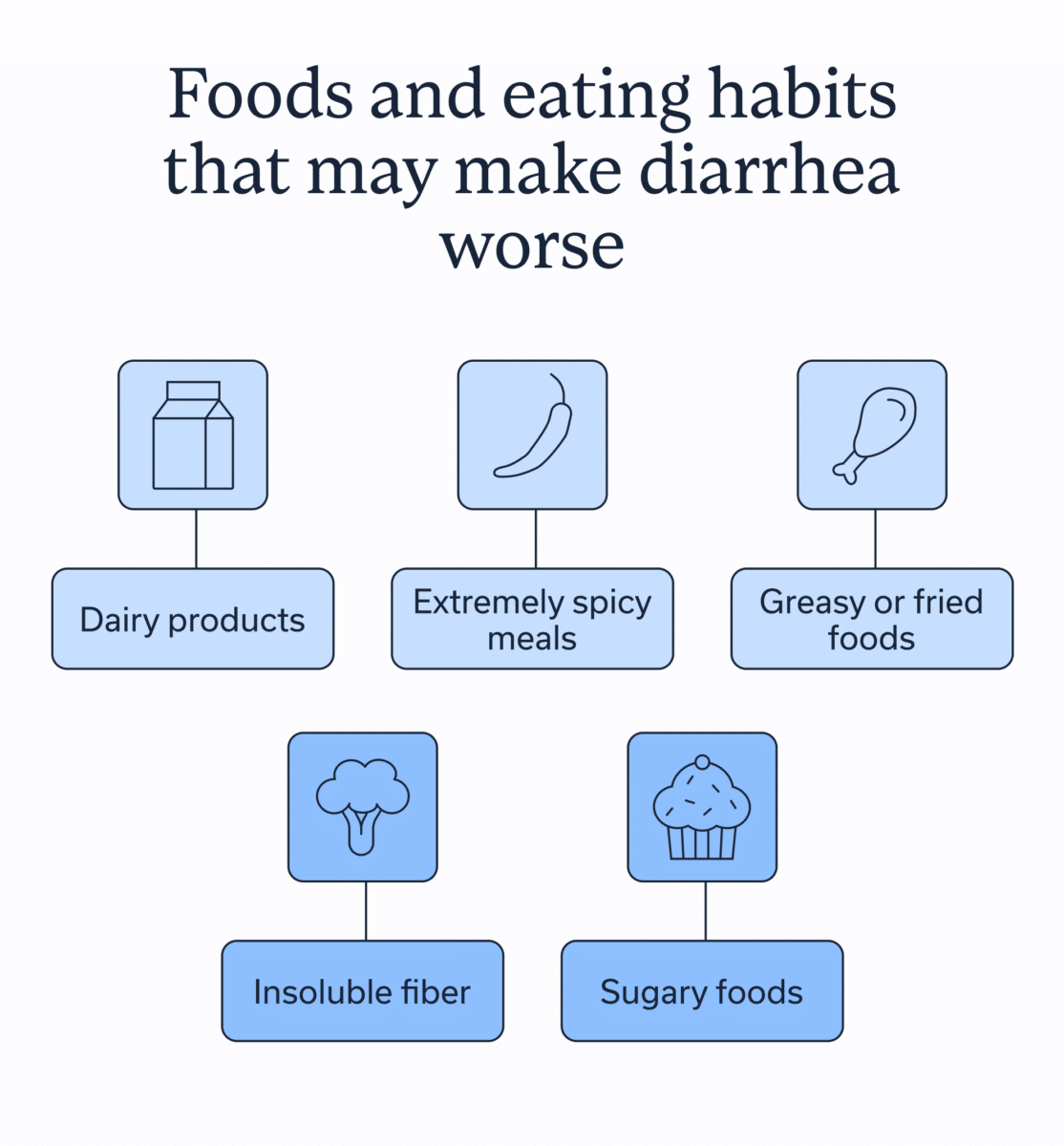
Diarrhea is not the time to spice up your diet (literally or metaphorically). Specific food groups to avoid vary on a case-by-case basis. Common culprits include:
- Dairy products: “For those with lactose intolerance, milk and other lactose-containing dairy products often cause diarrhea and gas,” says Voicechovski.
- Extremely spicy meals: Depending on the individual, spices may irritate the digestive tract, contributing to GI symptoms.
- Greasy or fried foods: These foods are always best avoided or enjoyed in moderation, though stick to avoiding them when diarrhea strikes.
- Insoluble fiber: Remember when we discussed the two types of fibers? Turns out, insoluble fiber can worsen diarrhea. This group includes many foods we consider healthy, like leafy greens and whole grains. While these foods are usually good for you, it’s best to put off eating that giant salad until after diarrhea is gone.
- Sugary foods: “Some foods or beverages that may worsen diarrhea include those that contain sugar alcohols or polyols. These can be found in packaged goods, such as low sugar/sugar-free candies and desserts (look for ingredients ending with”-ol”),” says Voicechovski. That doesn’t mean all natural or whole foods are safe, however. Some natural fruits, like prunes, apples, and watermelon, also contain high amounts of sugar.
What to drink (and avoid) when you have diarrhea
When experiencing diarrhea, keep your emotional support water bottle nearby. Since this GI symptom increases the risk of dehydration, it’s important to take small, consistent sips of water throughout the day. Some people also benefit from slowly sipping a drink with electrolytes or herbal teas, so long as they aren’t caffeinated.
Speaking of caffeine, it can irritate the GI tract, worsening diarrhea. Alcohol, acidic juices, and high-sugar beverages may also exacerbate diarrhea.
What helps with diarrhea besides food?
Diarrhea is a message from your body that something is off–and that you need a little rest and recovery. Instead of pushing through it, give your body time to sleep and slow down. A 2024 study suggests there’s a correlation between disruptions to sleep or sleep disorders and the risk of chronic diarrhea. And this makes sense; sleep is the time when our body recovers, including from whatever is causing your GI distress.
If resting during the day makes you stir-crazy, some light movement may be ok. For chronic diarrhea caused by an underlying GI disorder, light to moderate exercise, like a walk around the block or a gentle yoga flow, can actually help alleviate GI symptoms.
When you’re in the throes of diarrhea or warning signs are present (i.e., abdominal pain or an urgent need to use the restroom), avoid more intense exercise, which may make diarrhea worse. Intense workouts, such as a five-mile run or a CrossFit class, could also contribute to the dehydration or fatigue that often accompany diarrhea.
Last but not least, protect your skin. Diarrhea can cause irritation around the anus, but there are steps to stop an itching or a burning sensation from becoming another symptom:
- Clean the anus with water or unscented baby wipes at least once a day
- Consider an over-the-counter anti-itch ointment or cream
- Gently wipe and pat dry after a bowel movement
- Use unscented toilet paper
- Use unscented soaps when showering
- Wear loose clothing to prevent further irritation
Diagnosis and treatment options: When diarrhea needs a closer look
If the diarrhea suddenly gets worse or doesn’t improve in two days, call your primary care provider or a GI specialist who can assess symptoms and diagnose the underlying cause. For children, the timeframe is even shorter: Call a provider if diarrhea lasts longer than 24 hours.
For chronic or more severe cases, a primary care provider will refer you to a GI provider who has a better understanding of what helps diarrhea and can deliver a more accurate diagnosis. Or, you can head straight to a GI provider in the first place.
“It’s not a one-size-fits-all,” says Voicechovski, “Working with a GI care team to better understand the cause of your diarrhea and your unique triggers can help you to both better manage your symptoms and avoid unnecessary restriction.”
When to seek emergency care
Diarrhea can pose a serious risk to health, especially when chronic or accompanied by complications like dehydration. Seek immediate medical care if experiencing diarrhea with:
- Blood in stool
- Black or tarry stools
- Confusion
- Dizziness
- Excessive thirst
- Extremely limited urination
- High fever (102 degrees or higher)
- Racing heart
- Severe abdominal pain
- Stool containing pus

Working with a healthcare provider to personalize your plan
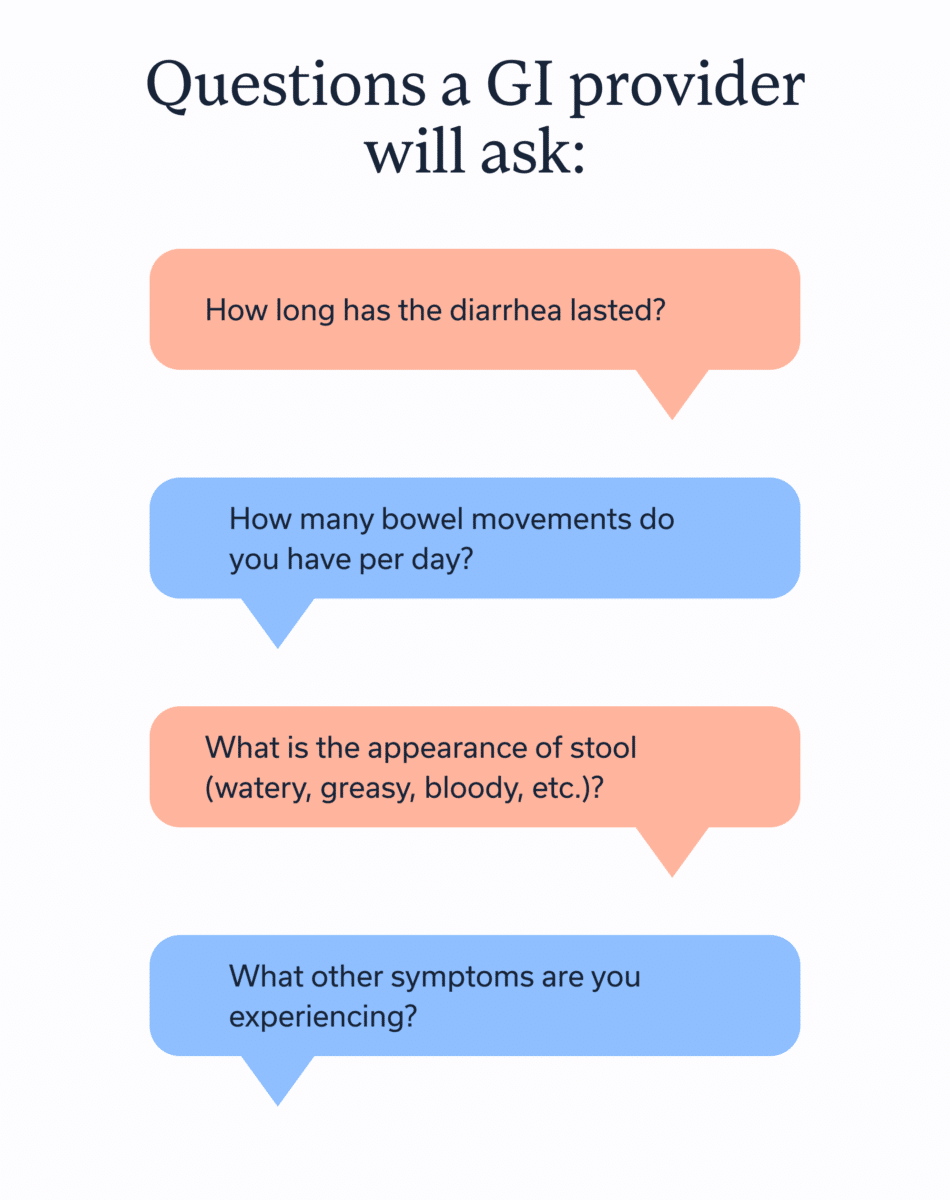
Diarrhea isn’t typically a standalone act. It usually has a cause, whether that’s something you ate, a medication, or an underlying medical condition. To diagnose what’s causing diarrhea, a GI provider will ask a few questions:
- How long has the diarrhea lasted?
- How many bowel movements do you have per day?
- What is the appearance of stool (watery, greasy, bloody, etc.)?
- What other symptoms are you experiencing?
They’ll likely also ask about the medications you’re taking, if you’ve used antibiotics recently, or if you’ve been exposed to contaminated food and water, such as through travel to high-risk countries. If diarrhea is chronic or severe, GI providers will also collect a stool sample, blood work, or order imaging for a better idea of what’s causing the GI distress.
Once a GI specialist has a diagnosis, they’ll create a personalized treatment plan. Providers like Oshi also give patients access to a GI care team, including a GI provider (often a GI-trained nurse practitioner or physician’s assistant), a GI dietitian, and a gut-brain specialist, all overseen by leading gastroenterologists. This dream team can provide insight from every angle on how to get rid of diarrhea.
Non-surgical treatment options for diarrhea
Diarrhea treatment doesn’t come in the form of a one-and-done pill or surgery. It usually requires a multi-pronged approach:
- Medications: Depending on the cause and severity, a provider may recommend the short-term use of anti-diarrheal medication. While some are available over the counter, consult your provider about which drug works best for your specific situation.
- Mind-gut strategies: Anxiety diarrhea is a very real thing. If stress or excessive worrying is causing your symptoms, a gut-brain specialist can help you calm the mind and the GI symptoms.
- Nutrition: Diet modifications, like the ones above, and staying hydrated often help. Ideally, nutrition strategies should be tailored to your needs by a GI provider or dietitian.
- Treatment for the underlying cause: Last but certainly not least, your provider will probably recommend other treatments based on what’s causing diarrhea. Options vary widely, depending on the underlying issue.
Surgical treatment options
Surgery is not normally recommended for acute diarrhea or most cases of chronic diarrhea. In rare cases, surgery may be considered if chronic diarrhea is related to a structural problem or some underlying diseases, such as inflammatory bowel disease (IBD), and isn’t responding to other treatments.
Final thoughts
- Diarrhea may lead to serious health impacts, including dehydration and inadequate nutrient absorption. To avoid both, it’s important to hydrate and eat foods that contain essential nutrients but won’t aggravate symptoms.
- When you have acute diarrhea, you don’t have to opt for the highly restrictive BRAT diet. While bananas, rice, applesauce, and toast are good options, they aren’t the only. Many people also find it beneficial to include lean protein sources and soluble fiber, such as oats or squash.
- The best drinks are water, followed by sports drinks with added electrolytes and non-caffeinated herbal teas.
- Avoid foods that contain dairy, are fried, or are ultra-processed, such as chips or fries. Insoluble fiber, which is found in many raw veggies, whole grains, and fruit with the skin on it, may aggravate GI symptoms too.
- If diarrhea lasts longer than two days for adults or 24 hours for children, contact a healthcare provider. They can help diagnose what’s causing diarrhea and possibly refer you to a GI specialist.
Frequently asked questions (FAQs)
-
Foods that may help when you have diarrhea include white bread, pasta, boiled rice, cooked vegetables, and lean protein. You’ll want to avoid sugary or greasy foods, as well as foods high in insoluble fiber, such as raw veggies or whole grains.
-
When you have diarrhea, avoid foods that may irritate the GI tract. This includes foods with simple sugars like lactose (i.e. dairy products), fructose, sugars ending in”-ol”, and options that are ultra-processed (think: buttery croissants, cupcakes, and chips). Foods that are high in insoluble fiber, like leafy greens or quinoa may also worsen diarrhea.
-
If you have diarrhea, the best thing to drink is water. Diarrhea increases the risk of dehydration, which is why it’s important to stay hydrated. Drinking sports drinks with electrolytes or calming, non-caffeinated herbal teas are other solid options.
Oshi is your partner in digestive health
Feel like your digestive concerns are running your life? You’re not alone—and we’re here to help you find lasting relief.
Oshi Health GI providers, gut-brain specialists, and registered dietitians work together to address your symptoms and find solutions that actually work for you.
Whether you’re dealing with chronic digestive issues or unpredictable symptom flare-ups, our GI specialists deliver:
✔ Personalized care plans tailored to your lifestyle
✔ Science-backed strategies to calm your gut
✔ Compassionate, whole-person care
✔ And so much more!
Ready to take control of your gut health?