



If you’ve been diagnosed with or suspect you have gastroesophageal reflux disease (GERD), don’t despair. GERD treatment options, including medications, dietary changes, and more, can help manage irritation so you can get back to enjoying mealtimes.
If you’re among the 20% of people in the United States living with gastroesophageal reflux disease (GERD), symptoms such as coughing, trouble swallowing, heartburn, feeling a lump in the back of your throat, and food regurgitation might plague you.
These symptoms can disrupt your sleep, delay your workout, or derail your work meeting — or simply leave you feeling frustrated and uncomfortable after a meal.
GERD means you have chronic acid reflux, in which stomach acid travels up into the esophagus (your “food pipe”), causing irritation and other symptoms. It occurs because the lower esophageal sphincter, which is a valve separating your esophagus from your stomach, fails to prevent stomach acid backflow. Heartburn is a common feature of GERD, though you can have GERD without this symptom.
Thankfully, GERD has a variety of treatment options. A combination of medications, personalized dietary shifts, and simple lifestyle habits can help.
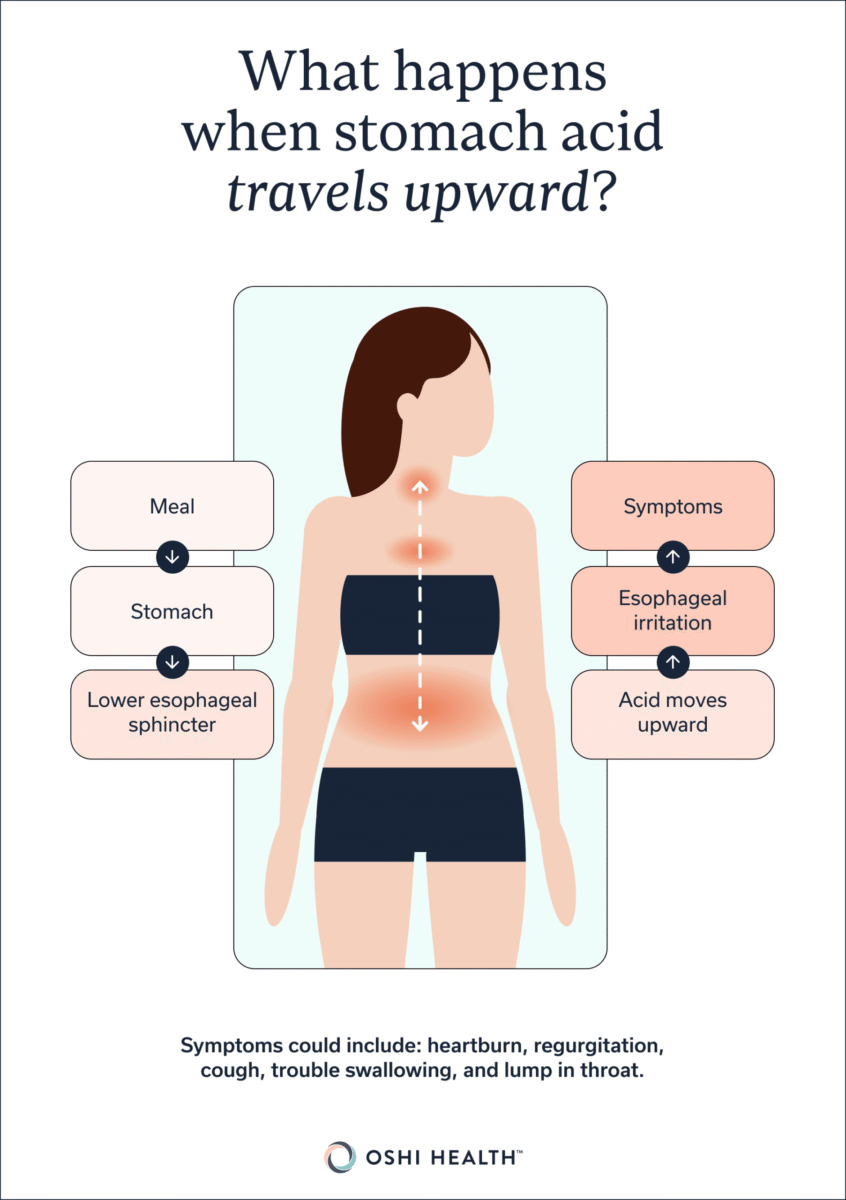
GERD treatment: what”healing” really means
The main goals of GERD treatment include getting you back to feeling better and preventing complications from ongoing irritation.
Your well-being is reason enough to treat GERD. You don’t have to”just live” with frustrating symptoms, but complications are another concern and reason to treat.
Long-term acid exposure can damage your esophagus in several ways. It can cause esophagitis (inflammation), esophageal ulcers, or stricture, a narrowing that makes swallowing difficult. In some cases, acid exposure over time can lead to Barrett’s esophagus, a condition in which tissue that behaves like your intestinal lining replaces tissue lining your esophagus (and this can be a pre-cancerous condition). GERD can also worsen existing lung conditions or put you more at risk for developing them, including chronic obstructive pulmonary disease (COPD), according to research in The Journal of Translational Medicine.
Treatment for GERD is not one-size-fits-all. The specific treatments that are right for you will depend on the frequency and severity of your symptoms. Treatment usually follows a step-by-step approach, with lifestyle and dietary changes and medications serving as the first lines of defense.
“More invasive treatments, such as endoscopic procedures and surgical intervention, are generally reserved for select populations of patients,” says Edmundo Rodriguez-Frias, MD, medical contributor at Full of Life.
How GERD is diagnosed before treatment starts
If you haven’t already been diagnosed with GERD but suspect you might have the condition, you might be wondering what getting a diagnosis entails.
“The diagnostic approach most commonly starts with the patient’s symptoms and history,” Dr. Rodriguez-Frias says. “If a person has typical symptoms without’alarm’ symptoms, such as difficulty swallowing, they will likely receive an initial treatment trial. However, if a person continues to have symptoms, that could represent a complication.”
Depending on various factors, including if complications are suspected, you might need to undergo a few tests to see if your esophagus or other tissues are damaged or inflamed.
-
Esophagogastroduodenoscopy (EGD): Also called an upper endoscopy, this procedure involves a doctor inserting a flexible tube through your mouth and down your throat. The tube has a small camera attached to it so your provider can view and analyze what’s going on.
-
Ambulatory pH monitoring: A device measures the acid levels in your esophagus for up to 4 days.
-
Esophagram: Also called a barium swallow test, this simple imaging procedure involves swallowing a barium-containing liquid during an X-ray that records the liquid passing through your upper gastrointestinal (GI) tract.
-
Esophageal manometry: After passing through your nose, down your throat, and into your stomach, a flexible tube with pressure sensors measures the muscle strength and function of your esophagus.

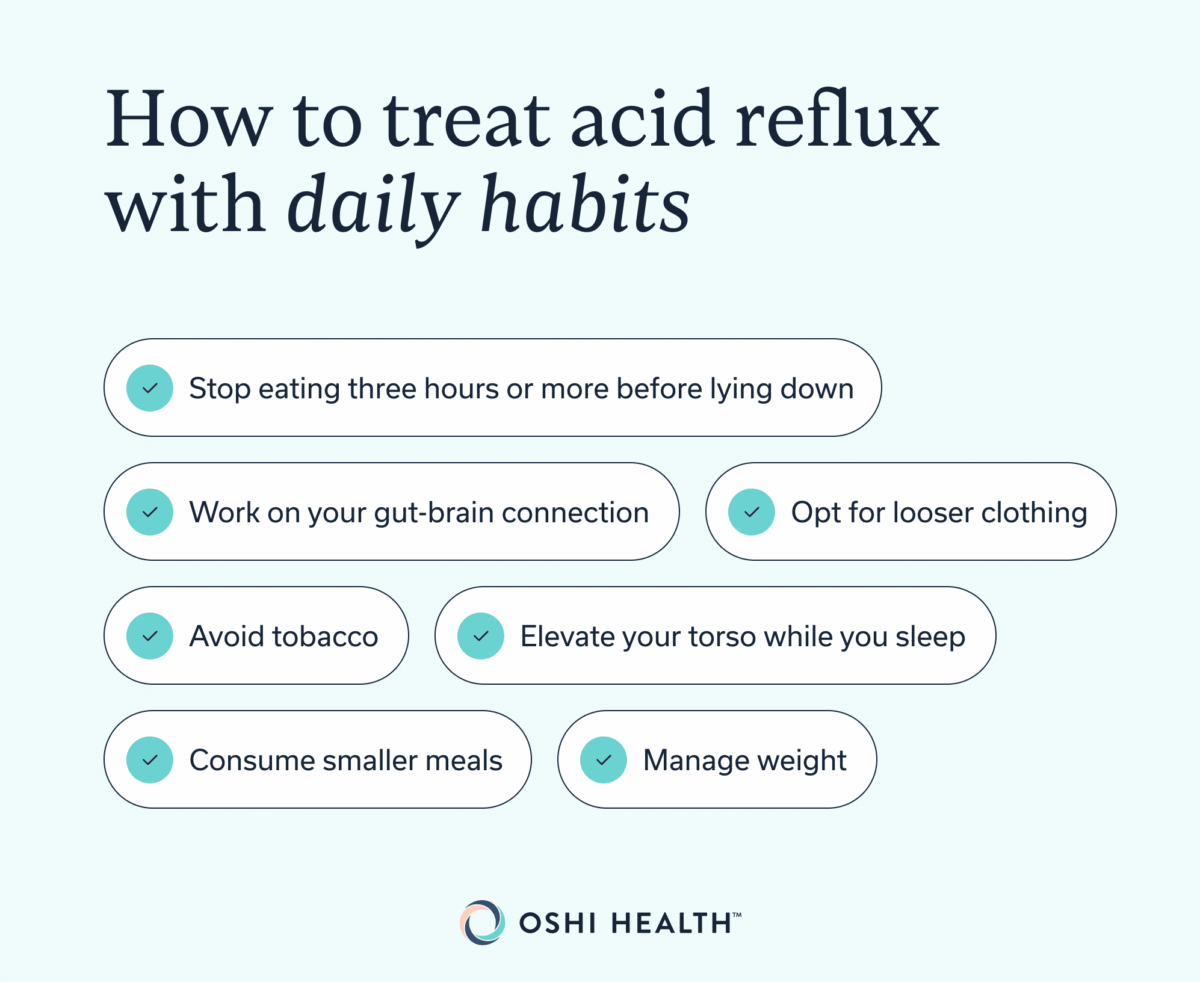
How to treat acid reflux with daily habits
In addition to working with a knowledgeable provider to receive a diagnosis and to help determine the best management plan for you, some daily habits can help keep reflux and irritation to a minimum.
-
Stop eating three hours or more before lying down: Lying flat too soon after a meal can trigger reflux. Finishing dinner at least three to four hours before bedtime may lessen the risk of reflux, which could also mess with your sleep by waking you up with nighttime symptoms.
-
Elevate your torso while you sleep: Extra pillows, a specially designed wedge that goes under your mattress, or even an adjustable bed can create a gentle rise for your upper GI tract so that gravity works in your favor to help prevent symptoms.
-
Consume smaller meals: Instead of eating three large meals a day, you might benefit from small portions (consumed more frequently). Large meals cause extra stomach pressure that can trigger GERD.
-
Opt for looser clothing: Restrictive clothing, such as cinched belts, too-tight waistbands, or clothing that pinches your torso, can drive GERD by increasing abdominal pressure, especially after eating.
-
Avoid tobacco: Tobacco reduces saliva production, but saliva is beneficial for combating GERD because it is rich in bicarbonate, which helps neutralize and eliminate acid. If you smoke, vape, or chew tobacco products, talk to your doctor about a way to quit that works for you.
-
Manage weight: Having obesity is a risk factor for GERD because it can impair the motility of food through the GI tract, lead to dysfunction of the lower esophageal sphincter, and increase intragastric pressure. If weight is a contributing factor for you, working with an obesity medicine specialist alongside a GI care team may help you manage acid reflux more effectively.
-
Work on your gut-brain connection: The brain and the gut are connected via what’s called the gut-brain axis. This means that stress, anxiety, depression, and more may also drive GERD symptoms. Working on your gut-brain connection with a GI psychologist may help you manage acid reflux.
Food and nutrition without unnecessary restriction
Adjusting your diet is another way to help manage GERD. But dietary recommendations for the condition are not one-size-fits-all. What triggers someone else’s symptoms might not trigger yours, and you don’t want to restrict your diet unnecessarily.
“In contrast to recommending that every patient follow a large number of dietary restrictions,” Dr. Rodriguez-Frias says, “I recommend developing recommendations based on each patient’s unique set of personal trigger foods.”
One way to assess your personal triggers is to keep a food and symptom log to see if you notice any common culprits. A log can also help a GI registered dietitian and other members of your care team make the best recommendations for you.
To help you narrow down some possible GERD triggers, here’s a list of the most common foods associated with worsening the condition, according to research in the journal Best Practice & Research Clinical Gastroenterology.
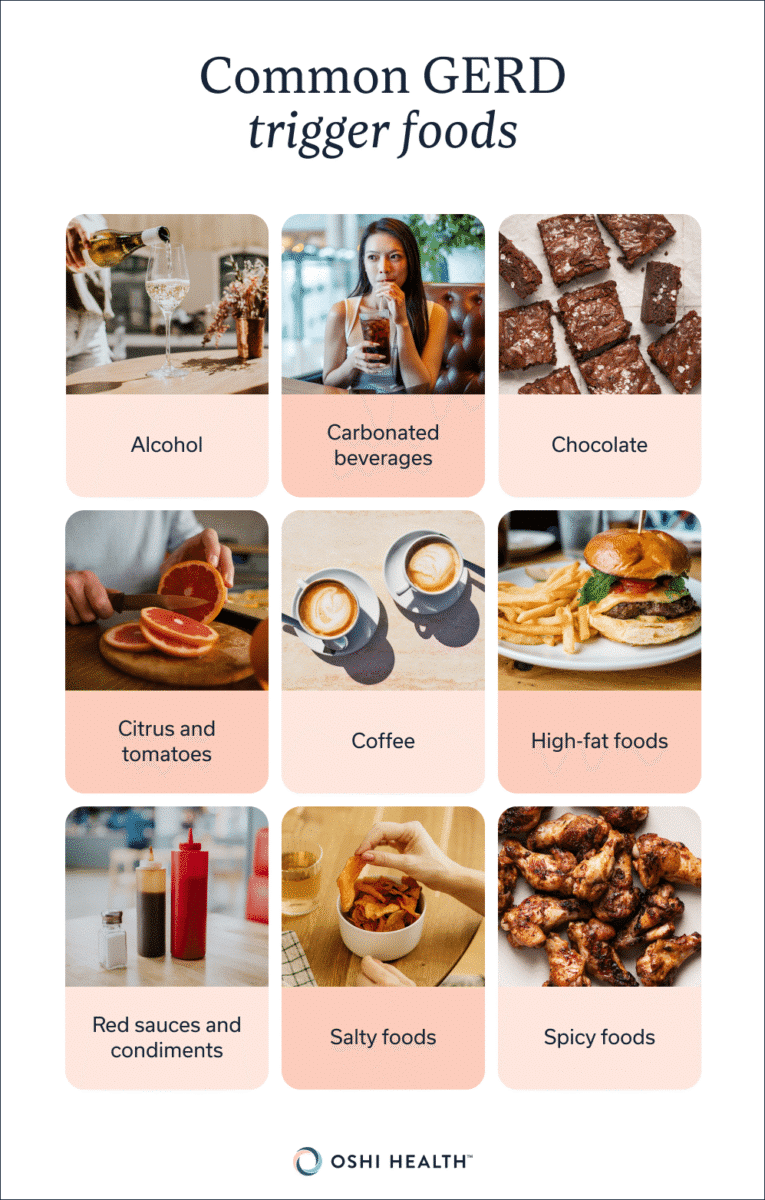
Common GERD trigger foods:
-
Alcohol: Alcohol can irritate and damage the stomach and esophageal lining. If you drink, limit your amount and avoid beverages too close to bedtime.
-
Carbonated beverages: Carbonation can lead to bloating and pressure.
-
Chocolate: Chocolate can be a GERD trigger, but if it’s your favorite treat, you might still be able to indulge on occasion.
-
Citrus and tomatoes: Citrus fruits and tomatoes are highly acidic, so use extra caution when including them in your diet and monitor how you feel afterward.
-
Coffee: Research is mixed on whether coffee triggers GERD. If it’s a problem for you, you may find that cold brew or dewaxed coffee don’t cause irritation, thanks to their lower acidity.
-
High-fat foods: Fried or other high-fat foods are frequently associated with GERD, potentially because they reduce pressure on the lower esophageal sphincter, worsening its function.
-
Red sauces and condiments: Red sauces and red condiments, such as ketchup or hot sauce, usually contain tomatoes, which contain citric acid, a common GERD trigger.
-
Salty foods: High-sodium foods can trigger GERD. The sprinkle of salt you use in the kitchen or at the dinner table to lightly season your food is likely not the problem. But ultra-processed foods tend to contain a high amount of sodium and might cause GERD trouble.
-
Spicy foods: Some spicy items contain the active compound capsaicin, which can irritate your esophageal lining. But research is mixed as to whether these foods trigger GERD. Ultimately, if you like spicy foods, you might have to go through some trial and error to see which specific seasonings or ingredients lead to too much burn.

GERD medications and how they differ
Some over-the-counter or prescription medications can also come to your rescue to keep acid reflux at bay and reduce irritation. Talk to your provider about which medication (or combination of medications) is best for you.
-
Antacids: Antacids contain ingredients that quickly neutralize stomach acid. You can buy them over the counter.
-
H2 blockers: H2 blockers bind to the histamine type-2 receptors in your stomach lining to block this type of histamine from triggering your stomach cells to produce acid. You can buy them over the counter.
-
Proton pump inhibitors (PPIs): PPIs block an enzyme that helps produce stomach acid. You can buy some over the counter, while stronger versions require a prescription.
-
Potassium-competitive acid blockers (P-CABs): P-CABs are newer medications that block potassium from entering the proton pump enzyme that helps produce stomach acid. You can only access them through a prescription.
-
Prokinetics: These medications increase muscle tone in the lower esophageal sphincter to help it function better, and they speed up how fast your stomach empties into your small intestine. You can only access prokinetics via a prescription.

Working with an Oshi healthcare provider
The best ways to treat and manage GERD will be somewhat unique to you and may be different from methods that help someone else. That’s why you may benefit from coordinated, multidisciplinary support from Oshi Health.
Your care team might include a GI clinician (a nurse practitioner or physician associate), a GI registered dietitian, and/or a gut-brain specialist or psychologist, all overseen by board-certified gastroenterologists. They collaborate to help you improve your gut health, alleviate symptoms of GERD and other conditions, and empower you with strategies to better manage your health over the long term.
You don’t have to manage GERD alone
Our multidisciplinary GI care team brings together medical providers, registered dietitians, and gut-brain specialists to create a coordinated GERD care plan designed around you.













Key takeaways
-
GERD is a chronic condition in which acid backflows from the stomach to your esophagus, leading to irritation.
-
GERD symptoms are worth treating because of their discomfort and because acid is erosive and can lead to damage and other complications over time.
-
Treatment for GERD might involve lifestyle and dietary changes as well as medications, depending on factors unique to you.
-
Oshi Health can help you tailor a treatment plan to your unique needs for less GERD irritation.
FAQ
-
GERD is considered a chronic condition, meaning you always have it once you’re diagnosed. But you can find ways to treat and manage GERD that help keep you comfortable and prevent damage to your esophagus and other complications.
-
Yes, GERD can cause bad breath. When stomach acid backflows into the esophagus, it leads to sulfur gases that you might burp up or exhale. Additionally, the irritation that GERD can cause creates a favorable environment for bacteria to grow, leading to unpleasant smells.
-
Yes, GERD can cause a sore throat and hoarse voice by irritating your larynx and vocal cords. When this happens, the condition is called laryngopharyngeal reflux (LPR) or”silent reflux.”
-
If you are pregnant and have GERD, your provider can recommend the safest treatment options, including changing your diet or lifestyle or taking certain medications, such as antacids or H2 blockers.
Find lasting relief from GERD symptoms
Feel like GERD is getting in the way of enjoying your life? You’re not alone—and we’re here to help.
Oshi Health GI providers, gut-brain specialists, and registered dietitians work together to address symptoms like acid reflux and heartburn and find solutions that actually work for you.
Our GI specialists will work with you to reduce symptom flare-ups and make meal times less stressful through:
✔ Personalized care plans tailored to your lifestyle
✔ Evidence-based GERD nutrition guidance
✔ Science-backed strategies to calm your gut
✔ Compassionate, whole-person care
✔ And so much more!
Ready to take control of your GERD symptoms?