



If your chest starts to burn after a meal, it could be acid reflux. This sensation is common and not always a cause for concern, though it’s almost always uncomfortable. Whether you’re in the middle of an acid reflux episode right now or you get flares often, you’re in the right place. We’re about to dive into what to do during an acid reflux attack.
The other day, I was out on a run when I felt a tightness in my chest. My first guess was that I was going too fast, but when I looked down at my watch, the time was on the slower side. The burn slowly intensified, and every time I swallowed, it felt like something was lodged in my throat. Heartburn was the next culprit that came to mind, which made sense since I ate leftover curry right before heading out.
It’s easy to look back now and point out that eating spicy food and running weren’t a good combo, but that doesn’t help when an acid reflux flare hits. What does help is having a bookmarked guide on what to do during an acid reflux attack. And that’s exactly what this article provides.
What is acid reflux?
Before we get ahead of ourselves, what is acid reflux? In medical terminology, it’s when food and stomach acid travel back from the stomach to the esophagus. “We typically think of acid reflux as heartburn or regurgitation,” says Scott Gabbard, MD, a gastroenterologist at the Cleveland Clinic, “It’s the feeling of stomach contents coming back up through the chest into the throat.”
If stomach contents coming back up the digestive tract sounds unusual, it’s because it is. Our gastrointestinal (GI) tract is designed to be a one-way street. After we swallow food, it travels through the esophagus, a tube in the chest, and into the stomach. It then moves onto the small and large intestines and eventually leaves the body.
If the contents of the stomach return to the esophagus (with stomach acid in tow), it’s called acid reflux. When this happens at least two times a week, someone may be diagnosed with gastroesophageal reflux disease (GERD). About 20% of Americans suffer from GERD, and almost everyone has experienced acid reflux at least once.
But if food isn’t supposed to travel back up the GI tract, why does this happen? Let me introduce you to yet another body part, the lower esophageal sphincter (LES). This ring of muscles sits between the esophagus and stomach and controls the flow of food. If the LES relaxes inappropriately, food can flow in both directions, which is about as chaotic as a car driving the wrong way down a one-way road.
What does an attack feel like?
When stomach contents move the wrong way, it usually manifests as a burning sensation called “heartburn.” Other symptoms of an acid reflux attack could include:
- An acidic or bitter taste
- Bleeding or irritated gums
- Burping or passing gas, especially after meals
- Chronic cough
- Dry mouth
- Feeling like there’s something lodged in your throat
- Nausea
- Pain when swallowing
- Trouble swallowing
Not everyone will experience all of these. The times I’ve had an acid reflux attack, I usually experience heartburn, dry mouth, trouble swallowing, and feeling like something is lodged in my throat, but I’ve never experienced a chronic cough.
These symptoms are also nonspecific, meaning they can be caused by many possible conditions. When acid reflux is to blame, there’s usually a gastrointestinal-related trigger. In my story earlier, it was eating something spicy combined with intense physical exercise.
What to do during an acid reflux attack
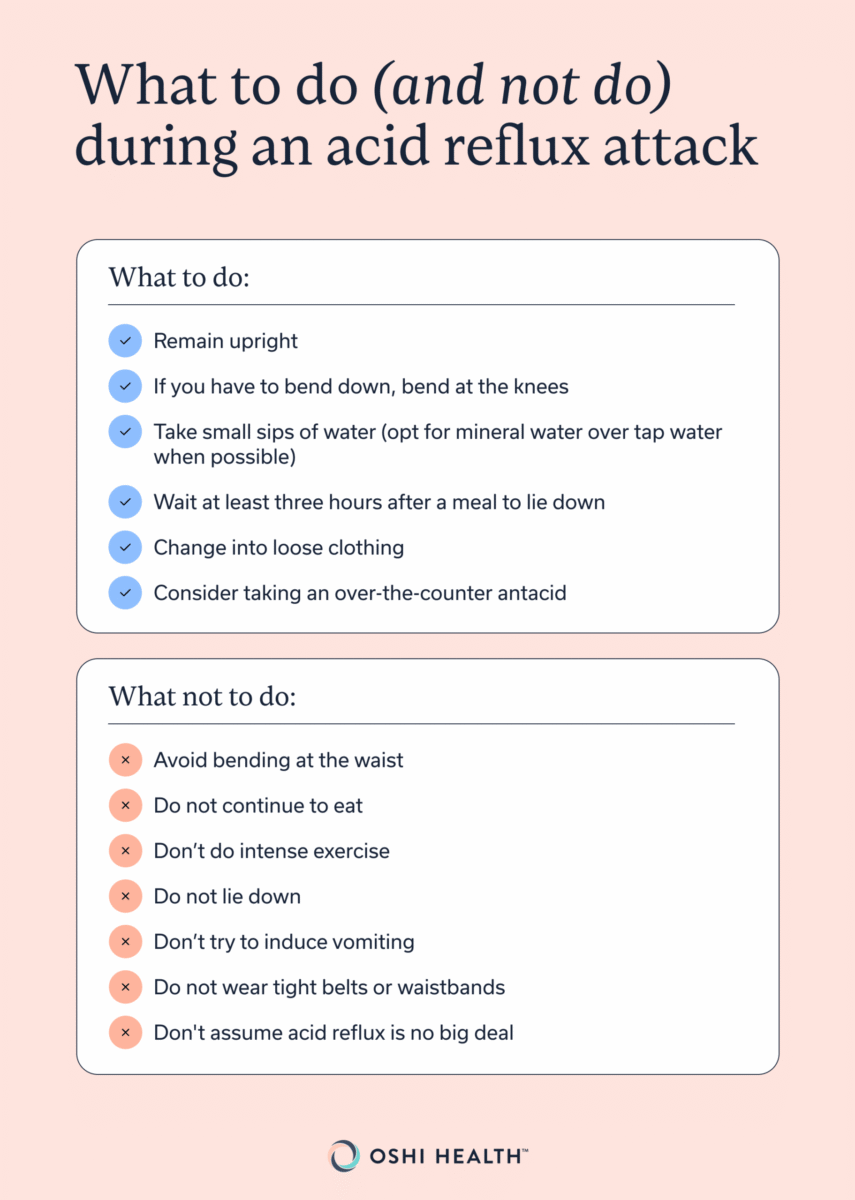
During an acid reflux attack, remain upright, change into loose clothing, and take small sips of water. Since the burning sensation comes from acid in the stomach, you may want to take something that may neutralize stomach acid. “We often recommend agents that neutralize acid in the stomach, such as calcium carbonate, or preparations that contain alginate,” says Dr. Gabbard.
Calcium carbonate and alginate may sound like vocab from a chemistry class. There is some scientific nuance to these terms, but for our purposes, calcium carbonate is a main ingredient in over-the-counter antacids, and alginate is a compound found in seaweed.
Both neutralize stomach acid, but alginate also floats to the top of the pool of acid in the stomach, explains Dr. Garbard. At the top of the pool, alginate may prevent the contents from flowing into the esophagus. Because of this dual effect, some studies suggest alginate may be more effective than calcium carbonate.
Other guidelines to follow include:
- Remain upright; even bending over to pick something up may trigger symptoms
- If you have to bend down, bend at the knees, not at the waist, and keep your head and esophagus upright
- Sip mineral water over tap water when possible, since the former may have a greater effect on acid reflux
- Wait at least three hours after a meal to lie down
What not to do during an acid reflux attack
When researching how to get rid of acid reflux, there are a lot of”don’t’s” to keep in mind, too:
- Avoid movements that involve bending at the waist
- Do not continue to eat when symptoms occur
- Don’t do intense exercise, like running, swimming, or CrossFit
- Do not lie down until the attack subsides
- Don’t try to induce vomiting, since this can make acid reflux worse
- Do not wear tight belts or waistbands
And perhaps the biggest one of all: Don’t assume acid reflux is no big deal. Chronic acid reflux, defined as having attacks two or more times a week, can be dangerous. It may lead to breathing issues and complications like GI bleeding and esophagitis, which is when the lining of the esophagus becomes damaged or inflamed. Severe, chronic attacks may even increase the risk of esophageal cancer.
What causes acid reflux?
A relaxed lower esophageal sphincter is what causes acid reflux. Anyone may develop a relaxed LES, though certain risk factors make someone more susceptible:
- Anxiety
- Bariatric surgery
- Certain medications
- Chronic stress
- Depression
- Eating lots of sugary, fried, or acidic foods
- Heavy drinking
- Hiatal hernia, a structural issue where the stomach protrudes up into the chest
- Obesity or being overweight
- Pregnancy
- Sedentary lifestyle
- Smoking
Common triggers of an acid reflux attack
In Dr. Gabbard’s experience, one of the most common triggers of an acid reflux attack is a larger meal that contains high amounts of fat. He says other trigger foods, such as spicy or acidic foods, may trigger acid reflux symptoms too.
Specific foods that may instigate an acid reflux flare include:
- Caffeinated beverages, like coffee and some teas
- Acidic foods (think: lemons, oranges, and tomatoes)
- High-fat foods, such as butter, bacon, and pastries
- Chocolate
- Mint
- Spicy foods, like curries or hot chicken wings
Other triggers include stress, late dinners, midnight snacks, and vigorous exercise or sleeping too soon after eating. These could work in tandem with food triggers or could be independent, though acid reflux usually comes about after eating. Stress, for example, may not cause an acid reflux attack on its own, but feeling stressed and recently eating food (even if not a”trigger food”) might lead to an attack.
How to treat acid reflux when it keeps happening
The tips we’ve provided so far are great in the moment, but they’re all temporary solutions. When acid reflux occurs over and over again, you need something more than a quick fix. Usually, that’s a mix of lifestyle changes, alongside medications or surgery when recommended by a GI provider.
Medications
Traditionally, medications were the go-to treatment for acid reflux and GERD. And they do still play a role in some people’s treatment plans. Taking an over-the-counter antacid after a meal or before bed may help relieve symptoms in one-off acid reflux flares or mild GERD cases.
Over-the-counter medications, however, don’t work for more severe GERD, which may require one of three prescription drugs:
- H2 blockers: Three common medications in this drug class are Famotidine (Pepcid, Zantac), cimetidine (Tagamet), and nizatidine (Axid).
- Potassium-competitive acid blockers: Medications like vonoprazan fall into this class.
- Proton pump inhibitors (PPIs): Omeprazole, esomeprazole, and lansoprazole are three common PPIs.
Prescription medications may be taken on an as-needed basis, though Dr. Gabbard mentions that some patients with chronic symptoms require daily medication to reduce acid levels in the stomach. A GI provider can prescribe a medication and help determine how often to take it.
Lifestyle changes
While medications work for some, 20-40% of GERD cases don’t respond to PPIs, which are the most commonly prescribed medication class. Whether someone responds to medications or not, lifestyle changes should play a starring role in treatment.
- Avoid trigger foods, such as coffee, chocolate, and alcohol
- Develop a stress management practice, such as meditation or journaling
- Exercise regularly (just avoid intense exercise right after eating)
- Increase fiber intake
- Maintain a healthy weight
- Quit (or don’t start) smoking
- Reduce alcohol consumption or don’t drink at all
- Stop eating three hours before bedtime
- Sleep with your head elevated slightly, even on nights when there are no symptoms
- Wear loose-fitting clothing
These changes may help strengthen the LES, reduce the risk of future attacks, or do both. Plus, they can be used on their own or alongside other treatment options.
Surgery and procedures
In a 2024 study, surgery for GERD had an 80% success rate with changes lasting over 20 years. While this is an impressive finding, not all cases are ideal for surgery. Typically, it’s reserved for extremely severe cases.
A gastroenterologist may recommend surgery when:
- Acid reflux attacks are caused by a structural problem, such as a hiatal hernia.
- Symptoms progress into complications like Barrett’s esophagus, a more severe condition where the esophagus lining changes. This increases the chance of developing esophageal cancer.
- The alternative is using a prescription medication for life.
Working with a healthcare provider for lasting relief
In most cases, acid reflux and even GERD can be treated with lifestyle modifications. However, deciding you’re going to switch up what you eat, how often you exercise, and other habits is not the same as actually implementing those changes.
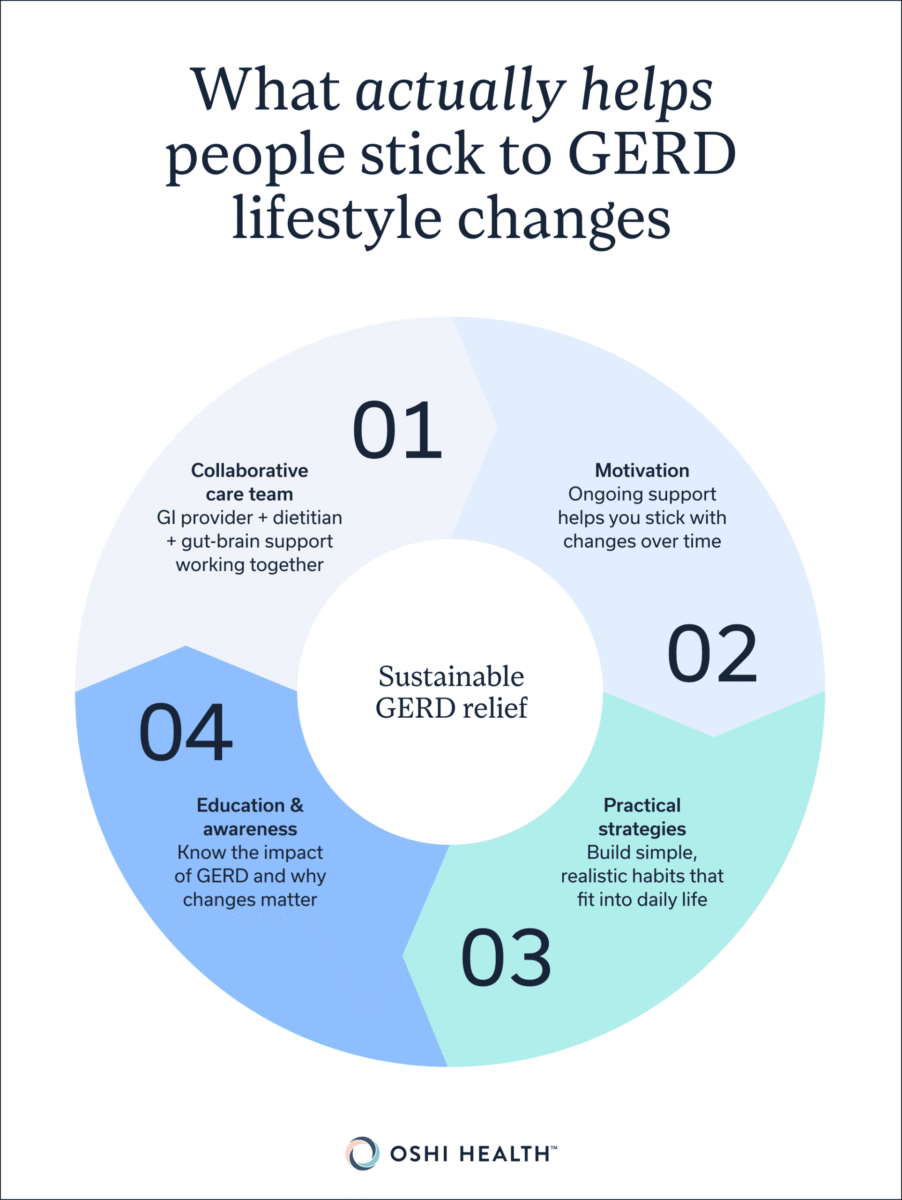
For GERD specifically, a 2023 study identified four key things people who actually maintained lifestyle changes had in common:
- Worked with a collaborative care team (i.e., a GI provider, GI dietitian, and gut-brain specialist who all work together to provide support)
- Stayed motivated to change habits
- Utilized strategies that made these new habits easier to achieve
- Understood the impact and potential severity of GERD
Comprehensive GI providers like Oshi Health combine all four of these components into a collaborative GI care model. The Oshi team approaches GERD care from behavioral, medical, and dietary angles, increasing someone’s chance of making sustainable, lasting changes.
When to seek care during or after an acid reflux attack
If acid reflux occurs more than twice a week, it may be time to see a doctor. “Patients should also be evaluated if they have an alarming symptom, such as difficulty swallowing or feeling like food gets stuck in the chest after swallowing,” adds Dr. Gabbard.
Seek immediate medical attention if experiencing what feels like an acid reflux attack alongside:
- Chest pain accompanied by pain in one arm
- Chest pain that is not clearly linked to meals
- Excessive amounts of blood in stool (aka black stool)
- Dysphagia, the medical term for trouble swallowing, that does not resolve
- Vomiting to the point where you can’t keep food or drink down

James shares how Oshi Health helped him with chronic reflux that was disrupting his sleep and daily life
Key takeaways
- When an acid reflux attack hits, change into loose clothing, stand or sit upright, and take slow sips of water. An over-the-counter antacid or product with alginate may help neutralize stomach acid.
- Don’t lie down, exercise vigorously, continue eating, bend over at the waist, or try to induce vomiting when an acid reflux attack occurs. These can all prolong symptoms or increase their severity.
- Those who experience acid reflux two or more times a week should consider a long-term treatment plan, which may include prescription medications, lifestyle changes, surgery, or some mix of the three.
- A GI provider, such as the team at Oshi Health, can help you determine the best acid reflux or GERD treatment plan based on your symptoms, triggers, and lifestyle.
Frequently asked questions (FAQs)
-
To get rid of acid reflux immediately, sip water, wear loose clothing, and avoid lying down or intense exercise once symptoms start. Some people also find it useful to take an over-the-counter antacid, which is a medication that may relieve symptoms in the moment but does not treat any underlying GI conditions.
-
One of the quickest ways to get rid of acidity is to take over-the-counter antacids. These neutralize existing stomach acid so that if it travels up into the esophagus, it won’t cause a burning sensation. To stop that acid from rising into the esophagus and causing heartburn, someone may also consider standing up or sitting up straight as opposed to lying down.
-
To calm an acid reflux flare, change into loose clothing and sit or stand straight to help prevent more of the stomach’s contents from traveling up into the esophagus. If symptoms don’t subside, consider taking an over-the-counter antacid, which neutralizes acid in the stomach. When symptoms occur more than twice a week, you may want to explore how to treat acid reflux with a GI provider, who can offer more individualized suggestions.
-
Drinking water may help relieve heartburn. In a 2023 clinical trial, participants who drank water right after experiencing heartburn reported faster symptom relief. The study noted, however, that those who drank mineral water as opposed to regular tap water experienced greater symptom relief.
Deep dive recommendations
Looking to read more on this subject? Here are a few resources we recommend starting with:
- American College of Gastroenterology. Acid reflux/GERD.
- Mayo Clinic Health Matters Podcast. Feel the burn? GERD and acid reflux.
- National Library of Medicine. GERD.
- National Institute of Diabetes and Digestive and Kidney Diseases. Acid reflux (GER & GERD).
Find lasting relief from GERD symptoms
Feel like GERD is getting in the way of enjoying your life? You’re not alone—and we’re here to help.
Oshi Health GI providers, gut-brain specialists, and registered dietitians work together to address symptoms like acid reflux and heartburn and find solutions that actually work for you.
Our GI specialists will work with you to reduce symptom flare-ups and make meal times less stressful through:
✔ Personalized care plans tailored to your lifestyle
✔ Evidence-based GERD nutrition guidance
✔ Science-backed strategies to calm your gut
✔ Compassionate, whole-person care
✔ And so much more!
Ready to take control of your GERD symptoms?