


Key takeaway: One-off bloating isn’t something to be too concerned about. It’s normal for your tummy to feel full after you’ve eaten a big meal. What is concerning is if this bloating keeps coming back, happens alongside pain, or starts affecting your mental health. Your stomach feeling heavy and bloated can be a sign of constipation, slow digestion, food triggers, hormonal fluctuations, or an underlying gastrointestinal (GI) or gynecological condition.
It’s easy to talk yourself down and minimize bloating because it happens to everyone at some point or another. But some bloating is more extreme than others, particularly if it keeps coming back. Not only can bloating make you uncomfortable, but it may also be a sign of a health condition.
If there’s one symptom I’m a patient expert at, it’s bloating. I’ve dealt with the full spectrum of bloating over the years: pressure, fullness, heaviness, swelling, you name it. I’m very familiar with the incredible discomfort, body image mind-mess (cue: having to unbutton jeans which just that same morning felt loose), and of course, the frustration of figuring out why the heck you feel this way.
Thankfully, I’ve been diagnosed and treated, and these days my bloating is a relatively rare occurrence (and, since I know my body better now, I can usually identify what’s caused my bloating when it does occur). But it took me a while to get to this point, including meeting with gastroenterologists, gynecologists, and registered dietitians along the way. For many people, myself included, bloating comes from multiple different causes, and it also benefits from multiple treatments, including not just medication and diet but also lifestyle and stress relief practices.
If you’re also struggling with bloating, try to imagine me reaching virtually through your phone or laptop screen and giving you a big hug. I understand, and you’re not on your own in this struggle.
This article dives into what might be causing your heavy, bloated stomach, as well as tips for diagnosis and treatment when symptoms just won’t go away (or even get worse).
Why does my stomach feel heavy and bloated? Differentiating bloating, distention, and heaviness
If your stomach feels bloated, full, heavy, or if it is visibly swollen, then you’re not alone. “Bloating and abdominal heaviness are among the most common complaints I see in my GI practice,” says Vikram Tarugu, MD, a board certified gastroenterologist. “They are easily in the top three reasons patients come to see me.”
To figure out why you feel heavy and bloated, it can help to get super specific about how you feel. There’s actually a clinical difference between bloating vs. stomach swelling, and this can help pinpoint your cause.
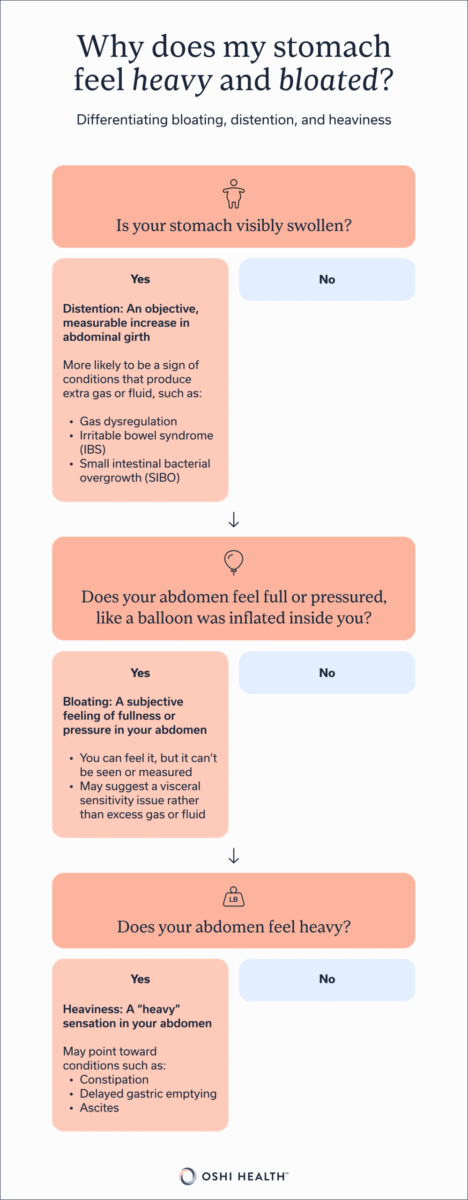
- Bloating refers to a subjective feeling of fullness or pressure in your abdomen, almost as if a balloon were inflated inside you. You can feel it, but it can’t be seen or measured (this doesn’t make it any less real, though!).
- Distention, or stomach swelling, on the other hand, is an objective, measurable increase in abdominal girth (aka, the distance around your abdomen if you were to use a measuring tape).
“I believe it’s important to distinguish the two because many patients feel bloated without any actual distention, which suggests a visceral sensitivity issue rather than excess gas or fluid,” says Dr. Tarugu. Visceral sensitivity is a heightened perception of pain or discomfort inside the internal organs, such as the intestines. In contrast, distention is more likely to be a sign of conditions that produce extra gas or fluid, such as:
- Gas dysregulation
- Irritable bowel syndrome (IBS)
- Small intestinal bacterial overgrowth (SIBO)
A “heavy” sensation in your abdomen is another important clue. According to Dr. Tarugu, this points toward conditions such as:
- Constipation
- Delayed gastric emptying
- Ascites
It could also be a sign of a gynecological condition, such as endometriosis or adenomyosis. These conditions produce inflammation within your pelvis and abdomen, which is often felt as a signature heavy sensation.
Common digestive causes of bloating and excess gas
Problems with digestion can result in bloating. Everyone’s heard of digestion, but what exactly does it entail? Digestion starts when you chew food, and continues as that food travels through your gut and its nutrients are absorbed, all the way until waste products are pooped out.
As you can imagine, digestion is a pretty complicated process. There are quite a few things that can go wrong along the way that might contribute to bloating.
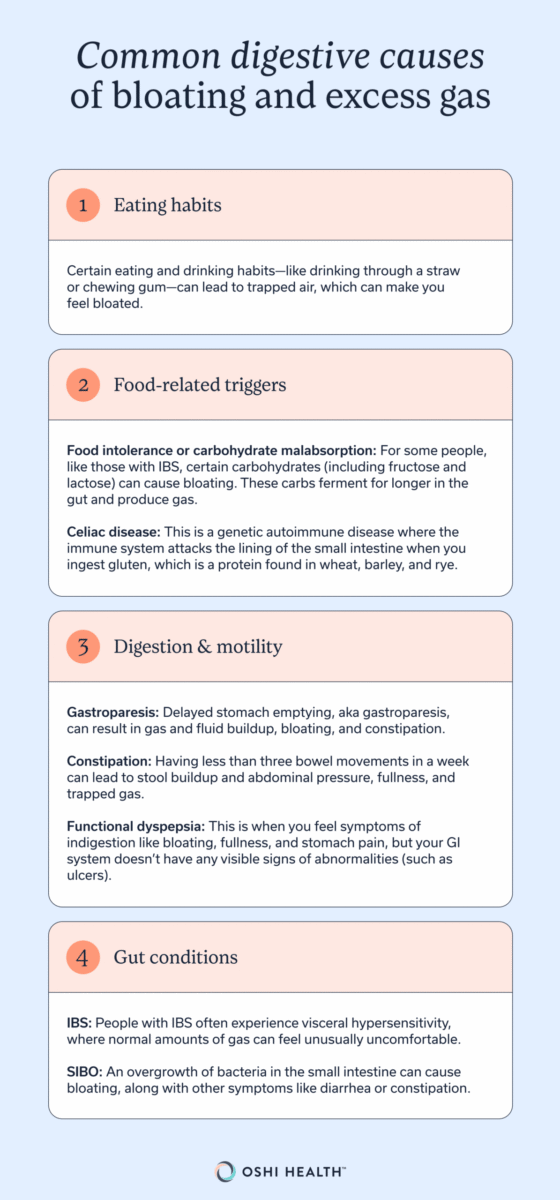
The following are potential causes of bloating and distention, relating to digestion:
- Celiac disease: This is a genetic autoimmune disease where the immune system attacks the lining of the small intestine when you ingest gluten, which is a protein found in wheat, barley, rye, and related products. When someone with celiac disease eats food containing gluten, they can become painfully bloated.
- Constipation: Having less than three bowel movements in a week, which is classed as constipation, can lead to stool buildup and abdominal pressure, fullness, and trapped gas.
- Eating habits: Certain eating and drinking habits can lead to trapped air, which can make you feel bloated. These include eating quickly, drinking through a straw, chewing gum, or drinking fizzy beverages.
- Food intolerance or carbohydrate malabsorption: For some people, certain foods and ingredients trigger bloating and distention. Many people with IBS have difficulty absorbing certain carbohydrates, such as fructose or lactose. These carbs ferment for longer in the gut and produce gas, which is what makes you feel bloated.
- Functional dyspepsia: This is when you feel symptoms of indigestion like bloating, fullness, and stomach pain, but your GI system doesn’t have any visible signs of abnormalities (such as stomach ulcers).
- Gastroparesis: Slow and delayed stomach emptying, often due to damaged stomach nerves, is called gastroparesis. When it takes a long time for your stomach to empty, this can result in gas and fluid buildup, bloating, and constipation.
- IBS: People with IBS often experience visceral hypersensitivity, where normal amounts of gas can feel unusually uncomfortable.
- SIBO: An overgrowth of bacteria in the small intestine, called SIBO, can cause bloating, along with other symptoms like diarrhea or constipation.
“In certain patients, especially older adults or those with risk factors, I also want to rule out ascites, pancreatic insufficiency, or even colorectal malignancy (cancer) before attributing symptoms to a functional cause,” says Dr. Tarugu.
A “functional” GI condition refers to those, like IBS or functional dyspepsia, where there’s nothing visibly wrong with the GI tract, but there are issues that result in symptoms such as bloating.
Causes of bloating in females and hormone-related bloating
Digestive conditions aren’t the only offenders when it comes to feeling like your stomach is heavy and bloated. In many cases, hormonal changes and gynecological conditions could be at play.
“Hormonal fluctuations, particularly the drop in progesterone before menstruation, can slow gut motility and promote fluid retention,” says Dr. Tarugu. This explains why many people who menstruate experience peaks in bloating in the days leading up to their period. It’s worth tracking your bloating alongside your cycle to see if this matches up.
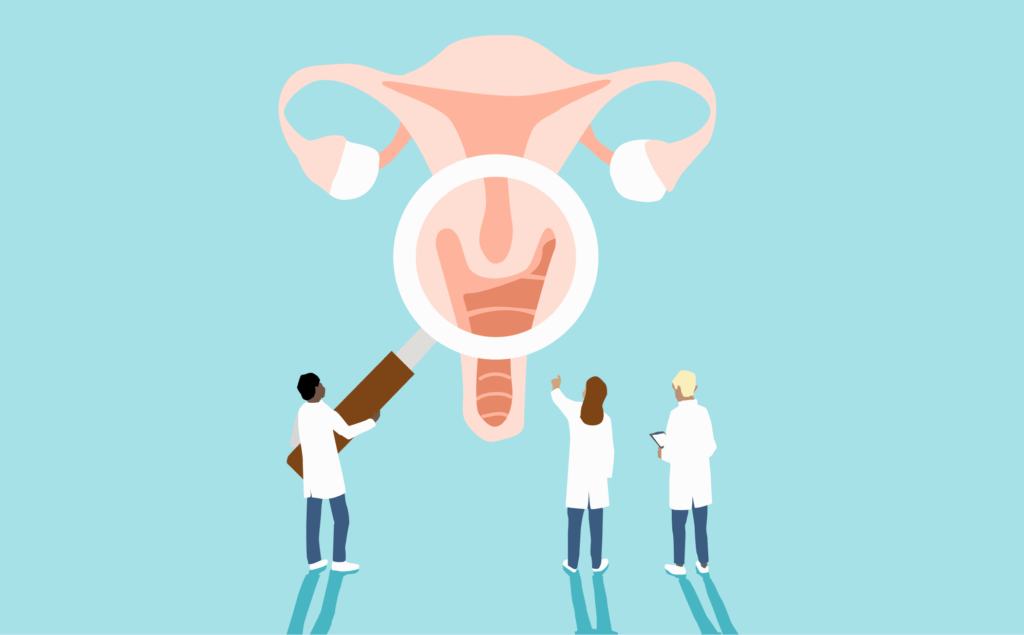
Certain gynecological conditions can also cause bloating and stomach heaviness, as well as other symptoms that overlap with GI conditions, like constipation, diarrhea, or abdominal pain. These include:
- Adenomyosis: A condition where the lining of the uterus grows into the uterus’s muscle wall, causing symptoms like heavy periods, pain, bloating, and a feeling of heaviness in the lower abdomen.
- Endometriosis: An inflammatory condition where cells similar (but not the same) as the lining of the uterus grow outside the uterus. Endometriosis lesions have been found in every organ of the body, but most commonly occur in the pelvis and abdomen, where they can cause bloating due to inflammation.
- Ovarian cysts: Small fluid-filled sacs on the ovaries (cysts) can cause bloating, as well. This can particularly affect people with polycystic ovarian syndrome (PCOS).
- Ovarian cancer: Bloating is a common symptom of cancer affecting the ovaries. Other symptoms include pelvic or abdominal pain, loss of appetite, and urinary symptoms.
“I regularly co-manage patients with gynecologists, especially when endometriosis or ovarian pathology is suspected,” says Dr. Tarugu. “[This is] because these conditions can closely mimic IBS and are commonly missed.”
That was the case for me. I was diagnosed with endometriosis, which was causing a horrible, heavy, bloated feeling in my stomach. Originally, I was referred to a gastroenterologist because symptoms like bloating and constipation are often related to GI conditions. However, after a lot of trial and error, it turned out that some of my answers lay with a gynecologist, instead. I’m now really passionate about raising awareness of the overlap in symptoms between many GI and gynecological conditions, because this could lead to earlier diagnosis.
When you work with the GI providers at Oshi Health or any GI provider, they should take into consideration whether gynecological conditions or hormones might also be contributing to your symptoms.
How is bloating diagnosed when it keeps coming back
When it comes to diagnosing what’s behind unexplained bloating, your provider will likely start by looking at your symptom pattern. “My first steps are always a thorough dietary history and symptom timeline,” says Dr. Tarugu. “[This is] because the pattern of when symptoms occur often points me directly toward the likely cause.”
For example, if your bloating reliably comes on in the few days before your period, then this points toward a hormonal or gynecological condition. If it happens every time you eat a heaping plate of your Nonna’s pasta, then this could indicate GI conditions triggered by food, like celiac disease or IBS. If it feels significantly better after a bowel movement, it could be linked to constipation.
Your provider may also ask you questions about:
- Any food triggers you’ve noticed
- Bowel movement frequency and consistency
- Medications or supplements
- Menstrual cycle history
- Stress levels
- What makes your symptoms better or worse
- What your symptoms feel like
- When your symptoms happen
Your provider will then recommend testing that aligns with your symptom profile and whatever conditions they suspect might be causing your bloating. In other words, everyone doesn’t get the same workup for bloating.
Some possible tests and procedures include:
- Blood tests
- Stool test
- Colonoscopy
- Endoscopy
- Breath testing
- Imaging (such as a CT scan or abdominal X-ray)
- Colonic transit study
- Anorectal manometry
- Defecography
- Balloon expulsion test
Your GI provider will recommend tests on a personalized basis, and based on the results of your initial tests (or your response to certain treatments) they may progress to other tests over time.
What helps with bloating in the short-term, and how to debloat safely
Unfortunately, there’s no instant fix to bloating. The fastest relief is going to depend on what’s causing your bloating, specifically.
However, there are some tried-and-true lifestyle changes that can help relieve bloating in the short-term (although they may not fully address the underlying cause).
“Regular physical activity is one of the most underutilized tools for stimulating gut motility and reducing bloating,” says Dr. Tarugu. “Even a 20-minute walk after a meal can make an appreciable difference.”
Changes to your diet, as well as the way you eat and drink, can also help reduce bloating. Some of Dr. Tarugu’s initial recommendations for bloating include:
- A low-FODMAP diet trial
- Chewing slowly to reduce swallowed air
- Eating smaller and more frequent meals
- Minimizing carbonated beverages and artificial sweeteners
A big part of how to get rid of bloating is figuring out what’s causing the bloating in the first place, and this often involves some careful detective work. A GI provider, dietitian, or gut-brain specialist can help you develop a system to track things like:
- Bowel changes
- Meals
- Sleep
- Stress
- Symptoms
If this sounds overwhelming, then that’s totally normal. Switching up your diet, or adopting lifestyle changes, can be confusing, tricky, and even restrictive if you’re trying to do it all on your own.
Working with a registered dietitian or gut-brain specialist, like the ones at Oshi Health, can help you set up a personalized plan—whether that’s embarking on a low FODMAP diet to find possible IBS triggers, an elimination diet to identify food triggers, adding in more fiber to combat constipation, cognitive behavioral therapy to work on your gut-brain connection, or something else.
Treatment options for ongoing bloating relief
Whilst there’s no blanket solution for bloating (I wish!), there are many effective long-term treatments. The key is matching your treatment to what’s causing your bloating.
Most people will also find bloating relief from trying more than one treatment, and not just focusing on diet changes. “The gut is deeply connected to sleep, stress, and overall lifestyle, so a holistic approach almost always yields better results than focusing on diet alone,” says Dr. Tarugu.
Treatments for bloating can include:
- Gut-brain connection interventions, to help manage stress, visceral hypersensitivity, and sleep, or when chronic GI patterns are part of the picture.
- Medications, such as motility drugs for constipation or antibiotics for SIBO.
- Nutritional guidance to evaluate food intolerances, address constipation, or treat IBS.
- Physical therapy, especially pelvic floor physical therapy that uses biofeedback training to address pelvic floor dysfunction (difficulty coordinating the muscles of the pelvic floor correctly, due to constipation, chronic pain, and other causes). Biofeedback involves equipment that measures the activity of certain pelvic floor muscles, so you can build awareness of when these muscles are being used and retrain them.
- Supplements, such as fiber to help with constipation, and only as recommended by your dietitian or GI provider.
- Surgical, which is definitely not a first-line treatment for bloating, but may be indicated to treat underlying causes such as endometriosis, adenomyosis, or ovarian pathologies.
To paint you a better picture, let’s take a closer look at the treatments I’ve had for bloating over the years, matched with what was causing my bloating:
- For celiac disease, I worked with a registered dietitian and switched to a lifelong gluten-free diet. I also went to therapy to cope with the social and lifestyle changes this brought about.
- For chronic constipation, I ate more fiber, drank more water, and took motility medications (until my endometriosis treatment ultimately cleared this up).
- For endometriosis, I had excision surgery and also went through pelvic floor physical therapy, which included biofeedback training.
- For SIBO, I took a short course of antibiotics and addressed what was causing my constipation.
- For suspected IBS, I worked with a registered dietitian to trial a low FODMAP diet (although this didn’t work for me, because IBS wasn’t what was causing my bloating!).
As you can see, the possible treatments are extensive and just as varied as the possible causes. Their effectiveness also depends on whether you’ve accurately identified what’s causing your bloating.
Get an evaluation from a team that sees the full picture.
Our multidisciplinary team—GI providers, gut-brain specialists, and registered dietitians—works together to find real answers.







When to seek care for a heavy, bloated stomach
If you’re feeling persistently bloated and tired of guessing why (or when it will end), then it may be time to seek medical attention.
“Bloating is real, it is not ‘just in your head,’ and it is absolutely treatable,” says Dr. Tarugu. “Please don’t normalize suffering in silence, or assume nothing can be done.”
If you’re getting bloated frequently, without any clear reason, then consider making an appointment with a multidisciplinary GI team, like those at Oshi Health, where virtual appointments are available within days. This can help you get to the bottom of your bloating—and finally start feeling better.
Some cases require faster attention, such as at an in-person urgent care center. “I always remind patients that bloating is a symptom, not a diagnosis,” says Dr. Tarugu. “Persistent or worsening symptoms, especially when accompanied by unintentional weight loss, blood in the stool, or a family history of GI cancer, warrant prompt evaluation rather than self-treatment.”
Working with a GI provider to get to the cause
A thorough GI evaluation will look beyond your symptom of bloating to see the whole picture. The first step is often working with a GI provider to systematically identify what is triggering your symptoms. This might involve keeping a log of bowel movements, tracking meals, and journaling symptoms. For some people, this might also involve working with a registered dietitian or a gut-brain specialist.
“Most patients see meaningful improvement once we find the right approach for their specific situation,” says Dr. Tarugu.
Ultimately, the goal is lasting relief from bloating, distention, and stomach heaviness, which is possible once you have a plan that’s built around what’s truly driving your symptoms.
The takeaway
- Bloating occasionally, especially after a large or rich meal, is normal. However, persistent bloating—especially if it comes with symptoms of heaviness, pain, nausea, appetite changes, and more—is not normal.
- Bloating is a symptom of many different health conditions, including GI conditions like IBS, celiac disease, functional dyspepsia, gastroparesis, and others. It’s also a symptom of gynecological conditions like endometriosis and adenomyosis.
- Effective treatment for bloating depends on its cause, but can include diet changes, medication, physical activity, pelvic floor therapy, gut-brain relaxation techniques, and more.
- If you’re dealing with unexplained bloating, then you deserve to get answers. Consider making an appointment with Oshi Health’s multidisciplinary team, who take a whole person approach to issues like bloating.
Frequently asked questions (FAQs)
Why do I feel heavy in my stomach and feel bloated?
There are many possible reasons that your stomach might feel heavy and bloated. Eating habits, like drinking through a straw or eating quickly, can cause trapped gas and bloating. Constipation, delayed stomach emptying, ascites, and some gynecological conditions can make the stomach feel heavy. Functional GI conditions, like IBS and functional dyspepsia, can make you feel bloated because you’re more sensitive to internal sensations.
How to get rid of bloating and heaviness?
The best way to get rid of bloating and heaviness is going to depend on what’s causing your bloating in the first place. This could involve anything from dietary changes, medication, pelvic physical therapy, gut-brain relaxation techniques, and more.
How to remove gas from the stomach?
A good place to start at home for removing gas from the stomach is getting more physical activity (for instance, walking 20 minutes after you eat), drinking plenty of water, and chewing your food slowly and thoroughly. Your GI provider may also recommend certain medications, including over-the-counter options like Gas-X, to help remove gas.
Oshi is your partner in digestive health
Feel like your digestive concerns are running your life? You’re not alone—and we’re here to help you find lasting relief.
Oshi Health GI providers, gut-brain specialists, and registered dietitians work together to address your symptoms and find solutions that actually work for you.
Whether you’re dealing with chronic digestive issues or unpredictable symptom flare-ups, our GI specialists deliver:
✔ Personalized care plans tailored to your lifestyle
✔ Science-backed strategies to calm your gut
✔ Compassionate, whole-person care
✔ And so much more!
Ready to take control of your gut health?