



If nausea is keeping you up or waking you up at night, several reasons could be to blame, including lifestyle factors, underlying conditions, and more. While an occasional bout of nausea might be completely normal, you should get checked out if you find yourself frequently battling this issue in the middle of the night or at other times of day.
Perhaps this is an all-too-common scenario for you. You tuck yourself in for the night, drift off, and then later your gastrointestinal (GI) tract wakes you up because it’s unhappy about something. You feel nauseous. You may even vomit or taste bile in your throat. Then you might feel so uncomfortable that you have trouble falling back asleep. Perhaps the stress of a sleepless night makes you feel even more queasy.
The term for middle-of-the-night stomach upset like this is nocturnal nausea. It can be incredibly frustrating to not feel well and know you’re missing out on much-needed sleep. So what gives?
If you’re asking yourself, ” Why do I wake up nauseous in the middle of the night ?” we’ve got you. In this article, we unpack causes of nausea at night , how to find quick relief with some stealthy nighttime tricks, when to seek care, treatment options, and more.
Why nausea strikes at night
If you keep feeling nauseous at night, you understandably want to get to the root cause of it all so you can get back to feeling better and sleeping soundly.
Several factors make nighttime nausea more likely. For one, lying down can change how stomach acid, food, and digestive contents move, making reflux or other GI symptoms more noticeable. You may experience nausea when lying down if you eat too close to bedtime, or if you consume specific items at night that may trigger GI issues, including spicy dishes, fatty foods, alcohol, or caffeine. Additionally dehydration or medication side effects could be a culprit.
If what you consumed is unlikely causing the trouble, then an underlying condition might be a factor. Sleep disorders, for example, can play a role; disrupted sleep and digestive function often influence each other. However, just because you have nighttime nausea doesn’t mean you automatically have an underlying condition. Talking to a clinician about your symptoms is the best way to get to the bottom of the issue.
Common causes of nausea at night
Now let’s look at the most common reasons nighttime nausea happens, based on the different body systems that might be involved.
Potential GI causes
-
Gastroesophageal reflux disease (GERD) or Laryngopharyngeal reflux (LPR): GERD is chronic acid reflux, while LPR means the reflux typically reaches the throat, causing irritation. The lower esophageal sphincter (LES) prevents stomach acid backflow, but it malfunctions with these conditions, hence the reflux. Lying down relaxes the LES, leading to exacerbations, with both conditions tending to worsen at night. Nausea is a potential symptom.
-
Gastritis and peptic ulcer disease: Gastritis is inflammation of the stomach lining. And peptic ulcer disease involves an ulcer (open sore) in the stomach lining or small intestine. They both cause a burning or gnawing sensation that may be worse at night and lead to nausea.
-
Functional dyspepsia: Functional dyspepsia is a term to describe chronic upper GI pain or discomfort without an underlying structural issue. It can cause nausea, including at night.
-
Gastroenteritis: Gastroenteritis is inflammation of the stomach and the intestines. A viral, bacterial, or parasitic infection can cause it, including from contaminated food and water. The inflammation can cause stomach upset, which may be worse when lying down.
-
Gastroparesis: This condition means you have delayed gastric emptying. Your stomach takes longer than usual to move its contents into the small intestine. Nausea can occur at any time as a result, especially when lying down.
-
Cyclic vomiting syndrome: This is a term for frequent episodes of nausea and vomiting without a known cause.
Other systemic causes
-
Anxiety and stress: The gut and the brain communicate via the gut-brain axis, so when anxiety or stress strike, so can nausea.
-
Biliary colic: Biliary colic is a pattern of abdominal pain brought on by a biliary tract obstruction. Gallstones are a common cause. Discomfort and nausea can result.
-
Hypoglycemia: Hypoglycemia is low blood sugar. It’s a common occurrence in people with diabetes. But it can also stem from having a high-sugar or high-glycemic food. The body can overcorrect with insulin release and significantly lower blood sugar below your usual baseline. Regardless of the cause, hypoglycemia can lead to nausea and other symptoms.
-
Kidney disease: Kidney disease can cause uremia, the buildup of waste products in the blood, which can lead to an upset stomach.
-
Migraine: Migraine is a chronic neurological condition with several types. Any type can bring on nausea, but menstrual migraine, abdominal migraine, and vestibular migraine have strong associations with stomach upset.
-
Obstructive sleep apnea (OSA): This sleep disorder involves the airway collapsing at night, which can lead to a lack of oxygen and cause sleep disturbances.
-
Pancreatitis: Pancreatitis is inflammation of the pancreas. The most common cause is heavy alcohol consumption, but several conditions can also lead to it. A frequent symptom is nausea.
-
Thyroid disorders: The thyroid gland can affect many bodily systems, including the digestive tract. If you have a thyroid disorder, you might experience nausea as a symptom.
-
Vertigo: Vertigo is the sensation of spinning, dizziness, or unsteadiness brought on by an inner ear or central nervous system issue. Nausea is a common symptom.
Medications and substances that can trigger nausea
Most medications come with a list of potential side effects, and nausea is a common one for the following meds:
Recreational substances can also play a role in nighttime nausea:
-
Alcohol: Wine beer and spirits can irritate the stomach lining resulting in nausea and vomiting.
-
Caffeine: We think of caffeine as putting a pep in our step, but for some people it causes nausea, especially in high amounts. So too much coffee, caffeinated tea, or energy drinks might lead to an upset stomach.
-
Cannabis: Although cannabis is known to help with nausea when used for medical reasons, sometimes chronic use can cause cannabis hyperemesis syndrome , which features intense nausea.
-
Nicotine: Nicotine from smoking, vaping, or other products stimulates that release neurotransmitters that can affect the GI tract, leading to nausea, especially in high amounts.
Why do I feel sick at night? Considerations specific to females
If you are assigned female at birth and you feel sick at night , some additional issues may be causing the problem.
-
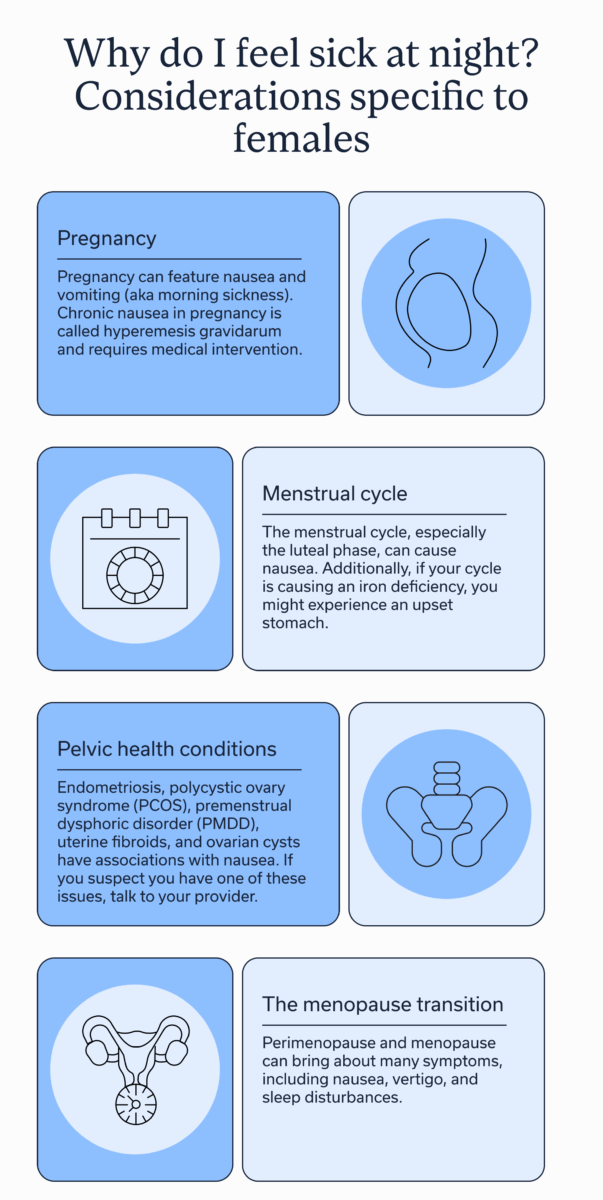
Pregnancy: Pregnancy can feature nausea and vomiting (aka morning sickness), which despite its name, can occur at any time. Chronic nausea in pregnancy is called hyperemesis gravidarum, a severe form of morning sickness that requires medical intervention.
-
Menstrual cycle: The menstrual cycle, especially the luteal phase, which lasts from ovulation until you get your period, can cause nausea. You might also feel queasy during menstruation. Additionally, if your cycle is causing an iron deficiency, you might experience an upset stomach.
-
Pelvic health conditions: Severe pelvic pain or menstrual cycle symptoms are not normal and could be an indication of endometriosis, polycystic ovary syndrome (PCOS), premenstrual dysphoric disorder (PMDD), uterine fibroids, ovarian cysts, and more. All these conditions have associations with nausea. If you suspect you have one of these issues, talk to your provider.
-
The menopause transition: Menopause is defined as 12 consecutive months without menstruation. Perimenopause is the transitional period before menopause characterized by substantial hormonal variation. These changes can bring about many symptoms, including nausea, vertigo, and sleep disturbances.

How to stop nausea fast at night
If you’re feeling queasy at night, a few tips can help ease your discomfort, so you can get a good night’s sleep.
-
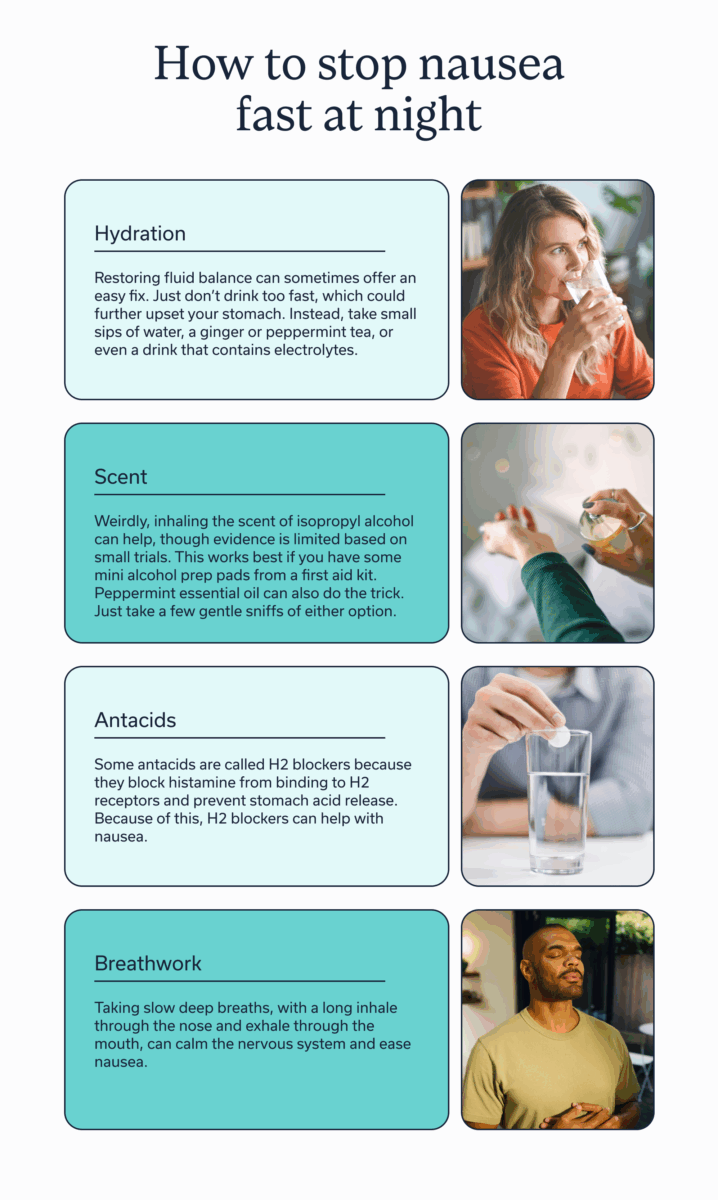
Hydration: Restoring fluid balance can sometimes offer an easy fix. Just don’t drink too fast, which could further upset your stomach. Instead, take small sips of water, a ginger or peppermint tea, or even a drink that contains electrolytes
-
Scent: Weirdly, inhaling the scent of isopropyl alcohol can help, though evidence is limited based on small trials. This works best if you have some mini alcohol prep pads from a first aid kit. Peppermint essential oil can also do the trick. Just take a few gentle sniffs of either option.
-
Antacids: Some antacids are called H2 blockers because they block histamine from binding to H2 receptors and prevent stomach acid release. Because of this, H2 blockers can help with nausea.
-
Breathwork: Taking slow deep breaths, with a long inhale through the nose and exhale through the mouth, can calm the nervous system and ease nausea.
-
Temperature: Nausea can drive other physiological responses, such as an increase in body temperature. Adding a cool cloth to your neck or cooling yourself in some other way might calm your stomach.
-
Acupressure: The P6 pressure point on your wrist can help resolve nausea.
When to seek care
If nausea at night plagues you regularly, you should consult a clinician to help you get to the root cause. Some symptoms warrant immediate medical attention:
-
Severe or worsening abdominal pain
-
Blood in your vomit or stool
-
Fever
-
Stiff neck
-
The worst headache you’ve ever had
-
Persistent vomiting or abdominal pain
-
The inability to keep fluids down
-
Excessive nausea, vomiting, or abdominal pain while pregnant
-
Unintentional or unexplained weight loss
Diagnosis: How clinicians pinpoint the cause
To help determine the cause of your nighttime nausea, a clinician will likely do the following:
-
Ask you about your medical history (and that of your family) to learn about your underlying conditions and risk factors
-
Ask you about your medications and supplements–as well as any side effects
-
Ask you questions about your symptoms, including their frequency, duration, and severity
-
Ask you about your lifestyle habits, including diet, meal times, alcohol consumption, and more
-
Ask you about your mental health, including your stress and anxiety levels
-
Examine you if necessary
-
Order any necessary lab work or imaging tests
Treatment options
The treatment options for nocturnal nausea will vary based on the underlying cause.
If you have a gastrointestinal or other condition that’s causing your nighttime upset stomach, finding ways to treat and manage that issue will help you get back to feeling better.
The solutions might involve adding medications, changing medications, making lifestyle changes, such as eating meals earlier, avoiding any known triggers, and more.
Your provider will likely recommend the least invasive treatment options first, but in rare cases you might need a procedure or surgery.
The collaborative care team at Oshi Health specializes in GI conditions, whether you have a diagnosis or remain undiagnosed. The team includes gastroenterologists, GI registered dietitians, gut-brain specialists and other GI providers who work together to ensure you’re getting well-rounded and integrated care.
Key takeaways
-
Many people experience the occasional bout of nausea at night, sometimes brought on by an unusual meal, eating too close to bedtime, or overindulging in alcohol.
-
If nausea frequently wakes you up at night, another factor or underlying condition may be causing your upset stomach.
-
To address your symptoms and help you feel better, the comprehensive care team at Oshi Health can help.
FAQ
-
You might wake up at any time during the night, including at 3 a.m., with nausea for several reasons. Possibilities include your underlying conditions, medications, and lifestyle habits. Lying down can cause changes in how acid, food, or waste move through your digestive tract. Sometimes the culprit is having eaten too close to bedtime or overindulging in alcohol, caffeine, or nicotine. Other reasons include your menstrual cycle, perimenopausal symptoms, and more.
-
Ideally, we sleep through the night, but that’s not always the case. Although getting nauseous at night might occur occasionally, if you have this issue frequently, then an underlying condition, a medication side effect, or another factor could be causing your nausea. To get to the root cause and feel better, talk to a healthcare provider.
-
The term for waking up in the middle of the night feeling nauseous is nocturnal nausea.
-
If you have ongoing nausea, you should talk to your doctor. If you experience persistent severe nausea or vomiting, blood in your vomit, or the inability to keep fluids down, you should seek immediate medical attention.
Oshi is your partner in digestive health
Feel like your digestive concerns are running your life? You’re not alone—and we’re here to help you find lasting relief.
Oshi Health GI providers, gut-brain specialists, and registered dietitians work together to address your symptoms and find solutions that actually work for you.
Whether you’re dealing with chronic digestive issues or unpredictable symptom flare-ups, our GI specialists deliver:
✔ Personalized care plans tailored to your lifestyle
✔ Science-backed strategies to calm your gut
✔ Compassionate, whole-person care
✔ And so much more!
Ready to take control of your gut health?