


Anxiety nausea isn’t a fun experience. Maybe it hits you when you’re about to make a life-changing decision or whenever a stress-inducing email arrives in your inbox. No matter your personal triggers, here’s why it happens—plus ways to relieve anxiety-induced nausea fast.
Despite what some people may claim, anxiety isn’t”all in your head.” Anxiety can have very real impacts on your quality of life. It can even manifest as physical sensations—whether that’s chest pain, tense shoulders, knots in your stomach, or anxiety nausea.
Nausea is a sick-to-your-stomach feeling that can come from many different health conditions—including gastrointestinal disorders, viruses like the flu, migraines, and yes, even anxiety. If the latter is causing your nausea, it may feel like your body is working to make you more stressed and anxious, not less. Here’s why anxiety and nausea co-occur and ways to relieve that nausea in the moment, as well as long-term anxiety management strategies.
Anxiety nausea: what it is and why it happens
So, can anxiety cause nausea? The answer is a resounding yes—and it is thanks to the gut-brain connection. You’ve probably felt this connection before, whether it was butterflies in your stomach after a good date or knots before a big work presentation.
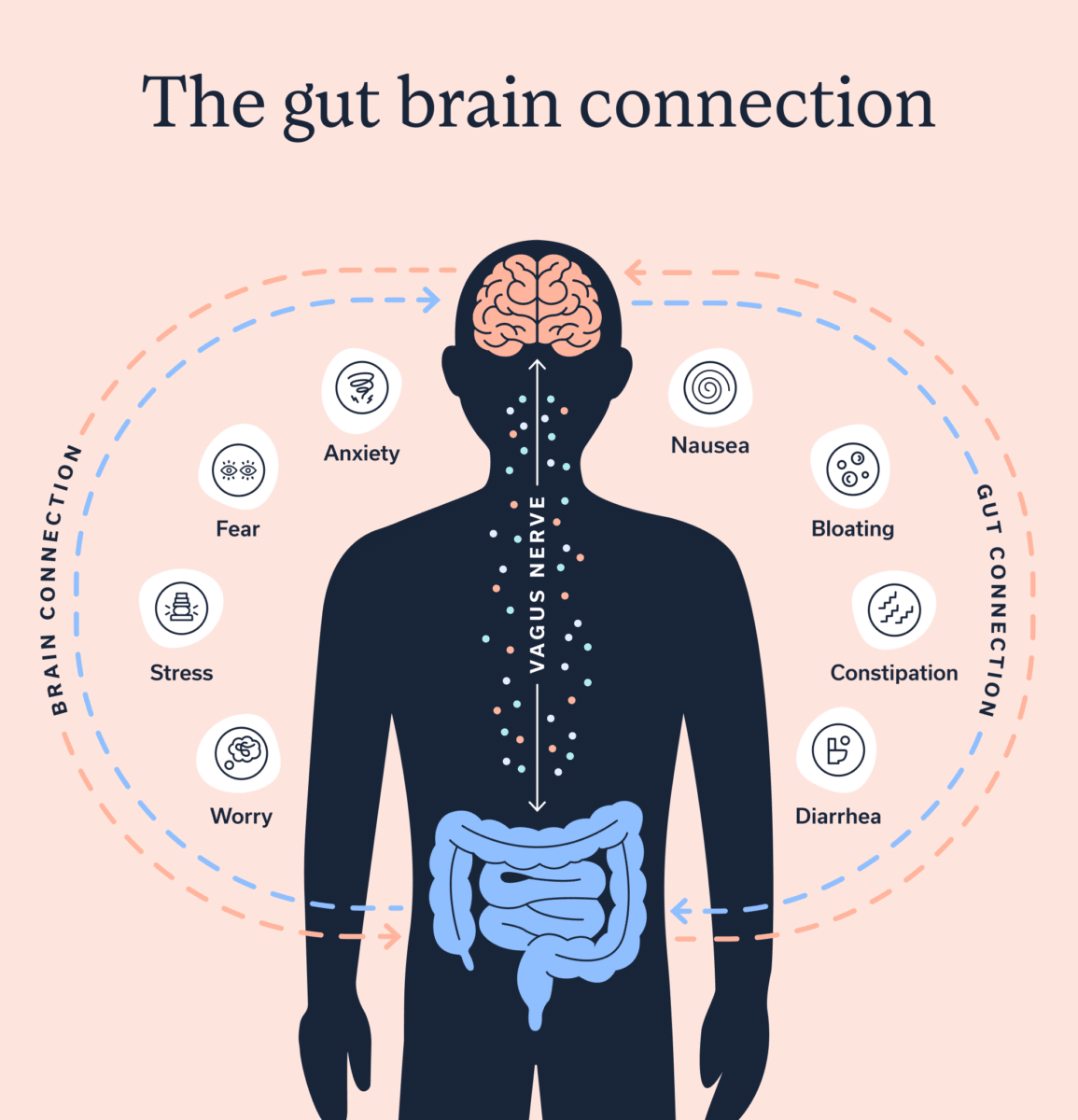
But while the”connection” you feel on that date might be metaphorical, the gut-brain connection is physical. That’s because it refers to the gut-brain axis, which runs between the two. The main connector is the vagus nerve, which acts almost like a two-way road that delivers messages to and from the enteric nervous system in the gut and the central nervous system in the brain.
“Anxiety and nausea can be deeply connected because of how our nervous system works. A direct physical connection exists between the brain and the gut,” says Steven J. Feinstein, PhD, a clinical psychologist and gut-brain specialist at Oshi Health. “And along this connection, the brain and gut must communicate regularly for digestion to function well.”
Anxiety disrupts normal gut-brain communication, which can then have a ripple effect on digestion. “Anxiety represents a change in the nervous system, and we can feel this when it occurs,” says Dr. Feinstein, “Our heart rate quickens, muscles tense, and breathing gets quicker and shallower—just to mention a few of the many physical changes happening behind the scenes.”
“Another change is that, when anxiety occurs, communication essential for best digestion is also disrupted,” he continues, “This is a natural process, and adaptive for survival, yet if it lasts too long, it leaves our gut in a state that causes digestive disruption, with nausea being a common result.”
Other potential GI symptoms of anxiety include abdominal discomfort or pain, bloating, diarrhea, constipation, or stomach cramping. These symptoms could be new, though anxiety may exacerbate pre-existing GI conditions as well.
Can anxiety cause nausea or vomiting?
As we’ve established, anxiety can definitely cause nausea. However, many different conditions may also exist, which can make it hard to determine the underlying cause. When anxiety is to blame, there are usually other symptoms, such as:
- Anxious thoughts or beliefs that won’t go away
- Dizziness
- Fatigue or exhaustion
- Feeling restless
- Headaches
- Muscle aches and pains
- Faster heartbeat
- Trouble breathing
- Trouble concentrating
Anxiety is also more likely to cause chronic nausea, not a one-off case. A 2022 study highlighted that among adolescent girls with chronic nausea, 70 percent of them reported having anxiety too.
Will anxiety make you throw up?
The answer to the question, “Can you throw up from anxiety?” is a bit trickier to answer. If anxiety is the direct cause, someone won’t typically throw up from nausea. However, there are many cases where anxiety and vomiting co-occur.
Take morning sickness, for example. Even if you haven’t been pregnant, you’ve probably heard of this symptom (which, despite its name, can actually happen at any time of day). It’s thought to be due to hormonal changes.
Pregnancy itself can also increase anxiety–and anxiety management might actually help with pregnancy-related nausea. A 2024 study had pregnant people undergo anxiety management practices guided by a licensed therapist. The researchers found that not only their anxiety but also their levels of nausea decreased.
Simply put, someone with morning sickness may experience vomiting and anxiety. Plus, anxiety management may reduce the likelihood of throwing up, even though the anxiety itself is not the reason for vomiting.
Unfortunately, this doesn’t mean stress management will solve all problems (pregnancy-related or otherwise), but it does remind us that the relationship between nausea and anxiety can be complicated.
How to tell whether nausea is from anxiety, a GI issue, or something else
Timing is everything when it comes to our love lives, careers, and, apparently, anxiety-related GI issues. If you’re experiencing nausea and you’re not quite sure if it’s from anxiety or something else, try to pay attention to when it’s showing up.
Some questions Dr. Feinstein recommends asking yourself are:
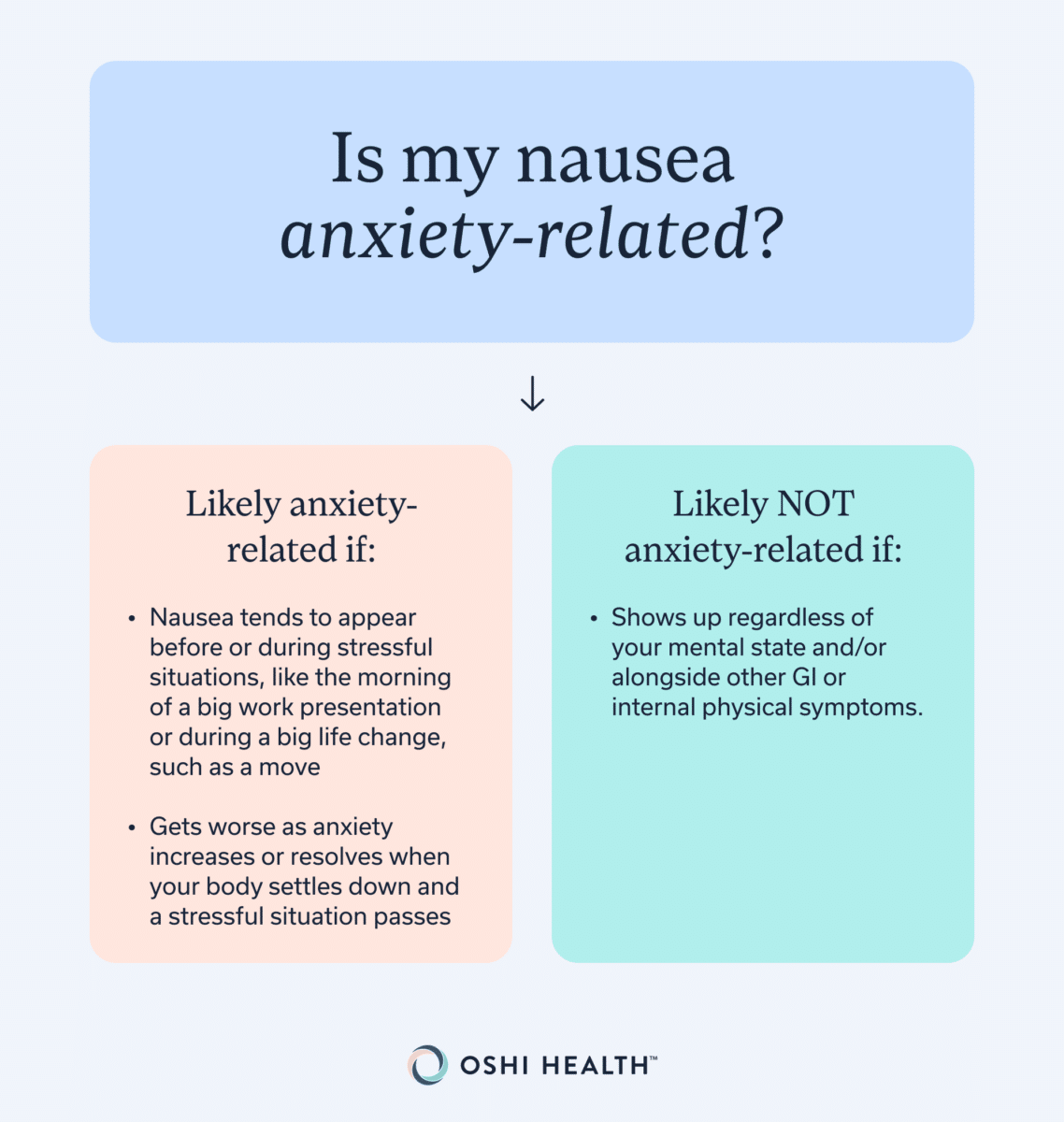
- Does nausea tend to appear before or during stressful situations, like the morning of a big work presentation or during a big life change, such as a move?
- Are there any other symptoms of anxiety that occur alongside it?
- Does nausea get worse as anxiety increases, or does it resolve when your body settles down, and a stressful situation passes?
“Other signs of anxiety-related nausea include persistent nausea that doesn’t often lead to vomiting and can last for weeks, months, or longer, fluctuating with stress,” says Dr. Feinstein.
If nausea doesn’t seem to correlate with stress and anxiety, it may be due to something else, from irritable bowel syndrome (IBS) to pregnancy to breast cancer treatment. These conditions and situations can cause anxiety, nausea, or both.
If you’re dealing with these causes of your anxiety and/or nausea, some other symptoms may include:
- Blood in stool
- Dehydration
- Fever
- Persistent vomiting
- Severe pain
- Unintentional weight loss
- Waking at night
Some of these might require immediate medical care if they interfere with daily functioning. For example, if someone experiences pain so severe that it makes it difficult to get out of bed or persistent vomiting to the point where they can’t keep any food or liquids down, emergency medical attention is warranted.
How clinicians figure out if anxiety is causing nausea
While tracking nausea triggers is a great way to gather clues about the culprit, a healthcare provider is the only person who can diagnose exactly what is causing your nausea. Ideally, you want to work with a GI provider who understands the gut-brain connection and builds out treatment plans that focus on both GI symptoms and the impact of mental health—such as the team at Oshi Health.
A GI provider will start by asking you about symptoms, which could be a good time to bring up any triggers you’ve noted. If necessary, they may then order tests that will rule out other causes and provide a more comprehensive look at the GI tract.
At Oshi, our GI providers then collaborate with GI registered dietitians and gut-brain specialists to make sure symptoms like anxiety are being approached from every angle.
What to do in the moment when anxiety nausea hits
“Since anxiety is a state of the nervous system, and digestion is run by the nervous system, anxiety and nausea often get wrapped up together in a vicious cycle that makes us feel worse and worse,” says Dr. Feinstein. Breaking that cycle often starts with finding a way to disrupt it, such as the three strategies below.
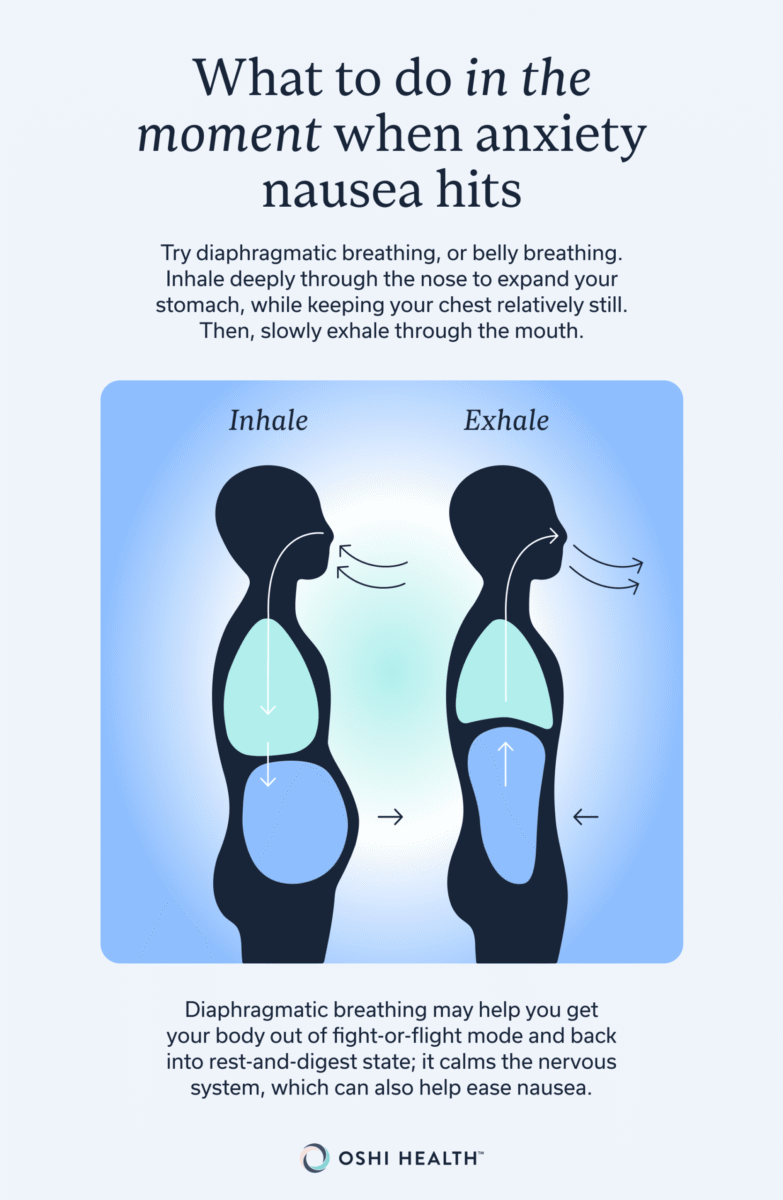
Try diaphragmatic breathing
“One of the first strategies often used to calm anxiety-related nausea in the moment is diaphragmatic breathing,” says Dr. Feinstein, “This is a specific breathing practice to maximize control of the brain-gut connection.”
When anxiety impacts the nervous system (and thus the gut-brain connection), it triggers fight-or-flight mode, which originally developed to help our caveman ancestors know when to run or fight off danger. We all (hopefully) experience fewer life-or-death situations these days, but our nervous system treats every”threat” the same way, whether it’s getting caught in a wildfire or receiving a stressful text.
While fight-or-flight mode may help us survive during a literal fire, it’s not actually that useful in most situations, because it takes us out of rest-and-digest (aka when we feel calm and can properly digest food).
Diaphragmatic breathing may help us get back into that second state because it calms the nervous system. This breathing exercise may then have a ripple effect on nausea. In a 2026 study, researchers determined that diaphragmatic breathing decreased nausea severity and frequency.
Diaphragmatic breathing is particularly convenient because it can be done almost anywhere. You can do it standing, sitting, or lying down. It can be done when you’re commuting to work or when cooking dinner. Working with a GI psychologist or gut-brain specialist is the best way to learn this technique, though this video can give an idea of what this breathing exercise looks like.
Use cognitive strategies
“Cognitive strategies are also useful in a difficult moment, often in combination with breathing practice, to help manage the common fear and catastrophic thoughts (e.g., “This is going to get bad and there is nothing I can do”) that occur when nausea begins,” says Dr. Feinstein, “In a difficult moment, these strategies can help to decrease anxiety, increase brain gut communication, and provide greater symptom control.”
Two specific strategies Dr. Feinstein recommends are:
- Challenge negative thoughts: “A go-to cognitive exercise is challenging the catastrophic thought that often arises when nausea begins. When nausea hits, people often think, ‘This is going to get bad, and there is nothing I can do,'” says Dr. Feinstein, “Pause and ask yourself: Is this thought 100% true right now? Or are these just old thoughts from the past? What is the evidence for this thought? Then come up with a more balanced thought.”
- Distance yourself from negative thoughts: “A related strategy is that when that catastrophic thought comes back, and it often does, you can distance yourself from that thinking by telling yourself something like, ‘I’m having that thought again, but I know it’s not true’ and let it float by,” says Dr. Feinstein.
Focus on the nausea
As someone with anxiety, I understand all too well that sometimes the anxiety won’t shut up, no matter how many breathing exercises you try. When this is the case, shift your focus to relieving the nausea. Ways to do so might include:
- Stay hydrated: Dehydration may cause or make nausea worse, so make sure to keep sipping water.
- Distract yourself: Take your mind off the nausea and anxiety by watching a TV show or reading a good book.
- Avoid food triggers: Some foods may trigger nausea or make it worse, such as greasy and ultraprocessed options like fries, pastries, and cake.
Longer-term healing: reducing the anxiety-nausea cycle
Short-term relief tactics may be amazing in the moment, but they aren’t a long-term fix. To call it quits on the anxiety-nausea cycle, consider long-term changes that you can implement on your own or with the support of a GI care team.
Build anxiety management into your daily routine
A gut-brain specialist, unfortunately, cannot wave a magic wand and make all anxiety-inducing situations and thoughts go away. What they can do is help you add anxiety management exercises into your daily routine, so you feel anxious less often and are more resilient when a trigger appears.
Dr. Feinstein explains, “Longer-term treatment to stop the anxiety-nausea cycle can include establishing a regular daily routine of behavioral tools such as diaphragmatic breathing, along with cognitive strategies to settle the impact of anxiety on nausea.”
Try whole-person GI care
Anxiety and related GI symptoms are a full-body experience, so the best treatment often takes a whole-person approach. More and more, researchers are discovering that aspects of wellness are interrelated, which you might already know if you feel more anxious after a poor night’s sleep or if nausea increases after eating processed foods. What this means is that your diet (and other aspects of health) also influence anxiety levels and gut health.
Working with a provider that takes this approach can help you better understand how to implement whole-person care, though there are some small ways to practice it starting today:
- Avoid drinking excessive caffeine or alcohol
- Don’t skip meals- if the nausea makes it hard to eat, try something small and bland, like toast or crackers
- Focus on getting seven to nine hours of quality sleep
- Reserve time each week, even if it’s just ten minutes, to do something you enjoy or that de-stresses you, such as reading a book or listening to music
- Set boundaries around when you do (and don’t) check work emails, social media, the news, and texts
- Stay hydrated and eat regular, healthy meals
And you don’t have to adopt every suggestion on this list starting today—or even this week. Personally, trying that would increase my anxiety and wouldn’t be something I could keep up. Instead, choose one or two you can realistically try for a week and see how you feel after. A GI provider can also help you determine which lifestyle habits will move the needle the most.
Gut-directed hypnotherapy
“Gut-directed hypnotherapy is another tool for long-term change,” says Dr. Feinstein, “This practice targets the sensitivity of the nerves in the gut, addressing the core nervous system connection between anxiety and nausea.”
For gut-directed hypnotherapy, someone listens to a recording about their GI symptoms and possibly their anxiety. It’s similar to a guided meditation, though it often has a more rigid protocol. In most cases, it should be done with guidance from a gut-brain specialist.
Admittedly, hypnotherapy sounds a bit woo-woo, but there’s a lot of evidence to back it up. In one study, 81% of participants diagnosed with irritable bowel syndrome (IBS) experienced improvements from hypnosis, and 70% of participants in another study found it effective for reducing anxiety.
Working with a healthcare provider
“If left untreated, anxiety-related nausea can become a chronic symptom of a disrupted digestive process,” says Dr. Feinstein, “It is all too common for patients to get stuck in the vicious cycle where anxiety leads to more nausea, and more nausea leads to increased anxiety. We have effective treatments to break this cycle and help gain more symptom control.”
Working with a GI provider and a gut-brain specialist can help you more effectively break the cycle. Plus, GI-focused clinics like Oshi Health can help determine the exact cause of nausea, which could be anxiety, a GI condition, or a mix of anxiety and other causes. From there, the GI provider can create a tailored treatment plan.

Key takeaways
- Anxiety nausea is a very real symptom that can impact your day-to-day life and overall health. It may disrupt digestion due to the gut-brain connection, possibly resulting in GI symptoms like nausea, abdominal pain, cramping, diarrhea, and/or constipation.
- Nausea can be caused by many different conditions, which is why it’s important to make an appointment with a GI care provider who can diagnose the underlying cause and create an appropriate treatment plan.
- If anxiety is wholly or partially to blame for nausea, a whole-person GI care approach may help. This often includes working with a gut-brain specialist, a GI provider, and possibly a GI RD.
- If interested in working with an integrated GI care team that takes a whole-person approach, consider Oshi Health.
Frequently asked questions (FAQs)
-
Getting rid of anxiety nausea often involves finding ways to manage the underlying cause: the anxiety. Management tactics might include diaphragmatic breathing, gut-directed hypnotherapy, cognitive strategies, and working with a therapist or gut-brain specialist.
-
Anxiety may cause nausea due to the gut-brain connection. This connection is how the brain and gut talk to one another, facilitating digestion and other processes. It’s also an open communication line, meaning that if the brain is anxious, that message will travel to the gut which may react with symptoms such as nausea.
-
Nausea can be related to many different health conditions, including anxiety or stress. When it’s related to a mental health condition, it’s considered a psychosomatic symptom.
Oshi is your partner in digestive health
Feel like your digestive concerns are running your life? You’re not alone—and we’re here to help you find lasting relief.
Oshi Health GI providers, gut-brain specialists, and registered dietitians work together to address your symptoms and find solutions that actually work for you.
Whether you’re dealing with chronic digestive issues or unpredictable symptom flare-ups, our GI specialists deliver:
✔ Personalized care plans tailored to your lifestyle
✔ Science-backed strategies to calm your gut
✔ Compassionate, whole-person care
✔ And so much more!
Ready to take control of your gut health?