

Irritable bowel syndrome with constipation (IBS-C) is a commonly diagnosed gastrointestinal (GI) condition. It involves abdominal discomfort and changes to your bowel habits, with constipation a key symptom. If you have IBS, an experienced clinician can design a treatment plan that’s unique to your needs so that you can keep symptoms at bay and feel better.
Irritable bowel syndrome with constipation (IBS-C) is a frustrating condition. You can be doing all the right things for your overall and gastrointestinal (GI) health and still deal with abdominal discomfort and trouble going number two. So what gives?
IBS-C is a disorder in which your brain and your gut have trouble communicating to keep your digestive tract operating smoothly. But this does not mean that your symptoms are “all in your head.” Your symptoms of pain and constipation are real, and they disrupt your quality of life.
But you’re not doomed to a life of frustrating pebble-like poops—if you can go at all—or wishing you could be in your comfy pants at all times. So what can you do? An individualized treatment plan can help you manage symptoms and have a happier relationship with your GI tract.
In this article, we explore types of IBS, IBS pain, and how to treat IBS.
IBS-C: What it is and how it differs from other types of IBS
IBS-C is a disorder that causes abdominal pain or discomfort and changes to bowel movements. Constipation is a chief complaint. But other symptoms (as noted below) can also occur.
IBS-C is one of four types of IBS. Some people have IBS-D and experience diarrhea as a top symptom of the condition. Others have IBS-M and experience a mix of constipation and diarrhea. Finally, IBS-U stands for a form of “unsubtyped” IBS, meaning that bowel movements don’t fall into a specific pattern.
About 14% of people worldwide have some form of IBS, with IBS-M as the most common type.
Prevalence by type:
- IBS-M: 31%
- IBS-C: 26%
- IBS-D: 26%
- IBS-U: 8%
Symptoms of IBS-C
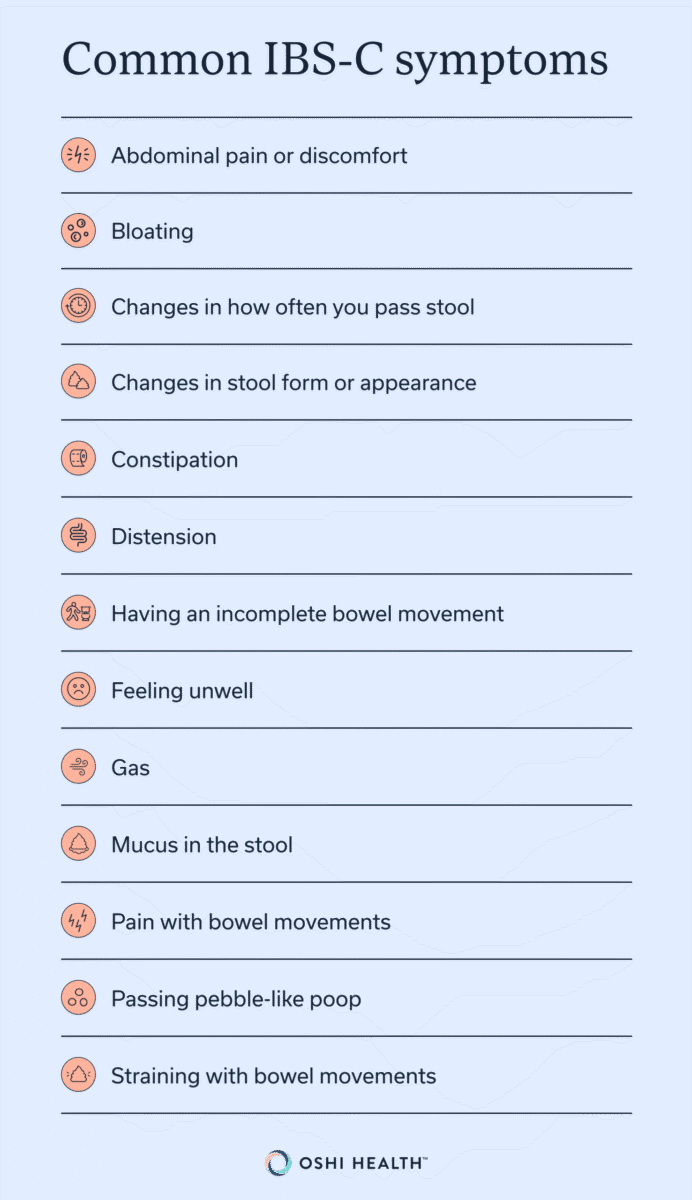
Symptoms of IBS-C can be different from one person to the next, but the list below features the most common concerns.
Common IBS-C symptoms
- Abdominal pain or discomfort
- Bloating
- Changes in how often you pass stool
- Changes in stool form or appearance
- Constipation
- Distension
- Feeling like you’ve had an incomplete bowel movement
- Feeling unwell
- Gas
- Mucus in the stool
- Pain with bowel movements
- Passing pebble-like poop
- Straining with bowel movements
What causes IBS-C?
What’s behind your IBS-C? Researchers don’t yet know the exact cause of IBS. But it’s likely that several factors–rather than just one thing–play a role.
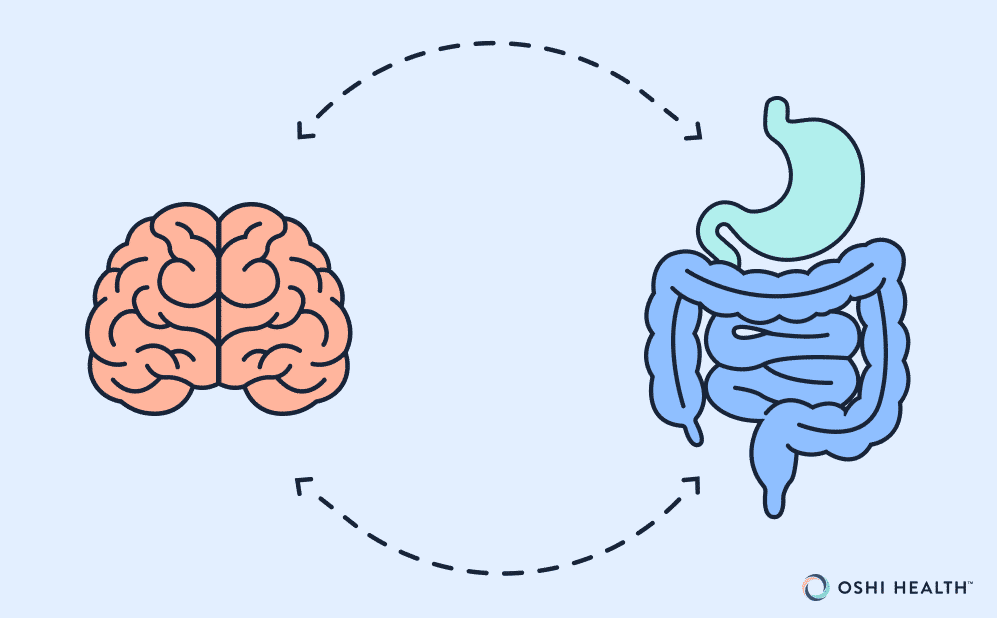
As mentioned earlier, IBS is a disorder of gut-brain interaction (DGBI), meaning that it occurs because your GI tract is having trouble communicating with your brain. This leads to your gut shirking some of its duties. And that shirking is in no way a failure on your part.
The gut and the brain communicate along what’s called the gut-brain axis. You know how you can sometimes experience a dropped call on your cell phone in an area with limited cellular service? Sometimes the brain and GI tract have a fuzzy connection as well. To understand this, we need to explore how the nervous system works with your GI tract.
Your GI tract has an extensive network of millions of neurons (specialized cells that transmit signals) along its walls. This network is called your enteric nervous system (ENS). It manages your digestive functions, including gastric secretions for digesting food, and motility, which is the movement of food and waste.
The ENS is part of your greater autonomic nervous system (ANS), which controls all the involuntary processes in your body that you don’t have to think about, like digesting food or breathing.
Your ANS also includes: your parasympathetic nervous system (PNS), or your”rest and digest” mode; and your sympathetic nervous system (SNS), or your”fight or flight” mode.
When you experience stress or anxiety, your fight-or-flight mode activates. It works somewhat in opposition to your rest-and-digest mode. Think of how your heating and air-conditioning work in your home. When one is on, the other is off. The PNS and SNS operate a bit like this, where when one is activated, the other is not, or is less active.
The kicker is that the PNS (your calm response) helps stimulate the ENS (your gut’s nervous system) to do its work. So when your SNS (stress response) is activated, suppressing your PNS (calm response), then the ENS stalls out a bit, and trouble can ensue.
IBS-C can be an indication of overactivation of the SNS, which jams up the PNS and ENS. When gut-brain talk goes haywire, you might experience motility issues, visceral hypersensitivity, or both.
-
Motility disturbances. Motility is the movement of food and waste through the digestive tract. Communication disturbances can lead to slowed motility, leading to constipation.
-
Visceral hypersensitivity (VH). This term describes pain resulting from your organs doing their usual job roles. Sometimes VH involves a sense of pain resulting from something that shouldn’t cause it, such as digesting food. Other times it involves a heightened sense of pain in response to something that actually is painful, such as fecal impaction or a trapped gas bubble.
Gut-brain communication issues are understandably common in people who have the following:
- Adverse childhood experiences (ACEs)
- Anxiety
- Celiac disease
- Chronic fatigue
- Chronic pain conditions
- Chronic stress
- Depression
- Fibromyalgia
- Post-traumatic stress disorder (PTSD)
However, you can still have IBS-C even without these specific gut-brain communication issues or related conditions.
Other factors that may play a role in IBS-C
Some additional concerns, beyond gut-brain communication issues, likely play a role in IBS.
-
Gut dysbiosis: Your gut microbiome features a whole community of bacteria and fungi, and its microbial balance can become disrupted, which may contribute to IBS.
-
Intestinal barrier damage or dysfunction: Many people with IBS have dysfunction in their gut barrier, the several-layer lining of the gut that’s responsible for absorbing nutrients and protecting the rest of the body from pathogens.
-
Trigger foods: Although not direct causes of IBS, some foods can trigger worsening symptoms. (See the treatment section below for more info on trigger foods).
How IBS-C is diagnosed
IBS is an affirmative or positive diagnosis. This means that doctors base a diagnosis on symptoms by looking at specific criteria. Rome IV criteria is an international method for diagnosing DGBIs. It was created by the nonprofit Rome Foundation.
Rome IV criteria for diagnosing IBS
- You’ve experienced recurrent abdominal pain for an average of at least one day per week over the past three months (with symptom onset occurring at least six months prior to a diagnosis).
- You have two or more of the following:
- Symptoms are related to going number two.
- Symptoms are associated with a change in how often you go.
- Symptoms are associated with a change in how your poo looks.
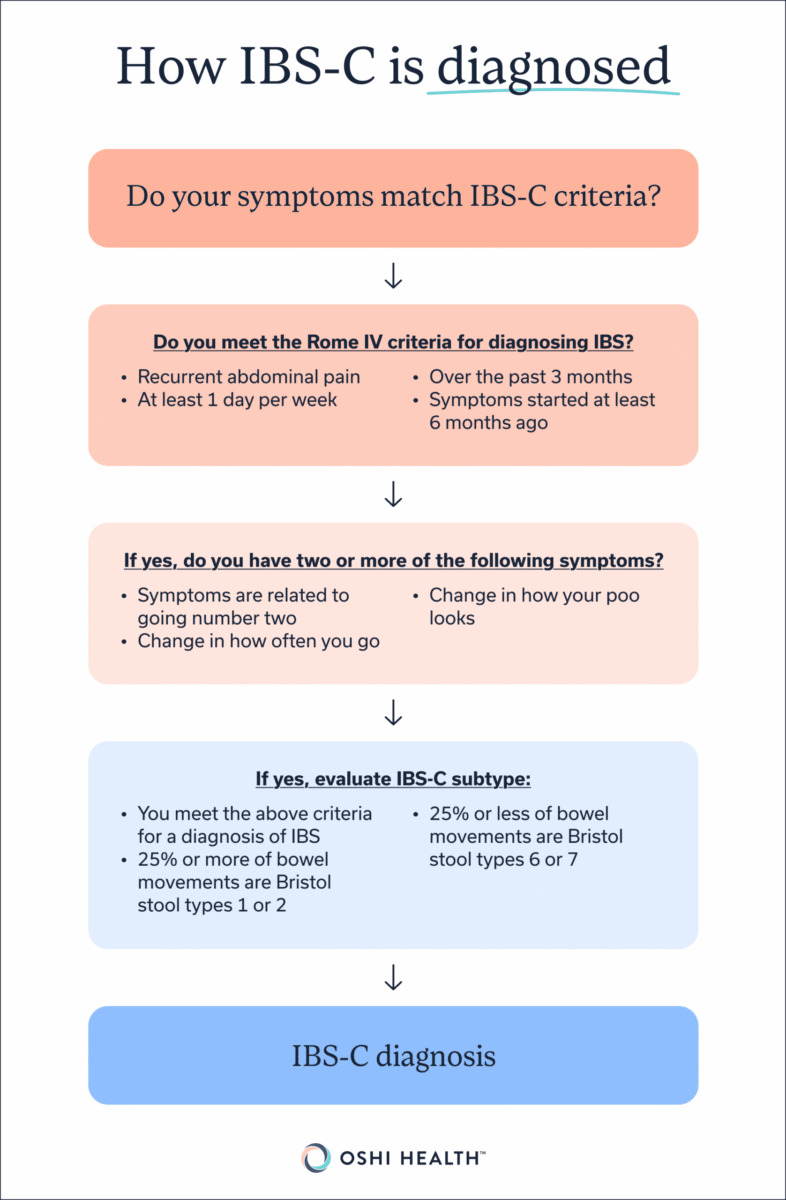
Rome IV criteria for diagnosing the IBS-C subtype:
- You meet the above criteria for a diagnosis of IBS.
- About 25% or more of your bowel movements have the consistency of Bristol stool types 1 or 2, and 25% or less of your bowel movements match Bristol stool types 6 or 7.
Prior to the Rome criteria, researchers used to consider IBS to be a diagnosis of exclusion. This meant that clinicians worked to rule out other GI conditions, sometimes with invasive procedures, before diagnosing IBS.
Despite the change in diagnostic criteria, many clinicians who aren’t experts in IBS still treat the condition as a diagnosis of exclusion. This practice can lead to unnecessary and expensive testing. That’s just one reason why working with a knowledgeable and empathetic GI expert or team is crucial.
Treatment options for IBS-C
IBS-C symptoms can be uncomfortable, frustrating, and overwhelming. But help is available for managing symptoms.
The right treatments for you will depend on your specific symptoms, triggers, and lifestyle factors. And what works for you may be different from what works for someone else.
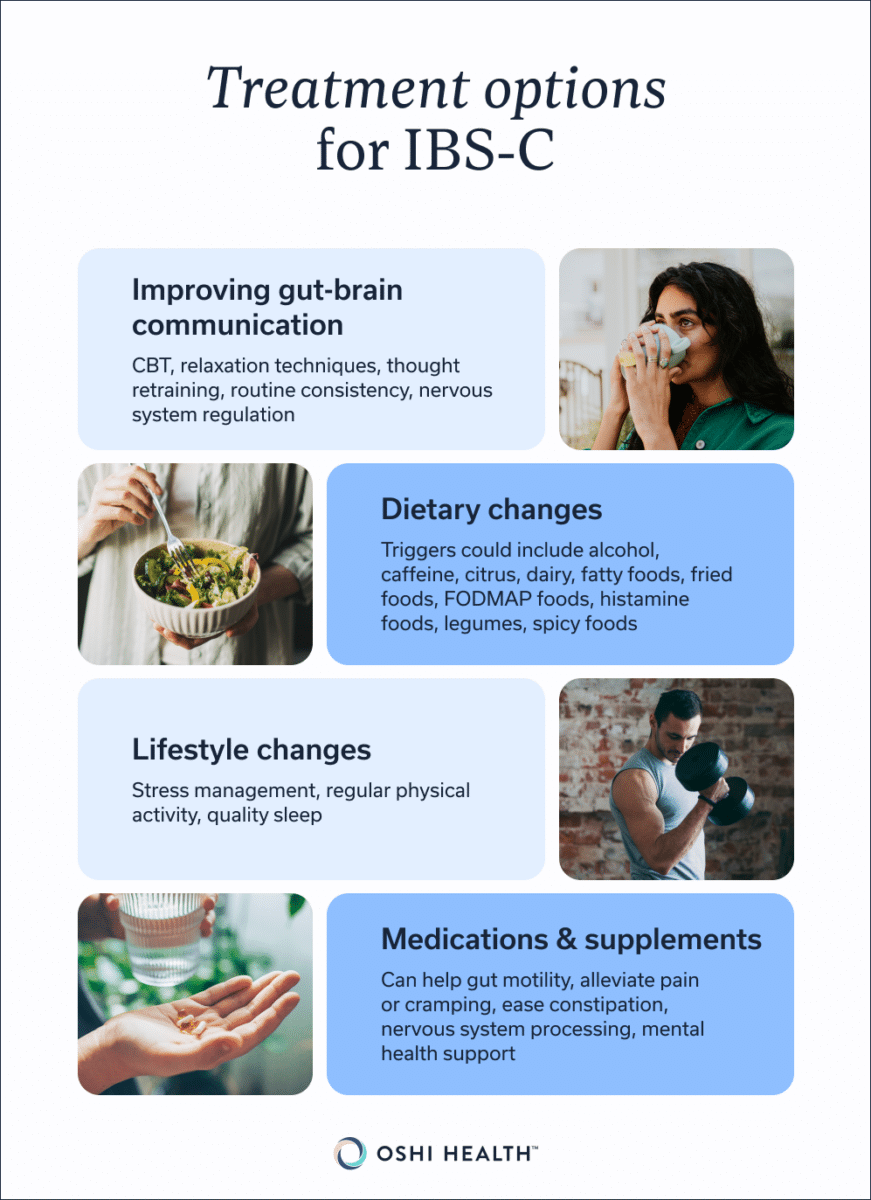
A care plan might include a combination of mental health therapies to enhance the gut-brain connection, medications or supplements where needed, and diet and lifestyle changes that can help you reduce exposure to triggers, whether specific foods or situations, including stress.
Improving gut-brain communication
Since IBS-C is a disorder of gut-brain interaction, treatment typically focuses on ways to improve communication between your mind and your” second brain,” your enteric nervous system, the branch that lines the gut.
Cognitive-behavioral therapy (CBT), for example, helps you retrain your brain to alter dysfunctional patterns of thinking that may contribute to gut-brain communication issues.
For example, maybe when you travel, your constipation and pain symptoms tend to ramp up. As you are on your next trip, you might understandably pre-emptively be stressed out about not being able to poo because of disruption to your routine.
The stress, in turn, leads to gut-brain communication glitches that then cause the very constipation you were worried about. (It happens!) CBT helps you retrain the thought patterns surrounding this stress, which can then reduce symptoms.
CBT also empowers you. It helps build your problem-solving skills so that you can avoid negative thought patterns. For example, a solution to travel triggering your symptoms might be taking more time in your hotel room in the morning before sightseeing. This strategy can help trick your GI tract into thinking you are at home so that it feels comfortable to do its work of going number two.
As a treatment for IBS, CBT can also help you craft calming or relaxation strategies. This can help you avoid tension that may lead to IBS-C symptoms.
In combination with CBT or other strategies, lifestyle and diet changes are also useful for treating IBS-C. Working with an expert gut-brain specialist, like those at Oshi Health, is a great way to determine the best treatment route for your unique symptoms.
Dietary changes that may help with IBS-C
Working with a GI registered dietitian can help you investigate which foods or eating habits tend to trigger your symptoms.
Your list of triggers will likely be different from the next person with IBS-C, but the following are some common culprits:
- Alcohol
- Caffeine
- Citrus
- Dairy
- Fatty foods
- Fried foods
- FODMAP foods
- Histamine foods
- Legumes (beans and lentils)
- Spicy foods
- Lifestyle changes that may help with IBS-C
General lifestyle changes that are good for your overall health can also help ease symptoms of IBS-C.
- Stress management: Managing stress can help you reduce stress response activation and instead activate your calm response, which helps keep your enteric nervous system operating more smoothly. Stress management can take many forms, including meditation, yoga, exercise, and more.
- Movement: Some research points to the benefit of regular physical activity for IBS. Movement may improve the gut microbiome, which may help ease symptoms. Additionally, movement can support gut motility, which can ease constipation. A simple walk might get things going again.
- Sleep: Sleep disorders are common among people with IBS, and how poorly you think you slept can worsen symptoms. Making getting enough quality sleep a priority might help ease discomfort. That can be easier said than done if you have a sleep disorder, of course. So seeking treatment for sleep disturbances may help.
Medications and supplements for IBS-C
In some cases, your clinician may prescribe medications to treat IBS. Medications for IBS-C are designed to help gut motility, alleviate pain or cramping, or ease constipation.
Neuromodulators, for example, change the way the nervous system processes signals between your gut and your brain and signals related to pain. Other medications, such as antidepressants, can help support mental health, which in turn can help support better gut-brain communication.
Supplements may also help by supporting your gut microbiome, gut motility, intestinal barrier, and more. But you should consult your clinician before starting new supplements or over-the-counter medications to ensure they won’t cause an IBS flare.
I’ve finally found a resolution to my symptoms, which I’ve never had been able to achieve. So I would really encourage anyone who’s struggling with IBS-C, as I have for so many years, to really reach out to Oshi. It’s made a huge difference for me.
— Danielle S.
Working with an Oshi healthcare provider
As we’ve covered, the best ways to treat IBS-C and alleviate symptoms will be unique to you and may be different from methods that help someone else. That’s why you may benefit from coordinated, multidisciplinary support from Oshi Health.
Your care team might include a GI clinician (a nurse practitioner or physician associate), a GI registered dietitian, and/or a gut-brain specialist or psychologist, all overseen by board-certified gastroenterologists. They collaborate to help you improve your gut health, alleviate symptoms of IBS-C, and help empower you with strategies to better manage the condition over the long term.
Key takeaways
- IBS-C is a Disorder of Gut-Brain Interaction (DGBI), formerly known as a functional gastrointestinal disorder. It’s a frustrating condition characterized by abdominal discomfort and frequent constipation.
- With the right individualized treatment plan, you can manage your IBS-C in a way that lessens your discomfort while avoiding unnecessary testing.
- Oshi Health can help you tailor a treatment plan to your unique needs so that IBS-C no longer rules your life.
FAQ
-
IBS does not have a permanent cure. However, a treatment plan that’s tailored to you and your unique symptoms and triggers can help you manage the condition and improve quality of life.
-
IBS-C is different from regular constipation. The difference lies in the pattern of bowel habits. Constipation happens to everyone occasionally. Having IBS-C means that abdominal discomfort occurs and that constipation is a feature about 25% or more of the time.
-
You can relieve IBS cramps by placing a heating pad on your stomach, which may help relax tensed muscles. Gentle activity, such as walking or easy stretching, may also help relieve trapped gas or encourage a bowel movement, which then may relieve related cramping.
-
Food triggers for IBS are highly individual. What bothers your IBS might be different from what causes symptoms for someone else. You can try keeping a food diary and noting any symptoms that show up after a specific meal or snack to determine your specific trigger foods. Working with a GI registered dietitian can also help.
Oshi is your partner in digestive health
Feel like your digestive concerns are running your life? You’re not alone—and we’re here to help you find lasting relief.
Oshi Health GI providers, gut-brain specialists, and registered dietitians work together to address your symptoms and find solutions that actually work for you.
Whether you’re dealing with chronic digestive issues or unpredictable symptom flare-ups, our GI specialists deliver:
✔ Personalized care plans tailored to your lifestyle
✔ Science-backed strategies to calm your gut
✔ Compassionate, whole-person care
✔ And so much more!
Ready to take control of your gut health?