


If your appetite has suddenly gone AWOL, you might be having a stressful day, experiencing a gross-out, or battling a temporary illness. If several days pass and you still don’t feel hungry, something else might be going on, such as a medication side effect, an emotional issue, or a gastrointestinal (GI) concern. Never hesitate to talk to a clinician for unexplained appetite loss or not feeling well, especially if you have red-flag symptoms.
As much as I love The Pitt, a popular emergency medical drama series, it can get rather gory and make me suddenly not want to finish what’s on my plate. In this case, the cause of a sudden loss of appetite is obvious. Looking at a gaping wound, even if created with makeup and other techniques, doesn’t exactly make me want to scarf the rest of my tomato soup.
However, sometimes the culprit behind a lack of appetite is less obvious. If you find yourself unexpectedly repulsed by food or having a total absence of hunger despite not having eaten in a while, you might be wondering what’s up and what you should do.
In this article, we answer your pressing questions about what causes loss of appetite, what to do if you have no appetite for days, and more.
Sudden loss of appetite: Is this an emergency?
If you find yourself suddenly not wanting Grandma’s famous chicken fettuccini, even though it’s normally the best thing that’s ever graced your plate, you might be alarmed. But don’t panic. Sometimes a loss of appetite is just temporary. An uptick in stress or worry, receiving bad news, or even a minor change in how you feel overall can disrupt your brain’s hunger signals.
But to figure out what’s behind your loss of appetite and what to do about it, you can ask yourself a few questions.
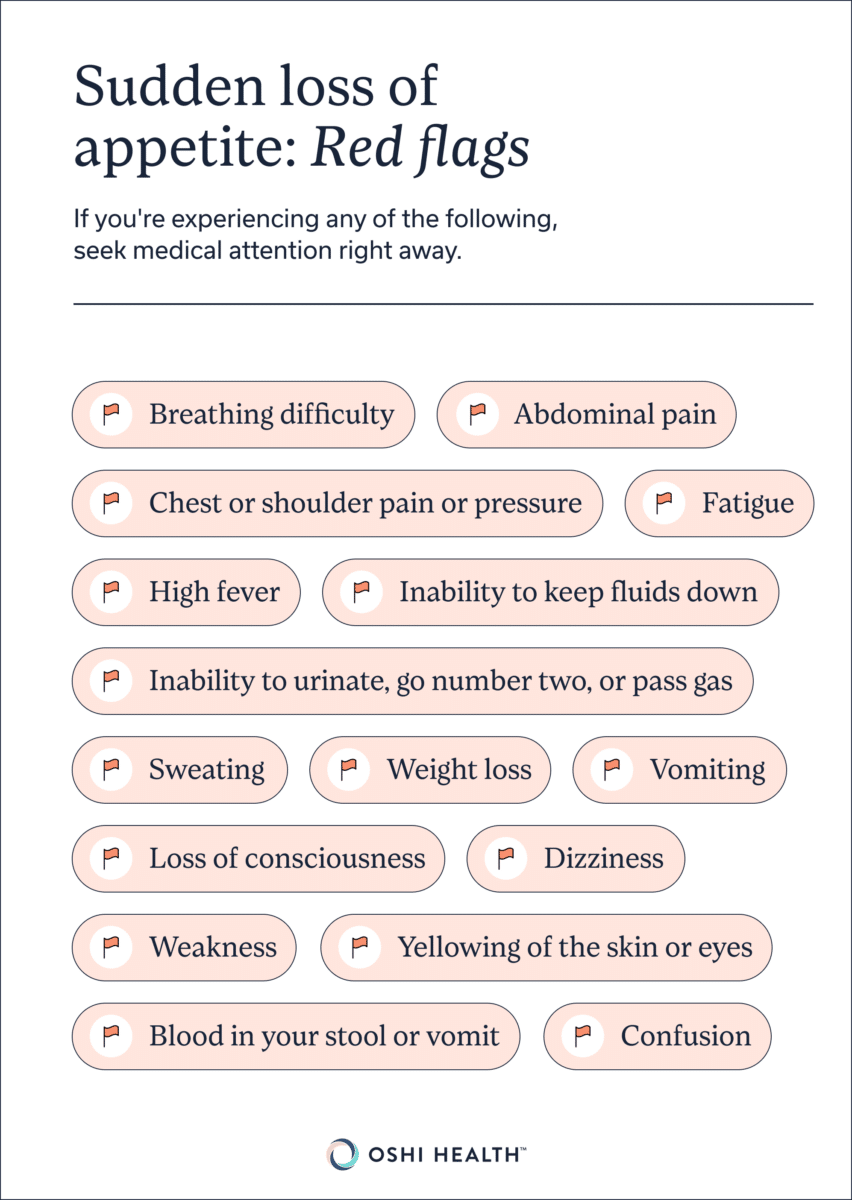
Do you have any red flags indicating a potential emergency? A loss of appetite alone is generally not a medical emergency unless it persists. However, if you are experiencing other red-flag symptoms, such as the following, seek medical attention right away:
-
Abdominal pain (that is severe or intense)
-
Blood in your stool or vomit (or if they look black, tarry, or like coffee grounds)
-
Breathing difficulty
-
Dizziness
-
Chest or shoulder pain or pressure
-
Confusion
-
Fatigue (that’s unexplained or intense)
-
Fever (that’s high)
-
Inability to keep fluids down
-
Inability to urinate, go number two, or pass gas
-
Intense sweating
-
Loss of consciousness
-
Vomiting (that is unexplained or persists)
-
Weakness
-
Weight loss (that is unexplained or unintentional)
-
Yellowing of the skin or eyes
How long have you had a loss of appetite?
A temporary loss of appetite without additional red-flag symptoms is unlikely to be an emergency. If your appetite loss has been ongoing for days, however, you should talk to a clinician as soon as you can.
What else has changed?
Take a quick inventory of what else has changed for you recently. Examples include medication changes, experiencing an illness, feeling more stress than usual, the possibility of pregnancy, whether you’ve potentially eaten contaminated food, and more.
These are all possibilities as to why you might be turning your nose up at foods you normally love. Understanding if you’re experiencing any of these changes can help you determine what you should do to address them. For example, if you’re experiencing a medication side effect, a talk with your doctor is the next best step. Read on for more details regarding these concerns.

Why am I not hungry? Understanding appetite
To understand why you might be experiencing a loss of appetite, you might wish to have a better understanding of the factors that affect whether you’re hungry.
The mechanisms behind appetite are somewhat complex. These include your:
-
Gut-brain axis: Your gut and brain communicate with each other along this pathway.
-
Gut microbiome: The community of microbes that live in your gut generates metabolites (substances produced during metabolism) when they ferment fiber. These metabolites can then affect your appetite. So changes to your gut microbiome may leave you less hungry.
-
Neurotransmitters and hormones: Both act as chemical messengers in the body to signal your brain, bodily organs, and tissues to perform various functions, including those related to appetite. Below is a quick-guide table of these chemical messengers, with more in-depth info following it.
Neurotransmitters and hormones related to appetite:
| Signal | Type | Primary source | Primary effect on appetite | Mechanism/notes |
| Ghrelin | Hormone | Stomach | Increases hunger | Rises before meals and activates neurons in your brain |
| Leptin | Hormone | Adipose (fat) tissue | Suppresses appetite–unless you’re experiencing leptin resistance | Activates neurons that signal long-term energy sufficiency. But leptin resistance can occur, leading to increased appetite |
| Insulin | Hormone | Pancreas | Suppresses appetite–unless insulin resistance is present | Signals nutrient availability to the brain; chronic high insulin may impair signaling |
| Glucagon-like peptide-1 (GLP-1) | Hormone (incretin) | Intestinal L-cells | Suppresses appetite | Slows gastric emptying; enhances satiety |
| Glucose-dependent insulinotropic polypeptide (GIP) | Hormone (incretin) | Intestinal K-cells | Stimulates insulin release | Appetite effects are less pronounced than those of GLP-1 |
| Peptide YY (PYY) | Hormone | Distal intestine | Suppresses appetite | Released post-meal; inhibits NPY neurons |
| Cholecystokinin (CCK) | Hormone | Small intestine | Promotes satiety | Stimulated by fat/protein; activates vagus nerve |
| Amylin | Hormone | Pancreatic beta cells | Suppresses appetite | Slows gastric emptying; complements insulin |
| Neuropeptide (NPY) | Neuropeptide | Hypothalamus | Strong hunger signal | One of the most potent appetite stimulators |
| Agouti-related peptide (AgRP) | Neuropeptide | Hypothalamus | Increases appetite | Antagonizes melanocortin receptors (MC4R) |
| Pro-opiomelanocortin (POMC) | Neuropeptide precursor | Hypothalamus | Suppresses appetite | Produces α-MSH, activates melanocortin pathway |
| α-MSH | Neuropeptide | Derived from POMC | Suppresses appetite | Acts on the brain to reduce food intake |
| Dopamine | Neurotransmitter | Midbrain | Variable (reward-driven eating) | Drives motivation and food reward |
| Serotonin (5-HT) | Neurotransmitter | Brainstem | Suppresses appetite | Increases satiety and reduces food intake |
| Norepinephrine | Neurotransmitter | Brainstem | Variable | Can suppress or stimulate appetite |
| Endocannabinoids (e.g., anandamide) | Neuromodulators | Brain & peripheral tissues | Increase appetite | Activate specific receptors; drives pleasure eating |
| Orexin | Neuropeptide | Hypothalamus | Stimulates appetite | Links wakefulness and feeding behavior |
| Melanin-concentrating hormone (MCH) | Neuropeptide | Hypothalamus | ↑ Increases appetite | Promotes feeding and energy storage |
| Cortisol | Hormone | Adrenal glands | Variable (often ↑ appetite) | Chronic stress may increase cravings; acute illness may suppress intake |
| Corticotropin-releasing hormone (CRH) | Hormone/neuropeptide | Hypothalamus | Suppresses appetite | Activated during acute stress |
| Cytokines (IL-1, TNF-α, IL-6) | Immune signaling proteins | Immune cells | Suppress appetite | Responsible for loss of appetite during illness |
To put it in a nutshell: Gut and brain crosstalk, your neurotransmitters and hormones (including those produced in fat tissue and the gut), your pancreas, and your gut microbiome all play a role in managing appetite.
Some common bodily changes can influence these mechanisms and alter whether you feel hungry or sated (satisfied or full). Examples include weight changes, chronic illness, acute illness, dietary changes, and mental health concerns, such as anxiety, depression, and an uptick in stress.
What causes loss of appetite: The most common short-term reasons
If your appetite has suddenly gone MIA and it’s taken you by surprise, here are a few considerations. These are generally not a medical emergency as long as you aren’t having any of the red-flag symptoms mentioned earlier in this article. However, never hesitate to talk to a clinician if you aren’t feeling well.
-
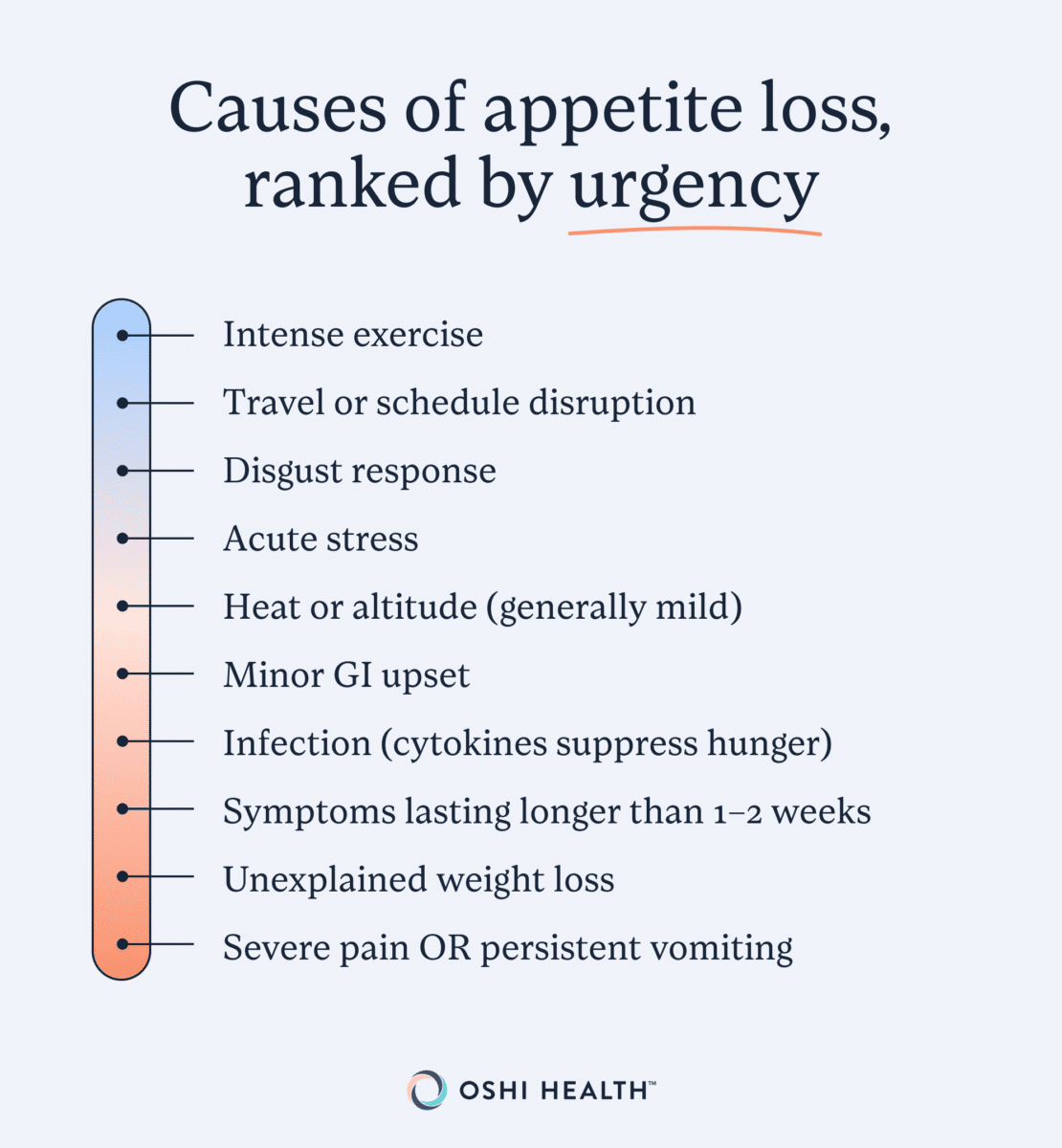
Acute illness: When you have a viral or bacterial infection, your immune system jumps into action. This can elevate cytokines (immune-system proteins), leading to inflammation to help fight off the offending germs. Some cytokines can suppress appetite, but your usual hunger signals should return once you start feeling better.
-
Gastrointestinal (GI) upset: Minor GI upset can certainly impact appetite. The issue could be related to something you ate that didn’t agree with you, or temporary constipation, bloating, or acid reflux, just to name a few.
-
Disgust: We think of disgust as a bad thing, but it’s actually a mechanism that helps keep us safe from illness. For example, rotting food is gross, so you don’t eat it and therefore don’t develop a foodborne illness. A temporary gross-out, of course, can send your appetite into hibernation.
-
Acute stress: Stress activates your sympathetic nervous system (aka”fight or flight”), which somewhat presses pause on your parasympathetic nervous system (aka”rest or digest”). This is why receiving bad news or experiencing anxiety, general worry, or sudden grief can crush your appetite.
-
Routine disruption: Maybe you’re traveling or just experiencing another type of change to your usual eating and sleeping schedule. This can affect appetite. Sleep loss is generally associated with increased appetite. But if your meal timing is completely off, you might feel a lack of hunger or cravings.
-
Heat or altitude exposure: Changes to your environment can also spur appetite loss. Digesting food increases body heat, and altitude decreases oxygen consumption, both of which can suppress hunger.
-
Intense exercise: Although you might logically think that exercise would drive hunger after an increase in calorie burning, the opposite is true in the short term. Intense exercise decreases levels of ghrelin (aka”the hunger hormone”) and increases hormones related to satiety. Satiety also results from N-lactoyl-phenylalanine (Lac-Phe), a molecule that signals the brain to stifle appetite.
No appetite for days: Causes that need closer attention
A sudden loss of appetite that persists for more than a few days deserves a closer look and a talk with a clinician. Situations where medical guidance may be helpful include:
-
Ongoing GI issue: A loss of appetite is a symptom of several gastrointestinal diseases. But just because you have ongoing appetite loss does not automatically mean you have a disease. Still, you should talk to a clinician for an evaluation and treatment (if needed).
-
Ongoing mental health concerns: If your appetite loss is due to continued anxiety or depression, you should talk to a mental health professional to figure out a treatment plan for improving your well-being.
-
Medication side effects: Several meds can cause a loss of appetite. The table below features some common culprits. If you suspect that a medication is leading to your lack of interest in food, talk to your doctor. They may be able to change your medication or dosage, or find a different treatment method altogether. Or they may have solutions to stimulate your appetite while you continue your existing treatment plan.
Medications associated with appetite loss:
| Medication Category | Examples |
| GLP-1 medications (for diabetes or weight loss) | Semaglutide (Ozempic, Wegovy), Liraglutide (Victoza, Saxenda), Dulaglutide (Trulicity) |
| Dual GLP-1/GIP medications | Tirzepatide (Mounjaro, Zepbound) |
| Other weight-loss medications | Phentermine, Phentermine/topiramate (Qsymia), Bupropion/naltrexone (Contrave) |
| ADHD stimulant medications | Adderall (amphetamine salts), Vyvanse (lisdexamfetamine), Ritalin (methylphenidate) |
| Certain antidepressants | Bupropion (Wellbutrin), Fluoxetine (Prozac), Sertraline (Zoloft), Venlafaxine (Effexor) |
| Cancer treatments (chemotherapy and immunotherapy) | Various medications, depending on treatment plan |
| Antibiotics | Erythromycin, Metronidazole (Flagyl), Doxycycline |
| Heart medications | Digoxin and some others |
| Neurologic or migraine medications | Topiramate (Topamax), Zonisamide |
| Diabetes medications | Metformin |
| Thyroid medication | Levothyroxine |
| Opioid pain medications | Morphine, Oxycodone, Codeine |
| Immune-modulating medications | Interferons and some biologic drugs |

How to prevent dehydration when you’re not hungry
If you’re experiencing appetite loss, you still need to stay hydrated and consume some nutrients if possible. Here are a few tips that can help sustain you until you feel better or can talk to a clinician if needed.
-
Sip fluids: Take small sips of water, broth, herbal tea, or electrolyte drinks or mixes.
-
Eat small amounts of food: Instead of your usual portions across your meals, try small meals or snacks throughout the day as tolerated.
-
Consider meal replacement options: A meal-replacement drink or mix can give you a dose of nutrients to help keep you healthy.
Working with an Oshi healthcare provider
Since appetite and GI health share a complex relationship and are affected by many other factors, you may benefit from coordinated, multidisciplinary support from Oshi Health.
Your care team might include a GI provider (a nurse practitioner or physician associate), a GI registered dietitian, and/or a gut-brain specialist or psychologist, all overseen by board-certified gastroenterologists. They collaborate to help you improve your gut health, determine if you have underlying conditions, and, in the case that you do, help you manage them.
Key takeaways
-
Temporary appetite loss can occur from stress, illness, disgust, and more. It is generally not a cause for concern unless you have red-flag symptoms.
-
Appetite loss that is unexplained and lasts for several days is a reason to talk to a clinician to figure out why.
-
Oshi Health can help you get to the bottom of your appetite loss and help you get back to enjoying food again.
FAQ
-
Sometimes you might suddenly lose your appetite for a minor reason, such as getting grossed out, experiencing a temporary illness, having a stressful day, or facing a minor gastrointestinal upset. If your appetite loss persists, however, something more intense may be going on and you should talk to a clinician.
-
If you have no appetite, try eating small bites of food or trying a meal-replacement mix or drink. Be sure to sip fluids regularly as well to stay hydrated. If your loss of appetite persists for more than a few days or you are experiencing other concerning symptoms, never hesitate to talk to a medical professional.
-
Appetite loss becomes an emergency if it has been ongoing for a few days or if it shows up suddenly with other concerning symptoms, such as the inability to keep fluids down, abdominal pain, fever, confusion, dizziness, blood in stool or vomit, and more.