Here at Oshi Health, we pride ourselves not only on delivering clinically proven digestive care that’s helped thousands of patients find relief, but also on being a trusted voice in the field of gastroenterology. To do both well, staying on top of the latest research, trends, and conversations in gut health is a top priority.
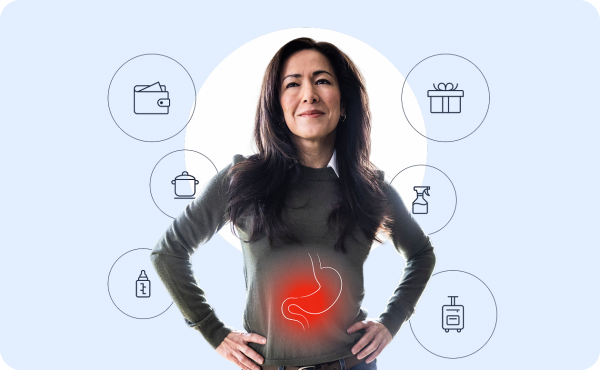
Recently, we conducted a study in partnership with YouGov to explore how the stress of the holiday season can trigger new GI symptoms—or worsen existing ones. The findings were eye-opening: 76% of adults report experiencing digestive discomfort they attribute to holiday stress. That number is even higher—86%—among parents. And those acting as their family’s “Holiday CEOs,” running point on everything from party planning, purchasing gifts, managing travel plans, and more, are also more likely to encounter digestive issues in the process. (1 in 3 Holiday CEOs report GI symptoms vs. 1 in 5 non-CEOs.)
Our data also confirmed what our clinicians have long suspected: because women are more likely to take on the mental load and “invisible” labor associated with playing that Holiday CEO role, they’re disproportionately affected by stress-related digestive issues.
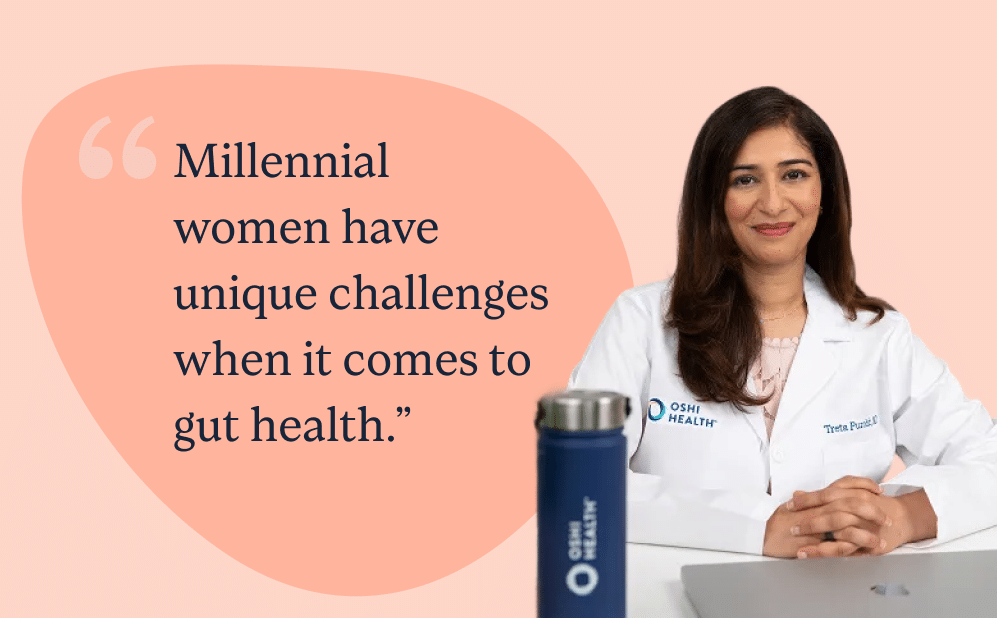
As a next step, we sat down with Treta Purohit, MD, a board-certified gastroenterologist and Oshi Health’s Executive Medical Director, to dig deeper into why women born between 1981 and 1996 seem especially prone to gut health challenges—not just during the holidays, but year-round.

Dr. Treta Purohit, gastroenterologist and Executive Medical Director at Oshi Health, sits down with our editorial team to share her thoughts on the unique gut health challenges faced by millennial women
Oshi Editorial Team: Thanks so much for joining us today, Dr. Purohit. To get started, can you tell us what, in your opinion, makes millennial women’s gut health unique right now?
Dr. Purohit: I think there are several factors that are unique to millennial women. Their gut health is often kind of an epicenter for what is going on in their lives.
We know the gut is the second brain of the body, and I think millennial women have unique challenges. They have busy careers, they’re raising families, many of them have side hustles. They’re also leading a very digital life. And so they are kind of at the center of this phenomena where they’re seeing many changes in their gut health. There are also some symptoms that they’re more prone to than the general population, like bloating, irregular bowel habits, irritable bowel syndrome, reflux.
A lot of this has to do with not just their age, but the stress in their life and the fact that they are at different points in their hormonal journey. A lot of them could be perimenopausal or menopausal around this time, and that can also play a role in their digestion. Stress alone can really put your gut-brain connection into overdrive, leading to more heightened sensitivity to flares and abdominal discomfort.
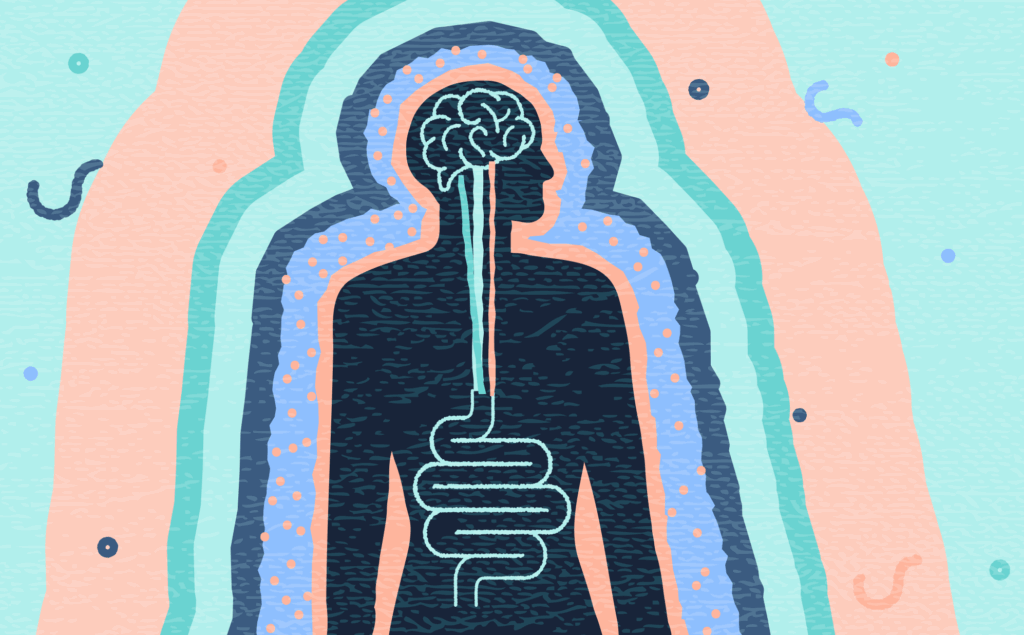
Another consideration is lifestyle. I think the millennial lifestyle is very different from that of their parents or their grandparents. We now have much more exposure to processed foods, or foods coming out of packages. We know that these kinds of foods not only are ultra-processed, but they also have decreased dietary fiber, which affects the gut lining and permeability. This really increases our risk of irritable bowel syndrome and indigestion in general.
And then lastly, I think when we talk about millennial women, it’s not just about the health issues that they have, but also how they approach care. I think we are in a setting where going to your community practitioner in his or her clinic is something we’re not seeing as commonly. A lot of women turn to online sources to get their information, and it could be just because there’s an overload of information and misinformation, whether it be TikTok, Instagram, Reddit, or other virtual sources.
Oshi Editorial Team: One thing that you mentioned was how the stress of a busy lifestyle, or a lifestyle that involves a lot of multitasking, can impact gut health. Can you give an example of how daily habits like maybe working late or eating on the go can directly impact digestion?
Dr. Purohit: Absolutely. Whenever you’re in the middle of a work activity or multitasking, you’re kind of in the flight or fight mode, which activates your sympathetic nervous system. Chronic activation of the sympathetic nervous system can affect multiple aspects of your digestion, from your salivary glands to your gut permeability. Which is all to say you’re not going to digest your food as effectively, or get the full nutritional benefit of what you’re eating, than if you’re eating mindfully and focusing on your food.
Second, I also think mindful eating is important because there’s a big emphasis now—and it is evidence-based—on increasing variety in your food. Because the variety of foods can affect your gut lining. When you have a big combination of different types of fibers and plant-based foods, it helps your gut microbiome actually thrive. But to make those choices, you need to take the time and be thoughtful about what’s going on your plate.
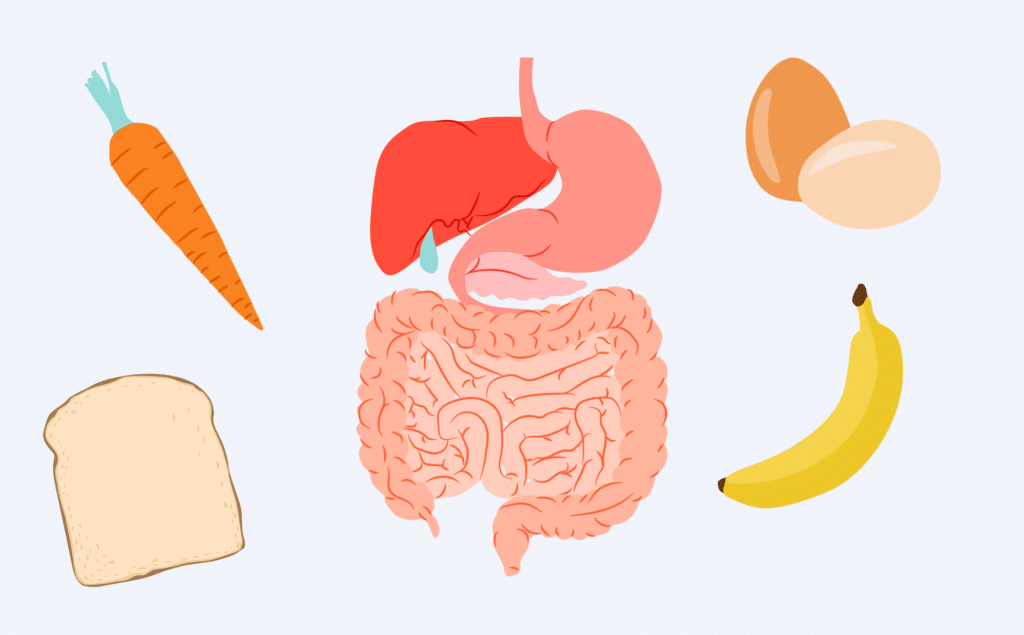
Oshi Editorial Team: That makes a lot of sense. One thing that would be helpful for our millennial women readers to understand is: what is normal gut function for women in this age group, and what isn’t? When do you think people should be considering seeking care?
Dr. Purohit: That’s a great question because normal bowel habits or normal gut function can vary considerably between individuals. If we stick to women between the ages of 25 to 40, in a strict scientific sense: about two to three bowel movements a day, varying to two to three bowel movements a week, is considered a “normal” frequency.
Some variance is also considered normal when it comes to stool consistency. In the academic world, we use the Bristol stool scale. If you’re anywhere from 2 to 6 on this scale, it’s considered normal.
If you’re traveling, if you’re dehydrated, if you’re going through some immense physiological or psychological stress, you can expect a change in your bowel habits. It’s not unusual to once in a while experience some gassiness, some bloating, some mild abdominal discomfort. But if it’s temporary and generally fixable with an intervention (like increasing water or fiber or dietary change), then it’s probably nothing to worry about.
The alarm signs or red flags happen when any of these is consistent: abdominal pain, bloating, blood in your stools. If you’re waking up in the night with any of these symptoms, or have experienced significant weight loss over a short period of time, those are things that require more investigation for some underlying organic pathology.
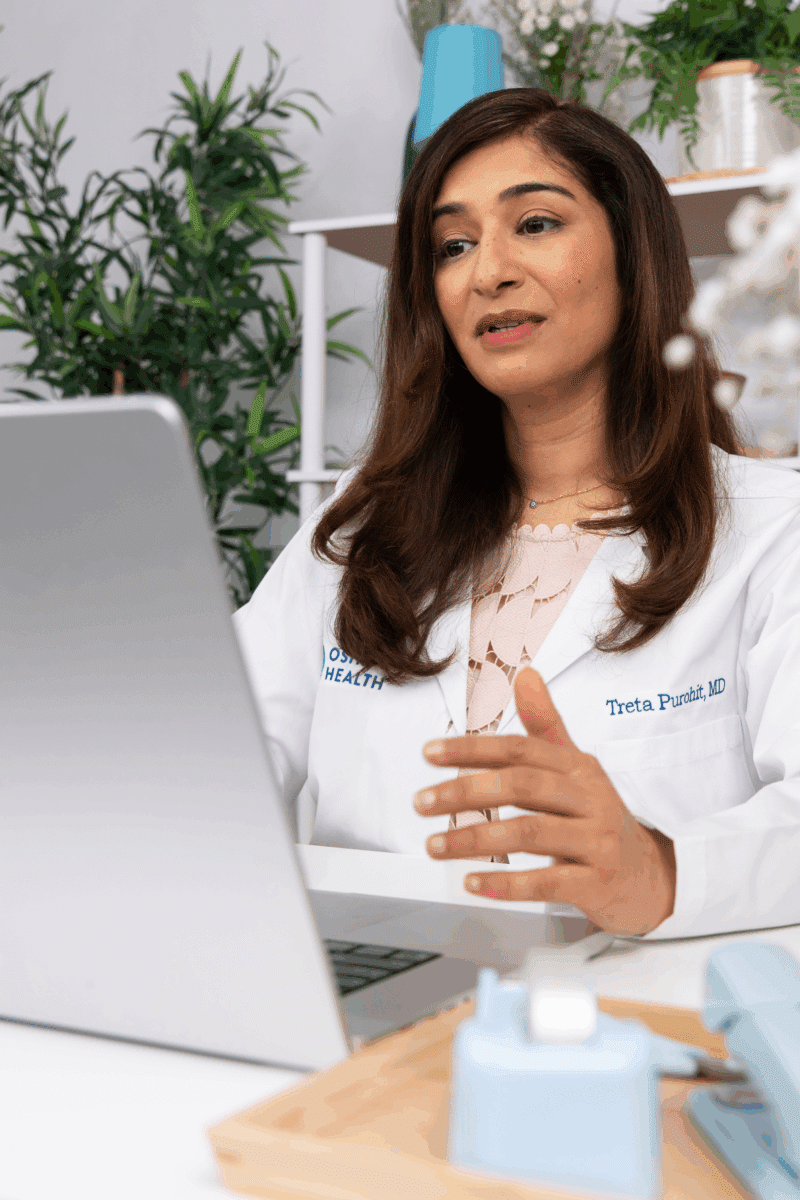
"If you're traveling, if you're dehydrated, if you're going through some immense physiological or psychological stress, you can expect a change in your bowel habits." - Dr. Treta Purohit, MD
Oshi Editorial Team: When someone experiences these “red flag” symptoms, how quickly do you think they should be seeking care? Is it like within a week, 24 hours? What would you say?
Dr. Purohit: That’s a really good question. I think there are different guardrails to consider. If you are a 25-year-old who traveled and has abdominal pain, nausea, vomiting, it’s probably infectious gastroenteritis. So you could give yourself a few days to see if things resolve on their own. But in a few weeks, if it’s not better, you should seek urgent care.
The guidance is similar with rectal bleeding. If it’s small amounts and you’re constipated, it’s likely a hemorrhoid. But if it’s persisting for weeks, or you’re dizzy or lightheaded or extremely symptomatic with that, you should seek care.
Oshi Editorial Team: That’s great to keep in mind. Next, we’d like to move to a different topic that’s especially relevant to millennial women. Is there a link between hormonal birth control or fertility treatments and gut health? What are you seeing in your practice?
Dr. Purohit: We are seeing more and more women exploring what science has to offer and taking advantage of fertility treatments to extend their fertile lifespans, which is a great option for them to have. What I’m seeing in clinic is that when women are on fertility treatments, they are likely to have mild bloating, abdominal discomfort, and some IBS-like symptoms.
They’re generally transient and mild, and typically resolve with introduction of some simple measures like hydration or water or fiber. Most of these symptoms will also resolve on their own once the patient ceases the fertility treatments.
To find relief while in active treatment, we usually give patients the usual advice: eat smaller, more frequent meals. Limit gas-producing foods, which we call a low FODMAP diet. Stay well hydrated. You can also lean on anti-nausea medications like ginger or vitamin B6. Regular physical activity. All of these help your GI symptoms, but they can also improve the efficacy of the fertility treatment themselves.

Oshi Editorial Team: And then in the case of hormonal contraceptives, you’ve mentioned before that those may cause subtle changes in the gut microbiome. What are some ways that women can support their gut microbiome while taking these medications?
Dr. Purohit: I think the evidence is building that you might have small shifts in gut microbiome— more specifically, a slight decrease in microbial diversity. It’s not a causal relationship, but there is some indication that it might increase your risk of inflammatory bowel disease (IBD) as well, but the data is not strong enough to say that for certain.
I will say that in this case, as well as many others, the pillars of health stay the same. So while you’re on oral contraceptives, continue to do things that are generally good for health. Take part in regular physical activity and eat a wide variety of less-processed foods. Really work on mindfulness and stress reduction techniques. All of these measures will encourage better overall health of your gut microbiome.

"I will say that in this case, as well as many others, the pillars of health stay the same. So while you're on oral contraceptives, continue to do things that are generally good for health. Take part in regular physical activity and eat a wide variety of less-processed foods." - Dr. Treta Purohit, MD
Oshi Editorial Team: One thing that you mentioned earlier in the interview is that millennial women are increasingly turning online to do their own research into their gut health. Why do you think this is? And do you have any watch-outs that you might want to give women who are doing this research on their own?
Dr. Purohit: Millennial women are “digital natives.” They’re so used to going online that the first instinct when you have a question, including a health question, is to go onto Google or ChatGPT to look up your symptoms.
When compared to getting in touch with a specialist or being seen in the office, getting an answer online is immediate—and it’s anonymous, which can be validating because you might have other people describing very similar struggles. So it’s easy to connect with and find solace and believe in the answers that are coming through from the internet. There are also some real barriers when somebody wants to get care. As a practicing gastroenterologist, I know that the wait time to see a gastroenterologist in a traditional clinic can be upwards of six to eight weeks. And so with a busy schedule, or not knowing what your insurance might or might now cover, and long wait times, it’s natural for people to turn online.
What I’ve also noticed as I’ve seen more women in my practice is that gut issues can be very embarrassing and stigmatizing for us to talk about in person. And sometimes, if you think of gastroenterology as a field, it’s a male-dominated specialty. The odds of you walking into a clinic and finding a female gastroenterologist is low. So, it can be very difficult for a female to talk about pelvic discomfort and bloating and incontinence with a male who may have not had the same experience, even though he is a healthcare provider.
The watch-outs should be familiar. Unfortunately, most medical practitioners are not on TikTok or Instagram, you know. There’s not that much information online that is clinically-validated. At the same time, misinformation abounds. For example, there’s a lot of stuff about restrictive elimination diets, very expensive supplements, detox regimens, expensive microbiome testing kits—none of which are validated. There’s no clinical rigor, and you could really go down a rabbit hole spending time and resources just for your condition to worsen.

"Gut issues can be very embarrassing and stigmatizing for us to talk about in person. If you think of gastroenterology as a field, it’s a male-dominated specialty. The odds of you walking into a clinic and finding a female gastroenterologist is low, so it can be very difficult to talk about pelvic discomfort and bloating and incontinence with a male who may have not had the same experience." - Dr. Treta Purohit, MD
Oshi Editorial Team: That’s such a great point. Knowing that there isn’t a ton of great information out there, are there any online resources that you would recommend?
Dr. Purohit: Absolutely. And this might sound biased, but here at Oshi we have a whole editorial department that is dedicated to spreading good information that is validated, that is clinically rigorous, and is backed by the GI societies. And we’re working very hard to put this information out regularly.
This information is vetted by internal specialists who are experts at the topics being discussed, whether it’s IBD, fatty liver, reproductive health, you name it. So, I do think Oshi is one of the most reliable resources online for GI information.
I also think while we’re talking about barriers to care and the long wait times, if you were to sign up on Oshi, you can see a provider as quickly as 24 to 48 hours, which is unheard of in today’s clinical settings. A resource like that can truly be very empowering and life-changing for somebody who is in the middle of a health crisis.
Oshi Editorial Team: We’re nearing the end of our interview, but one question that we wanted to ask is: what lifestyle strategies can millennial women implement to help improve gut health? We’re interested in hearing your insights on everything from these new wearable devices that are on the market, to diet and stress management.
Dr. Purohit: You’ve given me some good talking points.
We’ll start with the wearables because they’re all around us—and so many of us are already using them as well.
The thing is: the wearables and the tracking apps that we have right now, they are not validated to measure gut health directly. But they can capture some upstream data that can be very useful. They measure your heart rate, heart rate variance, blood pressure, quality of sleep, and stress. Now they’re even looking into hormonal cycles as well as cortisol levels. And we know all of these can influence your GI symptoms.
So I think this can be a good marker to say, “Hey, I exercised today” or “I’m getting better sleep according to my Oura ring” or “I’m getting a stable heart rate with a normal blood pressure.” And over time, I think a lot of the users will start seeing that the days that they have slept well or have had a good amount of moderate exercise, they’re probably feeling less GI symptoms.
We’re not in a world yet where any of these trackers link with an IBS or an IBD flare-up, but I think as we get more data, we will get to that point.
Moving along to diet: what you eat is central to GI disorders, which is a no-brainer. It’s also the most important factor that affects flare-ups, and it’s a modifiable risk factor. What we do know is that plant-based diets do support gut health. They increase dietary fiber. There are fermentable carbohydrates that—and this is getting a little into the weeds—promote short-chain fatty acids. Short-chain fatty acids are what strengthen the gut barrier and reduce inflammation.
When you have foods that are high in plant-based fiber, you increase your microbial diversity, which is important for digestion. And there is a balance of good and bad bacteria. So, by having more fiber, you’re increasing the good bacteria like Bifidobacterium and Lactobacillus. These are the bacteria that are part of these probiotic strains if you’ve seen them online. They also decrease the risk of inflammatory bowel disease, colon cancer, diverticulitis, things of that sort.
At the same time, I do think some amount of animal protein, if you do have animal protein in your diet, is reasonable as long as it’s things like lean fish, salmon, and eggs, because there are essential amino acids and omega-3 fatty acids in those foods that you will not find in a plant-based diet.
And again, I recommend staying away from ultra-processed foods. I cannot emphasize this enough. It’s extremely, extremely important.

Thinking beyond your diet, there are tons of prebiotics and probiotics on the market. And, you know, there’s a lot of research in the microbiome world. And the microbiome does hold answers to a lot of chronic gut and systemic conditions, but I don’t think the science is down to the level of accuracy where we know what probiotic or which prebiotic would be good for specific individuals. So, I do think natural probiotics, whether it’s like Greek yogurt or fermented foods or kimchi, those are probably your best resources for probiotics versus a medication or a supplement online.
Oshi Editorial Team: Thank you for all of these great tips. When it comes to stress reduction or management, do you have any strategies you’d recommend?
Dr. Purohit: Stress plays a very important role in GI symptoms. Like we say, the gut is the second brain of the body. There is something called the gut-brain axis, and it does get activated by stress, anxiety, and mental health conditions. And the activation of the gut-brain axis releases neuropeptides, which alter your microbiome.
So, we may not realize it, but managing stress can actually improve your gut health. Now there’s a lot of evidence that managing your stress and anxiety with things like cognitive behavior therapy, meditation or mindfulness exercises, or GI-based CBT can actually reduce flare-ups and also help chronic GI distress.
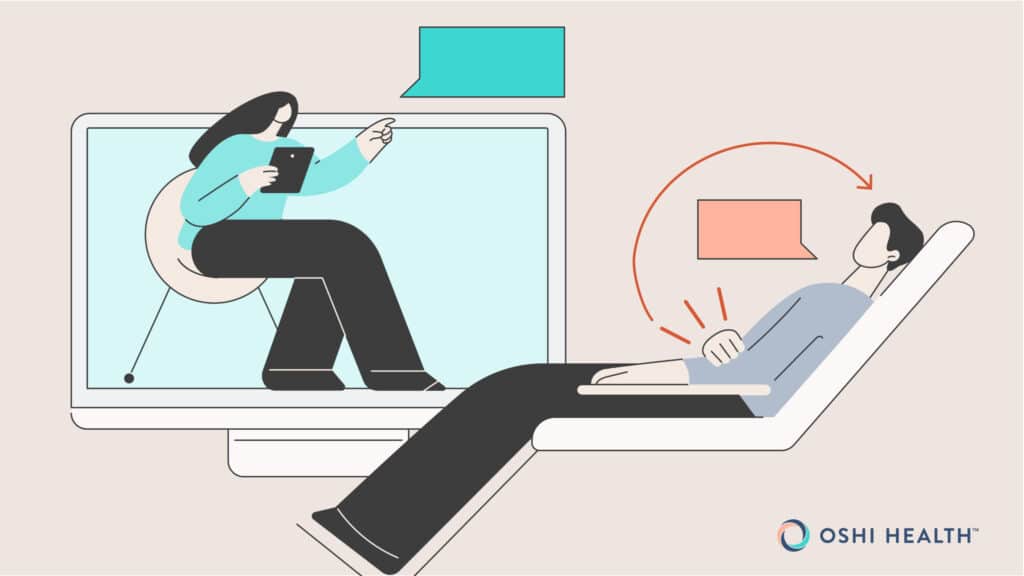
Oshi Editorial Team: Our next question kind of ties that in with what we discussed earlier around wearables. We know that sometimes we can get obsessed with tracking and staying on top of our data, which might actually cause more stress for some people. We wonder if you have any thoughts on that.
Dr. Purohit: I think moderation is key in everything we do, including our usage of wearables. We have to remember a few key things. Not every wearable is FDA approved for every indication. They may be tracking 20 things, but the FDA approval and validation may be for one thing. So I would say look at the data with a grain of salt.
Second, don’t forget to listen to your body. If you wake up feeling fantabulous and your Oura is saying you didn’t sleep well, I would listen to and trust my body. And while we don’t want to overuse wearables, sometimes it’s important to get feedback from multiple sources. So if you have an Oura and if you have a Fitbit, it’s good to see how much of it is overlapping. But other than that, I think just being mindful of and listening to the changes in your body. I think that trumps any wearable or any device available to date.
Oshi Editorial Team: We’re at our last question: what are the most important things millennial women can do day to day to maintain or nurture their gut health?
Dr. Purohit: I think one of the most important things is self-care. So while we are taking care of a million other things on our table, taking care of your own body and of your own health is extremely important.
As we’ve discussed, the most important things are regular physical activity, meaning moderate to heavy physical activity three to four times a week. Limiting processed foods. Having fiber-rich, plant-based variety. And also looking at care or management of your conditions from a whole-person lens, which means considering things like stress reduction and getting quality sleep. The social aspect is important too, as it really helps with stress reduction. Make sure you are connecting with things that matter to you. Remembering to smile, remembering to laugh. All of that together really helps in kind of resetting the balance in your gut and life in general.
Meet Oshi's GI Specialists
A full team of experts, working together for you.
Here at Oshi Health, we believe in treating the whole you, not just your symptoms. That’s why we bring medical, dietary, and gut-brain care together under one virtual roof—all provided be leading GI specialists.




Whole-person GI care that meets you where you are
Here at Oshi, we know that real, lasting relief is only possible when we treat you as a whole person—not just a set of symptoms. That’s why you’ll get a team of GI providers, registered dietitians, and gut-brain specialists, all working together to get to the bottom of your GI symptoms with proven, personalized care. And with virtual visits available within days—including evenings and weekends—we make it easy to see a GI provider within days.
Oshi is your partner in digestive health
Feel like your digestive concerns are running your life? You’re not alone—and we’re here to help you find lasting relief.
Oshi Health GI providers, gut-brain specialists, and registered dietitians work together to address your symptoms and find solutions that actually work for you.
Whether you’re dealing with chronic digestive issues or unpredictable symptom flare-ups, our GI specialists deliver:
✔ Personalized care plans tailored to your lifestyle
✔ Science-backed strategies to calm your gut
✔ Compassionate, whole-person care
✔ And so much more!
Ready to take control of your gut health?