

Your liver is an incredibly talented organ that takes on many job roles, including processing what you put into your body. But it’s also vulnerable to health issues. Because it’s so remarkable, though, the liver responds well to healthy habits and can often heal from damage with some TLC. Improvement can occur in as little as a few weeks. Read on for some key liver-supporting tactics.
Your liver is a star multi-tasking organ, performing over 500 vital functions in your body. If it were an employee, it would no doubt deserve a raise and a commemorative plaque for its achievements. But as with any multitasker, it can become overloaded and overworked, leading to issues, including damage. It’s also susceptible to some infectious diseases.
The nifty thing about the liver is that it can heal itself in many cases–and quickly at that! But if it needs healing, it needs your support to do that. If you’ve been told your liver is facing some difficulties, understandably, you might be searching for ways to give it a boost. You’ve come to the right place for strategies that help.
We’re not talking about “liver detoxes ” or ” liver cleanses.” Instead, implementing some basic tenets of health can give your liver the assistance it needs to heal and continue to do its good work.
In this article, we cover how to heal your liver, how to reverse liver damage, what foods are good for liver repair, fatty liver disease treatments, and more.
How your liver works and why it’s worth protecting
Your liver has a rather impressive résumé of work skills. Here’s a list of some of its most vital functions by category, but this list is by no means exhaustive. We’d have to write a book just to explain all that the liver tackles. But you get the idea. It’s an important organ that warrants the utmost care.
Liver functions:
| Category | Functions of the Liver |
| Metabolic | Regulates blood glucose (glycogenesis, glycogenolysis, gluconeogenesis); metabolizes carbohydrates, fats, and proteins; converts ammonia to urea; breaks down fatty acids; metabolizes and controls cholesterol. |
| Essential substance creation | Produces bile; synthesizes plasma proteins (albumin, clotting factors); makes lipoproteins (HDL, LDL, VLDL); synthesizes cholesterol and phospholipids. |
| Detoxification | Detoxifies drugs, alcohol, and toxins; inactivates hormones; converts harmful substances into less toxic forms. |
| Storage | Stores glycogen; stores vitamins A, D, E, K, and B12; stores minerals (iron, copper); acts as a blood reservoir. |
| Excretory | Excretes bilirubin and waste products in bile. |
| Digestive | Produces bile salts for fat emulsification and absorption of fat-soluble vitamins. |
| Immune | Kupffer cells destroy pathogens and old blood cells; filters blood from the digestive tract. |
| Hematologic | Breaks down red blood cells; produces clotting factors; stores iron; produces blood cells during fetal life. |
| Endocrine | Activates vitamin D; produces insulin-like growth factor 1 (IGF-1); regulates hormone levels. |
Common causes of liver damage and disease
Considering all its job roles, you won’t be surprised to learn that the list of potential things that can go wrong with the liver is also extensive. (See the table below.)
While some conditions are genetic or infectious, others are brought on by factors related to a lack of exercise, dietary factors, alcohol consumption, or medication or supplement toxicity. By far, the conditions related to lifestyle factors are the most common.
Liver conditions brought on by lifestyle:
-
Metabolic dysfunction-associated steatotic liver disease (MASLD): This condition occurs when fat builds up in the liver from issues such as insulin resistance, prediabetes and type 2 diabetes, obesity, and more. It is a reversible condition with lifestyle changes and medical care. Up to 38% of adults globally have MASLD, formerly called non-alcoholic fatty liver disease (NAFLD).
-
Metabolic dysfunction-associated steatohepatitis (MASH): This is a more severe form of MASLD, meaning the liver has developed inflammation and cell damage, which can lead to scarring. Like MASLD, MASH may be reversible if caught early. About one-third of adults with MASLD develop this more severe form.
-
-
Alcohol-associated liver disease (ALD): This is a broad term to describe liver damage from alcohol consumption. Prevalence ranges from about 3.5% of the general population to 26% of heavy drinkers, to more than 55% among those with alcohol use disorder (AUD). ALD exists on a spectrum with two types:
-
Alcoholic hepatitis: This form of ALD can come on suddenly from heavy drinking or occur after long-term use. Although liver cells are injured, they haven’t developed scar tissue, and lifestyle changes, close clinical monitoring, and additional care can reverse the condition.
-
Alcohol-related cirrhosis: This form of ALD involves permanent damage that has progressed to end-stage liver disease.
-
-
Metabolic dysfunction and alcohol-associated liver disease (MetALD): You can also have a combination of MASLD and ALD.
-
Drug-induced liver injury (DILI): This condition, also called drug-induced hepatotoxicity or toxic hepatitis, occurs when medications, supplements, or chemicals damage or inflame the liver. Acetaminophen (when used in high doses or used in those sensitive to it) is the most common cause. Unregulated herbal and dietary supplements are also often culprits. This condition is usually reversible, but in rare cases it can lead to liver failure.
As noted, the conditions listed above are the most common liver concerns, but this table offers a more extensive list of liver issues.
Liver diseases and damage by category:
| Category | Condition | Notes |
| Inflammatory & infectious | Hepatitis A | Acute viral hepatitis |
| Hepatitis B | Acute or chronic viral hepatitis | |
| Hepatitis C | Often chronic, risk of cirrhosis | |
| Hepatitis D | Requires hepatitis B infection | |
| Hepatitis E | Usually acute, waterborne | |
| Autoimmune hepatitis (non-infectious) | Immune system attacks liver cells | |
| Metabolic/steatotic | MASLD | Fatty liver due to metabolic dysfunction |
| MASH | Inflammatory form of MASLD | |
| Alcohol-related | ALD | Liver damage from chronic alcohol use |
| Alcoholic hepatitis | Inflammatory liver disease | |
| Alcohol-related cirrhosis | End-stage scarring | |
| Genetic & metabolic | Hemochromatosis | Iron overload |
| Wilson’s disease | Copper accumulation | |
| Alpha-1 antitrypsin deficiency | Protein buildup damages liver | |
| Gilbert’s syndrome | Mild bilirubin metabolism disorder | |
| Cholestatic/bile duct | Primary biliary cholangitis (PBC) | Autoimmune bile duct destruction |
| Primary sclerosing cholangitis (PSC) | Bile duct inflammation and scarring | |
| Structural & chronic damage | Fibrosis | Early scarring |
| Cirrhosis | Advanced irreversible scarring | |
| Portal hypertension | Increased portal vein pressure | |
| Cancer & tumors | Hepatocellular carcinoma (HCC) | Primary liver cancer |
| Cholangiocarcinoma | Bile duct cancer | |
| Metastatic liver disease | Cancer spread to liver | |
| Drug- & toxin-induced | DILI | Medications or toxins damage liver |
| Paracetamol toxicity | Common cause of acute liver failure | |
| Vascular | Budd-Chiari syndrome | Hepatic vein obstruction |
| Congestive hepatopathy | Heart failure-related liver damage | |
| Pediatric/congenital | Biliary atresia | Blocked bile ducts in infants |
| Neonatal hepatitis | Inflammation in newborns |

What ‘healing your liver’ really means
Healing your liver is not about undergoing strict or unsustainable “liver detoxes” or “liver cleanses” like those touted by non-evidence-based articles or influencer posts.
Instead, healing the liver involves supporting it through everyday, sustainable practices. (See the next section). Why? Your liver is a master at detoxing on its own. You just need to give it the tools it needs, through lifestyle changes, to do its work optimally.
The incredible news is that if liver damage is detected early, then your liver can bounce back to better health over time. In some cases, improvements occur within a few weeks of consistent lifestyle changes, while further advancements in liver health may take a few months to a few years.
Here’s an estimated timeline of when you might see improvement in various liver issues:
-
MASLD: Certain lifestyle changes can result in reduced fatty liver within just a few weeks, while further improvement may take three to six months.
-
MASH: Lifestyle changes over the course of a year can significantly improve your liver health, even if you have MASH. Keep those healthy habits up, and you will see further improvement by year two.
-
ALD: In early forms of ALD, abstaining from alcohol can result in reversal of the condition in as little as two to three weeks.
-
DILI: The timeline for recovery varies based on the nature of the injury, but some estimates show that improvement can occur in three to six months.
Lifestyle changes that support your liver
As we’ve discussed, the liver is a remarkable organ that responds well to sustainable healthy habits. Lifestyle changes can be beneficial for any liver condition.
Here are the lifestyle changes that are most effective for liver health.
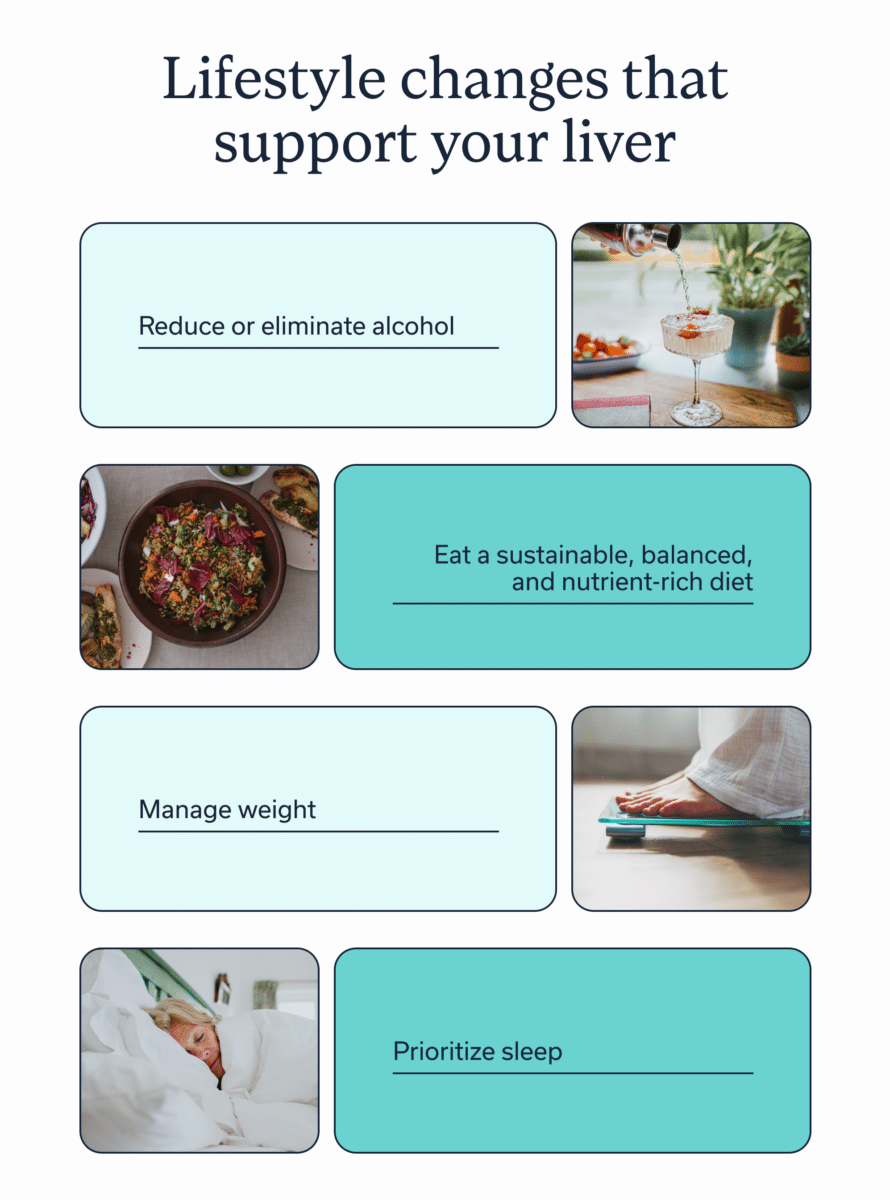
Reduce or eliminate alcohol
One of the best things you can do for your liver is abstain from alcohol, especially if you already have a liver condition.
Your liver must process alcohol, and in doing so, it produces an alcohol metabolite called acetaldehyde that is toxic and damages liver cells. In healthy people, the occasional drink likely won’t pose a major threat. However, regular drinking increases your risk for ALD.
Research shows that even low or moderate alcohol consumption can increase the risk of liver damage, especially in people who already have MASLD.
-
Females: 5 to 9 drinks per week increases risk
-
Males: 10 to 20 drinks per week increases risk
Alcohol consumption can also increase risk even for people who don’t have MASLD or abnormal liver findings.
-
Females: 1 drink per day increases risk
-
Males: 5 or more drinks per day increases risk
Eat a sustainable, balanced, and nutrient-rich diet
You might be wondering: What foods are good for liver repair? Indeed, making sustainable dietary changes is one of the best things you can do for your liver. If you’re looking to revamp your diet for liver health, working with a GI registered dietitian can help. But here are some of the best foods for supporting your liver and why.
The best foods for liver health:
| Category | Examples | Notes |
| Leafy greens | Spinach, kale, arugula | Reduce liver fat; high in antioxidants and nitrates that support liver metabolism |
| Cruciferous vegetables | Broccoli, Brussels sprouts, cauliflower, cabbage | Support liver enzymes involved in detoxification and fat processing |
| Berries | Blueberries, strawberries, raspberries | Protect liver cells from oxidative damage; reduce inflammation. |
| Citrus fruits | Oranges, lemons, grapefruit (Note: Some meds interact with grapefruit). | Support antioxidant defenses and liver enzyme activity. |
| Legumes | Lentils, chickpeas, black beans | Improve insulin sensitivity and reduce fat buildup in the liver. |
| Whole grains | Oats, quinoa, brown rice | Help regulate blood sugar and reduce fat delivery to the liver. |
| Fatty fish | Salmon, sardines, trout | Omega-3 fats reduce liver fat and inflammation. |
| Olive oil | Extra-virgin olive oil | Improves liver fat levels and metabolic markers. |
| Nuts & seeds | Walnuts, almonds, chia seeds | Provide healthy fats and antioxidants linked to better liver markers. |
| Garlic & onions | Garlic, onions, leeks | Support liver enzyme activity and reduce oxidative stress. |
| Green tea | Green tea (unsweetened) | Rich in catechins that may reduce liver fat. |
| Coffee | Regular or decaf coffee (unsweetened) | Strong evidence for reduced fibrosis, cirrhosis, and hepatocellular carcinoma risk. |
Just as we have the good guys for your liver, we also have the guys that aren’t so great. The following are some of the worst offenders when it comes to liver health. Reducing them as much as possible will help ease the burden on your body’s detoxification organ.
But a list like this can feel overwhelming to tackle all at once. Taking an additive approach, rather than a restrictive one, can help you naturally eliminate some of these foods. So focus on filling your plate with the good fellas above, and you’ll likely find that you don’t miss the items below.
The worst foods for liver health:
| Category | Examples | Notes |
| Sugar-sweetened beverages | Soda, energy drinks, sweet tea, fruit juice | High-fructose corn syrup intake promotes liver fat buildup and insulin resistance. |
| Ultra-processed foods | Packaged snacks, frozen meals, fast food | Often high in refined carbs, sugar, and unhealthy fats that worsen liver fat; excess sodium from these foods may worsen fibrosis and fluid balance in liver disease. |
| Refined carbohydrates | White bread, pastries, cakes, cookies | Rapid blood sugar spikes increase fat delivery to the liver. |
| Fried foods | French fries, fried chicken, chips | Contain oxidized fats that promote inflammation and liver stress. |
| Processed meats | Bacon, sausage, hot dogs, deli meats | High saturated fat and additives linked to fatty liver progression. |
| Foods high in saturated fat | Butter, cream, fatty red meat | Excess saturated fat increases liver fat and inflammation. |
| Highly sweetened desserts | Candy, donuts, ice cream | Combine sugar and fat, accelerating liver fat accumulation. |
| Artificial sweeteners | aspartame, sucralose, erythritol, and sorbitol | May disrupt insulin signaling and worsen metabolic liver stress. |
Exercise
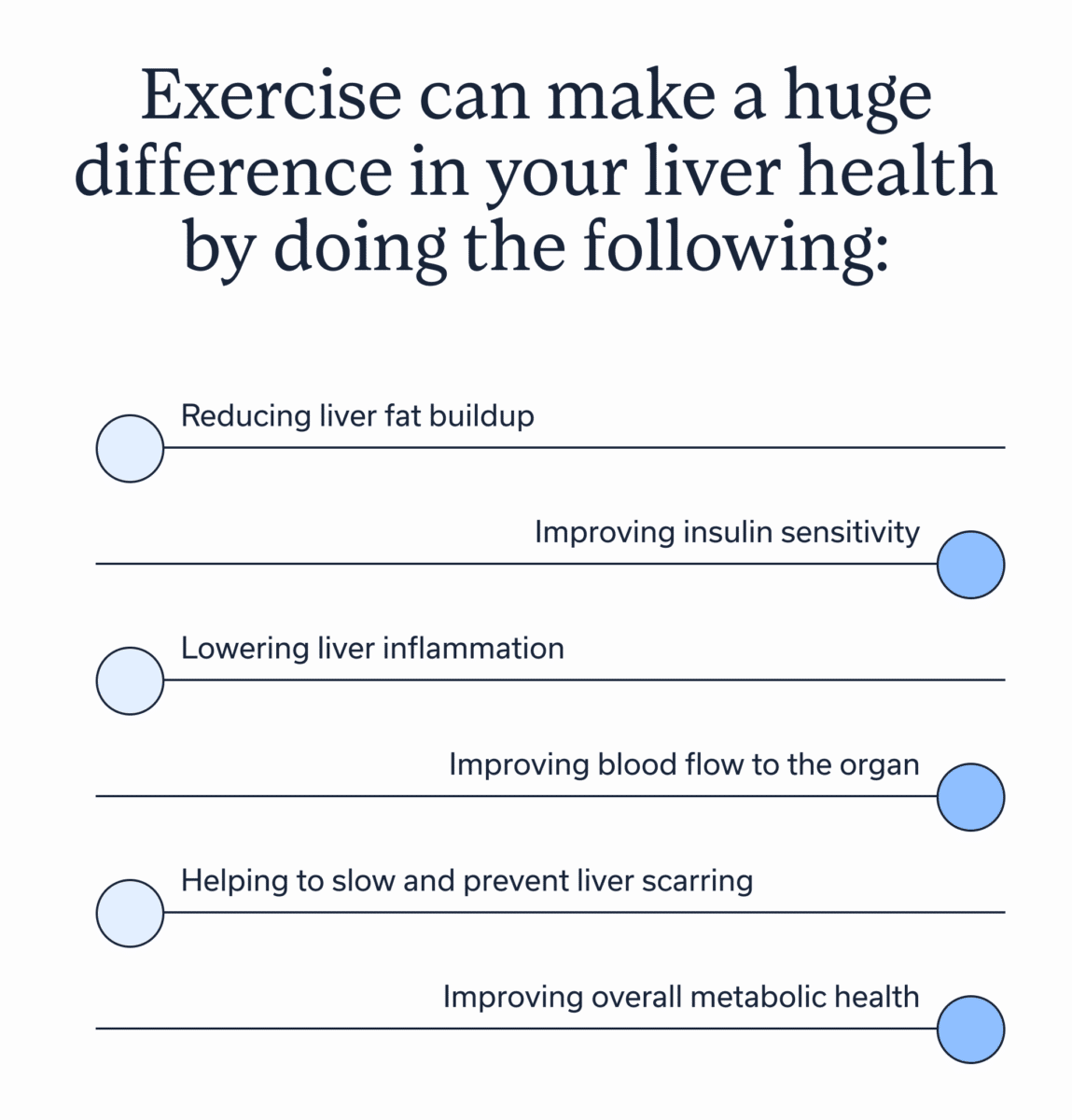
Exercise can make a huge difference in your liver health by doing the following:
-
Reducing liver fat buildup
-
Improving insulin sensitivity (how well your body responds to this hormone)
-
Lowering liver inflammation
-
Improving blood flow to the organ
-
Helping to slow and prevent liver scarring
-
Improving overall metabolic health (e.g., better blood sugar, cholesterol, and triglyceride control)
Manage weight
Liver disease affects people of all shapes and sizes, including thin or lean people. So weight loss isn’t always a part of improving liver health. However, for people who have obesity or are overweight, a reduction of 7% to 10% of their weight can dramatically benefit the liver.
Prioritize sleep
Finally, your liver and overall health will benefit from getting optimal sleep. Improving sleep quality is associated with a 29% reduced risk for MASLD.
Working with a healthcare provider
If you have a genetic liver issue or one brought on by an infection, a drug, or a supplement, working with a clinician is key. Clinical support can help even if you’re just generally concerned about your liver health and are looking for ways to support this vital organ. Because liver health is influenced by nutrition, metabolism, alcohol use, sleep, and underlying conditions, many people benefit from coordinated, multidisciplinary support like that offered at Oshi Health.
Your care team might include a GI provider (a nurse practitioner or physician associate), a GI registered dietitian, and/or a gut-brain specialist, all overseen by board-certified gastroenterologists. They collaborate to help you improve your gut health and manage chronic conditions–and to get you and your liver set up for success.

Key takeaways
-
Your liver performs more than 500 key job roles to keep you healthy, but it is susceptible to damage.
-
The good news is that when issues are caught early, the liver can heal relatively quickly with sustainable lifestyle changes.
-
Oshi Health can help you improve your liver health with an approach customized to your unique needs.
FAQ
-
The liver responds well to lifestyle changes. Focus on eliminating or reducing alcohol intake and adding more fruits and veggies to your diet while reducing consumption of ultra-processed foods, refined carbohydrates, added sugar, and artificial sweeteners. Getting adequate exercise and optimal sleep are also key.
-
Four warning signs of a damaged liver include jaundice (yellowing of the skin or eyes), abdominal pain or swelling, fatigue or weakness, and digestive issues such as nausea and lack of appetite.
-
In many cases, liver damage can be reversed, especially if the issue is caught early before scarring develops.
-
When you make sustainable lifestyle changes, your liver health can begin improving in as little as a few weeks, with further advancements occurring over several months to years.
Oshi is your partner in digestive health
Feel like your digestive concerns are running your life? You’re not alone—and we’re here to help you find lasting relief.
Oshi Health GI providers, gut-brain specialists, and registered dietitians work together to address your symptoms and find solutions that actually work for you.
Whether you’re dealing with chronic digestive issues or unpredictable symptom flare-ups, our GI specialists deliver:
✔ Personalized care plans tailored to your lifestyle
✔ Science-backed strategies to calm your gut
✔ Compassionate, whole-person care
✔ And so much more!
Ready to take control of your gut health?