



Perhaps you’ve found yourself frantically searching online for constipation relief. Or maybe you’re simply looking for ways to improve your gut health. Search results will likely reveal that increasing fiber and staying hydrated can help with more regularity. Plus, fiber is king for your digestive tract and overall health for other reasons. However, not all fiber choices are created equal when it comes to providing constipation relief—or meeting additional health goals. Read on to find the fiber you need for you.
Constipation can be extremely frustrating, but it is also incredibly common. Almost everyone experiences occasional constipation, and about 15 percent of people in the United States experience it regularly. A first line of defense against constipation is a combination of increased fiber and ensuring you’re staying hydrated with plenty of fluids to help the fiber do its good work. But fiber, of course, has many additional benefits aside from aiding regularity.
For one, fiber helps keep your digestive tract in balance and supports healthy glucose (blood sugar) and cholesterol levels. In many cases, boosting your fiber intake is a good idea. You can increase your fiber through dietary changes. In some cases, you may need a fiber supplement to up your intake. But the sheer number of options on shelves or in social media ads can make choosing a supplement feel overwhelming.
In this article, we’ll take a deep dive into fiber dietary supplements. But let’s start by taking a couple of steps back to talk about how fiber works in the body, how much fiber you should aim for per day, and the best fiber foods for implementing more of it in your diet.
What does fiber do for the body?
Fiber seems almost magical when you think about all it does for the body. For this article, we’ll focus on how it supports your gastrointestinal (GI) health, but let’s take a quick look at fiber’s many roles.
What does fiber do to the body?
-
Adds bulk to stool to promote regularity
-
Creates a gel-like texture to soften stool and help it move through the digestive tract
-
Feeds your good gut bacteria
-
Supports overall digestive health
-
Helps balance glucose (blood sugar)
-
Helps regulate cholesterol
-
Aids with weight management
Fiber for constipation
Now let’s take a closer look at how fiber promotes bowel movements and healthy digestion overall.
Fiber falls into two main categories:
-
Soluble fiber: Dissolves in water
-
Insoluble fiber: Does not dissolve in water
When you consume soluble fiber or take a soluble fiber supplement, the fiber dissolves with the help of fluids in your digestive tract. When it dissolves, it creates a gel-like substance called mucilage. The mucilage helps add volume to your stool—think of a sponge expanding when wet. The added volume and moisture soften feces, making them easier to pass. The mucilage also creates lubrication to help waste move more easily through your intestines.
One caveat: Some soluble fibers are fermentable, which means they may not work the same as those that form a gel. They can be useful for overall gut health, but they may not offer the same constipation-relieving benefits.
When you consume insoluble fiber, it doesn’t dissolve, but it helps bulk your stool, which encourages peristalsis, your colon’s natural contractions that help produce a bowel movement.

Fiber’s other benefits
Fiber also feeds the beneficial bacteria in your GI tract, which can help restore balance to your gut microbiome (a community of microbes). This can also help promote more regularity—or ease other symptoms, such as diarrhea caused by an imbalance between good and bad bacteria.
Fiber also benefits the gut-brain axis, the way the GI tract and mind communicate. When this communication pathway becomes disrupted, it can lead to constipation or other symptoms. Fiber can be a tool to help improve your digestion and get or keep things running smoothly. Ultimately, improvement in gut-brain axis comms can benefit overall GI health.
But this feeding of your gut microbiome benefits you in other ways, too, including by supporting your:
-
Immune system: About 70 to 80 percent of your immune cells live in your GI tract. Fiber helps keep them healthy and doing their good work for you as a whole.
-
Mental health: That crosstalk between the gut microbiome and the brain plays important roles in your well-being, mood, and more. Fiber, by feeding your gut microbiome, may help reduce symptoms of anxiety, depression, and other mental health concerns.
-
Metabolic health: Metabolic health includes factors such as your blood sugar and cholesterol levels, and more. Fiber plays a role in supporting healthy levels. And it can even support weight management by helping balance appetite signals. Improving metabolic health through fiber intake helps reduce your risk for chronic diseases, including type 2 diabetes, obesity, and cardiovascular disease.
How much fiber do you really need per day?
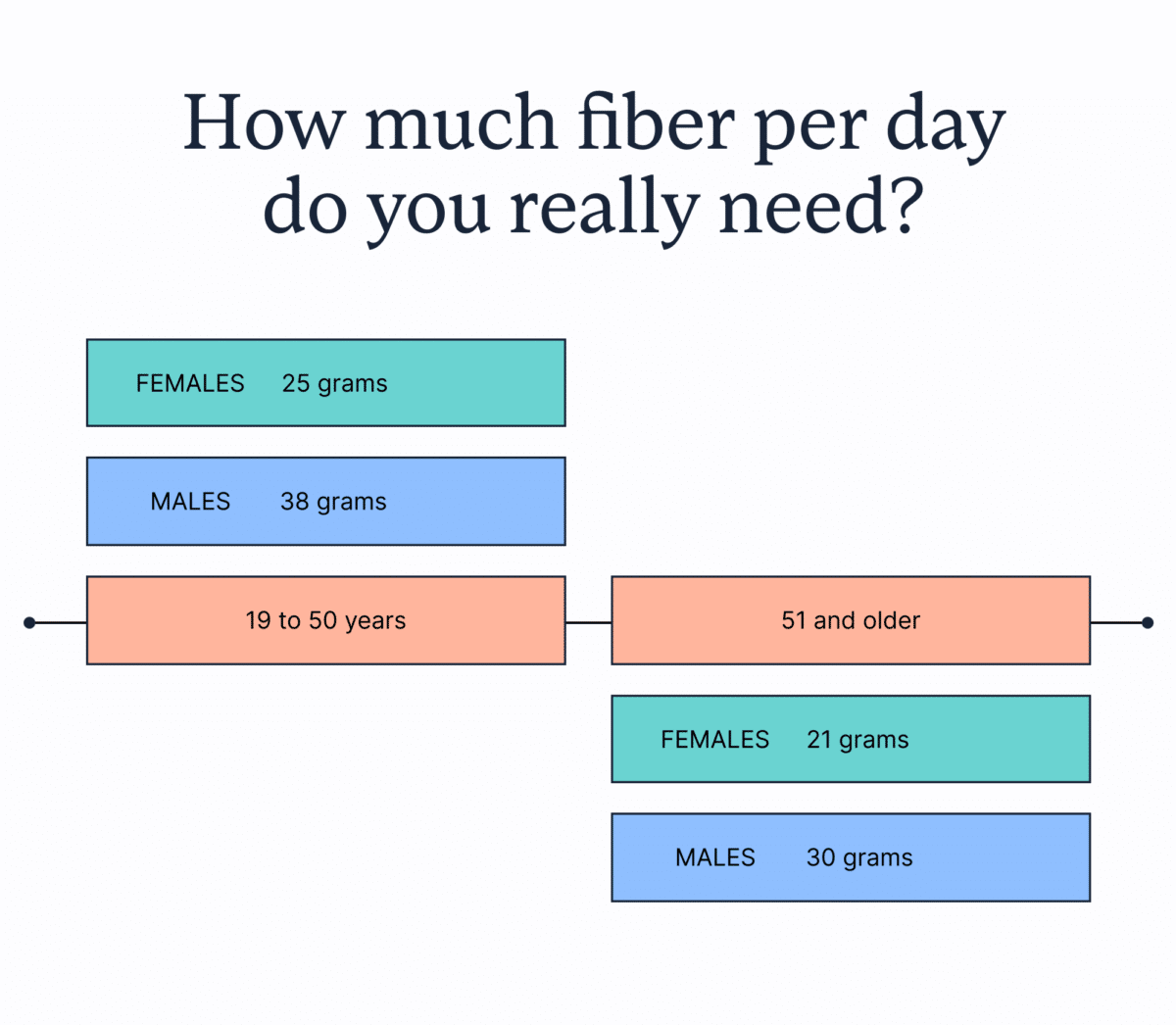
The current dietary reference intake (DRI) for fiber says adults need between 25 and 38 grams of fiber per day, depending on age and sex assigned at birth.
-
Females 19 to 50 years: 25 grams
-
Males 19 to 50 years: 38 grams
-
Females 51 and older: 21 grams
-
Males 51 and older: 30 grams
National surveys indicate that only about 5 percent of people in the United States consume adequate fiber. Average consumption amounts to about 15 to 16 grams per day.
So even if you think you’re getting enough, you may not be. Plus, some people may need slightly more fiber than what the DRI recommends. If you experience chronic constipation, you may fall into this category.
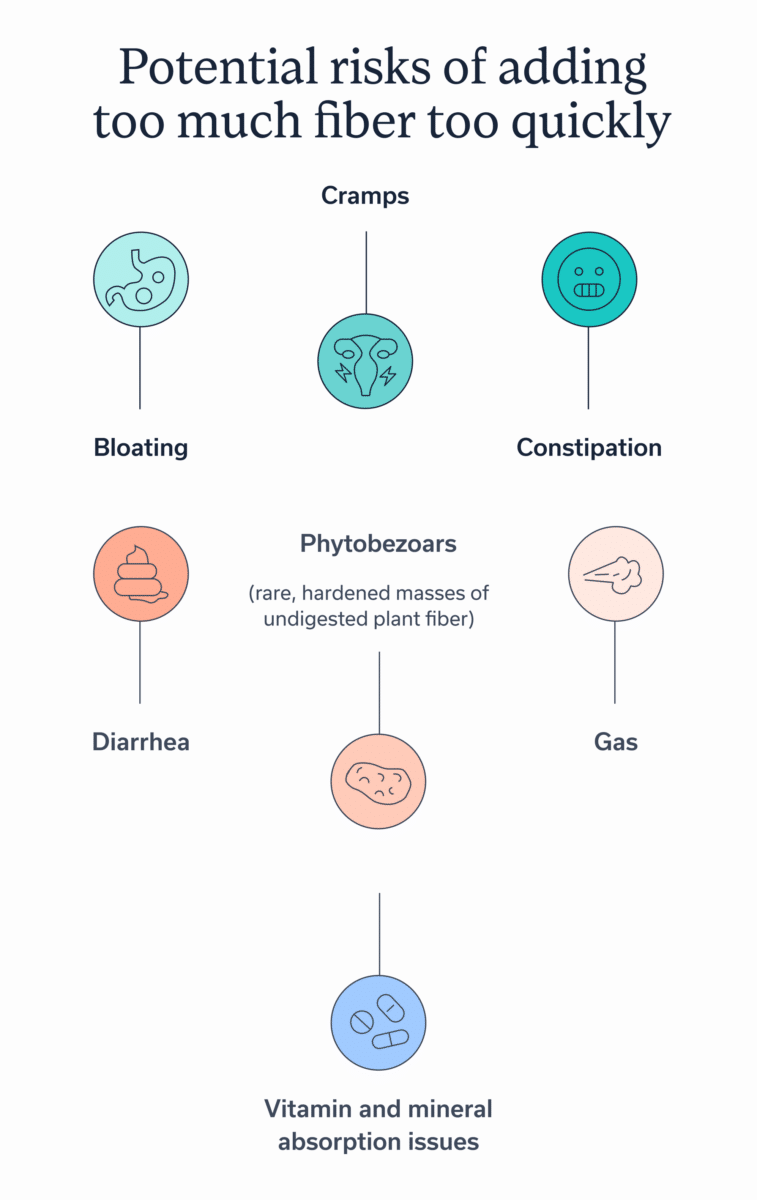
With all of fiber’s benefits, you might think you can’t have too much of a good thing. But too much fiber can also be problematic, especially if you increase fiber too quickly or don’t drink enough fluids. Research doesn’t spell out an amount that is too high. However, you likely won’t find much, if any, added benefit with going beyond, say, 40 grams per day.
Issues with too much fiber:
-
Bloating
-
Cramps
-
Constipation (especially if you don’t stay hydrated)
-
Diarrhea
-
Gas
-
Phytobezoars (rare, hardened masses of undigested plant fiber)
If you’re adding more fiber to your diet, whether with food or supplements, a good rule of thumb is to increase your intake slowly over time and to drink plenty of fluids. These tactics keep you hydrated to help fiber do its work and guard against unpleasant GI symptoms when you add too much fiber all at once.
Keep in mind that if you have any existing GI conditions, you might benefit from working with a GI registered dietitian. This specialized type of RD will be well-versed in gut health and conditions, such as irritable bowel syndrome (IBS) and inflammatory bowel disease (IBD), including ulcerative colitis (UC) and Crohn’s disease.
Working with a GI registered dietitian can help you dial in your fiber needs, help mitigate symptoms from adding too much fiber or sources you might find irritating, and more.
Fiber from food vs. supplements: Where to start
Adding more fiber to your meals and snacks is a great place to start boosting your fiber intake. As an added health benefit, many fiber-rich foods are loaded with vitamins, minerals, and antioxidants.
Fiber is only available in plant foods: Think fruits, veggies, legumes, whole grains, and nuts and seeds. The good news is that fiber sources are plentiful, so you’re not stuck eating foods you actively dislike or find to be”meh.” The variety of options can suit your unique tastes and preferences.
To get the most bang out of your fiber intake, aim for whole food sources as much as you can. That means consuming foods in as close to their natural form as possible, whether raw or cooked. For example, think carrots instead of carrot juice. Juicing fruits and veggies removes their fiber, though blending, as in a smoothie, does not. Also, think whole grains, such as brown rice, rather than processed options (white rice), which have their fiber stripped out.
Getting your fiber from food: soluble and insoluble sources
| Category | Food | Soluble fiber | Insoluble fiber |
| Fruits | Apples (with skin) | Moderate | Moderate |
| Citrus fruits (oranges, grapefruit) | ⭐ High | Low | |
| Berries (strawberries, blueberries, raspberries) | Moderate | Moderate | |
| Bananas (ripe) | Moderate | Low | |
| Pears (with skin) | Moderate | Moderate | |
| Avocado | Moderate | Moderate | |
| Vegetables | Carrots | ⭐ High | Low |
| Sweet potatoes (with skin) | Moderate | Moderate | |
| Brussels sprouts | Moderate | Moderate | |
| Broccoli | Low-Moderate | ⭐ High | |
| Green beans | Moderate | Moderate | |
| Spinach | Low | Moderate | |
| Legumes | Lentils | ⭐ High | Moderate |
| Chickpeas | ⭐ High | Moderate | |
| Black beans | ⭐ High | Moderate | |
| Kidney beans | ⭐ High | Moderate | |
| Split peas | ⭐ High | Moderate | |
| Whole Grains | Oats/oatmeal | ⭐ High (beta-glucan) | Low-Moderate |
| Barley | ⭐ High | Moderate | |
| Rye | Moderate | Moderate | |
| Whole wheat (bread, pasta, kernels) | Low | ⭐ High | |
| Brown rice | Low | Moderate | |
| Popcorn | Low | ⭐ High | |
| Nuts & Seeds | Chia seeds | ⭐ Very high | ⭐ Very high |
| Flaxseeds | ⭐ Very high | ⭐ Very high
Low-Moderate |
|
| Almonds | Low | ⭐ High | |
| Walnuts | Low-Moderate | Moderate | |
| Pistachios | Moderate | Moderate |
The scoring for the table above is based on these fiber ranges:*
|
|
|
|
|
|
|
|
|
|
|
|
|
|
|
|
|
|
*These fiber ranges should be treated as guidelines and are not regulatory definitions (which do not currently exist). Our ranges are based on typical nutrition conventions, USDA nutrient data, common RD-facing educational materials, and guidance from our registered dietitians.
Types of fiber supplements
Sometimes getting enough fiber from food can be tricky. This can be especially true if you have underlying conditions that certain foods trigger or if you have food allergies or sensitivities.
In these cases, a fiber supplement can help. Some people take a supplement (either as a fiber pill or powder) to ensure they get a base amount and then get the rest from their diet. Of course, it’s best to consult a GI provider or RD before investing a lot of money into fiber supplements. In many cases, providers will advocate for dietary changes over supplements, but in the case that they do suggest supplements, it should be a personalized recommendation.
We’ve compiled a list of fiber supplements below, categorizing them by type and benefit.
| Fiber Type | Common sources or products | Soluble or insoluble? | Main benefits | Best for |
| Psyllium | Metamucil, psyllium husk | Mostly soluble (some insoluble) | Forms gel, regulates digestion, supports healthy cholesterol and blood sugar | Constipation, IBS with constipation, cholesterol management |
| Methylcellulose | Citrucel | Soluble | Gentle on the stomach, less gas, increases stool moisture | Boosting your overall fiber intake, mild constipation, loose stools |
| Inulin* | Prebiotic powders, chicory root fiber | Soluble (fermentable) | Feeds gut bacteria, supports gut health | Gut microbiome support (but may not have a laxative effect) |
| Glucomannan | Konjac root fiber capsules/powders | Soluble | Very absorbent, promotes fullness, can support healthy blood sugar | Appetite control, cholesterol, and blood sugar support |
| Wheat dextrin | Benefiber | Mostly soluble | Mixes easily, gentle, supports digestive regularity | Daily fiber maintenance, but may not have a laxative effect |
| Acacia fiber | Acacia powder | Soluble | Very gentle, prebiotic, low gas | IBS, sensitive digestion |
| Partially hydrolyzed guar gum (PHGG) | Sunfiber | Soluble | Helps promote regular bowel movements, may ease bloating | IBS with constipation |
| Cellulose | Fiber tablets, veggie powders | Insoluble | Adds bulk to stool, speeds transit | Constipation |
| Resistant starch | Potato starch, green banana flour | Soluble (fermentable) | Strong prebiotic effect, supports insulin sensitivity | Gut health support, metabolic health, but may not have a laxative effect |
*Inulin can be tough to tolerate, and side effects may include gas, bloating, etc. Oshi Health dietitians don’t usually recommend this supplement.

When to seek care
Increasing your fiber through diet or taking supplements may help you address symptoms of constipation, diarrhea, or other GI issues. However, if you have ongoing GI symptoms, talking to a clinician is always a good idea.
Reasons to seek immediate care:
-
Blood in stool
-
Fever
-
Inability to have a bowel movement or pass gas (and the situation doesn’t resolve)
-
Loss of appetite (that doesn’t resolve)
-
Abdominal pain or cramping (that is severe or doesn’t resolve)
-
Unexplained weight loss
-
Use of laxatives that don’t produce a bowel movement within 12-24 hours
-
Vomiting that does not resolve
Oshi Health provides multidisciplinary care for whole-person comprehensive GI health. Your care team might include a GI provider (a nurse practitioner or physician associate), a GI registered dietitian, and/or a gut-brain specialist, all overseen by board-certified gastroenterologists . They collaborate to help you improve your gut health and manage chronic conditions. You’ll have access to unlimited virtual visits with your care team, with appointments available within days.
Key takeaways
-
Constipation, diarrhea, or other GI issues might be a sign that you need to up your fiber game, either through diet, supplements, or both.
-
Depending on the type consumed, fiber can help bulk, soften, and lubricate stool, encouraging more regularity.
-
Fiber has many other health benefits, including supporting overall gut health and managing cholesterol and blood sugar.
-
If your GI symptoms continue to affect your quality of life, Oshi Health can help.
FAQ
-
The most effective fiber supplement for you will depend on your unique needs and goals. For example, if you experience constipation and are aiming for more regularity, psyllium husk is a great choice. If your stomach is sensitive to fiber, you might find methylcellulose to be your best bet.
-
Many gastroenterologists recommend trying to up your fiber intake from a variety of plant foods first. But if you find that you aren’t getting enough fiber through diet or are experiencing constipation, they might recommend a supplement, such as psyllium husk. It helps soften stool to promote more regularity.
-
Both Metamucil (psyllium husk) and Benefiber (wheat dextrin) are beneficial, but they have some slightly different effects. Metamucil (mostly soluble with some insoluble fiber) forms a gel in the intestines that helps bulk, soften, and lubricate stool. These factors make it a great choice for constipation. Benefiber (soluble fiber only) uses a fermentable fiber, which does not form a gel. This makes Benefiber an option for boosting your fiber intake, but note that if your concern is constipation, this one may not produce a robust laxative effect. In fact, it may harden stool, leading to further symptoms.
-
If you are trying to consume the recommended amount of fiber per day, you can keep a food diary for a week and see how much fiber you’re getting through your diet. If you’re not meeting the recommended amounts, consider adding a fiber supplement that makes up the deficit.
Oshi is your partner in digestive health
Feel like your digestive concerns are running your life? You’re not alone—and we’re here to help you find lasting relief.
Oshi Health GI providers, gut-brain specialists, and registered dietitians work together to address your symptoms and find solutions that actually work for you.
Whether you’re dealing with chronic digestive issues or unpredictable symptom flare-ups, our GI specialists deliver:
✔ Personalized care plans tailored to your lifestyle
✔ Science-backed strategies to calm your gut
✔ Compassionate, whole-person care
✔ And so much more!
Ready to take control of your gut health?