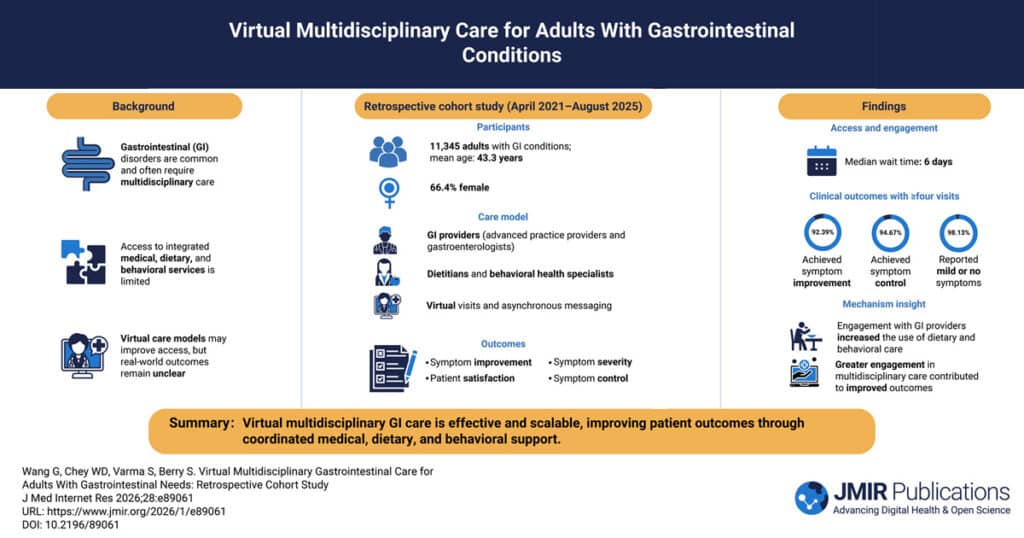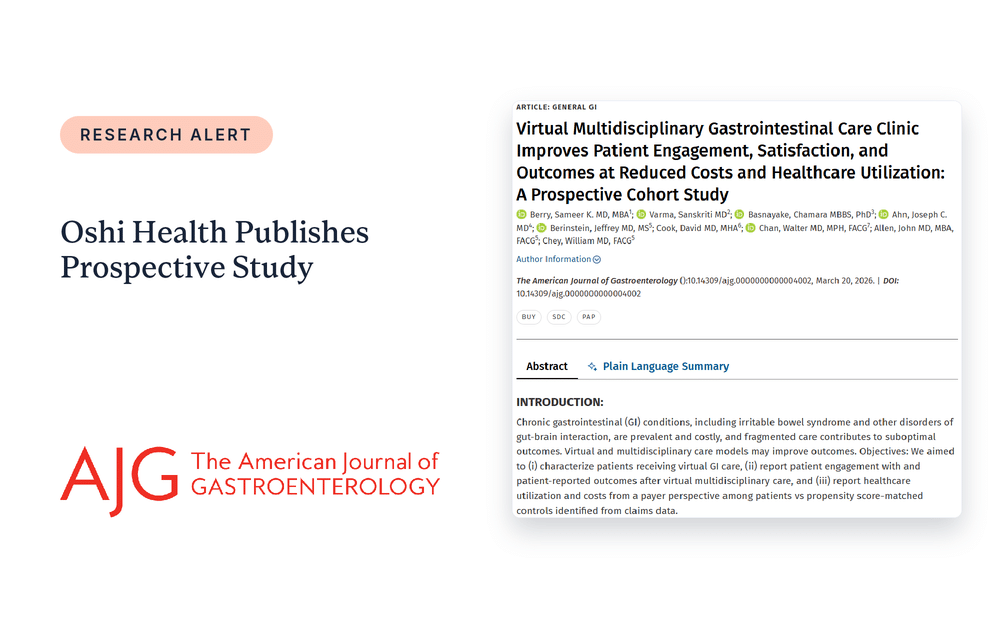
Published in the American Journal of Gastroenterology (AJG), the study found that Oshi patients saw costs drop significantly at 6 months – with projected annualized savings of $5,300 in gastrointestinal (GI) costs and $8,100 in total healthcare costs per year compared to matched controls – alongside significant reductions in imaging and GI-related emergency department visits with marked improvements in symptom severity, quality of life, and satisfaction.
The first-of-its-kind study published in the American Journal of Gastroenterology (AJG), evaluated Oshi Health’s virtual care model, which integrates gastroenterologists, advanced practice providers, registered dietitians, and licensed psychologists into a coordinated care team. Patients gained rapid access to this team, with a mean of 6 days to the first appointment, compared to a 40-day national average wait time for a GI specialist consultation. For cost and utilization outcomes, the study used a difference-in-difference analysis comparing patients to propensity score-matched controls drawn from real-world claims data to measure both clinical outcomes and healthcare costs.
“We hold our care model to the same evidentiary standard expected of any medical intervention, and publication in the AJG, one of the most respected journals in gastroenterology, reflects that commitment,” said Sameer Berry, MD, MBA, chief medical officer and co-founder of Oshi Health. “This prospective study strengthens our growing peer-reviewed evidence base showing that improving access and outcomes is the best way to reduce total cost of care.”

“Too often, cost containment in healthcare means restricting care using tools like prior authorization or step therapy. This study validates the opposite approach: give patients unlimited access to a coordinated team, and utilization falls because patients feel better and stop seeking avoidable care.”
— Sameer Berry, MD, MBA, chief medical officer and co-founder of Oshi Health
Key findings
- Among 234 patients (71% female, mean age 45.4), 80% engaged in multidisciplinary care, completing an average of 10 visits across the care team
- Mean time to first appointment was 6 days, and 51% received a new GI diagnosis.
- IBS symptom severity score (IBS-SSS) dropped 81 points (from 226.7 to 145.6), exceeding the clinically meaningful threshold of 50 points
- Symptom control increased from 20.2% to 86.6%, and satisfaction rose from 37.4% to 96.3%
- 93% of patients utilized registered dietitian services, and 76% saw a GI psychologist
- The study noted a statistically significant drop in diagnostic imaging (15% of Oshi Health patients with imaging compared to 44% of matched controls) and GI-related emergency department visits (4% of Oshi Health patients vs. 10% of controls)
- Difference-in-difference analysis showed GI-specific cost savings of $443 per member per month (p=0.047) and all-cause cost savings of $676 per member per month (p=0.043), equating to annualized savings of $5,316 and $8,112, respectively
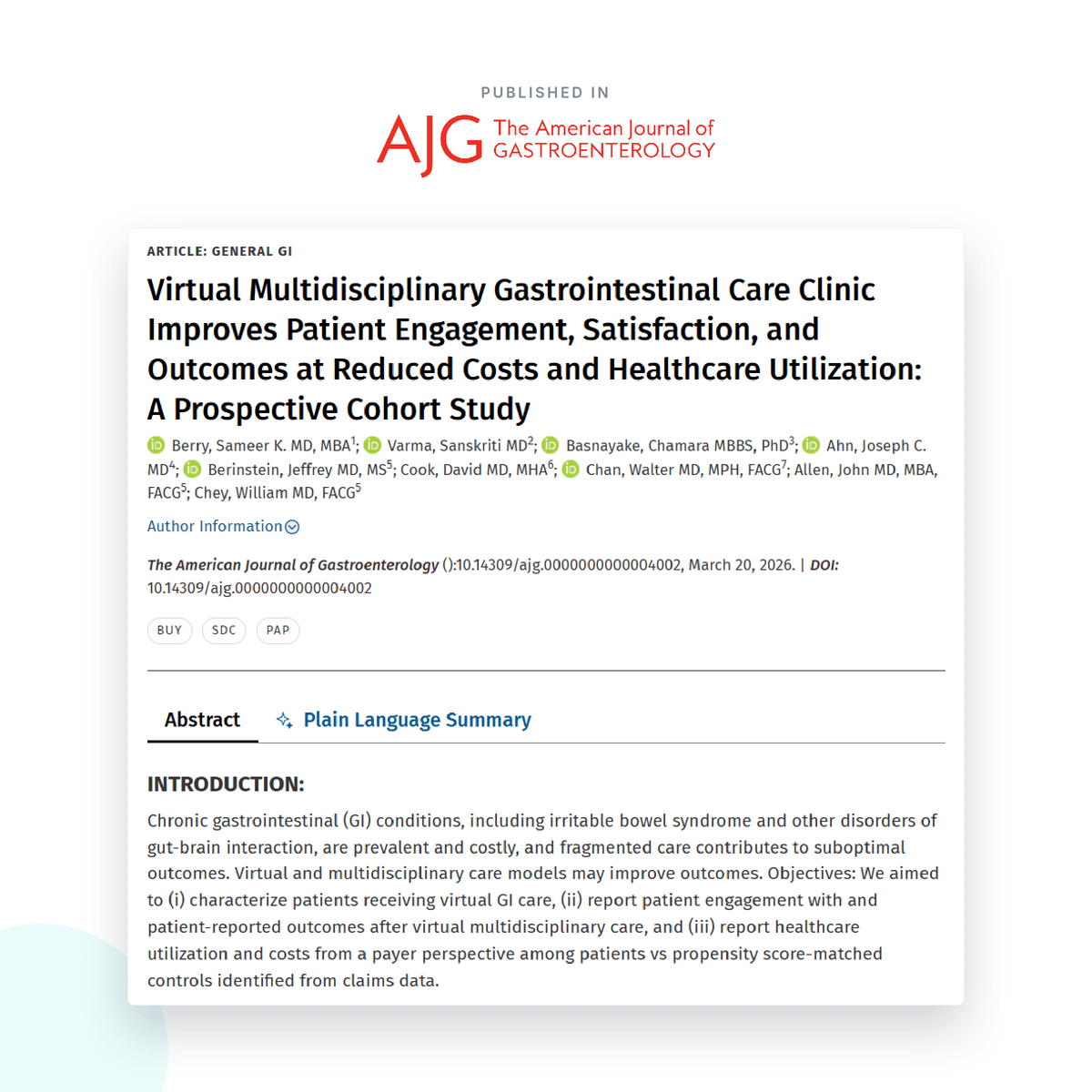
Virtual Multidisciplinary GI Care Clinic Improves Patient Engagement, Satisfaction, and Outcomes at Reduced Costs and Healthcare Utilization: A Prospective Cohort Study
Virtual multidisciplinary GI care was associated with high engagement, improved clinical outcomes, and reduced healthcare utilization and costs.