Gallbladder disease overview
Gallbladder disease refers to a group of conditions that affect the structure of the gallbladder and how well it works. Common gallbladder issues include gallstones, gallbladder inflammation, and gallbladder dysfunction.
Symptoms can range from abdominal pain, nausea, and bloating to diarrhea, indigestion, and discomfort after eating.
For some people, a gallbladder disease diagnosis comes with a recommendation for surgery. While surgery can help relieve symptoms from certain types of gallbladder disease, people may continue to experience symptoms even after having their gallbladder removed. Both situations can feel overwhelming.
Read on to learn about gallbladder disease symptoms, causes, risk factors, and complications. Plus, how an Oshi care team can create a personalized plan for long-term relief.
What is gallbladder disease?
Your gallbladder is a small organ located beneath the liver that stores bile, a digestive fluid that helps break down fats.
Gallbladder disease is an umbrella term for conditions that affect gallbladder function, including:
- Gallstones. Hardened deposits that can block the flow of bile and cause pain, nausea, or other digestive symptoms.
- Cholecystitis. Inflammation of the gallbladder, often caused by gallstones.
- Chronic acalculous gallbladder disease. When the gallbladder doesn’t empty properly.
- Congenital issues. These are gallbladder problems present at birth.
- Primary sclerosing cholangitis. A chronic disease affecting the bile ducts.
Gallbladder disease symptoms
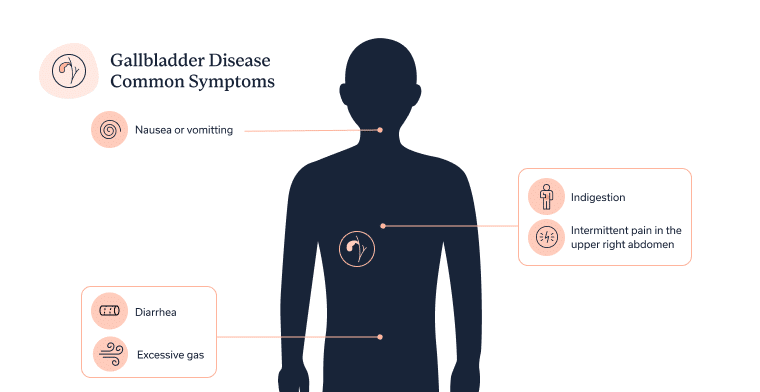
Gallbladder symptoms can overlap with a lot of other digestive conditions. Symptoms can include:
- Intermittent pain in the upper right abdomen, which often presents after eating fatty meals (AKA biliary colic)
- Nausea or vomiting
- Indigestion
- Excessive gas
- Diarrhea
If you have severe symptoms or symptoms accompanied by fever, jaundice (yellowing of the skin or eyes), or persistent vomiting, get immediate medical attention.
I love that no matter where I am in the world, no matter what I’m doing, if something comes up, if I have a question, if I lost my lab orders and I need a new one—it’s all there in the app. Easy to log in, easy to navigate, easy to talk to somebody within 24 hours. I don’t think I’ve ever had to wait longer than 24 hours for a response.
— Oshi patient Ariana L.
Read more about Ariana's storyWhat causes gallbladder symptoms?
Gallbladder symptoms can develop for several reasons. One of the most common causes is gallstones, which form when there’s an imbalance in the substances that make up bile, like cholesterol or bilirubin. These substances then harden into small deposits, which can block the normal flow of bile and cause pain, inflammation, or infection.
Other gallbladder conditions may occur when the gallbladder doesn’t empty properly, when the bile ducts become blocked, or when inflammation develops.
In many cases, there isn’t a single root cause for gallbladder symptoms. A combination of genetics, hormones, lifestyle factors, and underlying health conditions can all play a role.
Gallbladder disease risk factors
Anyone can develop gallbladder disease, but certain factors can increase your risk, including:
- Being female
- Being over 40
- Having a family history of gallstones
- Living with a metabolic condition
- Rapid weight loss or frequent weight cycling
- Pregnancy
- Diabetes
- Certain liver conditions, like cirrhosis
- Having high triglycerides
- Diets high in saturated fat and low in fiber
Keep in mind, having one or more risk factors doesn’t mean you’ll develop gallbladder disease, and many people with gallbladder disease don’t have obvious risk factors.
Gallbladder disease complications
Without proper treatment, gallbladder conditions like gallstones may lead to more serious health problems.
Potential complications include:
- Gallbladder inflammation (cholecystitis)
- Infection
- Blocked bile ducts
- Pancreatitis (inflammation of the pancreas)
- Damage to the gallbladder, bile ducts, or liver over time
The good news is that many complications can be prevented with timely care. If you’re having ongoing symptoms like abdominal pain, nausea, bloating, or digestive changes, it’s important to talk to a healthcare provider.
Gallbladder disease diagnosis
Your provider will typically start by reviewing your symptoms, medical history, and any patterns you’ve noticed—like pain after eating or symptoms triggered by certain foods.
Depending on your symptoms, additional testing may include:
- Blood tests to look for signs of inflammation, infection, or problems with the liver or bile ducts
- Imaging tests, such as an ultrasound, CT scan, or MRI, to evaluate the gallbladder and surrounding structures
- Gallbladder function tests, which can help determine how well the gallbladder is emptying
Sometimes, gallbladder disease is discovered during testing for another health issue.
If you’ve already had your gallbladder removed but are still experiencing digestive symptoms, additional evaluation may help determine whether another digestive condition is contributing to how you’re feeling.
In-network with most major health plans
Unlike traditional healthcare providers, we don’t bill on a per visit basis. With insurance coverage, most Oshi Health patients get a year of unlimited care and only pay for four in-network specialist visits. For those four visits, copays and deductibles apply based on your plan benefit details






Gallbladder symptom treatment
A single factor rarely causes gallbladder issues. That’s why Oshi takes a whole-person approach to care.
Together, you and your care team will work to understand what’s contributing to your symptoms and create a personalized care plan that may include:
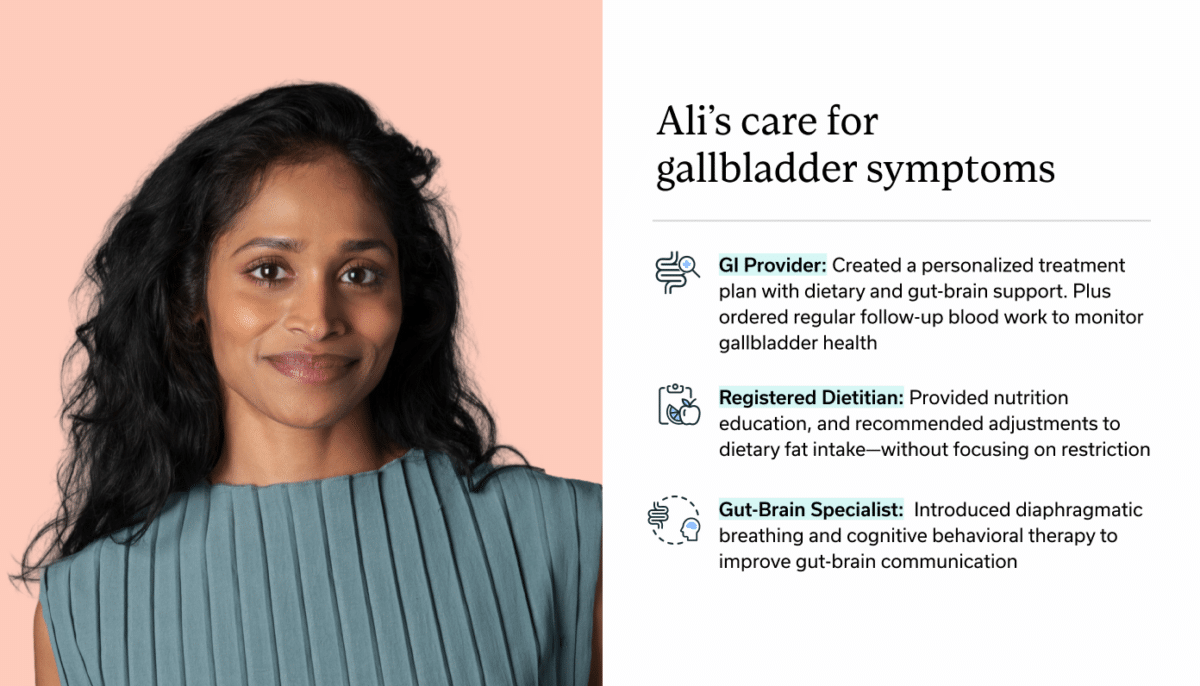
1. Medical management
Your GI provider will take time to understand your medical history and symptoms, and how they affect your daily life. From there, they can order and interpret testing when appropriate, prescribe medications to help ease symptoms like abdominal pain or nausea, and adjust your treatment plan as things evolve.
They can also help determine whether surgery or additional specialty care is the right next step—or whether other approaches are worth exploring first.

Still having symptoms after gallbladder removal?
Many people expect digestive symptoms to disappear after surgery. But for some, symptoms continue—or new ones develop. This can happen for a few reasons. Your body may still be adjusting to changes in bile flow. Symptoms can also be related to an underlying digestive condition that was never fully identified in the first place. You may experience:
- Chronic diarrhea
- Urgency after eating
- Bloating
- Abdominal pain
- Food intolerances
- Indigestion
- Changes in bowel habits
2. Dietary adjustments
Food can play a major role in symptom management before and after gallbladder surgery. Our GI registered dietitians help patients identify triggers and create sustainable changes that support digestive health without unnecessary restriction.
For gallbladder symptoms that might look like:
- Adjusting fat intake to help reduce symptoms after meals
- Increasing fiber gradually to support digestion and help regulate bowel movements
- Identifying individual trigger foods that may worsen pain, bloating, or diarrhea
- Tailoring nutrition strategies based on whether symptoms are pre-surgery, post-surgery, or chronic
3. Working on the gut-brain connection
Stress and digestive symptoms often influence one another. And chronic health concerns like gallbladder discomfort can take a major toll on your mental health. Oshi’s gut-brain specialists can help you develop tools to manage symptom-related anxiety, stress, and quality-of-life challenges.
Team-based care for liver disease
Our GI specialists are here to treat you from every angle and bring you long-term relief from symptoms.









4. Ongoing care
Gallbladder symptoms don’t happen in isolation, and your care shouldn’t either. At Oshi, your treatment plan is designed to evolve with you over time.
You’ll have ongoing access to your care team between visits, so you can ask questions as they come up and schedule follow-up visits when symptoms flare up unexpectedly.
- decrease in unnecessary (and expensive) procedures and tests
- of undiagnosed patients get a clear diagnosis within 3 months
- of patients report better quality of life, with less stress and anxiety, within 3 months
Source: Results of a clinical trial conducted in partnership with a national health plan
Oshi is your partner in digestive health
Feel like your digestive concerns are running your life? You’re not alone—and we’re here to help you find lasting relief.
Oshi Health GI providers, gut-brain specialists, and registered dietitians work together to address the root cause of your symptoms and find solutions that actually work for you.
Whether you’re dealing with chronic digestive issues or unpredictable symptom flare-ups, our GI specialists deliver:
✔ Personalized care plans tailored to your lifestyle
✔ Science-backed strategies to calm your gut
✔ Compassionate, whole-person care
✔ And so much more!
Ready to take control of your gut health?
Frequently Asked Questions
-
Early signs often include pain in the upper right abdomen (especially after eating), nausea, bloating, and indigestion (especially after fatty meals). Read more about the signs of a bad gallbladder.
-
Yes. You can live without a gallbladder. But some people may experience ongoing digestive symptoms, such as diarrhea or bloating, after removal.
-
Alcohol, sugary drinks, and very high-fat drinks (like cream-heavy coffee drinks) may worsen symptoms for some people, especially if they trigger digestive discomfort after meals.
 Steph Coelho, CPT
Written by Steph Coelho, CPT
Steph Coelho, CPT
Written by Steph Coelho, CPT
Medically reviewed by Michael Currier, PA-C