



Small intestinal bacterial overgrowth (SIBO) is a digestive condition that occurs when you have too many bacteria in your small intestine. This can cause gastrointestinal (GI) symptoms like diarrhea, constipation, bloating, and more. The bacterial overgrowth can also lead to vitamin and nutrient deficiencies in more severe cases. SIBO testing involves not just breath tests (which identify gas produced by these bacteria, and therefore point to their presence) but also blood tests, stool tests, and more in order to rule out other conditions and find your underlying cause.
Diagnosing SIBO can be tricky. This is because SIBO symptoms overlap with irritable bowel syndrome (IBS) and many other digestive conditions—and SIBO can also be caused by these conditions. When most people think of SIBO tests, they think of breath tests, but this isn’t the only diagnostic involved.
I’ve personally been diagnosed with methane-dominant SIBO, and taken a breath test (which involved fasting and then a pretty boring three hours of breathing into a plastic bag). But those three hours were the tiniest part of my overall diagnosis process, which included thorough evaluations through blood tests, stool tests, and other diagnostics, as well as working with a registered dietitian.
Before my doctor even suggested SIBO testing, I tried multiple motility drugs, didn’t respond to the low FODMAP diet for IBS, and had various blood tests showing malabsorption issues. I also had a previous diagnosis of celiac disease, which is an autoimmune disease that affects your small intestine and can predispose you to SIBO.
The story I’m trying to tell here is that SIBO testing is complex, and a breath test is certainly not the first suggestion your GI clinician may make, nor will it be the entirety of the diagnosis process. However, in the right instances, breath tests can reveal helpful information that can guide your overall treatment plan.
This article covers how SIBO is diagnosed, including breath testing and what you can expect during the test and after you get your results. Note that breath testing can produce false positives when underlying conditions are present, which is why it’s so important to evaluate for and treat other conditions first. Ultimately, the goal in any GI care plan is not just a simple test result, but getting the correct diagnosis and finding a treatment plan that addresses you as a whole person.
SIBO test: What it is and when it’s used
Breath testing is a non-invasive way to test for SIBO. SIBO breath tests measure gas produced by bacteria in your gut after drinking a sugar solution. Your body can’t produce these gases on its own, so the levels and presence of these gases can indicate whether you may have an overgrowth of bacteria in your small intestine.
“Breath testing, when positive, predicts patients who are more likely to improve with an antibiotic approach,” says Mark Pimentel, MD, professor and executive director of the Medically Associated Science and Technology (MAST) Program at Cedars-Sinai and worldwide expert in SIBO. “This is really important because you don’t treat everyone [with antibiotics], just the ones where the test is positive.”
A SIBO breath test is not a screening test for bloating (in fact, contrary to common belief, SIBO is actually more associated with diarrhea than bloating). It’s typically only considered when your symptoms and history already suggest an overgrowth. These signs and symptoms can include:
- Abdominal pain or discomfort
- Bloating after meals
- High folate
- Low B12
- Nutritional deficiencies
- Steatorrhea (fatty stools)
- Unexplained gas, diarrhea, or constipation
- Unexplained weight loss, especially in the elderly
There are various kinds of SIBO breath tests, and some are more reliable than others. We’ll get into the details further on in this article. And for some people, breath testing might not be worth the cost or inconvenience if another diagnosis could better explain their symptoms. So, a GI provider will likely try to rule out other conditions or causes before recommending breath testing, depending on your symptoms.
How is SIBO diagnosed? The full workup beyond breath testing
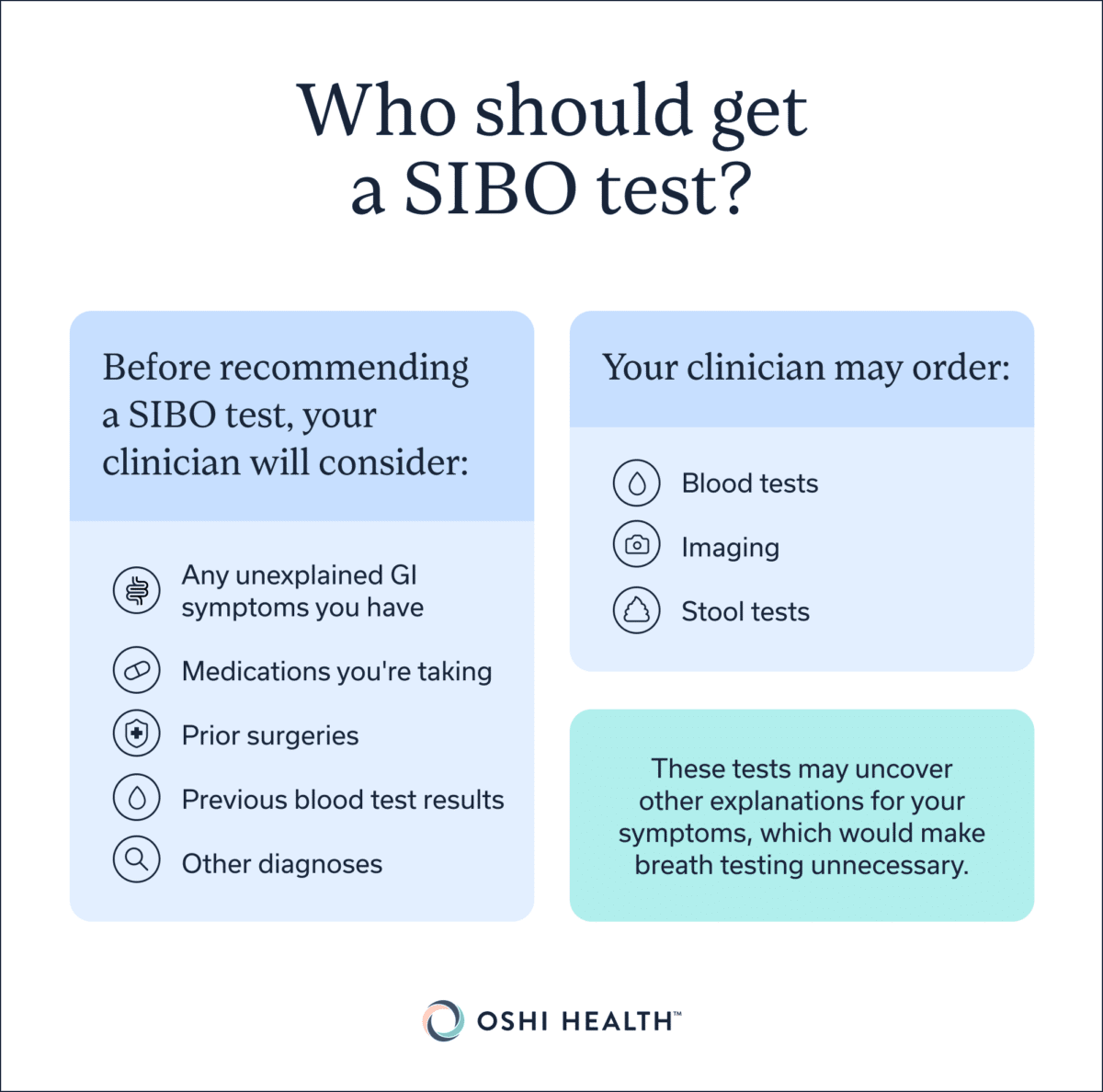
SIBO diagnosis starts by looking at the big picture. Your clinician will consider not only your unexplained GI symptoms, but also your medications, prior surgeries, blood test results, and any other diagnoses you might have.
Certain conditions and procedures are thought to raise your risk of developing SIBO, particularly those that affect the structure of your small intestine and how food or fluid might move through it. Some of these include:
- Inflammatory bowel disease (IBD)
- Celiac disease
- Chronic opiate use
- Chronic pancreatitis
- Cystic fibrosis
- Diabetes
- Diverticulosis in the small intestine
- Enterocolonic fistula
- Gastroparesis
- Hypothyroidism
- Immune deficiencies
- Surgery on the small intestine
- And more
Before considering breath testing, your clinician may also run blood tests, imaging, or stool tests to investigate what’s causing your symptoms.
Keep in mind that none of these tests can diagnose SIBO, although signs of maldigestion or malabsorption (such as low B12, high folate, or fat in your stool) can point toward the possible presence of SIBO. However, these tests may uncover other explanations for your symptoms, which would make breath testing unnecessary.
How to test for SIBO: At-home vs. in-clinic options
SIBO breath tests can either be done in a clinic or using an at-home SIBO test kit that your healthcare provider orders.
At-home testing can improve access, but it’s essential that you follow all instructions correctly, or you may end up with flawed results.
Whether you get tested in a clinic or in the comfort of your own home, remember that breath testing is not a “self-diagnosis” tool. Your clinician will need to interpret the results, which can be complicated.
SIBO breath test: How the test works
A SIBO breath test involves measuring the gases in your breath over a two to three-hour period. In the past, breath tests focused on two gases: hydrogen and methane. However, research in the field is rapidly expanding, and a new three-breath test now looks at hydrogen, methane, and hydrogen sulfide.
“These gases on breath have now been validated as correlating with the microbiome,” says Dr. Pimentel. “So this is the most validated breath test in history.”
You don’t need to be tested for these gases separately. “Both gases, or all three gases depending on the test you do, are measured at the same time,” says Dr. Pimentel.
While these tests can be done at home or in a clinic, I personally went into a clinic for my SIBO breath testing. The process is pretty similar for both options, but you’ll obviously have less in-person guidance with an at-home test. For me, the whole process took about three hours, and it wasn’t particularly pleasant or unpleasant. This is what you can usually expect:
- Drink a sweet solution that includes some combination of glucose or lactulose.
- Breathe into a plastic bag.
- Breathe into the plastic bag every 15 minutes for the next two to three hours.
At the clinic I went to, I sat in a large chair in a private room, and had a small buzzer that reminded me to breathe into the bag at regular intervals. A clinician also checked on me regularly.
However, the process is lengthy, and I’ll say it: pretty boring. Consider bringing a book or a laptop to help the time pass.
How to prepare for SIBO testing
The way you prepare for a SIBO test matters because things like food, drinks, medications, and even exercise can affect your results, possibly giving you a false negative or positive.
I was surprised by how intensive the SIBO test prep process was. I had to alter my medications for up to a month beforehand, and my diet for two days prior, including eight hours of fasting.
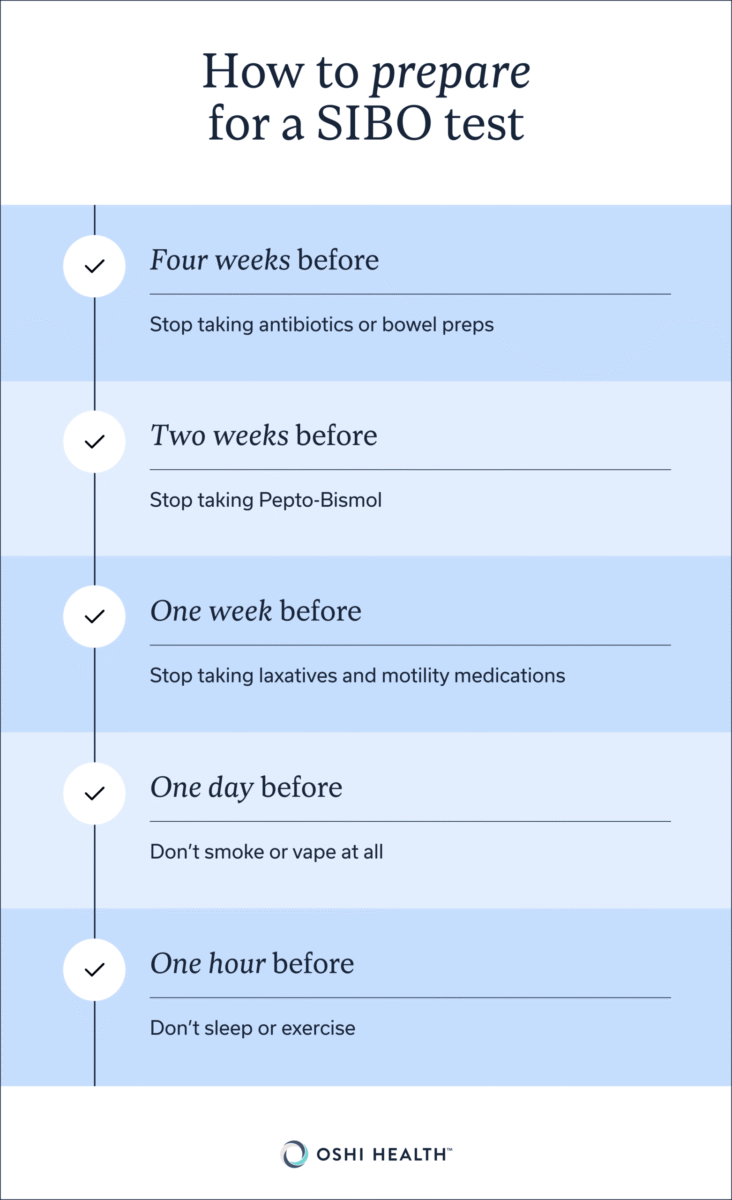
Your GI clinician will instruct you on how to properly prep for your test. However, these are some common recommendations.
You’ll have to avoid certain medications and habits before a SIBO breath test:
- Four weeks before: Stop taking antibiotics or bowel preps.
- Two weeks before: Stop taking Pepto-Bismol.
- One week before: Stop taking laxatives and motility medications.
- One day before: Don’t smoke or vape at all.
- One hour before: Don’t sleep or exercise.
Note: It’s very important that you don’t change your medications without talking to a clinician first.
You’ll also need to adjust your diet for up to two days before your breath test. The purpose of this is to limit foods that might produce gas in your intestines, skewing your results.
- Two days before: low-carb and low-dairy diet.
- Eight hours before: nothing to eat or drink, including gum or hard candy.
My GI team gave me thorough instructions, including a sample meal plan that I followed to a tee. My test was in the late afternoon, so I spent my day with hunger pangs. Taking your test mid-morning could make it more manageable.
It’s important to follow your clinician’s instructions closely, because you may have to reschedule your test if you don’t. If your SIBO test is in-person at a clinic, then rescheduling might mean you have to pay a fee or be moved to the bottom of a waiting list.
What SIBO test results mean — and their limits
The SIBO breath test measures how gases change over time, and doesn’t just give one number. According to Dr. Pimentel, many global consensus statements confirm the following as positive results:
- Hydrogen rise of 20 parts per million (ppm) by 90 minutes
- Hydrogen sulfide exceeding 2 ppm
- Methane exceeding 10 ppm
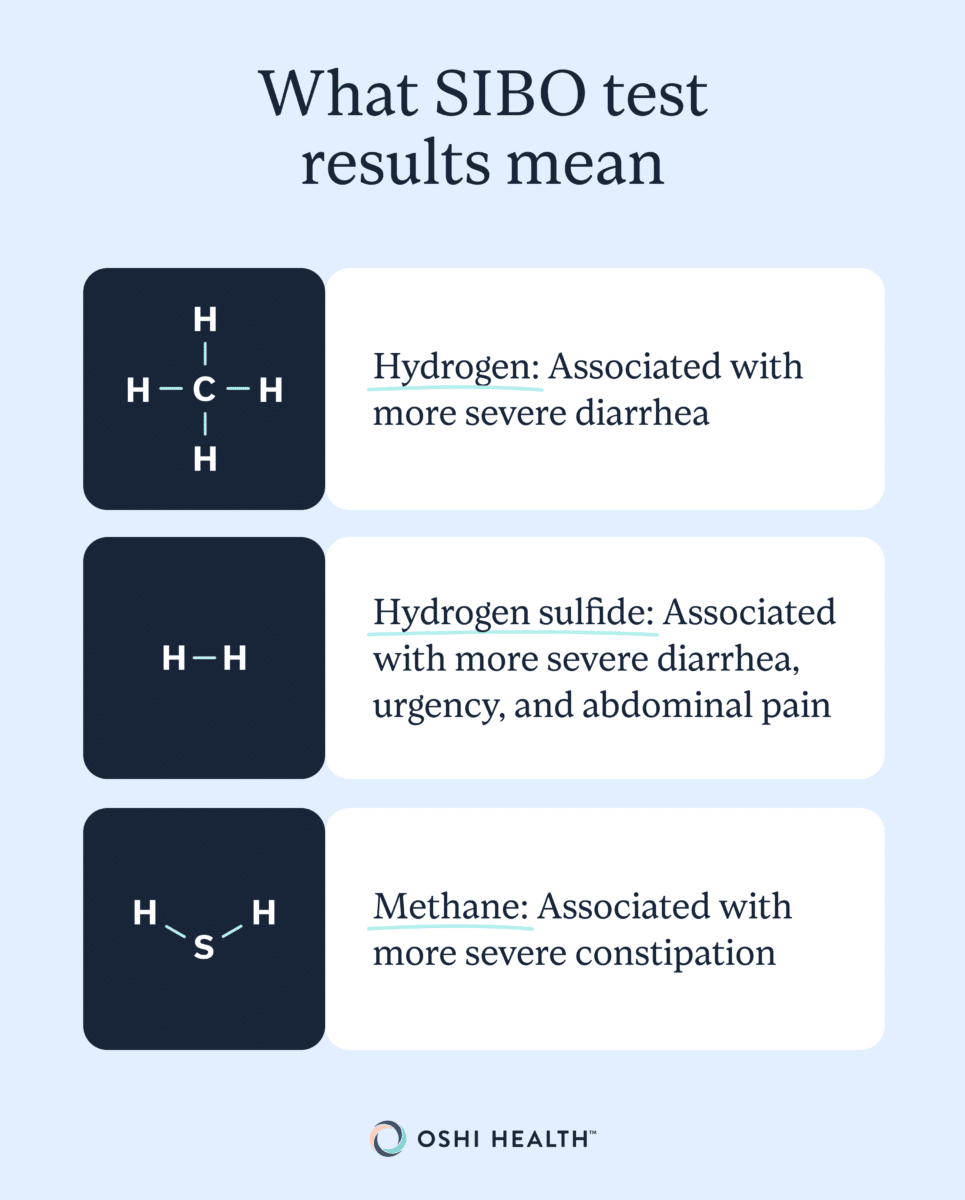
The type of gas you predominantly have also points toward your symptom profile, and therefore potential treatment:
- Hydrogen is associated with more severe diarrhea.
- Hydrogen sulfide is associated with more severe diarrhea, urgency, and abdominal pain.
- Methane is associated with more severe constipation.
False positives and false negatives can happen with breath testing. This could be due to lapses in following your prep protocol (like sneaking a bite to eat the morning of your test), or issues when delivering the tests themselves. There’s also varying reliability and validity of different breath tests.
Other tests sometimes used in a SIBO diagnosis
You may have heard of small bowel aspirate and culture as the “gold standard” for diagnosing SIBO. However, this is an invasive option that’s not widely available and has real limitations, including concerns about contamination.
“While culture of the small intestine was previously thought of as the gold standard, our [research] group has shown that culturing the small bowel is no easy feat,” says Dr. Pimentel. “It requires double-lumen catheters and a proper microbiology lab that does serial dilutions of the aspirate, and many other difficult steps to get it right.”
In addition, a study at Mayo Clinic showed that an estimated 20% of small intestine cultures were contaminated.
According to Dr. Pimentel, one of the biggest problems with culture is that it will tell you if you have SIBO, but not which type of gas. “Each gas is treated differently, so knowing the breath test results is actually more productive for patients,” he says.
There’s also a growing interest in newer capsule technologies, which could measure bacteria in your gut after you swallow them. However, according to Dr. Pimentel, these aren’t ready for prime time yet. “[There are] a lot of problems with the technology. It may be the future, but not yet.”
What happens after a SIBO diagnosis
Treatment for SIBO is multifaceted and should address the cause of the bacterial overgrowth, not just the breath test result.
However, if you do have a positive breath test, then your care plan will likely include addressing the overgrowth with a short course of antibiotics. Antibiotics used for SIBO include:
- Amoxicillin-clavulanate
- Ciprofloxacin
- Neomycin
- Rifaximin
- Tetracycline
- Metronidazole
Of these, rifaximin has the most research to support it and has been found to effectively eliminate SIBO in 71% of cases; however, recurrence is common (which is why addressing the underlying cause, as well, is so important). There’s also evidence that rotating multiple types of antibiotics may treat SIBO more effectively than a single antibiotic.
Your clinician will prescribe different antibiotics depending on the type of gas found. Rifaximin is given more often for diarrhea and hydrogen-predominant SIBO, whereas a combination of neomycin and rifaximin is more effective for treating constipation and methane-predominant SIBO.
Your treatment may also involve addressing nutritional deficiencies caused by your SIBO, such as:
- B12
- Folate
- Iron
- Niacin
- Thiamine
- Other fat-soluble vitamins
Beyond treating the overgrowth and any deficiencies, it’s equally important to identify and treat underlying drivers of SIBO in order to prevent recurrence. This is sometimes easier said than done. For me personally, I was ultimately diagnosed with endometriosis, which is likely what contributed to my SIBO. For you, it could be something totally different.
Getting a personalized SIBO evaluation from a multidisciplinary GI team like Oshi Health—which includes GI providers, gut-brain specialists, and registered dietitians—can help. You can start by booking an intro call—and take a gut health assessment in advance of your session, which can help you pinpoint what questions to ask your provider.
Diets for SIBO
You might be wondering if there’s such a thing as a SIBO diet. The answer is: not really.
There’s evidence that an elemental diet can be used to treat SIBO among people who can’t tolerate antibiotics or who don’t respond to two courses of antibiotics. This short-term diet involves drinking specific liquid supplement drinks that starve the bacteria in your gut, but keep your body nourished. It’s extremely restrictive and should only be done under a GI clinician’s guidance.
Other diets, including the low FODMAP diet, have not been shown to eliminate SIBO, but may help your symptoms if you have co-occurring IBS. Ultimately, a GI dietitian will examine your current diet and recommend personalized ways to improve it to prevent SIBO, its underlying causes, and related symptoms.
Working with a healthcare provider to get the right diagnosis
If you’re experiencing symptoms of SIBO—like diarrhea, constipation, bloating, or nutrient deficiencies—then you might be worried about being brushed off as “just having IBS,” without a full evaluation.
Consider working with a specialist GI provider, like those who work at Oshi Health, to help you get to the bottom of things.
It can help to come to your appointment prepared with information like:
- Bowel movement frequency and consistency
- List of diagnoses
- Medications, including any past antibiotics
- Prior surgeries
- Timeline of your symptoms, including any previous episodes of food poisoning
Your clinician will assess your symptoms and order tests if appropriate, which may or may not include breath testing.
When to seek care right away
Some symptoms require urgent medical attention, and not just outpatient SIBO testing. The following symptoms indicate something more serious and could warrant a visit to urgent care or the emergency room:
- Black or bloody stools
- Difficulty eating
- Fever
- Persistent vomiting
- Progressive weakness
- Severe abdominal pain
- Unexplained weight loss
The takeaway
- A SIBO breath test can be a useful tool to diagnose an overgrowth of bacteria in your small intestine and separate those who may benefit from antibiotics from those who will not.
- However, diagnosing your GI symptoms is about more than one breath test result. SIBO often reflects an underlying cause, which is important to get to the bottom of in order to help you feel better and prevent recurrences.
- If you’re taking a SIBO test, remember that preparation (up to a month beforehand) is important, and so is carefully following the test instructions. Otherwise, you risk false negatives or positives.
- Getting answers to your GI symptoms depends on not only a SIBO test, but the wider clinical context of your symptoms, previous diagnoses and surgeries, diet, and more. Working with a multidisciplinary GI team can help you feel better, whether you have SIBO or not.

Frequently asked questions (FAQs)
What are the first signs of SIBO?
The first signs of SIBO are often diarrhea, constipation, or bloating. Vitamin and nutrient deficiencies can be a sign of more advanced SIBO.
What kills SIBO naturally?
Antibiotics are the first-line treatment for SIBO, but they can come with side effects, as well as a risk of SIBO recurrence and antibiotic resistance. There’s interest in natural remedies for SIBO—including herbal remedies, diets, and probiotics—but currently, none of the research is strong enough to support these.
How do I know if I need a SIBO test?
Not everyone with symptoms of SIBO will require a SIBO test, which can be time-consuming and costly. Your clinician will likely run blood tests, stool tests, and look at your overall health history to identify other possible causes of your symptoms, such as celiac disease or IBD, before recommending this test.
How to check for SIBO at home?
Some SIBO breath tests can be done at home. However, you must closely follow the instructions for both preparation and testing so that you get accurate results.
How do doctors confirm SIBO?
Doctors confirm SIBO by looking at your overall health history and symptoms that could fit a diagnosis of SIBO, ruling out other possible causes of your symptoms, and then, in some cases, administering a SIBO breath test. This test—especially the newer three-breath tests which measure hydrogen, methane, and hydrogen sulfide—can diagnose overgrowth of bacteria in the small intestine.
Oshi is your partner in digestive health
Feel like your digestive concerns are running your life? You’re not alone—and we’re here to help you find lasting relief.
Oshi Health GI providers, gut-brain specialists, and registered dietitians work together to address your symptoms and find solutions that actually work for you.
Whether you’re dealing with chronic digestive issues or unpredictable symptom flare-ups, our GI specialists deliver:
✔ Personalized care plans tailored to your lifestyle
✔ Science-backed strategies to calm your gut
✔ Compassionate, whole-person care
✔ And so much more!
Ready to take control of your gut health?