“Multidisciplinary care” is one of the most frequently used terms in virtual GI vendor marketing. It is actually a specific clinical model, and virtual care delivery is the critical unlock for employer populations.
When consultants and benefits leaders evaluate virtual GI solutions, they often encounter a term that needs more explanation than it typically receives: multidisciplinary care. It sounds like a quality descriptor. It is actually a clinical model, and understanding what it means and why it matters is essential to evaluating whether a GI program is designed to produce the outcomes its providers are claiming.
What traditional gastroenterology is built to do
Traditional gastroenterology practice is optimized for high-acuity diagnostic and procedural work. Colonoscopies. Endoscopies. Diagnosing inflammatory bowel disease. Managing complex medication regimens for Crohn’s and ulcerative colitis. This is critical, irreplaceable work, and it must continue.
However, rarely does it include the high touch support through care plan adjustments and iterations that most GI patients need most.
The strongest virtual GI programs are built to extend local gastroenterology capacity rather than compete with it, coordinating directly with in-person GI providers for procedures, screenings, and high-acuity diagnosis while absorbing the time-intensive, iterative work that a busy specialty practice’s schedule cannot accommodate.
The majority of GI conditions driving employer claims, IBS, functional dyspepsia, GERD, disorders of gut-brain interaction, are chronic, multifactorial conditions that respond primarily to dietary modification, behavioral intervention, and iterative medical management. Traditional GI practice is not designed to provide this. It is not a failure of any clinician. It is a structural mismatch between how the specialty was first organized and what this patient population needs.
What multidisciplinary care actually means
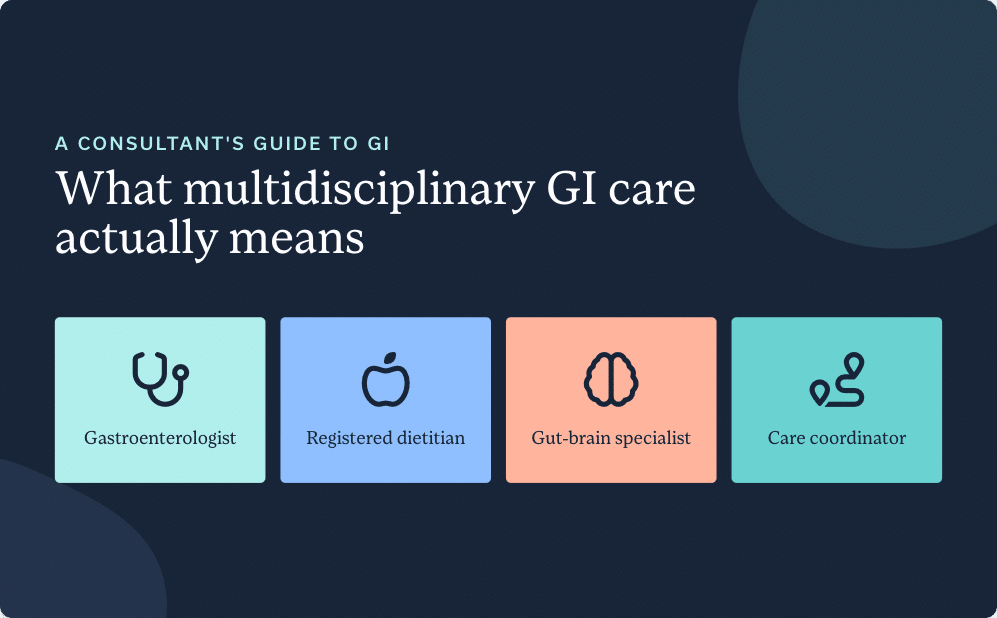
A true multidisciplinary GI care model integrates four clinical roles that work together in a coordinated care plan:
- A GI-specialized advanced practice provider or gastroenterologist who leads medical management, diagnoses conditions, and prescribes when indicated
- A GI-specialized registered dietitian who addresses the dietary dimensions of the condition with evidence-based protocols
- A behavioral health clinician trained in gut-directed therapies who addresses the brain-gut connection that underlies many functional GI disorders
- A care coordinator who manages transitions, follows up on outstanding tests, and ensures the patient does not fall through the gaps between appointments.
Each plays an important role. Even better, when all roles are working together, the patient is supported into a truly personalized care plan that works for them.
Why multidisciplinary care produces better outcomes than single-modality care
The outcomes data from multidisciplinary virtual GI programs is consistently stronger than what traditional single-specialist care produces at population scale:
- 92% or higher symptom control rates
- 68% reductions in GI-related emergency visits
- per-patient cost savings of up to $11,000 annually in independently validated claims analyses
These results are not achievable through local gastroenterology alone because the conditions driving most of the utilization require the integrated dietary and behavioral intervention that only a multidisciplinary team can deliver.
Why virtual care is such an important unlock for patient engagement
Ideally, multidisciplinary care teams iterate and adjust the care plan over time, frequent touchpoints and coordinated support across multiple clinical disciplines that a single gastroenterology appointment every few months simply cannot deliver. For the patient, engaging with their care team virtually and via messaging removes a significant burden.
What consultants should ask when evaluating programs
When a vendor describes their program as multidisciplinary, the follow-up questions matter. Are the registered dietitians GI-specialized, or are they general nutrition counselors? Are the behavioral health clinicians trained in gut-directed therapies such as cognitive behavioral therapy for IBS and gut-directed hypnotherapy, or are they generalist therapists? Are the care team members employed by the program or contracted through a third-party network? And does the model include a care coordinator who actively manages patient transitions, or does it rely on the patient to navigate between providers? The answers reveal whether a program is genuinely multidisciplinary or simply using the term as a marketing descriptor.
For the GI conditions that drive the majority of employer claims, look for a multidisciplinary GI program built to deliver clinically integrated care, and you’ll see the difference in its track record of producing the outcomes employer clients are counting on.