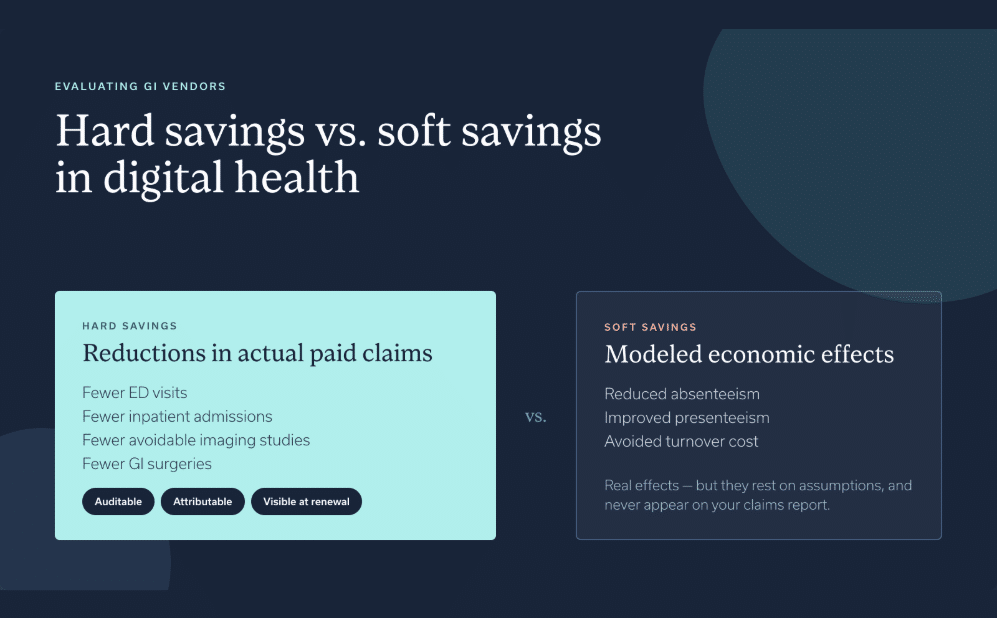
The distinction between a credible financial argument and a marketing exercise is the difference between hard savings and soft savings. Here’s how to understand the difference.
When a digital health vendor presents its ROI case, the numbers can look compelling. The distinction that separates a credible financial argument from a marketing exercise is the difference between hard savings and soft savings, and most vendor presentations blend them without making the distinction clear.
Hard savings
Hard savings in GI are reductions in actual paid claims. For example, They show up in your plan’s claims data as fewer ED visits, fewer inpatient admissions, and fewer avoidable imaging studies. The reduction in services are calculated by comparing to members who didn’t receive digital health services. They reduce your plan’s expenditures in ways that are auditable, attributable, and visible in your renewal conversation. This is the category of savings that should anchor any GI vendor ROI discussion.
Soft savings
Soft savings in GI include productivity gains from reduced absenteeism, avoided cost of replacing employees who leave due to chronic illness, and increased presenteeism. These are real economic effects. But they rely on modeling assumptions rather than observed claims data, and they do not appear on your claims report. A vendor whose primary ROI evidence is soft savings is telling you something important about the strength of their clinical outcomes.
Better questions to ask
When evaluating GI vendors, ask for the hard savings data first and specifically.
Ask whether it is based on actual claims from a real population with a defined methodology.
Ask whether the study was conducted by an independent party.
Ask for the utilization metrics that drive those savings: ED visit reduction, hospitalization reduction, imaging reduction, surgical reduction.
These are the numbers that reflect genuine population health impact.
Cost savings can be significant in GI, and within reach
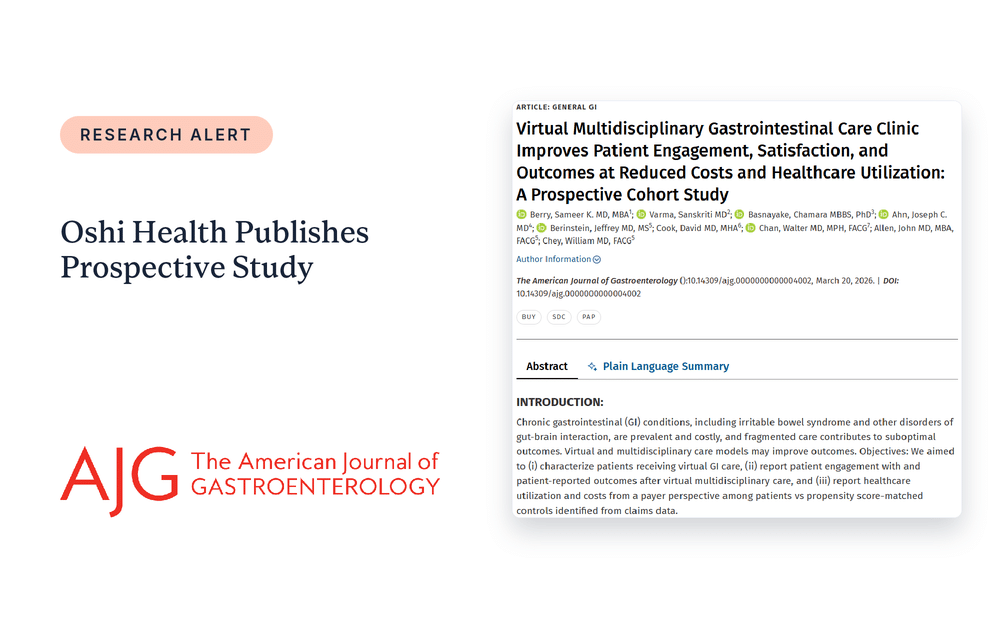
To illustrate what hard savings looks like in practice: Oshi Health’s cost savings data comes from propensity-matched claims analysis conducted by a national payer, published in the American Journal of Gastroenterology (AJG). The findings include $8,112 in annualized per-member savings, 68% reduction in GI-related ER visits, 52% reduction in hospital admissions, and 56% reduction in GI surgery.
That is the standard of evidence worth holding every vendor to, including us.