

Does feeling backed up have you Googling what to do for constipation? Your fastest path to relief will likely be an over-the-counter laxative or stool softener. But for longer-term relief, you’ll need adequate hydration, enough fiber, and other lifestyle changes. Constipation can stem from many causes, and a multidisciplinary GI care team can help you figure out what’s behind your irregularity.
Gastrointestinal (GI) issues can feel like a mystery, simply because without medical intervention, we can’t see inside ourselves to understand what’s going on, such as why you’re having trouble going number two.
Constipation is a frustrating digestive tract concern because it can leave you feeling sluggish, bloated, and generally uncomfortable. The issue plagues everyone once in a while, but sometimes constipation becomes a more pressing concern when all you want is to be able to go regularly. Thankfully, some solutions can help, both in the short and long term.
This article explores constipation relief strategies, constipation causes, and more.
What causes constipation in the first place
Constipation isn’t caused by just one thing. Several factors can play a role in why you have constipation right now. And the factors may be different the next time you feel like you can’t go number two. But having a general understanding of what causes constipation might help you identify what’s up with your gut.
Constipation falls into three types:
-
Functional: Bowel movements are scarce and difficult, but no structural cause is present. Instead, various factors may be contributing, such as miscommunication between the gut and brain, dietary issues, or slowed gut transit.
-
Chronic idiopathic: Bowel movements are irregular or difficult but with no evident underlying factors or causes.
-
Secondary constipation: Constipation results from specific causes, such as medications, underlying conditions, dietary factors, and more.
The causes of constipation also fall into several categories:
-
Primary or idiopathic: The cause is unknown and not a symptom of another disease. This cause involves three categories.
-
Normal-transit constipation: Stool moves through the colon at a normal rate, but bowel movements still cause trouble. Disrupted gut-brain communication is usually involved.
-
Slow-transit constipation: Stool moves through the colon more slowly than normal.
-
Pelvic floor dysfunction: The pelvic floor muscles do not work correctly. Common causes include pregnancy or childbirth, obesity, pelvic surgery or injury, etc.
-
Dietary: Inadequate fiber or hydration can cause constipation.
-
Anatomical: Structural causes, such as hemorrhoids, a narrow anal canal, a tumor, etc., may drive constipation. Even a retroverted or incarcerated uterus can be a factor, according to research published in the journal Radiology Case Reports.
-
Abnormal musculature: Some underlying conditions or congenital abnormalities affecting abdominal muscles can cause constipation. These include Down syndrome, muscular dystrophy, gastroschisis, and more.
-
Neurological: Neurological conditions, such as Parkinson’s disease and multiple sclerosis (MS), or abnormalities in the intestines’ neurological structure can also lead to difficulty with bowel movements.
-
Medications: Constipation can be a side effect of a medication or recreational drug.
-
Metabolic or endocrine: Some metabolic or endocrine disorders, including diabetes, can contribute to constipation for multiple reasons.
-
Miscellaneous: Other causes of constipation get siloed into the miscellaneous category and include celiac disease, inflammatory bowel disease (IBD), cystic fibrosis, and more.
Constipation relief: What to try first
Constipation relief can get complicated because the best constipation remedies for you will depend on what factors are causing your constipation in the first place.
Lifestyle changes regarding hydration, diet, and bathroom habits can help in the long term, but these take time to implement and work. So if you want to relieve constipation stat, you might need an over-the-counter (OTC) option, such as a laxative or stool softener.
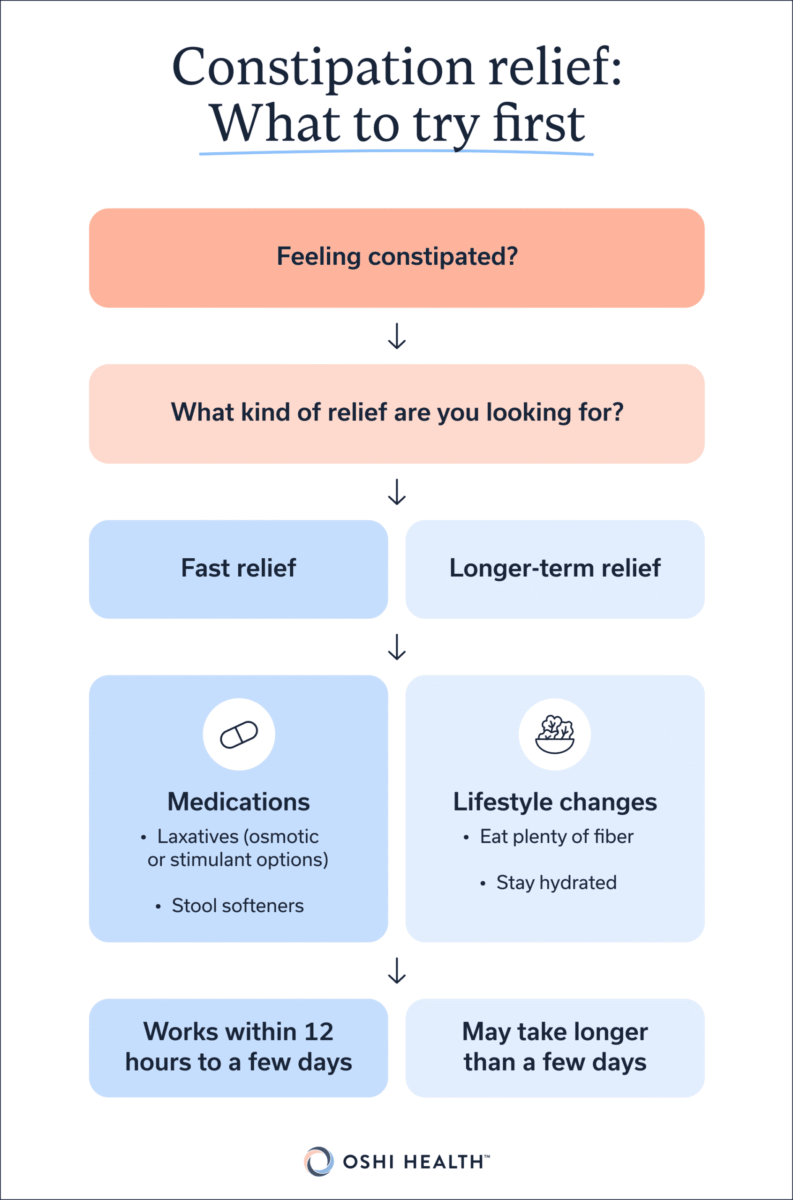
Fast short-term OTC options that work within 12 hours to a few days
-
Laxatives help relieve and prevent constipation through a couple of different mechanisms, and include osmotic and stimulant options.
-
Osmotic laxatives draw water into your colon, increasing volume and pressure to stimulate a bowel movement.
-
Stimulant laxatives cause muscle contractions that help move waste along. They should only be used for short-term relief to avoid developing a dependence on them.
-
-
Stool softeners work by helping water and fats penetrate the stool, making it softer and easier to pass–rather than stimulating movement directly.
Lifestyle changes that help relieve constipation
Lifestyle changes can also bring about relief, but they may take longer than a few days to get things moving. Here are the two to try first, though you’ll find more later in the article.
What helps with constipation?
-
Stay hydrated: Hydration supports intestinal motility. Keep those fluids coming throughout the day. Water is the best choice, but natural (no sugar added) fruit juice, herbal teas, and clear soups also help. Although you may have heard the”drink 64 ounces of water a day” myth, the actual recommended amount depends on your age, sex, breastfeeding status, and activity level.
-
Eat plenty of fiber: Fiber helps bulk stool to keep it moving through your digestive tract. But increase it slowly over time to avoid discomfort. Aim for at least 25 grams if you’re female and 38 if you’re male. Too much fiber, especially without adequate hydration, can actually contribute to constipation, so these two lifestyle changes work best in tandem. Additionally, talking to a GI registered dietitian may be helpful; they can help you dial in your fiber and hydration needs.
High-fiber foods that help relieve constipation
The foods that best help with constipation are those that contain fiber, which supports the gut in multiple ways.
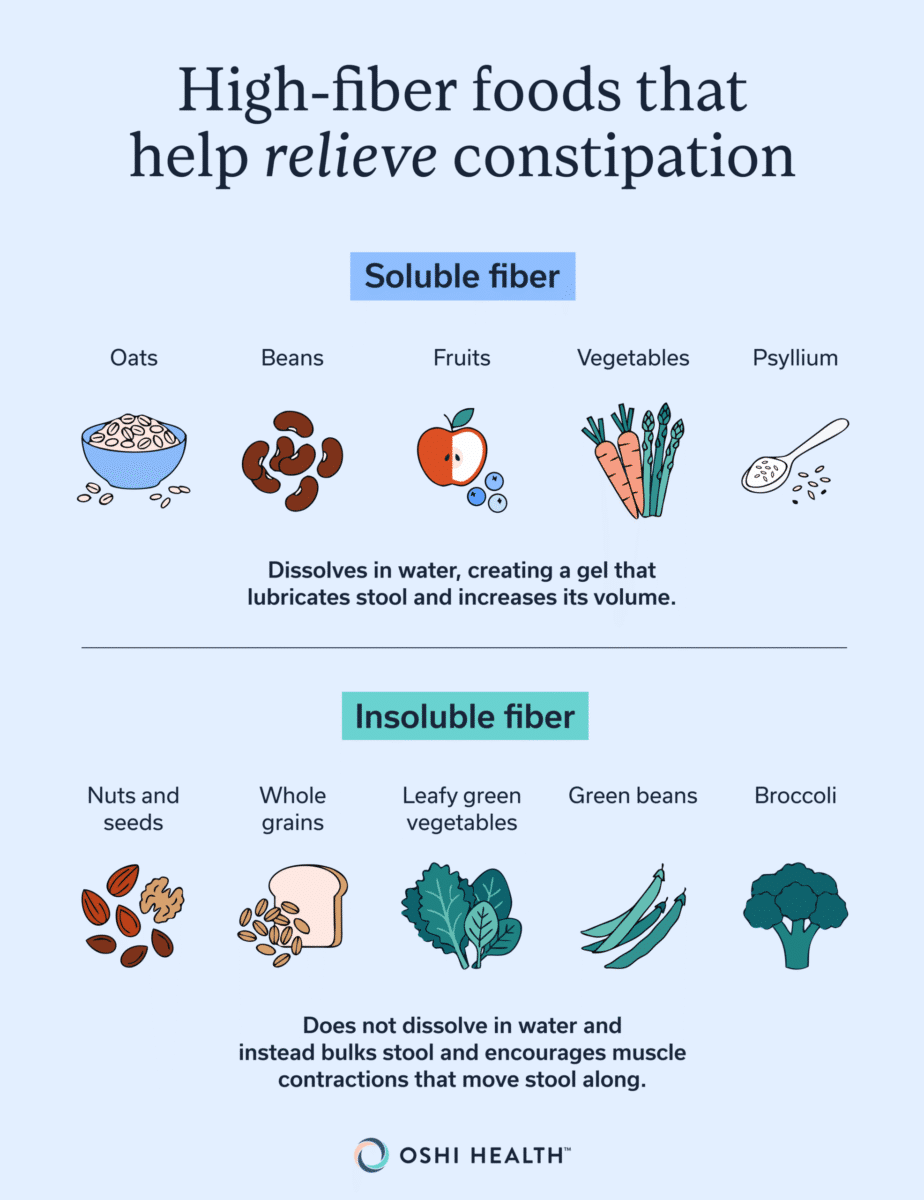
Fiber falls into two main categories:
-
Soluble fiber dissolves in water, creating a gel that lubricates stool and increases its volume.
-
Insoluble fiber does not dissolve in water and instead bulks stool and encourages muscle contractions that move stool along.
“Soluble fiber–found in food sources, such as oats, beans, fruits, and vegetables, or supplements like psyllium–can aid in developing more consistent stools,” says Edmundo Rodriguez-Frias, MD, a gastroenterologist and medical contributor for Full of Life. “However, adding soluble fiber too quickly may cause bloating.”
Some soluble fibers are fermentable, which means they may not work the same as those that form a gel. They can be useful for overall gut health, but they may not offer the same constipation-relieving benefits.
High sources of insoluble fiber include nuts and seeds, whole grains, leafy green veggies, green beans, broccoli, and more.
A few additional foods and beverages have evidence for supporting regularity. Among whole foods,” Dr. Rodriguez-Frias says, “prunes and kiwis are some of the best studied for their ability to relieve constipation. Prunes contain both fiber and sorbitol. Studies show that eating two kiwis per day may help some individuals develop better bowel habits.”
Coffee may also come to your aid, according to research published in the journal PLoS One. Likely, the reason a cup of joe might help is likely twofold. Both caffeine and specialized compounds, such as chlorogenic acid, trigger stomach acid production that then triggers the release of gastrin, a digestive hormone that causes stomach contractions.
Habits that make bowel movements easier
The lifestyle changes that will likely provide the fastest relief from constipation include staying hydrated and adding more fiber (slowly). However, other lifestyle changes can continue to support more regular bowel movements.
Engage in physical activity
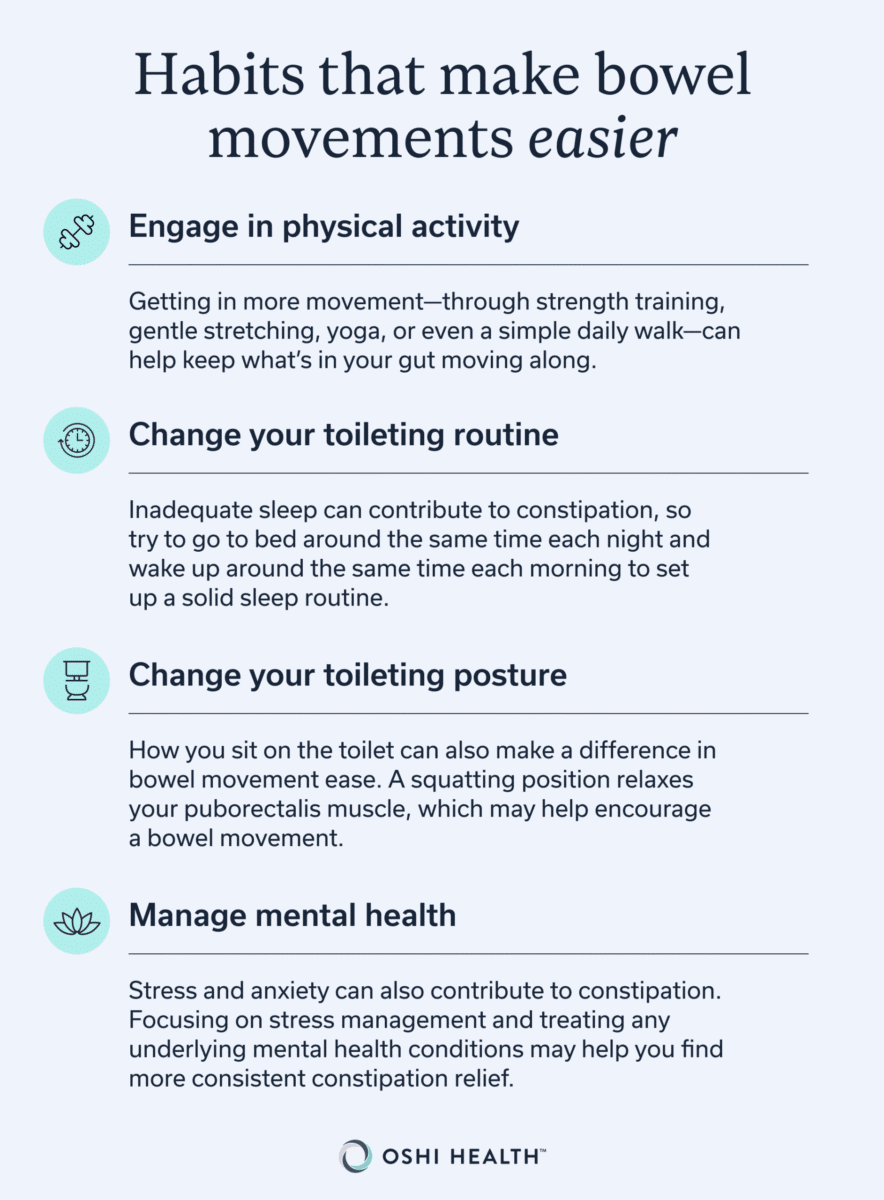
Getting in more movement can help keep what’s in your gut moving along, according to research published in the Journal of Global Health. The Centers for Disease Control and Prevention (CDC) recommends aiming for 150 minutes of moderate-intensity or 75 minutes of vigorous-intensity activity, along with two sessions of strength training per week.
Gentle stretching or yoga might also help encourage a bowel movement, according to research published in the Journal of Bodyweight Movement Therapy.
Change your toileting routine
Your GI tract thrives on routine, dictated by your circadian rhythm (sleep-wake cycle), says research published in the journal Expert Review of Gastroenterology & Hepatology.
Inadequate sleep can contribute to constipation, so try to go to bed around the same time each night and wake up around the same time each morning to set up a solid sleep routine.
Sticking to a daily routine overall may also support more regularity. Do you know from past experience when you are most likely to have a bowel movement? Research in the Journal of Clinical Gastroenterology notes that morning is a common time for many people because the bowel experiences more frequent and stronger contractions.
“A regular bowel routine, particularly after morning meals, when your body’s natural gastrocolic reflex is at its peak,” Dr. Rodriguez-Frias says, “will also work to alleviate constipation.” Try having coffee (if it’s part of your routine) and breakfast. Then allow time to relax and have a bowel movement. Just be mindful not to sit on the toilet for too long, which could contribute to hemorrhoids that may worsen constipation.
Change your toileting posture
How you sit on the toilet can also make a difference in bowel movement ease. Your puborectalis muscle acts a bit like a sling, looping around your rectum and attaching to the pubic bone. During normal sitting posture, it contracts, causing a kink between the rectum and the anus.
A squatting position relaxes your puborectalis muscle and releases the kink, which may help encourage a bowel movement. Research published in the Journal of Clinical Gastroenterology suggests that a defecation postural modification device, such as the popular “Squatty Potty” that places you in a squatting position, may solve your constipation woes.
If this position is challenging or you don’t have a device to help, try tilting your torso forward for a few seconds and then back for a few seconds to see if that leads to a number two.
Manage mental health
Stress and anxiety can also contribute to constipation. Focusing on stress management and treating any underlying mental health conditions may help you find more consistent constipation relief.
However, sometimes additional help is needed. Conditions such as irritable bowel syndrome (IBS) are often rooted in disrupted gut-brain interaction. Working with a gut-brain specialist can help improve this communication.
When constipation may need testing or a GI evaluation
If constipation keeps showing up like an unwanted guest in your life who stays too long, then don’t hesitate to reach out to a knowledgeable GI provider. They can evaluate your symptoms, medical history, and more. And they can formulate a treatment plan to help you find relief. Some instances warrant seeking immediate medical attention, however.
Don’t wait to seek care if you notice the following:
-
Severe abdominal pain
-
Blood in your stool
-
Constipation lasting weeks
-
Unexplained persistent changes in bowel habits
-
Inability or difficulty passing gas
-
Unexplained weight or appetite loss with constipation
-
Vomiting with constipation
-
Feeling a mass in your abdomen
-
Having to use your fingers to extract feces
-
Using an enema or suppository and not being able to evacuate it
-
Family history of colon cancer or colon polyps
“These symptoms may represent a potential intestinal obstruction or other serious conditions requiring urgent treatment,” Dr. Rodriguez-Frias says.
Working with an Oshi Health provider
Since constipation can be caused by many factors, including issues in which the gut and brain are having trouble communicating, you may benefit from coordinated, multidisciplinary support from a team of experts in gut-brain therapy, like those at Oshi Health.
Your care team might include a GI provider (a nurse practitioner or physician associate), a GI registered dietitian, and/or a gut-brain specialist or psychologist, all overseen by board-certified gastroenterologists. They collaborate to help you repair your gut-brain connection to soothe and manage GI conditions and symptoms.
Key takeaways
-
To address constipation quickly, try an over-the-counter option, such as a laxative or stool softener. But to reduce instances of constipation, lifestyle changes may be needed.
-
Constipation has many causes, so lifestyle changes may not be enough to address frequent or severe constipation (though they are a good place to start)
-
How to relieve your constipation will depend on the specific underlying cause and your unique circumstances.
-
Seek treatment with a GI provider, such as the specialists at Oshi Health, if you are experiencing chronic constipation.
FAQ
-
Yes, in some cases, constipation will resolve on its own, especially if you stay hydrated, eat adequate fiber, and engage in regular movement. But if you need faster relief, an OTC laxative or stool softener will do the trick. But these OTC options aren’t long-term solutions, so if you continue to experience constipation, talking to a medical professional is best.
-
Yes, coffee may help with constipation thanks to caffeine and specialized compounds, both of which help support muscle contractions within your GI tract that help move waste along.
-
Yes, too much fiber consumed too fast or without adequate hydration can worsen constipation. If you’re increasing your fiber intake, do so slowly over time so that your body can adjust.
Find lasting relief from chronic constipation
Feel like constipation is getting in the way of enjoying your life? You’re not alone—and we’re here to help.
Oshi Health GI providers, gut-brain specialists, and registered dietitians work together to address symptoms like chronic constipation and find solutions that actually work for you.
Our GI specialists will work with you to reduce symptom flare-ups and help you spend less time in the bathroom:
✔ Personalized care plans tailored to your lifestyle
✔ Evidence-based nutrition guidance to help ease constipation
✔ Science-backed strategies to calm your gut
✔ Compassionate, whole-person care
✔ And so much more!
Ready to take control of your constipation?