
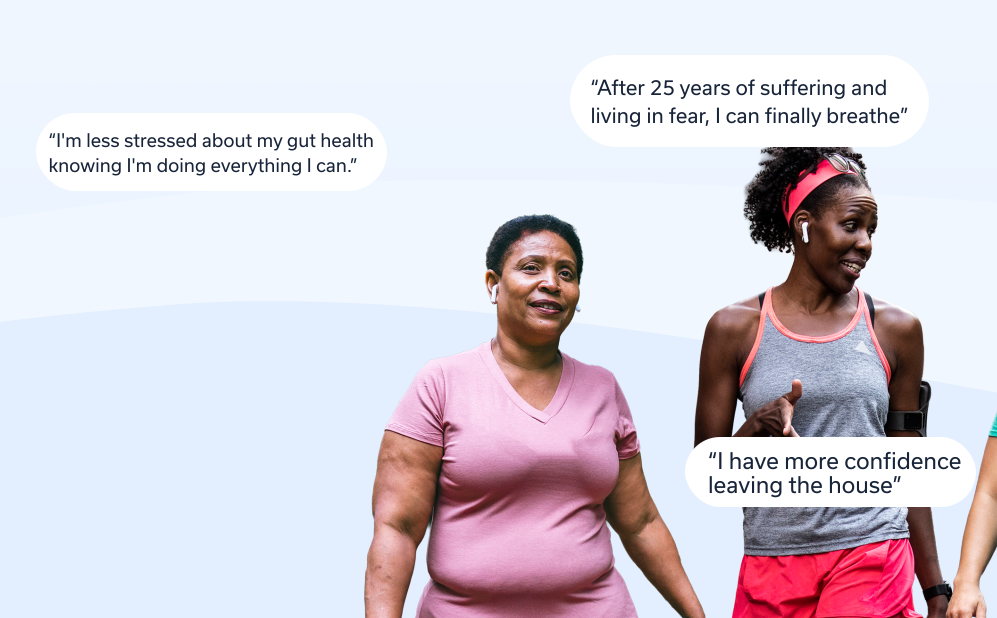
New findings from Oshi Health’s latest patient survey show that with the right care, women struggling with digestive symptoms and conditions can find real, long-lasting relief.
For many women, getting care for gastrointestinal (GI) symptoms isn’t so simple. It often means long wait times to see specialists and lots of trial-and-error. Many are left without clear answers or lasting relief.
That gap is exactly what we set out to understand in our first-ever patient survey. We asked female Oshi patients between the ages of 35 and 55 about their personal experiences living with GI conditions and navigating digestive health care.
Before finding Oshi, respondents described feeling stuck and exhausted—cycling through DIY treatments, adjusting their lives around unpredictable symptoms, and not getting the answers they needed.
After starting care with Oshi, the shift was clear. The women reported feeling more in control of their health, and the majority were able to return to the lives they wanted to live. Eating without fear, traveling with confidence, and showing up to work and social events without worrying about how their digestive symptoms might get in the way.
Still searching for answers: Why so many women feel stuck with GI symptoms
For women, living with GI symptoms comes with an extra set of challenges. For one, women are more likely to experience digestive symptoms and conditions. Evidence suggests women have higher rates of GI disorders like irritable bowel syndrome (IBS) than men. They also often face delays in diagnosis due to the complicated overlap between digestive, hormonal, and reproductive health. According to one particular 2023 study, women were more likely to face diagnostic delays for both Crohn’s disease and ulcerative colitis than men. They were also more likely to be misdiagnosed.
Digestive symptoms can change over time and come and go, too. Women might be doing everything “right”—seeing a primary care physician, seeing specialists, making dietary changes, trying supplements, adjusting their lifestyles, tracking symptoms—and still be experiencing life-interrupting symptoms.
Our survey reflects this reality, with two-thirds of respondents saying they had already seen a gastroenterology specialist before coming to Oshi. It’s important to note that this isn’t the fault of any one provider. This high level of care-seeking highlights just how difficult these complex conditions can be to diagnose and treat. And that’s especially true when care is spread across different providers and systems that don’t necessarily talk to each other—or prioritize multidisciplinary care.
Through Oshi, respondents experienced a different approach: coordinated, whole-person care that helped many finally move from ongoing symptoms and discomfort to real relief.
I'm less stressed about my gut health knowing I'm doing everything I can.
— Survey respondent
Women’s gut health is part of whole-body health
Part of what makes women’s digestive health so complex is that it rarely exists in isolation. GI symptoms are often connected to hormonal, reproductive, and mental health.
More than half of respondents said they came to Oshi specifically to address mental and emotional well-being in relation to gut health. In particular, 76 percent said they wanted help with symptoms interfering with work, school, or daily activities. Sixty-two percent said they wanted to better understand what causes their symptoms.
- came to Oshi specifically to improve mental and emotional well-being linked to gut health
- came to Oshi to reduce how much their symptoms interfered with work, school, or daily activities
- came to Oshi to understand what causes their symptoms
Research shows that the gut and endocrine system (that’s the system responsible for producing and synthesizing hormones) are closely linked, meaning changes in one can affect the other. This helps explain why many women experience digestive symptoms alongside menstrual cycle changes, pregnancy, perimenopause, menopause, and conditions like polycystic ovarian syndrome (PCOS).
“The hormones that regulate the menstrual cycle, especially estrogen and progesterone, also affect the digestive tract,” explains Treta Purohit, MD, a board-certified gastroenterologist and hepatologist and Executive Medical Director at Oshi Health
The gut and brain are also deeply connected through the gut-brain axis, which means stress, anxiety, and emotional health can all influence digestion. There’s also evidence of a link between certain gut bacteria and brain function in women experiencing premenstrual symptoms.
You might notice worsening bloating, pain, and irregular bowel movements around your period, while also managing heavy or painful cycles. At the same time, you may feel anxious about symptoms showing up unpredictably during work, travel, or social plans. It’s all connected, making it hard to tell where one issue ends and another begins.
Before receiving care at Oshi I was terrified of flareups, which would mean the likelihood of missing work and having financial setbacks due to healthcare costs. Through my consultations with Oshi specialists, I have rarely suffered flareups, and I am able to continue my life as perfectly normal.
— Survey respondent
Our survey data highlights just how common this overlap is. More than half of the respondents said they were also navigating hormonal or reproductive health conditions, often more than one. Nearly a third said they’re going through perimenopause or menopause. Eleven percent cited dealing with pelvic floor issues, including pelvic pain. A smaller percentage (7 percent and 6 percent, respectively) said they had PCOS or endometriosis. Almost two-thirds of respondents with hormonal health conditions said they discussed it with their Oshi providers.
- of survey respondents had at least one hormonal or reproductive health condition during their Oshi care
- said they were experiencing perimenopause or menopause during care
- had pelvic floor issues
- had pelvic pain
- were managing two or more hormonal conditions simultaneously
- discussed their hormonal health conditions with their Oshi providers
Why women turned to Oshi: Faster access and a coordinated approach to care
If you’ve been struggling to get the care you need, you’re not alone. When women in our survey were asked why they chose Oshi, their answers pointed to a clear set of needs.
Access was one of the biggest challenges cited by survey respondents. Almost all the women we surveyed said they came to Oshi looking for faster appointments and the ability to get seen quickly—in days, not weeks or months. One estimate from 2025 shows that the average wait time to see a gastroenterologist is roughly 40 days. And that’s in major cities. Outside metro areas, the wait can be even longer, or may require traveling out of town or out of state to access specialist care. Even for those living in cities, getting to a visit often involves taking the day off from work and sitting in traffic.
I was miserable before Oshi and couldn't get in to see a doctor for months. Their quick help allowed me to enjoy my holidays and even now, I feel so supported.
— Survey respondent
I feel great knowing I have resources with availability at my fingertips.
— Survey respondent
Virtual care was another key selection factor for 85 percent of respondents. The ability to connect with providers from home makes it easier to fit care into daily life and stay consistent with treatment. For people dealing with ongoing or unpredictable symptoms, timely care can mean a faster, more effective path to lasting relief. The women surveyed also highlighted the value of whole-person, coordinated care.
- said appointment availability and the ability to get seen quickly was important to them
- said cost and insurance coverage was a key decision-making factor in choosing a provider
- said whole-person, coordinated care was important to them
- said virtual care was a key consideration when choosing a provider
For many respondents, a coordinated approach made it easy to stay consistent with treatment and start seeing real improvement. Ninety percent found dietary care with an Oshi registered dietitian to be helpful or very helpful. More than three-quarters of respondents found working with a gut-brain specialist to be helpful as part of their care.
I have a better understanding about the things that cause me pain and bloating. I have a plan, because of the Oshi team, I will be able to return to a vegetarian lifestyle again soon. Stress and life events are unpredictable yet guaranteed so gaining better tools to face challenges has been extremely helpful.
— Survey respondent
Oshi is in-network with many major insurance providers
Ninety-two percent cited cost and insurance coverage as being very important or important to them when choosing a GI care provider.
Oshi is designed to make it easier for you to get the care you need. With faster appointments, virtual visits, and a care team that works together, you don’t have to navigate everything on your own.
My provider helped me build a "tool box" of medicines and things to try to prevent a flare and avoid going to the ER, and it has been so helpful.
— Survey respondent
Back to living life to the fullest
Lasting relief means dealing with fewer symptoms. It’s also about what becomes possible when those symptoms no longer take center stage.
GI conditions can affect nearly every part of daily life. From meals and travel to work and social plans, symptoms can shape decisions in ways that are invisible yet deeply challenging.
Our survey findings show what can change with timely, convenient access to integrated care.
Eighty-six percent of respondents said they felt more in control of their digestive symptoms after receiving care with Oshi. The majority (84 percent) also reported being better able to engage in everyday activities again. Eighty-three percent said they felt more confident managing flare-ups when they did happen.
Beyond daily routines, many women surveyed described a return to the moments that matter. Almost three-quarters of respondents said they were able to enjoy social activities again without worrying about their symptoms. And for seventy percent of respondents, concerns about managing gut symptoms while traveling were no longer top of mind.
- came to Oshi specifically to improve mental and emotional well-being linked to gut health
- came to Oshi to reduce how much their symptoms interfered with work, school, or daily activities
- came to Oshi to understand what causes their symptoms
After 25 years of suffering and living in fear, I can finally breathe, and have hope!
— Survey respondent
Our takeaway: With the right care, women can find real relief from complex digestive symptoms and conditions and get back to living the life they want, with more freedom, confidence, and ease. That can look like fewer flare-ups, less time planning your day around symptoms, and more energy to do the things you enjoy.
This survey was conducted online in March-April 2026. 350 female Oshi patients ages 35-55 were invited to take the survey, with 178 people responding. Respondents who completed more than 75% of the survey were included in analysis.
Personalized care for the whole you
Did you know women are more likely to experience gastrointestinal (GI) symptoms and conditions than men? That’s because hormones and reproductive health have a major impact on the gut-brain connection—and vice versa!
At Oshi Health, we work with you to understand your unique situation, including how your cycle might impact your GI symptoms. Our goal is to create a personalized care plan that fits your lifestyle.
Here’s what you’ll get:
✔ A personalized care plan tailored to you
✔ Nutrition guidance rooted in scientific research
✔ Proven techniques to calm your gut and ease discomfort
✔ Compassionate, whole-person care
✔ And so much more!
Ready to find lasting symptom relief?