


Crohn’s disease is a type of inflammatory bowel disease (IBD) that causes inflammation anywhere along your digestive tract, from your mouth to your anus. Symptoms of Crohn’s disease can be sneaky—mimicking other health conditions, coming on gradually, or disappearing for periods of time.
Undiagnosed Crohn’s disease symptoms commonly include diarrhea, weight loss, or blood in your stool. But there are some lesser-known symptoms, too. Crohn’s disease can make you feel foggy and tired, and it can also affect your skin, joints, eyes, and more.
It’s frustrating to have gastrointestinal (GI) symptoms without clear answers. You might try to convince yourself it’s “normal” to feel this way. Or, maybe you’re seeing three different healthcare providers about each individual symptom, and nobody’s piecing the puzzle together.
If this sounds like you, then it’s worth taking the time to learn about undiagnosed Crohn’s disease symptoms. Getting a prompt diagnosis of Crohn’s disease is important because untreated Crohn’s can cause serious complications.
Knowing when to make an appointment with a health professional, like the GI providers at Oshi Health, can make a big difference on your journey—whether you end up having Crohn’s, or something else.
Undiagnosed Crohn’s Disease Symptoms: What to Watch For
“As with many gastrointestinal diseases, the symptoms of Crohn’s disease can be vague or subtle at first,” says Dr. William Chen, MD, a gastroenterologist and clinical assistant professor of medicine at Brown University.
So, what are the symptoms of Crohn’s disease? Some of the most classic Crohn’s symptoms include:
- Abdominal pain, cramping, or tenderness
- Blood or mucus in the stool
- Diarrhea
- Nausea
- Reduced appetite
- Unexplained weight loss
- Urgent bowel movements
These symptoms can come on gradually, which can make them easy to brush off.
I like to use the frog in boiling water analogy to put it in perspective (bear with me here—I love animals, so it’s all theoretical!). If you dropped a frog into boiling water, it would leap out. But if you heated the water slowly while the frog was swimming inside, it wouldn’t notice the slowly rising temperatures and would continue swimming to its own doom.
In the same way, you may not have noticed how serious your symptoms have become since you’ve had to learn to live with them one tiny change at a time.
“The key is not to ignore symptoms that persist, recur, or gradually worsen,” says Dr. Chen. “And not to rationalize them as being solely due to stress or diet without discussing them with a healthcare professional.”
Early Signs of Crohn’s Disease That Are Easy to Miss
Many Crohn’s disease symptoms are easy to miss. “People often associate Crohn’s disease with severe abdominal pain, diarrhea, and rectal bleeding, but the early signs may be less obvious,” says Dr. Chen.
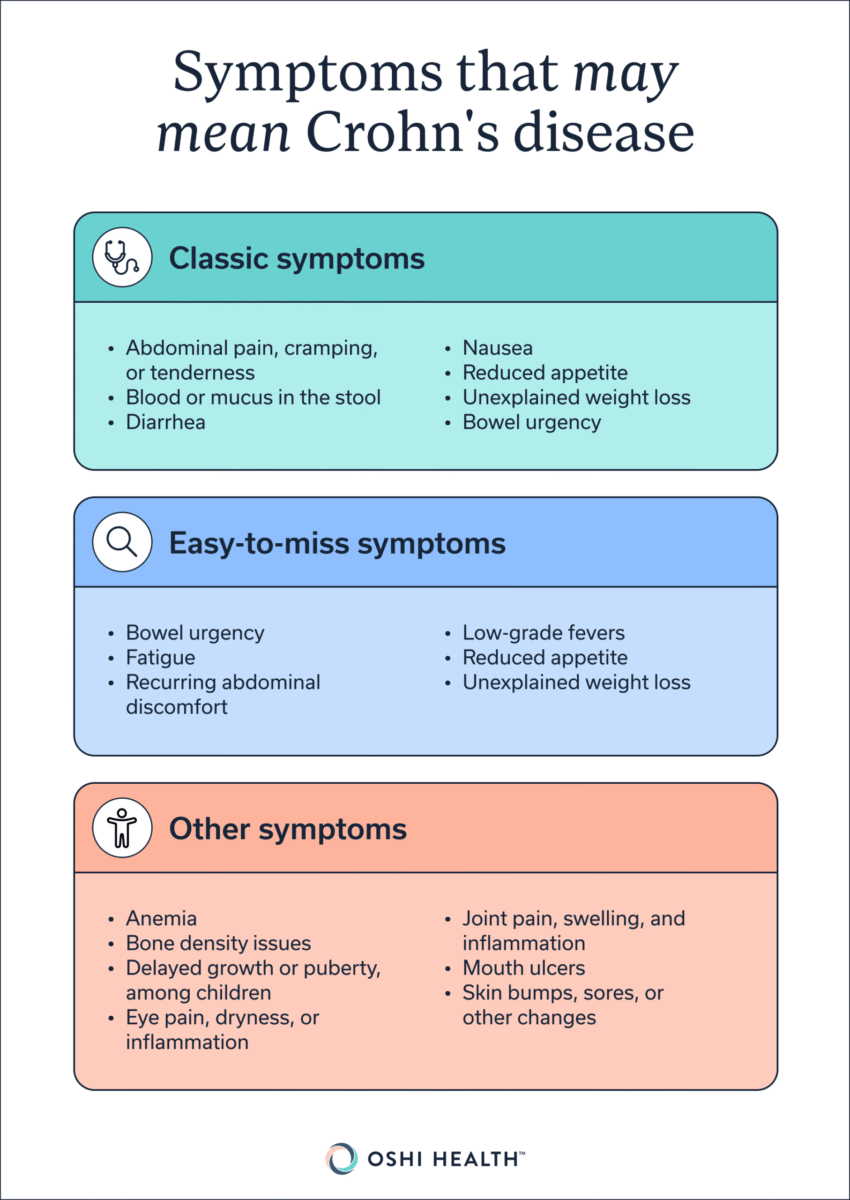
Some Crohn’s symptoms that fly under the radar include:
- Bowel urgency
- Fatigue
- Low-grade fevers
- Recurring abdominal discomfort
- Reduced appetite
- Unexplained weight loss
You might overlook the way you feel if you have multiple mild symptoms appearing together, rather than one super-severe symptom.
Or, since Crohn’s disease is a relapsing-remitting condition, your symptoms might come on suddenly, but then go away. This could lead you to believe it’s a temporary stomach bug instead of a serious underlying condition.
It’s also easy to miss the more classic signs of Crohn’s disease, like diarrhea, if you attribute it to stress, diet, or just having a “sensitive stomach,” says Dr. Chen.
Lesser-Known Crohn’s Disease Symptoms Outside the Gut
Up to 40% of people with Crohn’s disease have symptoms that occur outside their intestines, per the United European Gastroenterology Journal.
Extraintestinal symptoms of Crohn’s disease can include:
- Anemia
- Bone density issues
- Delayed growth or puberty, among children
- Eye pain, dryness, or inflammation
- Joint pain, swelling, and inflammation
- Mouth ulcers
- Skin bumps, sores, or other changes
Often, people don’t associate these types of symptoms with Crohn’s disease because they mistakenly think that a GI condition is limited to GI symptoms. But the truth is that Crohn’s disease can affect many parts of the body, not just your intestines.
How Long Can You Have Crohn’s Without Knowing?
There’s no fixed timeline for recognizing or diagnosing Crohn’s disease, but the earlier the diagnosis, the better. “Early diagnosis is crucial for effective treatment, improved long-term outcomes, and the prevention of potentially life-altering complications,” says Dr. Chen.
Unfortunately, people with Crohn’s disease face diagnosis delays of up to 26 months on average, per the World Journal of Gastroenterology.
You might be wondering what’s behind these delays, and how you can avoid them. “In my experience, delays in diagnosis are often multifactorial,” says Dr. Chen.
In other words, a delayed Crohn’s diagnosis isn’t solely down to you not connecting the dots with undiagnosed Crohn’s disease symptoms (don’t blame yourself!). There’s a lot more at play.
Some factors that can delay the Crohn’s diagnosis timeline include:
- Attributing symptoms to stress
- Crohn’s can resemble other conditions, such as infection or irritable bowel syndrome (IBS)
- Disjointed care between multiple healthcare providers (your healthcare providers might miss the larger pattern)
- Disparities in access to healthcare, including GI specialists
- Lifestyle adjustments that make your symptoms feel more manageable, such as diet changes or planning around bathroom access
- Symptoms that appear mild, intermittent, or nonspecific
- Temporary improvement in symptoms (you might postpone seeking medical advice)
Crohn’s Disease vs. Other Possible Causes
Crohn’s disease can resemble many other GI conditions, and this can contribute to confusion and diagnostic delay. Some of these conditions include:
- Celiac disease: This is a genetic autoimmune condition in which the immune system mistakenly sees the gluten protein as an “invader,” and attacks the small intestine when you ingest it. There are over 200 symptoms of celiac disease, per the Celiac Disease Foundation, and many of these overlap with Crohn’s disease.
- Food intolerance: For some people with Crohn’s disease, certain foods and ingredients can trigger symptoms. However, if you write your symptoms off as a food intolerance without proper diagnosis, you’ll miss out on essential treatment.
- IBS: While IBS is a collection of symptoms and a disorder of gut-brain interaction, Crohn’s disease involves physical inflammation. Many of the symptoms of these two conditions overlap, but the underlying causes are very different.
- Stomach infections: Because Crohn’s disease follows a relapsing-remitting pattern, people can mistake intense episodes of symptoms as a stomach bug, food poisoning, or infection. While the symptoms are similar in the short term, the difference is that Crohn’s disease inflammation will come back.
- Ulcerative colitis (UC): This is the other main type of IBD, alongside Crohn’s disease. The key difference is that UC inflammation is limited to the large intestine and rectum, whereas Crohn’s disease inflammation can occur throughout the entire digestive tract. Symptoms can be very similar, and accurate diagnosis requires investigation.
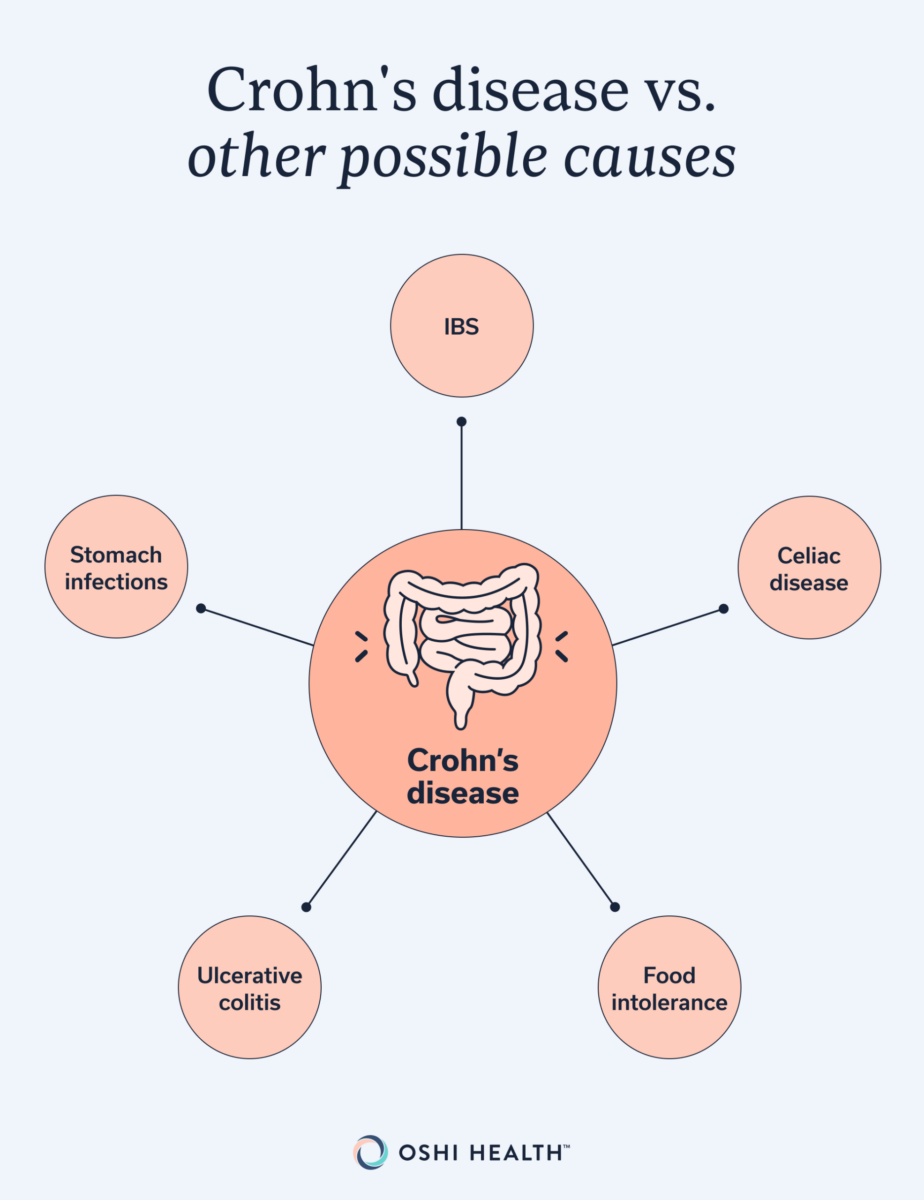
As you can see, it’s impossible to tell which GI condition you might have based on symptoms alone, since so many of them overlap. Recognizing possible symptoms and patterns is important, but your next step should be to bring this information to a healthcare professional, like the multidisciplinary GI team at Oshi Health.
What Untreated Crohn’s Disease Can Lead To
When left untreated, Crohn’s disease can lead to some pretty serious consequences. “Untreated Crohn’s disease can lead to progressive and sometimes irreversible bowel damage,” says Dr. Chen.
Ongoing inflammation from Crohn’s disease can damage your intestines, causing scarring, narrowing, infections, abscesses, and fistulas (abnormal tunnel-like connections between body parts).
Persistent inflammation can also contribute to malnutrition and nutritional deficiencies, according to Dr. Chen.
And the impacts aren’t limited to your gut, either. Crohn’s disease can also affect your body outside of your GI tract, including your eyes, skin, liver, and bones.
“Over the long term, Crohn’s disease involving the colon is associated with an increased risk of colorectal cancer, particularly when the disease is extensive, longstanding, and associated with persistent inflammation,” says Dr. Chen.
Knowing this information—and experiencing unexplained GI symptoms of any kind—can feel scary. Before you get overwhelmed, pause and take a deep breath. Complications of Crohn’s disease are possible, but they’re not inevitable, and timely diagnosis and treatment can reduce that risk. If you’re reading this article, you’re already taking a good first step!
When to Seek Care for Possible Crohn’s Disease
If you’re experiencing new or recurring GI symptoms, it’s important not to self-diagnose based on your symptoms. This could delay you getting the right care for whatever’s going on with you.
Instead, arrange a GI evaluation to take a deeper look at your symptoms. Oshi Health offers virtual GI care from a multidisciplinary team of GI providers, registered dietitians, and gut-brain specialists—and we’re in-network with most insurance plans.
The personalized matching process takes less than three minutes, and you could be seeing your GI specialist within days.
Some warning signs that should prompt evaluation include:
- Bowel habit changes
- Diarrhea lasting more than a few days
- Ongoing abdominal pain
- Persistent fatigue
- Slowed growth or delayed puberty in children
- Unexplained weight loss or loss of appetite
Try to avoid waiting for your symptoms to become constant or severe before asking for help. You deserve to get to the bottom of what’s causing your symptoms and feel better. Remember, the sooner you address your symptoms, the less likely you are to experience complications from delayed care.
Urgent evaluation at an urgent care center or local emergency room may be required for certain symptoms. These include:
- Fainting
- High fever
- Rectal bleeding
- Repeated vomiting
- Severe abdominal pain
- Signs of dehydration
Thanks to Oshi Health, I now look forward to waking up in the morning with optimism about my future. The multi-faceted approach that I have been wanting for so long has resulted in significant improvement in just a few months! I have energy for the first time in years. I can focus during the day, take pride in my work, and enjoy time with my family.
— Justin
Read more about Justin's storyHow Crohn’s Disease Is Diagnosed
So you’re noticing early signs of Crohn’s disease, and you’ve booked an appointment… what next?
There’s no single test that diagnoses Crohn’s disease for every person, according to Dr. Chen, so diagnosis follows a step-by-step process.
This usually begins with a careful review of your symptoms and medical history. Diagnostic testing may then include:
- Blood work
- Endoscopic evaluation, such as colonoscopy
- Radiographic imaging, such as CT or MRI scans
- Stool tests
“The most important part of the process is the partnership between the patient and the clinician,” says Dr. Chen. “[This includes] open communication, shared decision-making, and a clear understanding of both the evaluation and the goals of treatment.”
Treatment Options After a Crohn’s Diagnosis
Treatment for Crohn’s disease is tailored to your specific symptoms, disease location, severity, and complications. Your overall health, as well as your personal values and preferences, also matter.
“The goal is not simply to improve symptoms, but to control the underlying inflammation, promote healing, and prevent complications,” says Dr. Chen.
Some treatments for Crohn’s disease include:
- Diet support with a registered dietitian to understand personal triggers and maintain adequate nutrition during flares
- Medications that reduce inflammation or modify immune activity
- Procedures or surgery to address inflammation or complications
- Vitamins, supplements, infusions, or diet changes to address nutrient deficiencies
Ongoing monitoring is another big part of Crohn’s disease treatment. Your treatment doesn’t end once you’re diagnosed and your first flare is under control. Instead, it’s a continuous process.
“Symptoms are important, but they do not always accurately reflect the degree of intestinal inflammation,” says Dr. Chen. Follow-up bloodwork, stool testing, imaging, and repeat endoscopy are often required to monitor your health.
Although Crohn’s disease is a lifelong condition, treatment and monitoring can help you reach remission and live a full and active life.
How to Work With a GI Care Team While Seeking Answers
Facing unexplained GI symptoms can feel scary, and you might jump to worst-case scenarios in your mind. But as the saying goes, knowledge is power. Working with the GI team at Oshi Health can help you understand your symptoms, what’s causing them, and how to treat them.
As part of working with Oshi Health, you may be asked to:
- Keep a diary of your diet, sleep, and other habits
- Share medical and family history, and details on previous tests
- Track bowel habits and related symptoms, such as pain, bleeding, fatigue, or weight changes
- Trial recommended medications, vitamins, or nutrition supplements
Oshi Health takes a whole-person approach to GI health. Your GI specialist will look at your experience as a whole, rather than managing each symptom in isolation.
If you ever experience new symptoms, or feel confused about the direction of your tests or treatment, know that it’s always okay to bring this up.
“I often tell my patients that they know their own bodies better than anyone else, including their clinician,” says Dr. Chen. “If something feels persistently different or wrong, it is important to speak up and to continue seeking answers. This is true at the beginning of the evaluation and remains true even years after diagnosis.”
Key takeaways
- Undiagnosed Crohn’s disease symptoms often look like diarrhea, weight loss, blood or mucus in stool, and fatigue.
- Crohn’s disease symptoms can also appear outside your gut (called extraintestinal symptoms), and affect your joints as well as organs like your eyes, liver, skin, and more.
- An early and accurate diagnosis can help you feel better and avoid complications. The GI specialists at Oshi Health can help with diagnosing and managing Crohn’s disease, as well as countless other possible GI conditions.
Frequently asked questions (FAQs)
Can you have Crohn’s disease without diarrhea?
Diarrhea is a common symptom of Crohn’s disease, but you can definitely still have Crohn’s disease without diarrhea. It’s even possible to have “silent Crohn’s disease,” which has no symptoms at all.
Can Crohn’s disease cause constipation?
Yes, Crohn’s disease can cause constipation. Although it’s less common than diarrhea, it’s certainly not unheard of. Constipation is defined as having less than three bowel movements per week.
Can Crohn’s disease begin later in life?
Yes, Crohn’s disease can begin later in life, which is one reason it’s always worth investigating possible signs of Crohn’s disease. Crohn’s disease is most frequently diagnosed between the ages of 20 and 30, per the Crohn’s & Colitis Foundation. However, there’s another spike in Crohn’s disease diagnoses between the ages of 50 and 70, with approximately 10% to 15% of Crohn’s patients being diagnosed at age 65 or older, per Cureus.
Oshi is your partner in digestive health
Feel like your digestive concerns are running your life? You’re not alone—and we’re here to help you find lasting relief.
Oshi Health GI providers, gut-brain specialists, and registered dietitians work together to address your symptoms and find solutions that actually work for you.
Whether you’re dealing with chronic digestive issues or unpredictable symptom flare-ups, our GI specialists deliver:
✔ Personalized care plans tailored to your lifestyle
✔ Science-backed strategies to calm your gut
✔ Compassionate, whole-person care
✔ And so much more!
Ready to take control of your gut health?