Three out of four GLP-1 users deal with digestive side effects, but you don’t have to grit your teeth or stop the medication altogether—effective, lasting symptom relief is possible with the right support.
You found something that works. You’re seeing progress toward your health goals—whether that’s steadier blood sugar, improved symptoms, or other changes that matter to you. But now your gut is speaking up.
If that’s you, you’re far from alone. Many people taking GLP-1 medications experience gastrointestinal (GI) side effects like nausea, constipation, diarrhea, or changes in appetite. Most people just aren’t talking about it—even if it’s affecting their daily life.
What to expect on a GLP-1
Your doctor may have warned you about the likelihood of nausea or other digestive side effects while taking a GLP-1 medication, but probably didn’t go into detail about why these happen. GLP-1s work partly by slowing digestion, which helps control blood sugar and appetite. It’s also exactly why so many people end up dealing with symptoms like nausea and constipation.
For a lot of people, these uncomfortable side effects are enough to change how they take their medication—or whether they keep taking it at all.
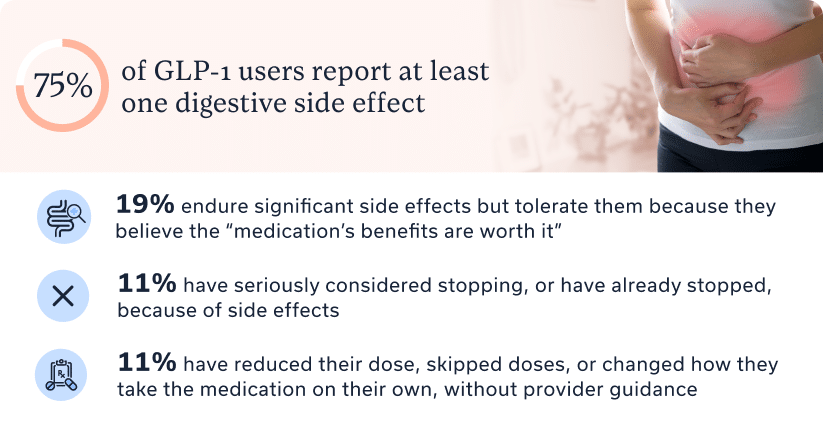
Oshi Health / Morning Consult survey, June 2026
Suffering in silence…unnecessarily
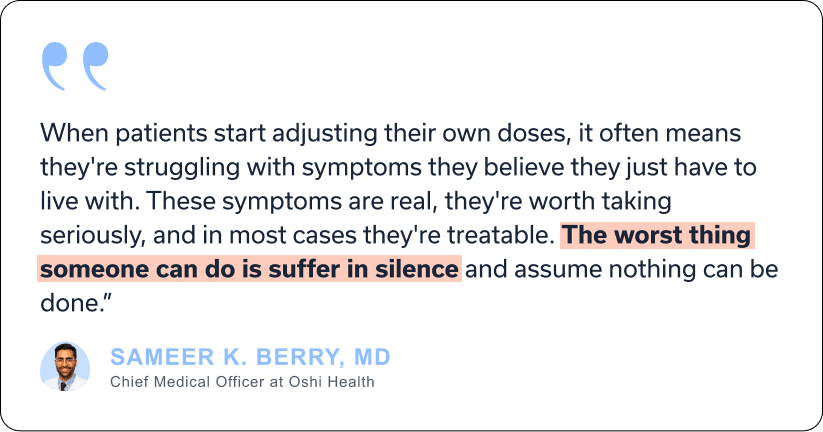
Side effects with GLP-1s are common, but a lot of people aren’t bringing up these symptoms with their doctor. Not because the symptoms are mild. Because they’re worried about potentially having to stop the medication or they’re embarrassed to bring up diarrhea, constipation, and other GI troubles.

Oshi Health / Morning Consult survey, June 2026
If any of that sounds familiar, you’re not being dramatic, and you’re not alone. Diarrhea, gas, and constipation aren’t the most glamorous things to bring up at an appointment. But they’re also highly treatable! As long as your provider is in the loop.
Your GLP-1 symptoms are not my GLP-1 symptoms
Nausea gets most of the airtime when people talk about GLP-1 side effects. It’s real, and it’s common—but it’s far from the only thing people are dealing with on these medications.
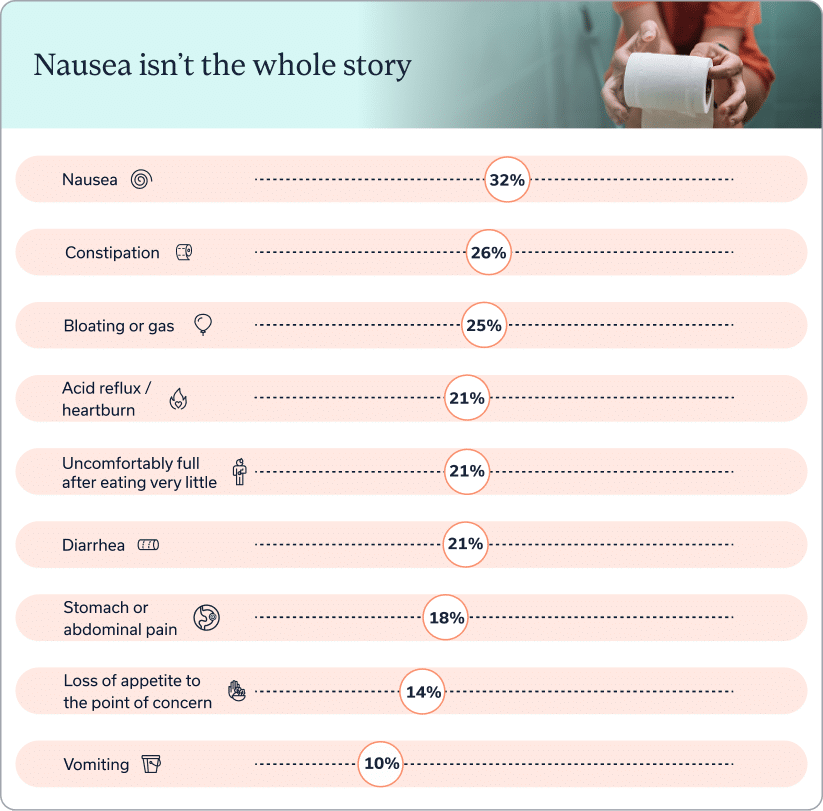
Oshi Health / Morning Consult survey, June 2026
Everyone’s GLP-1 experience is personal. What flares up for you might never show up for someone else, and vice versa. That’s why “just push through it” isn’t great advice.
Support built for GLP-1 side effects
None of this means you have to white-knuckle your way through side effects or give up on a medication that’s actually working for you.
Oshi Health’s care model brings GI providers, registered dietitians, and behavioral health specialists together. So instead of guessing on your own, you’ve got a team looking at what’s actually happening in your body and building a plan to get your GLP-1-related symptoms under control.

Oshi Health patient outcomes data
If your GLP-1 is helping you reach your health goals but your GI symptoms are getting in the way, you don’t have to choose between the two. The right support can help you manage side effects and feel better while staying on your care plan.
Download the full survey infographic.
Take charge of your gut health on GLP-1 medications with expert dietary support
If you’re taking a GLP-1 medication and experiencing side effects like nausea or digestive discomfort, you’re not alone. Our team of GI-specialized, registered dietitians is here to help.
Your nutrition plays an important role in how you feel day to day, especially when adjusting to a new medication. Oshi dietitians can work with you to:
✔ Ensure you stay nourished and offer practical tips for navigating common GLP-1 side effects
✔ Build personalized meal plans that fit your lifestyle and medication schedule
✔ Guide you through small, sustainable changes to help you feel your best
✔ And so much more!
Ready to make mealtimes less stressful and feel in control again?